
To get rid of slugs in your garden, start by identifying their presence through ragged holes, slime trails, and damage to soft plants, especially after rain or early mornings. Reduce hiding spots by clearing debris, trimming overgrowth, and keeping soil dry with morning watering. Use physical barriers like copper tape, traps with beer, or crushed eggshells around vulnerable plants. Promoting natural predators, avoiding pesticides, and creating a balanced ecosystem further help control populations. Exploring these methods more deeply will give you practical, sustainable solutions.
TLDR
- Use physical barriers like copper tape, plastic pots, or crushed eggshells around vulnerable plants.
- Set beer traps or fermented bait to attract and drown slugs effectively.
- Encourage natural predators such as birds, frogs, and beetles by creating suitable habitats.
- Remove hiding spots and debris, and water early to reduce moisture that attracts slugs.
- Avoid pesticides; instead, promote a balanced ecosystem for long-term slug control.
Why Are Slugs a Problem in My Garden?
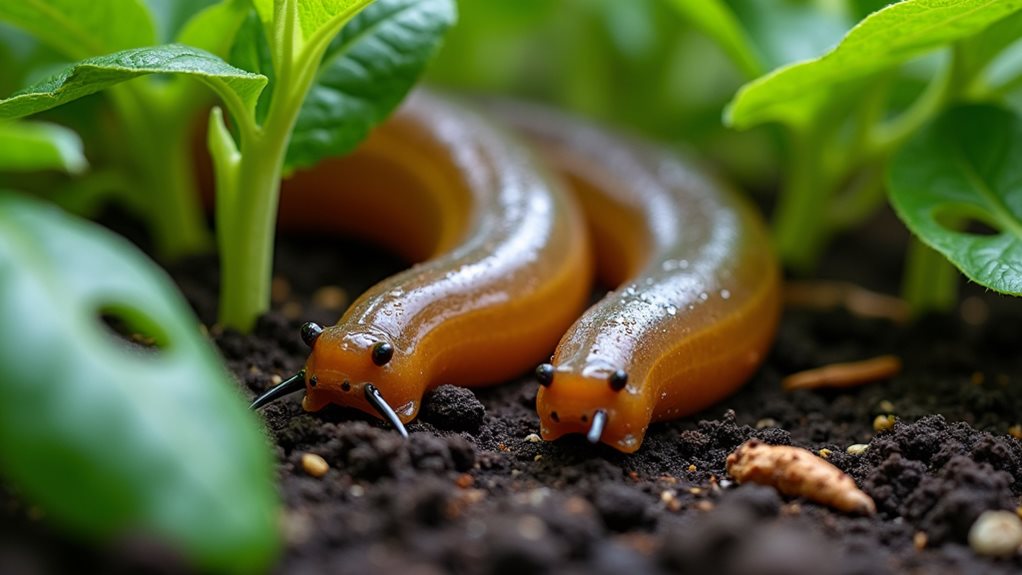
Slugs are a common problem in gardens because they directly threaten the health and productivity of your plants. Their presence signals a need for control, as they cause plant damage by feeding on seedlings and young plants, especially in damp, dark conditions.
Without proper management, their rapid multiplication can lead to significant crop loss and unsightly damage.
How Can I Tell If Slugs Are Damaging My Plants?
Detecting slug damage in your garden requires careful observation of plant signs and environmental cues. Look for ragged holes and chewed edges on leaves, especially seedlings and soft plants, and check for silvery slime trails on soil and leaves, which indicate slug activity. Early morning or after rain are ideal times to spot missing or partially eaten plants. Additionally, understanding the causes of smoke in an oven can help you maintain a clean garden environment, free from conditions that attract pests like slugs.
Which Plants Are Most Vulnerable to Slugs?
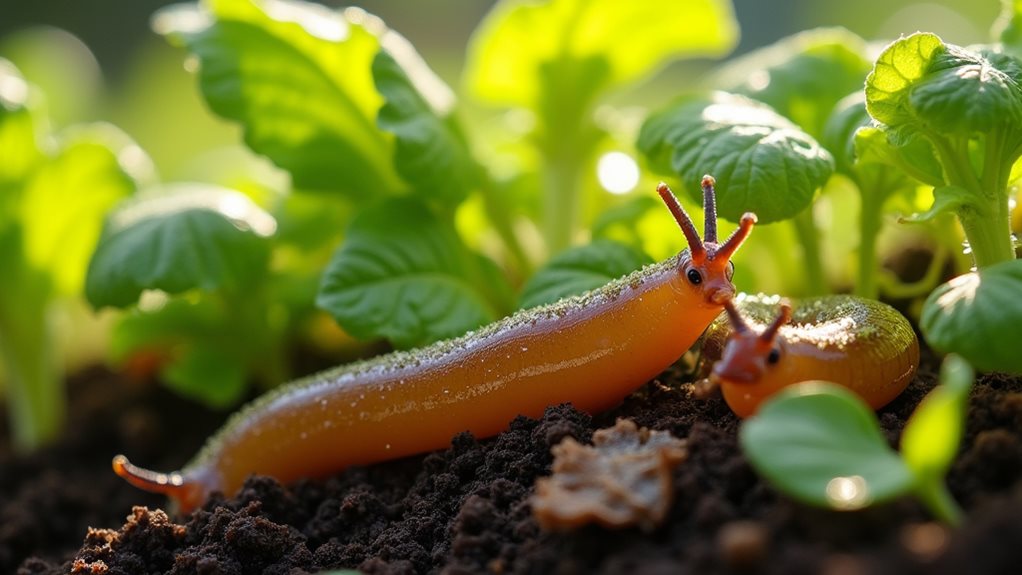
Certain plants are more vulnerable to slug damage, especially those with soft, tender tissues such as seedlings, young shoots, and freshly transplanted areas. Vegetables like lettuce, cabbage, and basil are frequently targeted because of their delicate leaves, while early-stage flowers like lilies and marigolds also suffer. In contrast, tougher plants like ferns, lavender, and herbs such as rosemary tend to repel slugs, making them less of a concern in your garden. Maintaining proper environmental conditions can also help reduce slug problems by making the area less attractive to pests.
Commonly Attacked Vegetables
Vegetables with soft, tender foliage and high moisture content are most vulnerable to slug attacks, making them prime targets in many gardens. These vulnerable plants, like lettuce, cabbage, basil, and strawberries, often suffer slug damage, with ragged holes and slime trails.
Recognizing these vulnerable plants helps you protect your garden from extensive slug damage.
Favorite Fragile Flowers
Fragile flowers, especially those with tender stems and delicate blooms, are among the most attractive targets for slugs in your garden. They often suffer significant slug damage, particularly during damp nights when seedlings and new transplants are most vulnerable.
Effective slug control strategies are essential to protect these plants from being eaten or severely damaged.
Edible Plants at Risk
Have you noticed how certain edible plants seem to fall prey more often than others in your garden? Slugs target tender, soft plants like lettuce, cabbage, and seedlings of herbs such as basil, parsley, and chives.
They often leave ragged holes and slime trails. Using a protective ring around vulnerable plants can help shield them from these persistent pests.
How Do I Attract Natural Predators to Control Slugs?
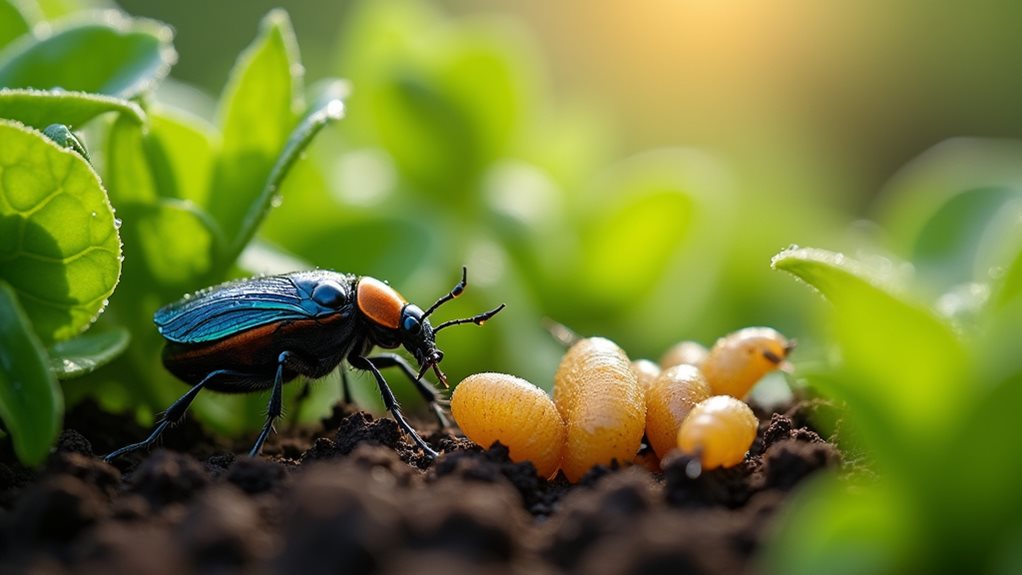
To effectively control slugs in your garden, attracting their natural predators is a crucial strategy. You can encourage beneficial insects like ground beetles and rove beetles through habitat creation, such as log piles, stone heaps, and dense ground cover.
Providing shallow water sources and avoiding pesticides further supports predators like frogs, hedgehogs, and birds, creating a balanced ecosystem.
What Physical Barriers and Traps Work Best?
Physical barriers and traps are essential tools in managing slug populations effectively, especially when used with other methods. Copper tape around garden beds creates a reaction that deters slugs. Beer traps attract and drown them. Plastic barriers, like cut bottles or pots, offer direct protection. Regular maintenance guarantees these barriers and traps remain effective. Incorporating house plants with orange flowers, such as Clivia or Kalanchoe, can also add visual appeal while helping to identify and monitor slug activity in your garden.
Which Organic Baits and Repellents Are Effective?
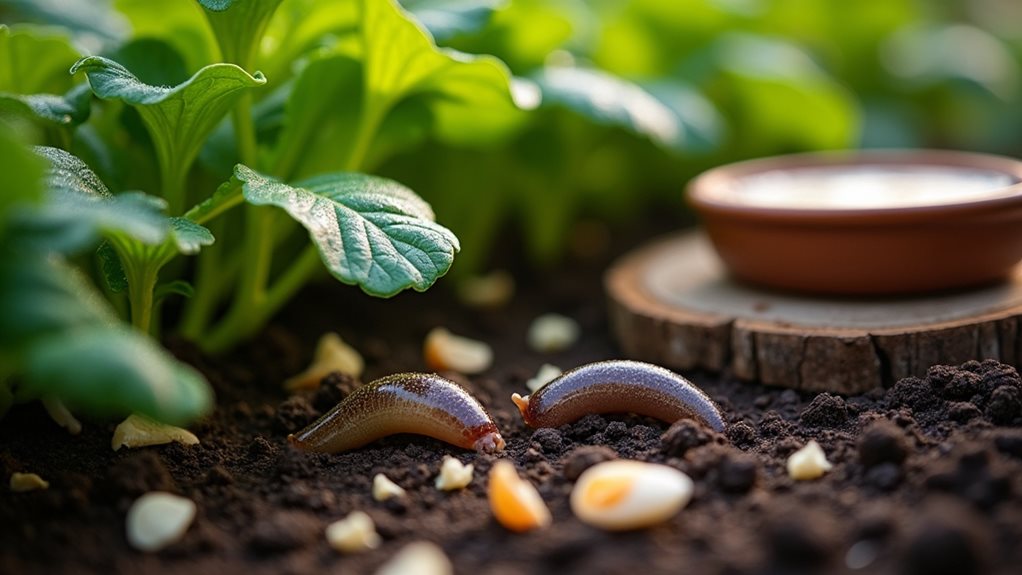
Using organic baits like shallow containers filled with beer or fermented brews can effectively attract and drown slugs, offering a simple yet practical solution.
Natural repellents such as coffee grounds or strong coffee sprayed around plants utilize caffeine’s deterrent properties, providing ongoing protection.
Applying crushed garlic or diatomaceous earth around vulnerable areas creates a physical and aromatic barrier that further discourages slugs from approaching your garden.
Organic Bait Types
Have you considered organic bait options that effectively attract and control slugs in your garden? Using slug bait with natural deterrents like beer or fermented brews can lure slugs into shallow containers, drowning them.
Sprinkling crushed eggshells, coffee grounds, or garlic around plants offers organic control, making your garden safer and pest-free through proven methods.
Natural Repellent Options
Natural repellents offer an effective, environmentally friendly way to protect your garden from slugs without relying on chemical pesticides.
Using coffee grounds or strong brewed coffee around plants introduces caffeine as a natural slug repellent.
Additionally, applying diatomaceous earth creates a physical barrier.
A dedicated slug repellent enhances overall protection, all supporting a healthy, chemical-free garden environment.
Application Techniques
What’re the most effective ways to apply organic baits and repellents to keep slugs at bay? Start by placing slug pellets or burying shallow containers filled with beer traps, which attract and drown slugs.
Sprinkle diatomaceous earth on soil after watering or dew, creating a physical barrier. These methods provide targeted, natural control to protect your garden.
How Can I Reduce Hiding Places and Keep My Garden Clean?
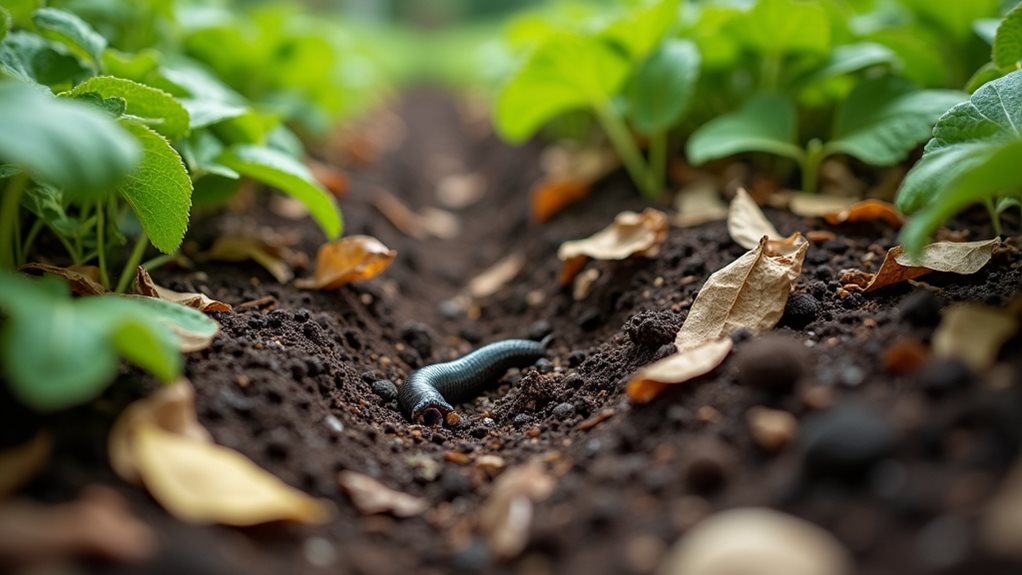
Reducing hiding places for slugs is essential for maintaining a healthy garden, as these pests thrive in dark, damp environments that provide shelter during the day.
To do this, keep your garden tidy by removing debris, old boards, and stones.
Trim overgrown plants, clear away decaying material, and eliminate dense ground cover to reduce hiding spots and discourage slug activity.
Additionally, ensuring proper garden microclimate by improving air circulation can help dry out damp areas that slugs favor.
How Should I Water to Discourage Slugs?
Water your garden early in the morning to allow the soil and plants to dry out before evening, which helps reduce the moist conditions that attract slugs.
Avoid watering at night or in the evening, as damp, dark environments encourage slug activity and feeding.
Using drip irrigation or soaker hoses can deliver water directly to the soil, minimizing surface moisture that creates an inviting habitat for these pests.
Implementing targeted watering methods also supports water efficiency, reducing unnecessary moisture that attracts slugs.
Water in Morning Only
Scheduling your watering sessions for early mornings can markedly reduce slug activity in your garden.
By watering early, the soil surface dries out completely overnight, creating less appealing conditions for slugs. Proper timing guarantees the soil remains dry, discouraging slug movement and feeding.
This naturally helps control their population while maintaining healthy, hydrated plants.
Minimize Nighttime Moisture
Watering your garden in the late afternoon or evening creates moist, dark conditions that are highly attractive to slugs, allowing them to thrive overnight. To discourage this, water early in the morning, giving the soil surface time to dry.
Using drip irrigation minimizes excess moisture, reducing damp conditions that invite slugs to hide and feed.
When and How Should I Protect Young Plants?
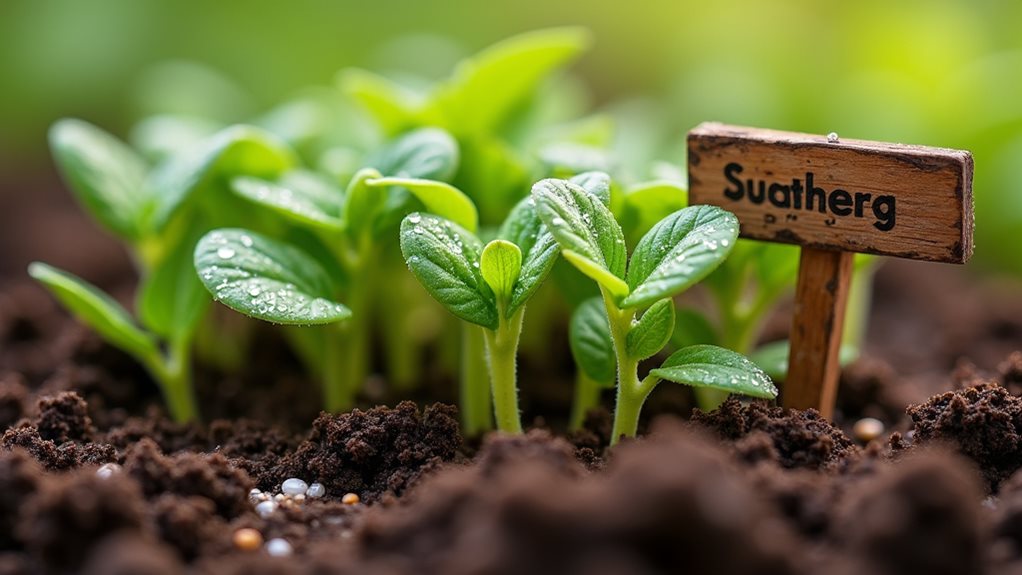
Young plants are particularly vulnerable to slug damage during their initial growth stages, so it’s essential to implement protective measures promptly. To protect your young plants, consider using barriers like copper strips or rings and placing cut-off plastic bottles as temporary shelters. These methods help safeguard young plants, reducing the risk of slug damage and supporting healthy growth from the start. Additionally, creating a layered barrier system with various deterrents can enhance long-term protection against pests.
How Do I Monitor and Adjust My Slug Control Strategies?
Monitoring slug activity regularly allows you to gauge the effectiveness of your control methods and identify new problem areas promptly. Keep a detailed garden log to track damage and control outcomes over time. Adjust strategies based on environmental conditions, such as increasing barriers after rain or sightings. Reapply traps and bait every few weeks or after weather changes to maintain control. Observing behavioral signs of under-stimulation in your garden’s ecosystem can help you tailor your management approach more effectively.
Final Note
Controlling slugs in your garden requires consistent effort and strategic planning. By understanding their habits, using physical barriers, encouraging natural predators, and maintaining a clean, well-watered environment, you can substantially reduce slug damage. Regular monitoring allows you to adjust methods effectively, ensuring your plants stay healthy. Implementing these practical steps not only protects your garden but also promotes a balanced ecosystem. With persistence and informed actions, you can manage slugs effectively and enjoy a thriving, pest-free garden.

Nathan McPhail is a garden and home DIY expert who writes practical, easy-to-follow advice for homeowners and gardeners. Through Yardique, he shares hands-on tips covering gardening, lawn care, landscaping, home improvement, repairs, tools, and outdoor living. His focus is on helping readers solve everyday household and yard problems with straightforward guidance, useful techniques, and practical solutions.