
To care for Zoysia grass, start by testing and adjusting your soil pH to at least 6.5, then remove weeds and aerate annually to promote healthy roots. Keep mowing at 0.75 to 1.5 inches with sharp blades, and water deeply about once a week, increasing during hot weather. Fertilize with a slow-release nitrogen in the growing season, and monitor pests like grubs regularly. Proper maintenance enhances lawn health, and continuing guides you toward a lush, resilient Zoysia lawn.
TLDR
- Conduct soil tests and adjust pH to ≥6.5 with lime; fertilize based on soil results for optimal growth.
- Mow at 0.75 to 1.5 inches with a sharp blade; remove thatch and aerate every 2-3 years to maintain turf health.
- Water deeply (1-1.25 inches weekly), preferably early morning, to promote deep roots and drought tolerance.
- Fertilize with slow-release nitrogen during active growth to enhance density and green color.
- Monitor for pests like white grubs and mole crickets; apply targeted treatments promptly to prevent damage.
How Do I Prepare My Zoysia Lawn for Healthy Growth?
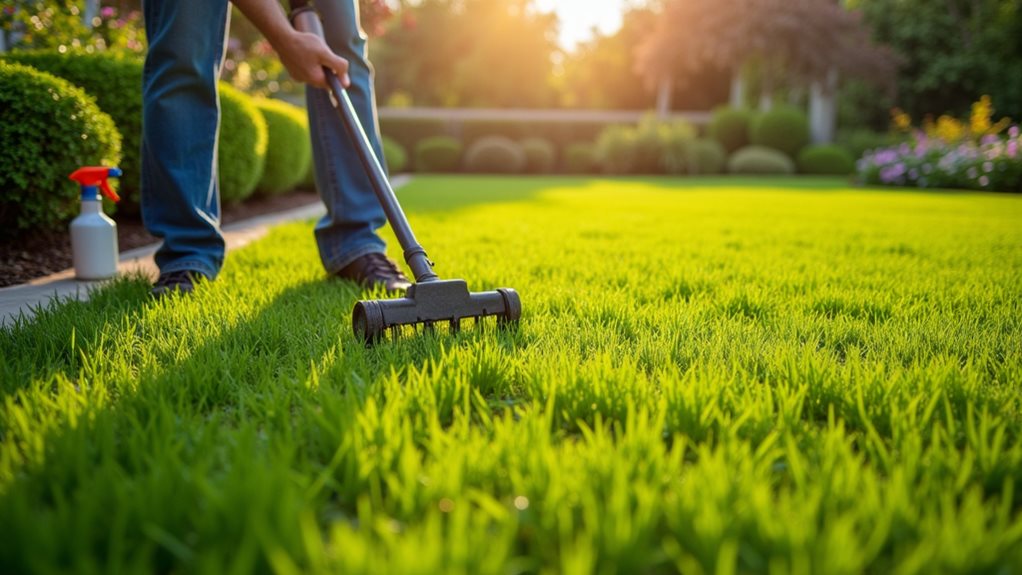
Preparing your Zoysia lawn for healthy growth begins with evaluating and optimizing the soil conditions. Conduct a soil test early in spring, then adjust the pH to at least 6.5 with lime if needed. Remove weeds and debris, aerate annually to improve soil drainage, and fertilize appropriately. Regular mowing and watering promote a resilient, thriving turf environment. Additionally, ensure proper drainage and soil health, as poor drainage can lead to root rot and other issues that hinder growth.
What Are the Best Mowing and Maintenance Practices for Zoysia?
Maintaining a healthy Zoysia lawn requires attentive mowing and consistent turf maintenance that support root development and vigor. Keep mowing height between 0.75 and 1.5 inches, using a sharp mower during active growth. Regular thatch removal through aeration every 2-3 years helps prevent disease, while proper mowing frequency and grass blade care promote overall turf health. Additionally, adjusting closet rod placement and ensuring proper support can enhance storage efficiency and prevent damage, similar to how correct mowing practices prevent turf issues.
How to Fertilize Zoysia for Dense, Green Turf
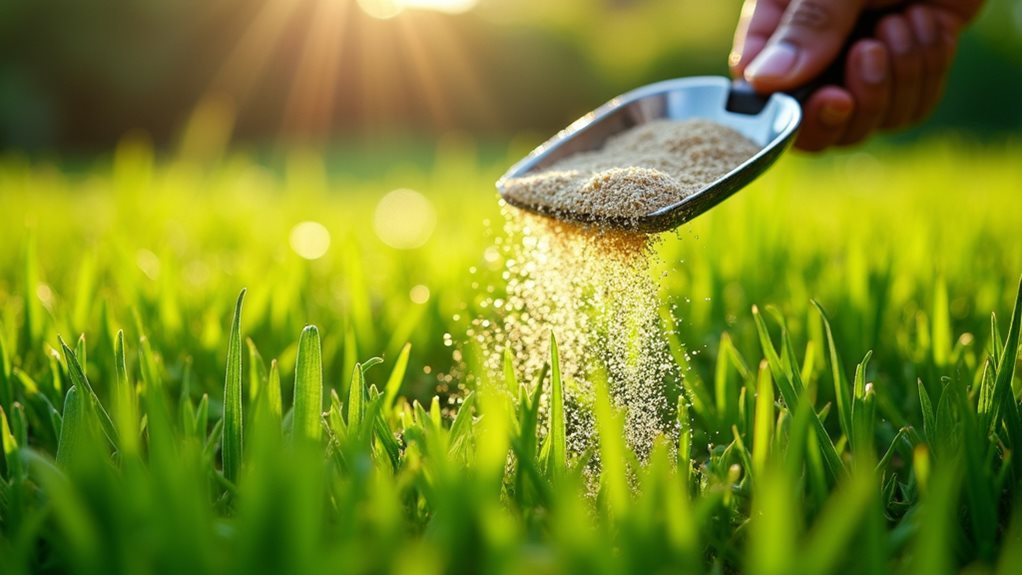
Fertilizing Zoysia properly is crucial for achieving a dense, lush green turf, and doing so at the right times guarantees ideal growth and health. During the active growing season, apply slow-release nitrogen fertilizer, about 0.5 to 1 pound per 1,000 square feet, after soil testing to adjust for nutrient deficiencies and soil pH. This guarantees maximum nutrient uptake and grass health. Additionally, using fertilizers with balanced cut and puncture protection can help maintain the turf’s resilience against pests and damage.
How to Choose the Right Zoysia Cultivar for Your Climate
Choosing the right Zoysia cultivar for your climate begins with understanding your regional conditions and how different varieties perform.
Consider turf health, growth rate, pest resistance, and drought or shade tolerance.
Refer to regional recommendations and sod selection advice, choosing cultivars like Meyer for pest resistance or Zeon for drought and shade, ensuring best adaptation and long-term success.
Additionally, understanding the proper application techniques for fertilizers and other treatments can help maintain optimal soil conditions for your chosen cultivar.
Watering Tips: How Often and How Much to Irrigate Zoysia
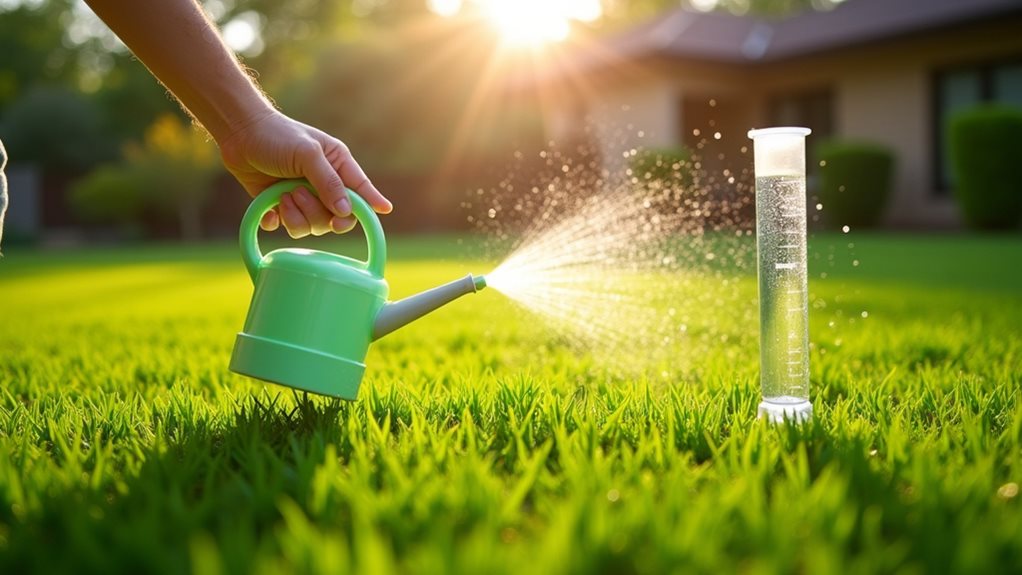
Proper watering is crucial for healthy Zoysia grass, so you should aim for about 1 to 1 1/4 inches of water weekly, including rainfall, with adjustments during hot weather. Water early in the morning to encourage deep roots and reduce fungal issues, but avoid overwatering, which can lead to yellow patches and weed growth. Watching for signs of drought stress and only watering when the soil feels dry will help ensure your lawn remains lush and resilient. Additionally, understanding the best time of day for watering can optimize water absorption and reduce evaporation.
Optimal Watering Frequency
Wondering how often you should water your Zoysia grass? Aim for deep watering about once a week, adjusting for weather and soil type, to maintain ideal soil moisture.
Early morning watering encourages soil absorption and supports healthy root growth.
Infrequent, thorough irrigation prevents drought stress and avoids issues like root rot or weed invasion.
Proper Irrigation Depth
To guarantee your Zoysia grass develops strong, deep roots, it’s essential to water it thoroughly rather than frequently with shallow applications.
Proper irrigation depth involves deep watering, providing 1 to 1 1/4 inches weekly during active growth and up to 2 inches in drought conditions.
This promotes turf health, maintains soil moisture, and optimizes your water schedule and irrigation practices.
Signs of Drought Stress
When Zoysia grass isn’t receiving enough water, it often shows clear signs of drought stress that can threaten its health and appearance. You might notice dull, gray-green color, thinning, and footprints that stay visible longer.
During dry periods, inadequate watering reduces deep root growth and increases evaporation, risking unhealthy turf in drought conditions.
How to Remove Thatch and Renovate Your Lawn
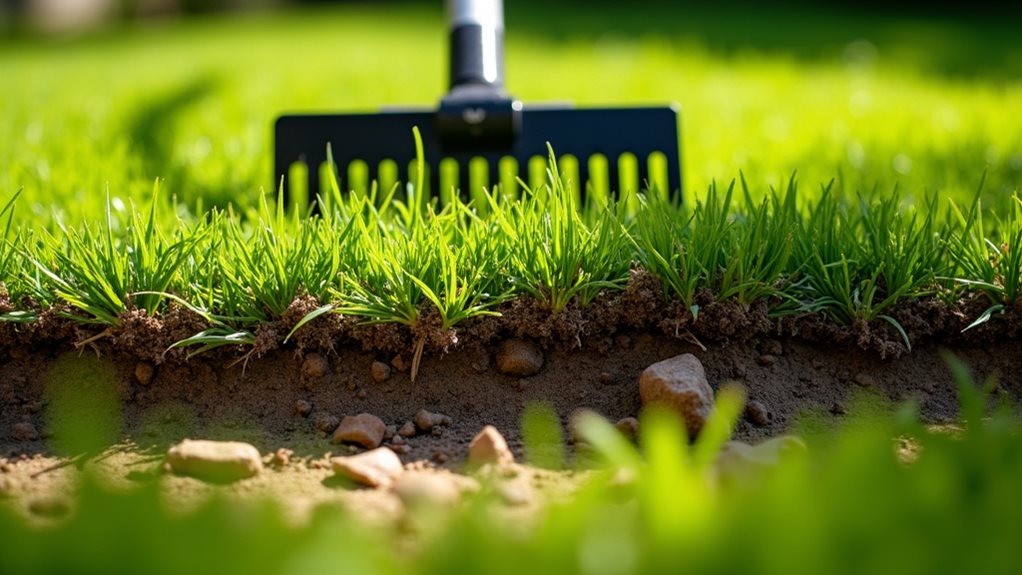
Removing thatch from your lawn is an essential step in maintaining healthy Zoysia grass, especially since a thick layer of decomposition can block water, air, and nutrients from reaching the soil. Use tools like a power rake or vertical mower for thorough dethatching, then aerate to improve soil health. Regular topdressing and proper lawn renovation practices help prevent excessive thatch buildup. Incorporating soil erosion prevention techniques such as mulching and planting cover crops can also contribute to a healthier, more resilient lawn.
Seasonal Lawn Care Tips: Spring, Summer, Fall, and Winter
Seasonal lawn care for Zoysia grass involves adjusting your maintenance practices to match each season’s specific needs, ensuring the grass remains healthy, resilient, and attractive year-round. Proper turf management includes timely mowing, fertilization, watering, and aeration.
Be vigilant about pests and weeds, applying seasonally appropriate treatments. It is important to modify care routines to support Zoysia’s growth and winter hardiness. Additionally, promoting a balanced, insect-rich ecosystem can naturally help manage pests and improve overall lawn health beneficial insects.
Troubleshooting Common Zoysia Problems: Weeds, Pests, and Disease
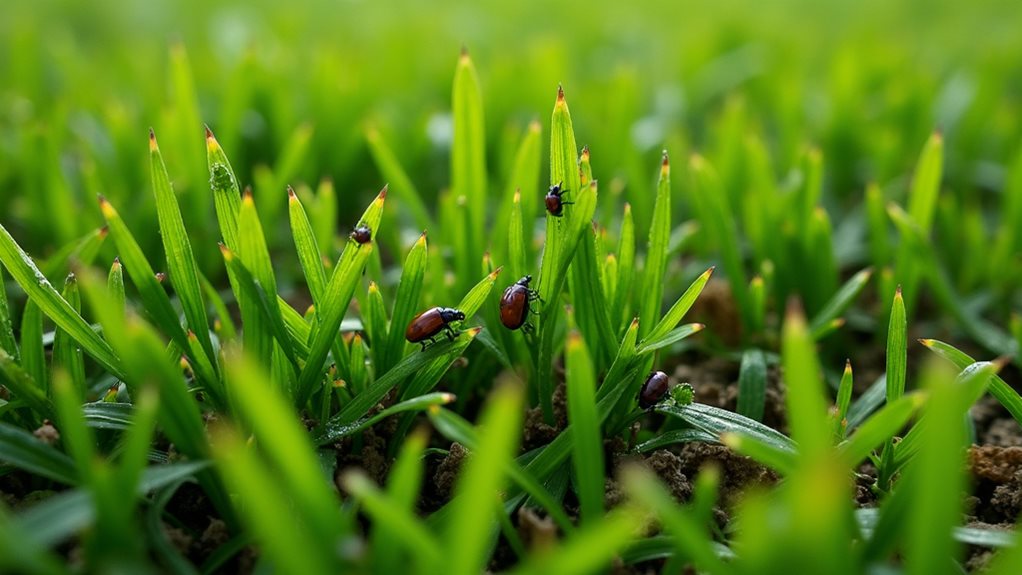
Addressing common problems in a Zoysia lawn requires vigilance and prompt action, as issues like weeds, pests, and diseases can quickly undermine its health.
To manage these, use pre-emergent herbicides regularly, control pests like white grubs with targeted pest control, and apply fungicides for fungal diseases.
Proper watering and early intervention are key to disease prevention and disease management.
FAQs: Your Top Questions About Zoysia Lawn Care
Many homeowners wonder about the best mowing practices, fertilization timing, and how to prevent diseases and pests on their Zoysia lawns.
Proper mowing, such as keeping the height between 0.75 and 1.5 inches and mowing frequently, helps maintain healthy grass.
Applying fertilizer at the right times supports vigorous growth.
Additionally, implementing disease and pest prevention strategies, like regular fungicide treatments, guarantees your lawn stays lush and resilient.
Best Mowing Practices
Mowing Zoysia grass correctly is essential for maintaining a healthy, dense lawn, and it involves more than just cutting the grass regularly.
You should mow at a grass height between 0.75 and 1.5 inches with sharp blades for a clean grass cutting.
Maintain mowing frequency that removes no more than one-third of the turf’s height to reduce grass stress and promote turf health.
Optimal Fertilization Timing
The timing of fertilization plays a crucial role in maintaining a healthy Zoysia lawn, as applying nutrients at the right moments guarantees peak growth and minimizes stress on the grass.
Based on soil test recommendations, apply nitrogen fertilizer with slow-release fertilizers during late spring, early summer, and late summer.
Proper soil testing guarantees ideal timing, promoting steady growth and overall plant health.
Disease and Pest Prevention
Preventing diseases and pests in your Zoysia lawn requires proactive strategies, as early detection and targeted actions can considerably reduce damage and maintenance costs. Monitoring pests like white grubs and mole crickets, applying white grub treatments, and using fungicides for fungal diseases help manage pest infestations.
Proper mowing, controlling thatch buildup, and disease prevention measures reduce disease susceptibility and improve overall pest control.
Final Note
By following these thorough care practices, you can guarantee your Zoysia lawn remains healthy, dense, and resilient throughout the year. Proper preparation, regular maintenance, and customized watering and fertilization routines are essential. Addressing pests and weeds promptly, along with seasonal adjustments, will prevent common issues. With consistent effort and informed decisions, your Zoysia grass will thrive, providing a lush, attractive scenery that enhances your outdoor space’s beauty and value.

Nathan McPhail is a garden and home DIY expert who writes practical, easy-to-follow advice for homeowners and gardeners. Through Yardique, he shares hands-on tips covering gardening, lawn care, landscaping, home improvement, repairs, tools, and outdoor living. His focus is on helping readers solve everyday household and yard problems with straightforward guidance, useful techniques, and practical solutions.