
To clean concrete effectively without causing damage, you should use a pressure of 2,000 to 3,000 PSI, depending on the surface and dirt level. For light cleaning, 1,500 to 2,000 PSI generally suffices, while stubborn stains may require up to 4,000 PSI. It’s vital to select the right nozzle and keep a safe distance to prevent etching or spalling. Staying within these ranges guarantees thorough cleaning and maintains your concrete’s integrity—learn more about optimizing your technique.
TLDR
- Residential concrete cleaning typically requires 2,000 to 3,000 PSI for effective results.
- Light cleaning tasks may need only 1,500 to 2,000 PSI to avoid surface damage.
- For stubborn stains, up to 4,000 PSI may be necessary, but caution is essential.
- Using PSI above 3,000 can risk etching or spalling of concrete surfaces.
- Proper nozzle selection and gradual pressure adjustments help achieve optimal cleaning without damage.
Why Using the Right PSI Prevents Damage and Ensures a Deep Clean
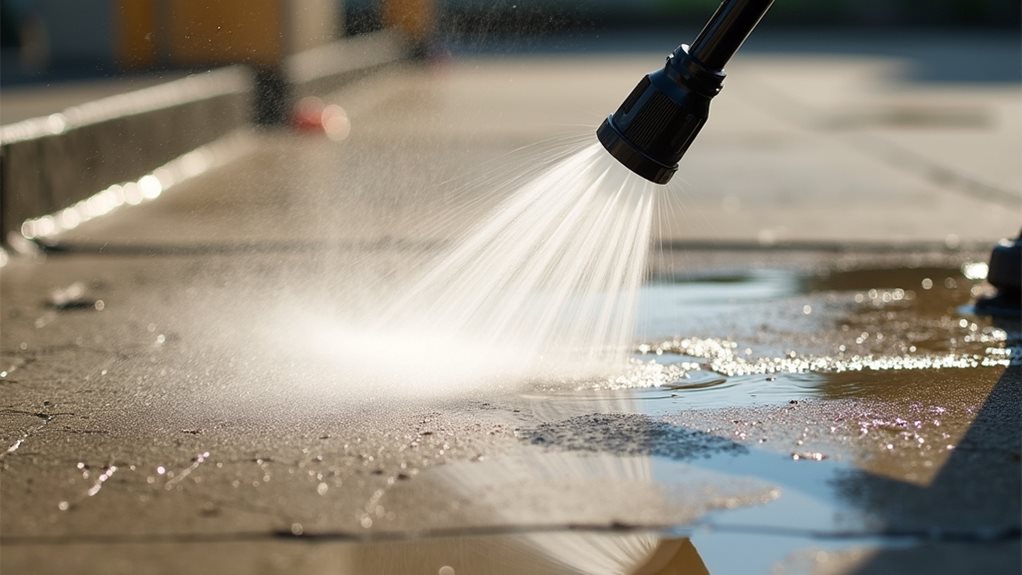
Using the right PSI setting when pressure washing concrete is essential because it directly impacts the effectiveness of the clean and the safety of the surface. Correct PSI prevents surface damage, like etching or spalling, while ensuring effective cleaning. Maintaining proper pressure allows you to remove dirt and stains thoroughly without weakening the concrete or risking surface pitting. Additionally, understanding the causes of leaks and the importance of regular maintenance can help prevent damage to surrounding surfaces during cleaning.
Recommended PSI Ranges for Cleaning Different Concrete Surfaces
Selecting the appropriate PSI for pressure washing concrete depends on the specific type of surface and the nature of the stains or dirt you’re targeting. For residential concrete cleaning, a pressure washer PSI within the 2,000 to 3,000 range is generally effective. Light cleaning tasks like patios may need 1,500 to 2,000 PSI. Stubborn stains often require up to 4,000 PSI. Additionally, understanding the best vegetables to grow can help in planning your gardening projects around your cleaning schedule to ensure your outdoor space is well-maintained.
How to Pick the Best Nozzle and Attachments for Your Pressure Washer
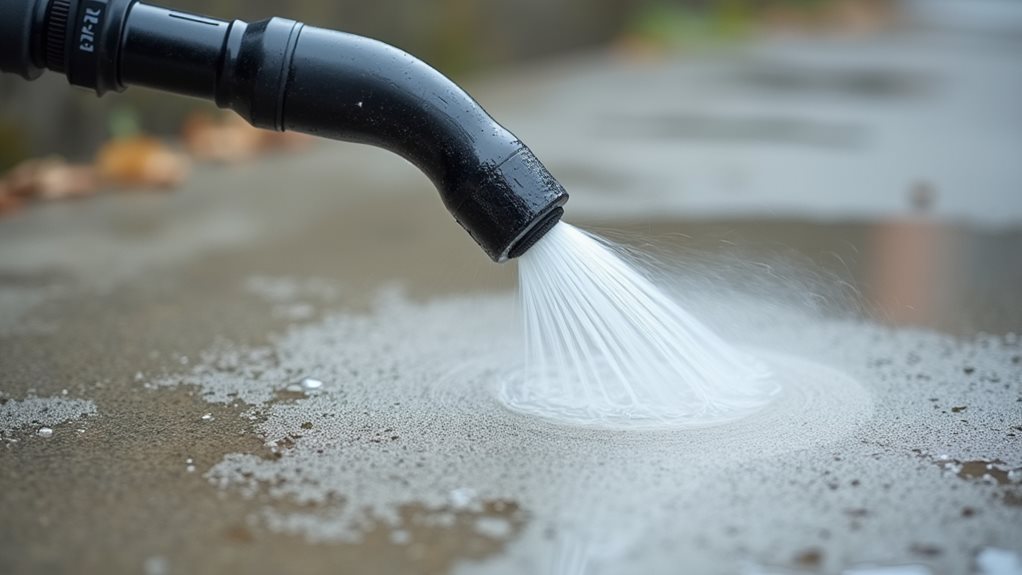
Choosing the right nozzle and attachments for your pressure washer is essential to achieve effective cleaning while protecting surfaces from damage.
For concrete, nozzle selection depends on PSI levels, with 25° nozzles commonly used for safety and efficiency.
Surface cleaner attachments help cover large areas evenly, reducing streaks and ensuring thorough cleaning without risking surface harm.
Additionally, selecting the appropriate nozzle can help prevent damage caused by over-pressurizing surfaces, ensuring your cleaning process is both safe and effective.
Avoid Common PSI Mistakes That Can Damage Your Concrete
Applying too much pressure during concrete cleaning can cause significant surface damage, so understanding the risks of high PSI levels is essential. Using PSI above 3,000 may lead to etching or spalling, especially with narrow spray nozzles. Sticking to the recommended range of 2,500 to 3,000 helps prevent surface damage while effectively cleaning your concrete. Additionally, selecting the appropriate pressure levels ensures the safety of your surface and prolongs its lifespan.
Tips for Safely Using PSI to Tackle Stubborn Stains and Soft Surfaces
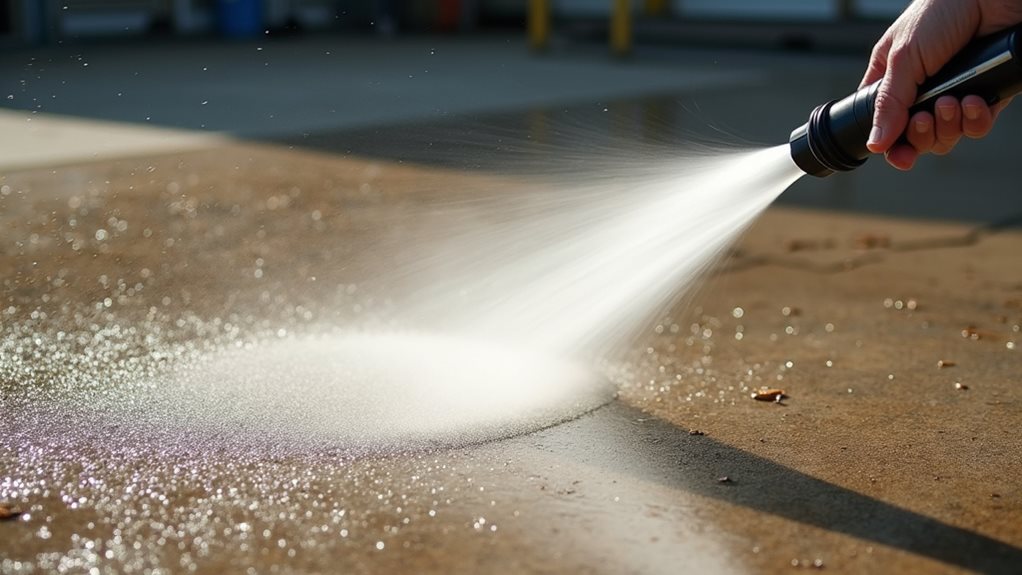
To safely use PSI when tackling stubborn stains and soft surfaces, it’s important to start with lower pressure settings and gradually increase as needed. Use between 2,500 to 3,000 PSI for tough stains, maintaining a safe distance and a 25° nozzle to prevent surface damage. Keep the nozzle moving to evenly distribute pressure and protect delicate concrete or stamped areas. Additionally, using physical barriers such as fences or protective covers can help prevent chickens from accessing and damaging the cleaned surfaces.
Adjusting PSI for Tough Stains and Delicate Surfaces
Adjusting PSI appropriately is essential for safely cleaning different surfaces, especially when dealing with tough stains or delicate materials.
For tough stains, you may need PSI levels between 3,000 and 4,000, using targeted nozzle angles.
However, delicate surfaces like stamped or sealed concrete require lower PSI, around 1,500 to 2,000, to prevent damage.
Utilizing the correct glove protection can also help prevent injuries and improve grip during pressure washing.
Final Note
Choosing the correct PSI for cleaning concrete is essential to achieve a thorough clean without causing damage. Generally, a range of 3,000 to 4,000 PSI works well for most surfaces, but adjusting based on stain severity and surface softness guarantees safety and effectiveness. Using the right nozzle and attachments, along with proper technique, helps prevent common mistakes. By understanding and applying these guidelines, you can efficiently restore your concrete’s appearance while safeguarding its integrity.

Nathan McPhail is a garden and home DIY expert who writes practical, easy-to-follow advice for homeowners and gardeners. Through Yardique, he shares hands-on tips covering gardening, lawn care, landscaping, home improvement, repairs, tools, and outdoor living. His focus is on helping readers solve everyday household and yard problems with straightforward guidance, useful techniques, and practical solutions.