
To safely pressure wash vinyl siding, choose mild weather in spring or autumn, avoiding extreme heat or direct sunlight to prevent damage. Use an adjustable pressure washer set between 500-600 PSI with a wide-angle (25-40°) nozzle, maintaining at least 12 inches from the siding. Protect plants and fixtures, start with low pressure, and spray downward to avoid water infiltration. Proper technique and equipment care guarantee a thorough clean without harm—continuing will reveal essential tips for effective, safe cleaning.
TLDR
- Choose mild weather conditions, avoiding extreme heat or direct sunlight, to prevent siding damage during pressure washing.
- Use a pressure washer with 500-600 PSI and a wide-angle nozzle, maintaining at least 12 inches distance from siding.
- Protect plants, windows, and fixtures before starting, and test the pressure on small areas to prevent damage.
- Apply appropriate, siding-safe detergents from bottom to top, allowing a 5-10 minute dwell time before rinsing.
- Inspect the siding afterward for damage, water intrusion, or warping, and re-seal or repair as needed for long-term protection.
When Is Power Washing Vinyl Siding Safe to Do?
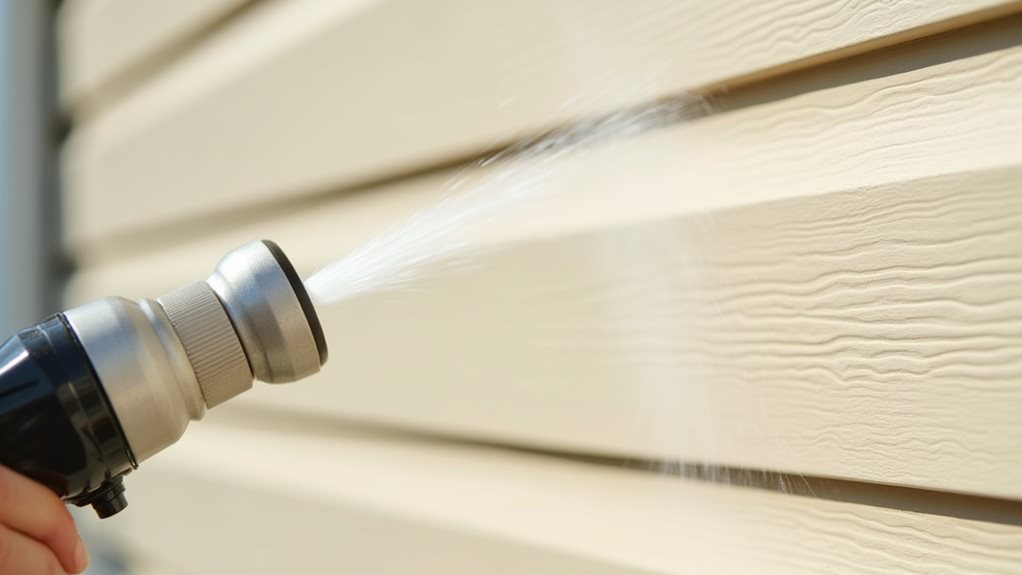
Power washing vinyl siding is safest when you choose the right timing and conditions, as these factors substantially influence the effectiveness and safety of the process.
Pressure washing is safe to do during mild weather, especially in spring or autumn, when temperatures are moderate.
Avoid extreme heat or direct sunlight, and guarantee the siding is dry and debris-free for maximum safety and results.
Additionally, ensure your HVAC system is functioning properly and not contributing to issues like frost buildup or system inefficiency, which could affect how safely and effectively you can clean your siding.
How to Prepare Your Home and Equipment for Pressure Washing
Before you begin pressure washing your vinyl siding, taking the time to properly prepare your home and equipment can make a significant difference in safety and effectiveness.
Cover nearby plants, windows, and fixtures with protective coverings.
Make sure your pressure washer has adjustable PSI settings, ideally between 500-600 PSI.
Check hoses and test on a small area to prevent damage.
Additionally, ensure your pressure washing activities do not disturb local wildlife, including insects like spiders that may inhabit the area.
Choosing the Right Pressure and Nozzle for Vinyl Siding
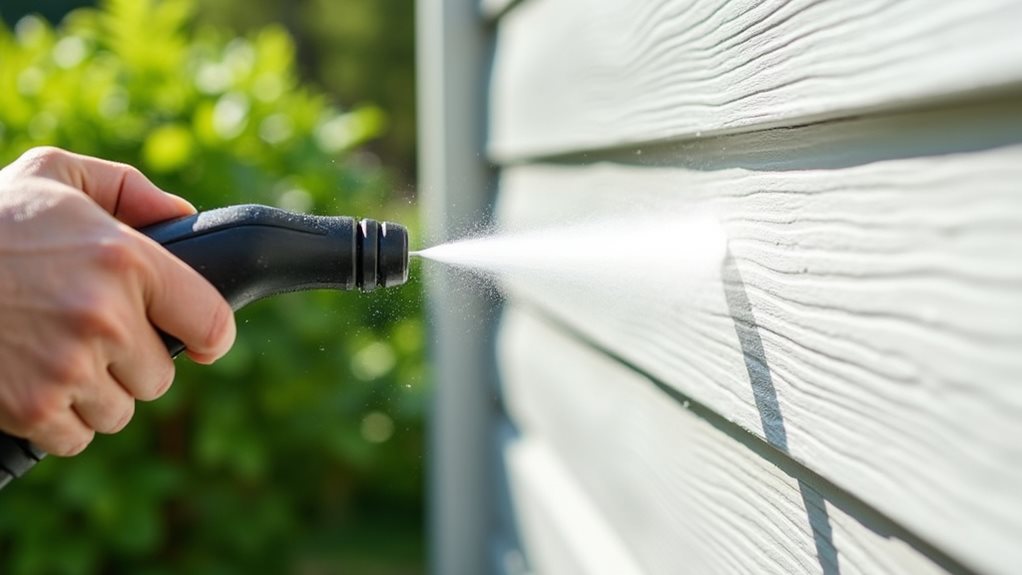
Selecting the appropriate pressure and nozzle settings is essential for cleaning vinyl siding effectively and safely. You should use a pressure of 500-600 PSI and attach a wide-angle spray nozzle (25-40 degrees) to distribute water evenly. Keep the nozzle at least 12 inches from the siding to prevent damage, ensuring a safe, thorough clean. Additionally, inspecting for obstructions or debris around the siding can help avoid potential damage during pressure washing.
Applying Detergents Effectively for a Deep Clean
Applying detergents effectively is essential for achieving a deep clean that removes dirt, mildew, and stains without damaging your siding. Use specialized detergents labeled safe for vinyl siding, applying from the bottom upward with smooth, overlapping strokes for even coverage.
Allow the detergent to dwell for 5–10 minutes, then rinse thoroughly from top to bottom for best results.
Techniques to Pressure Wash Without Damaging Your Siding
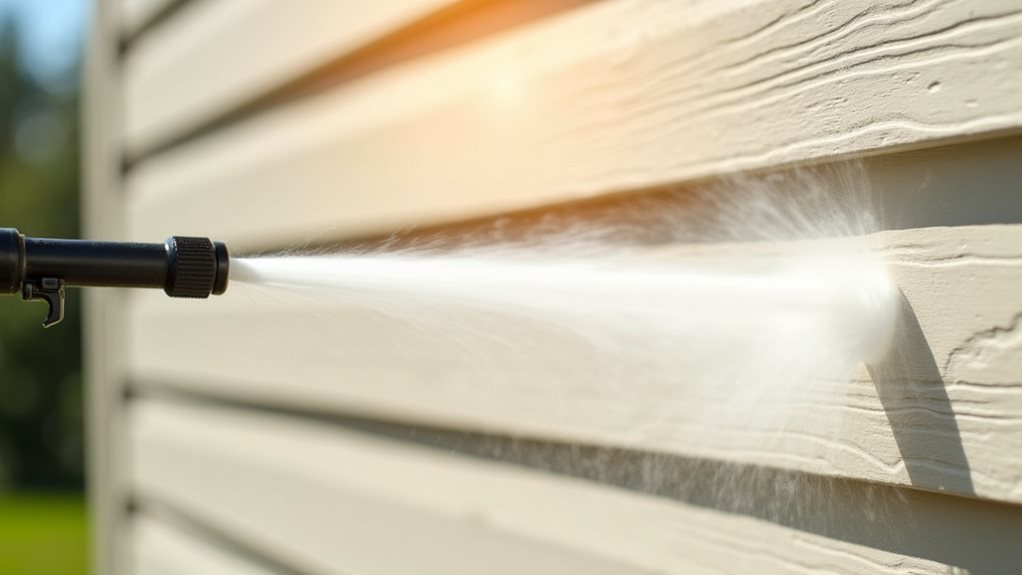
Maintaining a proper distance of at least 12 inches from the siding and using a wide spray nozzle helps prevent damage during pressure washing. Starting with a low pressure setting and gradually increasing it, while always spraying downward, guarantees you clean effectively without harming the material. Being cautious around vents, fixtures, and peeling paint further minimizes the risk of water intrusion or surface damage. Additionally, monitoring environmental factors like temperature and humidity during cleaning ensures the siding isn’t subjected to conditions that could weaken or damage it.
Maintain Proper Distance
Keeping a consistent distance between your pressure washer nozzle and the vinyl siding is essential to prevent damage. Maintain at least 12 inches of space, using a wide spray nozzle to distribute pressure evenly.
Start with low pressure, around 500-600 PSI, and gradually move the wand closer if needed, ensuring the pressure stays controlled to protect your siding.
Use Correct Nozzle
Choosing the right nozzle is key to avoiding damage when pressure washing vinyl siding. Use a wide-angle nozzle, such as a 25-40 degree, to reduce pressure and prevent dents.
Keep the pressure low, around 500-600 PSI, and maintain a minimum distance of 12 inches.
Always spray at a downward angle for safe, effective cleaning without risking damage.
Post-Cleaning Inspection and Maintenance Tips
After you finish pressure washing your vinyl siding, it’s essential to conduct a thorough inspection to identify any potential issues that may have arisen during the cleaning process. Check for damage like cracks or warping, and look for signs of water infiltration behind the siding. Regular maintenance and re-inspection help prevent water damage and preserve your siding’s long-term durability. Additionally, inspecting for proper sealing around joints and edges ensures that moisture does not seep in and cause mold or rot.
Final Note
Pressure washing vinyl siding can effectively restore its appearance when done carefully, following proper techniques and safety measures. Always assess weather conditions, select appropriate equipment, and apply detergents correctly to prevent damage. Regular inspections and maintenance after cleaning help preserve siding integrity and prolong its lifespan. By adhering to these guidelines, you guarantee a thorough cleaning that enhances your home’s curb appeal without risking costly repairs or surface damage.

Nathan McPhail is a garden and home DIY expert who writes practical, easy-to-follow advice for homeowners and gardeners. Through Yardique, he shares hands-on tips covering gardening, lawn care, landscaping, home improvement, repairs, tools, and outdoor living. His focus is on helping readers solve everyday household and yard problems with straightforward guidance, useful techniques, and practical solutions.