
Your plant’s leaves curl when they’re stressed—over‑watering makes them limp and yellow with downward folds, while dry soil forces upward, tight tubes as they conserve moisture; tiny sap‑sucking pests like aphids, thrips, or whiteflies cause cupped edges and specks; extreme heat, drafts, or sudden light changes trigger protective rolling; nutrient gaps, especially magnesium or calcium, produce interveinal chlorosis and curling; and diseases such as peach leaf curl or powdery mildew add reddish puckers or spots. Adjust watering, improve drainage, inspect undersides, balance nutrients, and control temperature, then you’ll see the problem ease and learn more solutions.
TLDR
- Check moisture: dry soil causes upward, tight curls; soggy soil leads to limp, yellowing leaves with downward curls.
- Inspect undersides for tiny sap‑sucking pests (aphids, thrips, whiteflies) that cause curling and yellow specks.
- Assess temperature and humidity: heat above 80 °F, low humidity, or sudden drafts trigger protective leaf rolling.
- Look for disease signs: peach leaf curl, powdery mildew, or anthracnose produce specific lesions and abnormal curling.
- Verify nutrients: magnesium or calcium deficiencies cause interveinal chlorosis and curling; correct with foliar sprays or soil amendments.
Identify the Main Leaf‑Curl Trigger in Your Garden
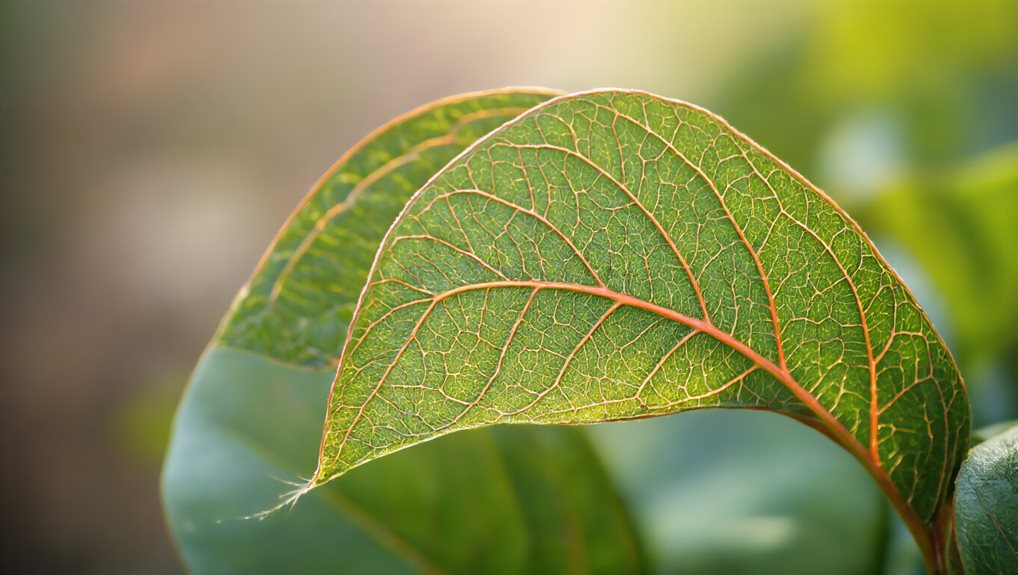
What’s causing your garden’s leaves to curl? First, inspect undersides for tiny pests—aphids, thrips, whiteflies—because their sap‑sucking creates tight tubes and yellow specks.
Next, consider heat stress above 80°F, which forces leaves to roll inward for moisture conservation.
Finally, rule out uniform herbicide drift or nutrient deficiencies, noting that most curling stems from environmental factors rather than nutrition. wet spring conditions can also cause leaf rolling in peppers, eggplants, and tomatoes. Insulation of roots around drought stress can further contribute to curling in certain soils, and recognizing pest pressure helps in targeting control measures.
Spot Leaf‑Curl Signs of Over‑Watering and Dry Out Soil
Typically, when you notice leaves curling upward into tight tubes while the soil feels light and dry, it signals that the plant is struggling to conserve moisture. You’ll also see pale, crisp tips, dry soil pulling away from pot edges, and a wooden stick left dusty. In addition, overwatering produces limp, yellowing foliage, downward curls, and soggy soil that feels heavy and may emit a sour odor. Root health can decline if signs are ignored, which further reduces the plant’s ability to uptake water.
Detect Under‑ and Over‑Watering and Restore Proper Moisture
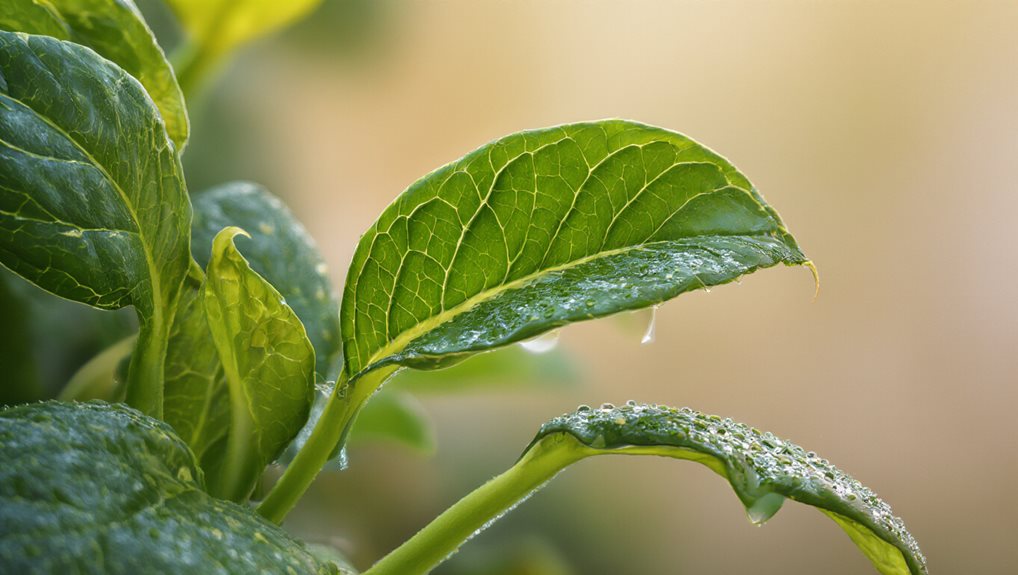
How can you tell whether a plant is thirsty or drowning, and what steps should you take to bring its moisture levels back to balance? Check leaf posture: soft, limp curls and yellow bases signal overwatering, while upward‑curled, crisp edges indicate dryness.
Feel pot weight—wet soil stays heavy, dry soil feels light.
Adjust by improving drainage, letting the top third dry, bottom‑watering when needed, and flushing salts if buildup appears.
Additionally, observe signs of stress from pests or environmental factors such as heat or low humidity, and address those conditions to support consistent moisture uptake. toad
Recognize Pest‑Induced Leaf Curl and Apply Safe Treatments
After checking moisture, the next step is to look for pests that can cause leaf curling. Examine undersides for whiteflies, aphids, leafhoppers, thrips, or mealybugs; note cupped edges, thickened or yellowed veins, and stunted growth. Treat infestations with weekly neem oil or organic super‑spraying oil, introduce ladybugs, and remove infected plants to halt viral spread. Water‑wise Landscaping practices can help reduce future pest pressure by promoting healthy, drought‑tolerant growth.
Assess Temperature & Light Stress That Cause Leaf Curl
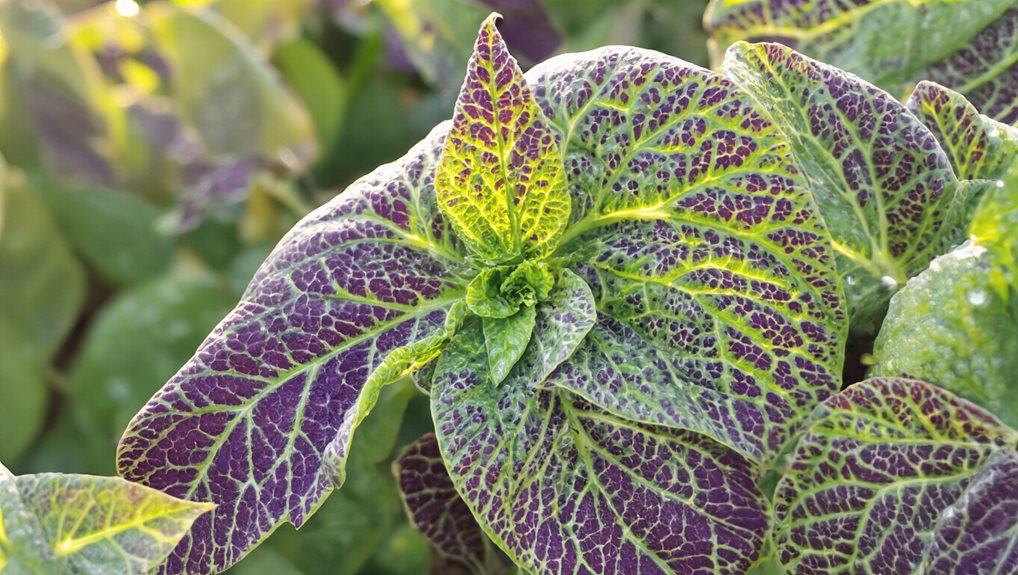
Ever wondered why your plant’s leaves twist upward or droop under certain conditions? Sudden temperature swings—cold drafts from windows or hot air from vents—disrupt water flow, causing protective curling, while intense direct light forces leaves to fold upward to limit exposure.
High heat pulls moisture faster than roots can replace it, producing papery, scorch‑marked edges.
Low humidity dryens air, making edges crisp and curled.
Adjust placement, moderate light, and maintain stable temperature and humidity to keep your foliage calm and thriving.
Diagnose Common Leaf‑Curl Diseases and Prune or Treat Them
What’s causing those twisted, discolored leaves?
Spot peach leaf curl by reddish puckers and gray spores,
celery anthracnose by sunken brown lesions and downward twists,
apple powdery mildew or scab by red‑yellow curling,
and pest‑induced curling from aphids or spider mites.
Examine stems and undersides, prune infected shoots, then apply copper fungicide, neem oil, or insecticidal soap as appropriate.
Fix Magnesium and Other Nutrient Deficiencies Quickly
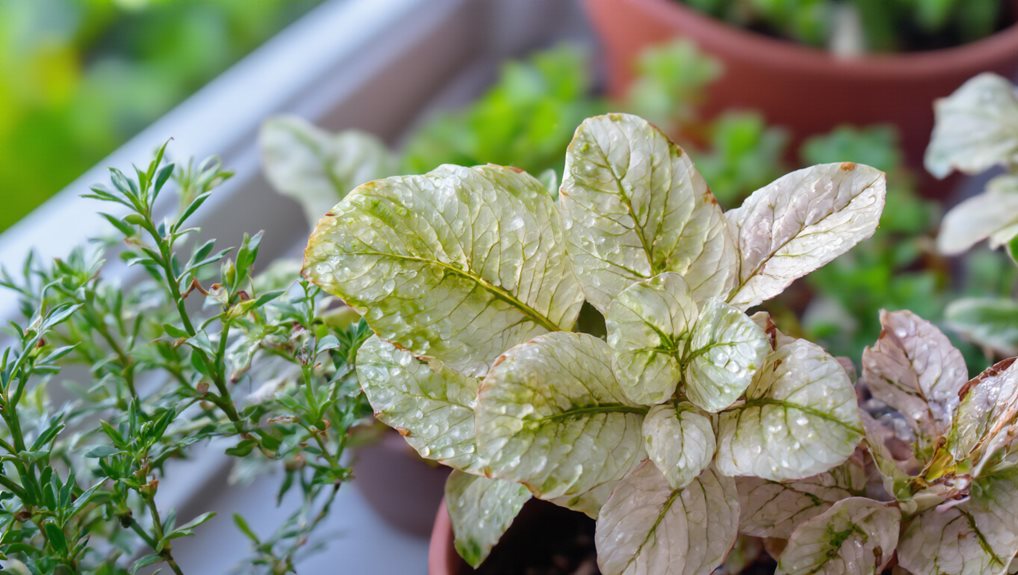
Twisted, discolored leaves often signal a nutrient imbalance, and once you’ve pruned away disease‑affected tissue, the next step is to address the underlying deficiencies that cause those symptoms. Apply Epsom‑salt foliar sprays or chelated magnesium drench for rapid uptake, adjust pH with dolomitic lime, balance potassium‑rich fertilizers, and monitor older leaves for interveinal chlorosis, ensuring regular tissue tests keep magnesium above 1 mg/g. Calcium-related rot in fruiting vegetables should be prevented by maintaining steady calcium levels in the tissue through consistent watering and soil calcium sources, and by avoiding large, rapid soil pH swings. Calcium management helps reduce Blossom End Rot risk and supports overall fruit quality, especially in tomatoes and peppers.
Resolve Physical Issues: Root‑Binding, Compaction, Transplant Shock
You’ll notice that tightly coiled or circling roots, slow drainage, and a pot that feels unusually heavy are clear signs you need to repot, loosen the soil, and improve aeration.
By gently teasing out the root ball, trimming any dead or damaged fibers, and adding a well‑draining mix, you restore oxygen flow and nutrient uptake.
Once the plant is settled in a larger container with proper spacing, monitor its recovery and adjust watering to prevent transplant shock.
Detection & Transplant
Ever notice your plant’s leaves curling, wilting, or yellowing after a recent move? Detect transplant shock by checking for limp stems, yellow tips, leaf drop, and stunted growth; root‑binding shows circling roots and reduced uptake, while compacted soil hardens and limits penetration.
When you repot, keep the root ball moist, avoid excess water, match soil texture, handle foliage gently, and choose cooler periods to lessen stress.
Soil Loosening & Aeration
After you’ve identified transplant shock and root‑binding, the next step is to address the physical condition of the soil itself. Loosen compacted potting mix by poking holes or using a hand‑driven spike, which breaks root tension and improves aeration; add earthworms or organic matter to sustain pore space. Regular plug aeration restores oxygen, prevents waterlogging, and encourages deeper root growth.
Weekly Checklist to Prevent Leaf Curl and Keep Leaves Flat
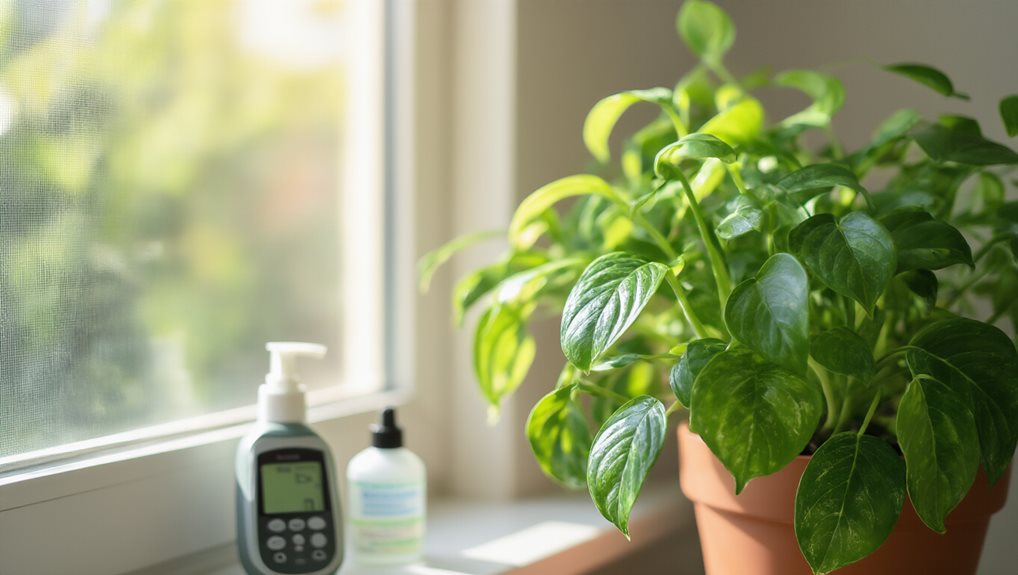
You should start each week by feeling the top inch of soil; if it’s dry, water until excess drains and let it partially dry out before the next check. Then, examine every leaf—especially the undersides—for insects, spotting, white, or,, and rinse any affected foliage with a gentle shower.
Together, these simple steps keep moisture balanced and pests at bay, preventing the curls that signal trouble.
Soil Moisture Check
How often you check your soil’s moisture can make the difference between thriving foliage and curled leaves. Test two inches down before each watering, using a wooden stick or feeling pot weight; dry dust or a light pot signals underwatering, while soggy soil, pooling water, or sour odors warn of overwatering. Consistent weekly checks reveal drying patterns, allowing you to adjust watering, prevent stress, and keep your plant community thriving.
Pest Inspection Routine
A consistent weekly pest inspection routine is essential for catching infestations early enough to stop leaf curl and keep foliage flat, so set aside a specific day and time each week, gather your flashlight, magnifying glass, and camera, then walk through the greenhouse or growing area while checking leaves, stems, and roots for webs, spots, or sticky residues; focus on undersides and new growth where pests first appear, and don’t forget to examine entry points, cracks, and shadowed corners with the light, because identifying even a few insects now can prevent widespread damage later.
Record counts, photos, and locations on your inspection sheet, replace sticky cards, and compare trends weekly to stay ahead of problems and protect your plants.
Final Note
By pinpointing the exact cause—whether it’s water imbalance, pest activity, temperature stress, disease, or nutrient deficiency—you can take targeted action to restore healthy foliage. Regular monitoring, proper watering, timely pest control, and balanced nutrition will keep leaves flat and vibrant. Implement the weekly checklist to catch issues early, and adjust care as needed; consistent, informed maintenance prevents future curling and promotes robust plant growth.

Nathan McPhail is a garden and home DIY expert who writes practical, easy-to-follow advice for homeowners and gardeners. Through Yardique, he shares hands-on tips covering gardening, lawn care, landscaping, home improvement, repairs, tools, and outdoor living. His focus is on helping readers solve everyday household and yard problems with straightforward guidance, useful techniques, and practical solutions.