
Before using a pressure washer for the first time, make sure you wear protective gear, connect all hoses securely, and check the water source. Start with low pressure, hold the nozzle at least 6 inches from the surface, and test on an inconspicuous area. Use the correct nozzle for your surface and work from top to bottom with overlapping strokes. Proper setup and technique prevent damage, and becoming proficient in these steps will set you up for successful cleaning—continue to investigate the details for best results.
TLDR
- Wear protective gear and ensure a steady water supply before starting.
- Connect hoses securely, turn on water, and build pressure before use.
- Select the appropriate nozzle and test spray on a hidden area.
- Start with low pressure, maintaining 6-10 inches distance, and use overlapping strokes.
- After cleaning, disconnect hoses, dry equipment, and perform maintenance checks.
Essential Safety Tips and Prep Before Pressure Washing
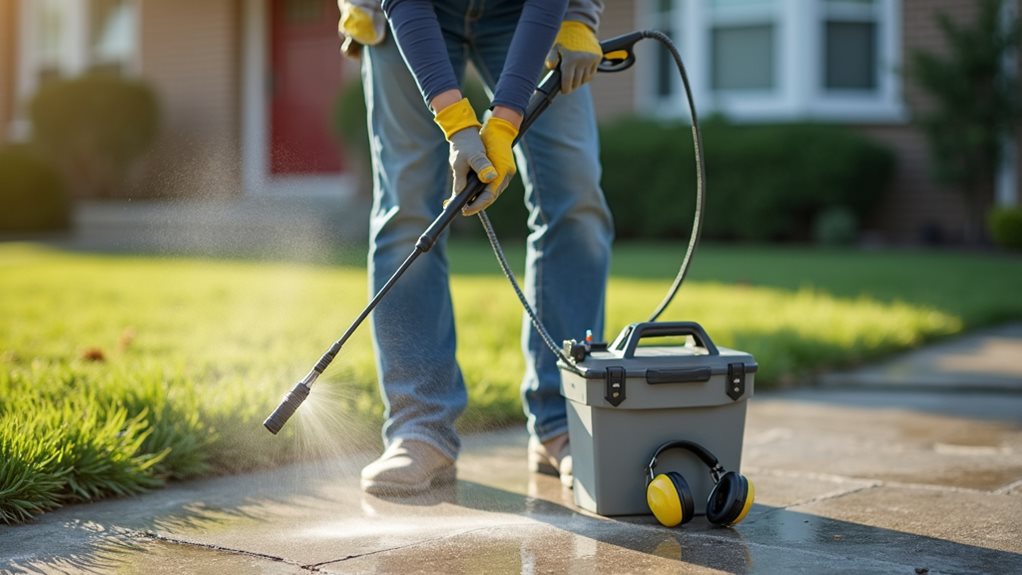
Before you begin pressure washing, it’s essential to prioritize safety and proper preparation. Wear protective gear like boots and safety glasses. Make certain you have a steady water source. Check your hose for leaks, prepare the power, turn on the water, and connect it securely. A clean, dry surface reduces the risk of slipping and helps prevent spider infestations. Following pressure washer safety guidelines helps prevent injuries and guarantees effective cleaning.
How to Set Up Your Pressure Washer Safely and Correctly
Setting up your pressure washer correctly is essential for safe and effective operation.
Start by connecting the water inlet securely to the garden hose and turning on the water supply, ensuring steady flow.
Attach the soap injector if needed.
Select and attach the appropriate nozzle.
Verify all connections are tight, and build pressure before use.
Always test spray in a safe area.
Be sure to check for any engine issues and perform necessary maintenance before starting to prevent operational problems.
How to Choose the Right Nozzle and Pressure Settings for Your Surfaces
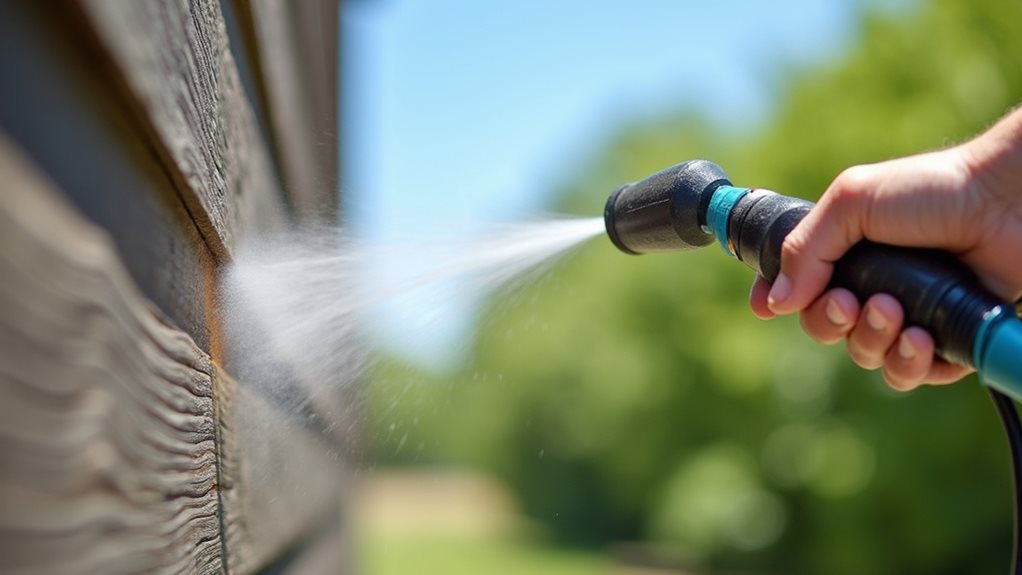
Choosing the right nozzle and pressure settings is essential to achieving effective cleaning without damaging surfaces. Your nozzle options include wider spray angles for gentle cleaning and narrower angles for tougher stains.
Adjust the pressure by changing nozzles or increasing distance, controlling water flow and spray pattern.
Always start with low water pressure and hold the high-pressure hose at least 6 inches away for safe, efficient surface cleaning.
Step-by-Step Tips for Effective, Damage-Free Pressure Washing
To clean effectively without causing damage, start with the lowest pressure nozzle and gradually increase the pressure as needed.
Always guarantee a safe distance of 6-10 inches from the surface and test spray in an inconspicuous area first.
Using controlled, overlapping strokes from top to bottom assures even coverage while protecting the surfaces you’re cleaning.
Proper Nozzle Selection
Selecting the right nozzle is essential for achieving effective cleaning without causing damage to surfaces. To do this, carefully choose the proper nozzle based on the cleaning surface.
Attach the nozzle securely by pulling back the collar and inserting it into the pressure washer.
Start with low-pressure settings for initial testing.
Keep a safe distance of 6-10 inches, then adjust the nozzle or pressure settings gradually for ideal results.
Safe Operating Techniques
Operating a pressure washer safely is key to preventing damage to surfaces and ensuring your own safety during use.
Follow safe operating techniques by checking that the water is flowing properly and the connection is tight.
Start with the lowest pressure, test spray on an inconspicuous area, and maintain a steady distance of 6 to 10 inches.
Use controlled overlapping strokes with the right pressure nozzle.
Post-Wash Care and Maintenance for Your Pressure Washer
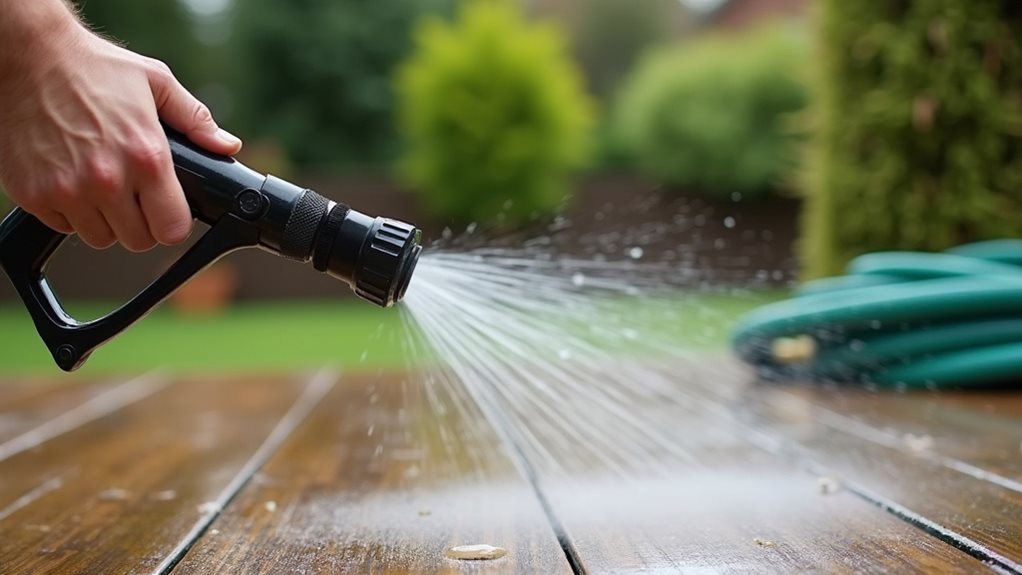
Proper storage, regular maintenance checks, and safe handling are vital to keep your pressure washer in good condition. After each use, make certain to disconnect hoses and nozzles, wipe down the exterior, and store it in a dry, protected area to prevent rust and damage. Additionally, inspecting and maintaining the components and systems can help ensure optimal performance and extend the lifespan of your pressure washer.
Proper Storage Techniques
After finishing your pressure washing tasks, it’s essential to follow proper storage techniques to guarantee your equipment remains in good condition.
Store hoses and connections carefully, and drain or relieve pressure from hoses and pumps, especially before winterizing.
Keep your pressure washer indoors if possible, and regularly inspect for damage or leaks to prevent costly repairs.
Regular Maintenance Checks
Performing regular maintenance checks on your pressure washer is essential to guarantee its longevity and reliable performance.
You should inspect the hose, seals, and parts for cracks or leaks, and check the system for debris.
Always drain or relieve water pressure before storage, and clean the water inlet to maintain proper water flow, ensuring your equipment stays in top condition.
Safe Equipment Handling
Have you ever wondered how to make certain your pressure washer remains safe and functional after each use? Proper handling involves turning off and unplugging the machine, releasing residual pressure, and disconnecting hoses to prevent leaks.
Inspect hoses and nozzles for wear, store the pressure washer properly in a dry place, and perform routine maintenance to guarantee safety precautions and proper setup are maintained.
Common Problems and How to Troubleshoot Your Pressure Washer
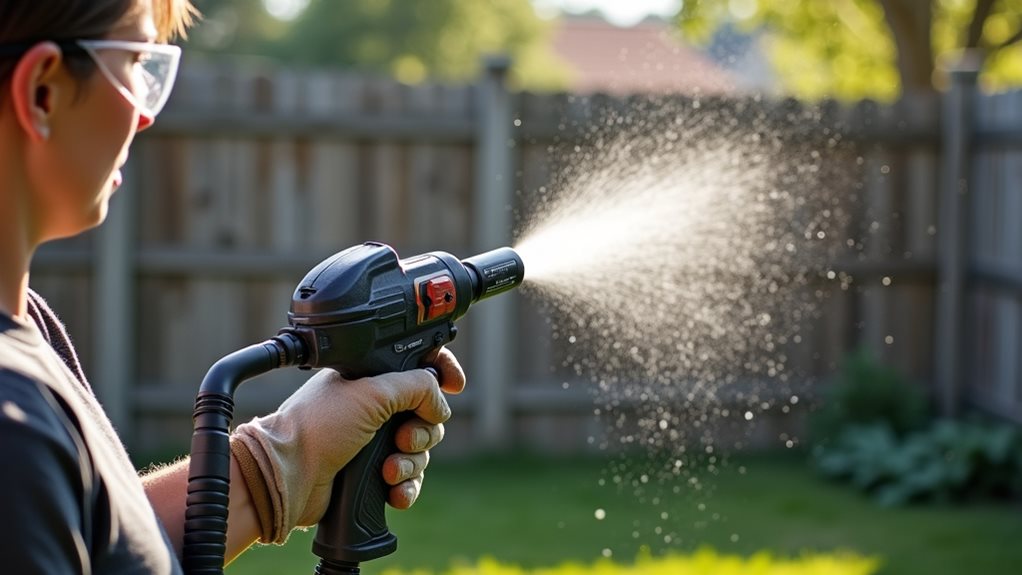
When your pressure washer isn’t functioning as expected, identifying the root cause can save you time and prevent further damage. Check hose connections and water supply for low water pressure.
Inspect for leaking hoses or clogged nozzles, and guarantee proper maintenance. Sudden pressure drops may signal pump issues or debris.
These issues require cleaning, tightening, or replacing components for ideal pressure output. Additionally, ensure the water source is clean and free of contaminants, as dirty water can clog filters and reduce performance, similar to how duck excrement can pose health risks to rabbits if shared in an environment.
Final Note
By following these safety tips, proper setup procedures, and selecting the appropriate nozzle and pressure settings, you can achieve effective pressure washing without damaging surfaces. Regular maintenance and troubleshooting guarantee your equipment remains reliable and safe to use over time. Remember to always prioritize safety and technique to maximize results and longevity of your surfaces and tools. With careful preparation and execution, pressure washing can be a practical, efficient way to maintain your property’s appearance.

Nathan McPhail is a garden and home DIY expert who writes practical, easy-to-follow advice for homeowners and gardeners. Through Yardique, he shares hands-on tips covering gardening, lawn care, landscaping, home improvement, repairs, tools, and outdoor living. His focus is on helping readers solve everyday household and yard problems with straightforward guidance, useful techniques, and practical solutions.