
To get rid of earwigs in your house and garden, reduce moisture and eliminate hiding spots by removing organic debris, mulch, and clutter around your home. Seal cracks and gaps in windows and doors to prevent entry, and use natural repellents like vinegar, peppermint oil, or coffee grounds around foundation areas. Keep garden debris away from your home and maintain proper drainage. For persistent infestations, consider professional pest control—there’s more to learn to protect your space effectively.
TLDR
- Remove organic debris and mulch around your garden and foundation to reduce moisture and hiding spots.
- Seal cracks, gaps, and entry points in doors and windows to prevent earwigs from entering the home.
- Use natural repellents like vinegar, peppermint oil, or coffee grounds around entry points and plants.
- Maintain proper drainage and fix leaks to lower indoor and outdoor moisture levels.
- Introduce natural deterrents such as herbs (basil, lavender) and tropical plants with red flowers.
How to Recognize Earwigs in Your Home and Garden
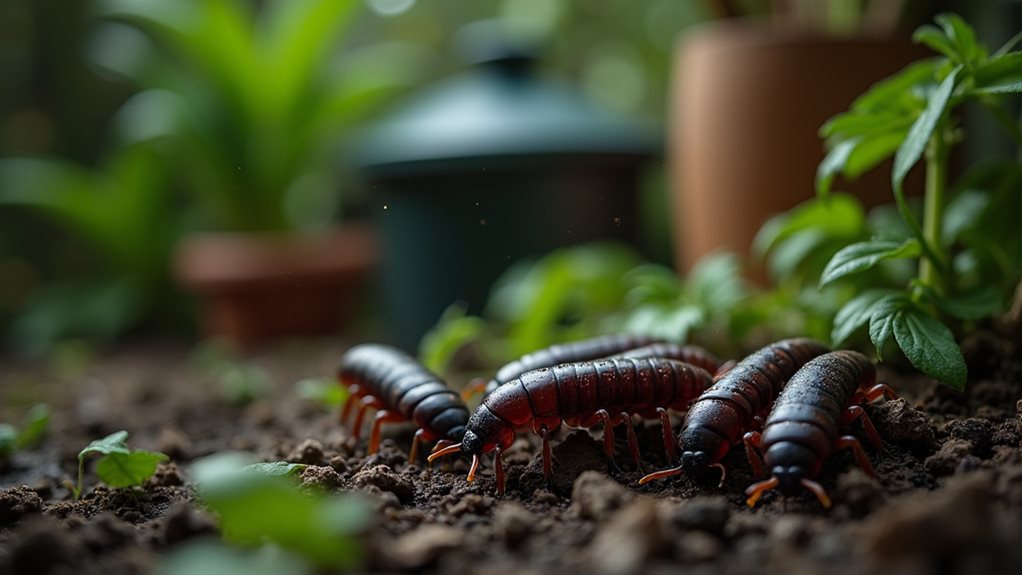
Recognizing earwigs in your home and garden begins with understanding their physical appearance and behavior. These insects, with elongated bodies and prominent pincers, are active at night and seek dark, damp areas such as under rocks or within soil. They are often attracted to moist environments and can sometimes be found hiding in crevices or under debris, where they are protected from light. Signs of earwig presence include jagged holes, chewed leaves, and black pellet-like droppings, indicating their activity inside your home or garden ecosystem.
What Attracts Earwigs and How They Enter Your Home
Earwigs are naturally drawn to moist, dark environments that offer ample organic debris, such as mulch and leaf piles. They often enter your home through entry points like cracks and poorly sealed windows or doors, especially at night. A well-maintained garden with proper drainage can also reduce moisture levels and make your property less attractive to these pests. Reducing moisture, sealing cracks, and minimizing outdoor lighting can help prevent earwig infestations from becoming a problem.
Simple Ways to Prevent Earwigs Outdoors
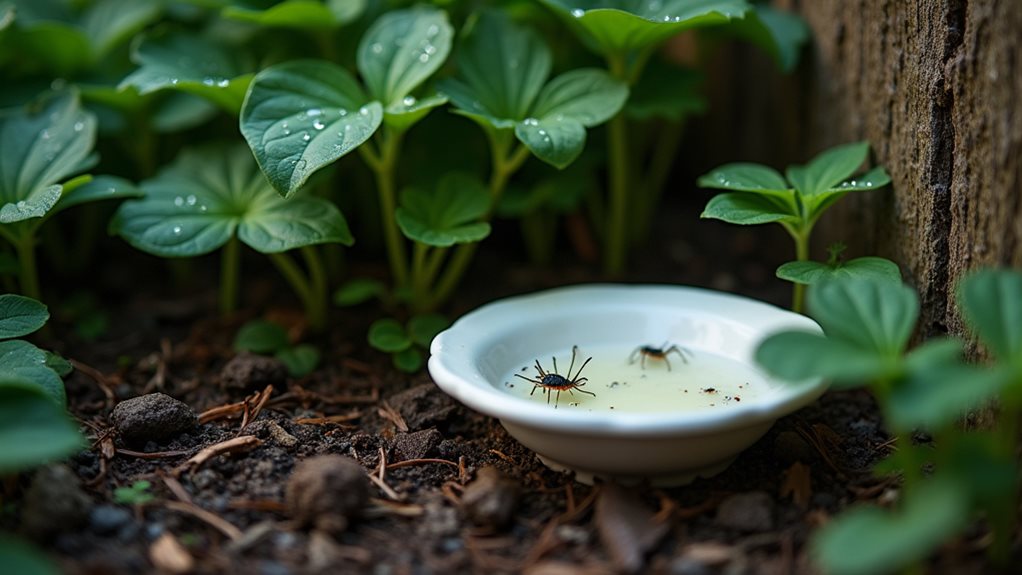
To prevent earwig infestations outdoors, it’s essential to eliminate their preferred hiding and breeding sites around your yard. Remove organic debris and mulch, and keep plant material at least 6-12 inches from your home’s foundation. A well-maintained landscape with proper drainage can help reduce excess moisture that attracts earwigs. Seal cracks, gaps, and entry points, and control moisture by fixing leaks and ensuring proper drainage to make your outdoor space less attractive.
Natural and DIY Methods to Get Rid of Earwigs
Implementing natural and DIY methods can be an effective way to control earwigs populations without relying on chemical pesticides.
Using natural repellents like vinegar, peppermint oil, and sachets of herbs, along with moisture control and physical barriers, helps deter earwigs.
Coffee grounds around entry points and plants further enhance these methods, creating a thorough, eco-friendly approach to pest management.
Adding insect-repelling tropical plants with red flowers, such as anthuriums or hibiscus, can also help naturally deterrent pest populations around your home and garden.
Protect Your Plants and Fruit Trees From Earwig Damage
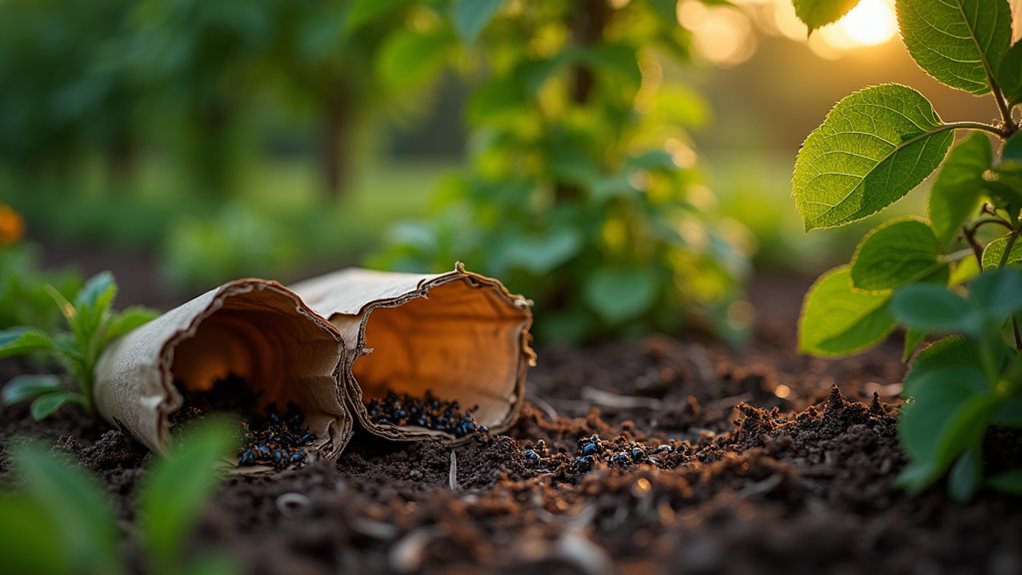
Protecting your plants and fruit trees from earwig damage involves proactive measures that can substantially reduce the risk of infestation and harm. Wrapping tree trunks with plastic or petroleum jelly creates a sticky barrier. Planting herbs like basil or lavender naturally deters earwigs. Regularly removing damaged fruits and managing organic matter minimizes hiding spots, supporting effective pest control efforts. Additionally, drainage solutions can help prevent excess moisture that attracts earwigs and other pests.
When to Call Pest Control for Earwig Problems
If you notice a large, persistent earwig problem that doesn’t respond to DIY methods, it’s time to call in pest control professionals.
You should also seek help if earwigs are damaging your plants or belongings despite ongoing efforts, or if activity suddenly spikes during peak seasons.
When natural repellents fail or chemical treatments are needed, professional assistance guarantees a thorough inspection and effective eradication.
Understanding the common wire and its role in your home’s electrical system can help prevent potential hazards during pest control procedures that involve electrical outlets or equipment.
Severe Infestation Signs
When you notice large colonies of earwigs under siding, in soil, or around trees, it signals a severe infestation that often requires professional intervention.
If earwigs are actively breeding or flying indoors in large numbers, it indicates an advanced outdoor-to-indoor invasion.
Contact pest control experts promptly to effectively manage widespread problems and prevent further damage to your home and garden.
Persistent Indoor Activity
Persistent indoor activity of earwigs, despite efforts with natural repellents and traps, often indicates a substantial infestation needing professional pest control.
Ongoing indoor activity, especially across multiple rooms or during seasons with low activity, suggests entry points and moisture issues.
A pest control expert can identify underlying problems and effectively eliminate the infestation, providing long-term relief.
Difficulty Controlling Naturally
Natural control methods often fall short when earwig populations grow large or become deeply entrenched in your home or garden. In such cases, infestations may resist DIY efforts and natural repellents.
Making professional pest control essential. Chemical treatments by experts are often necessary when infestations overwhelm natural control, especially during seasonal surges or significant plant damage.
Tips for Long-Term Earwig Prevention and Control
Implementing long-term strategies to prevent and control earwig populations requires consistent effort and environmental management.
You should seal cracks and repair leaks indoors, remove debris and organic matter outdoors, and control moisture around your home.
Encouraging natural predators like birds and beneficial insects supports ongoing pest control, helping you achieve a healthier, earwig-free environment over time.
Additionally, practicing smart landscaping by selecting drought-tolerant plants and designing your garden to reduce water runoff can further minimize suitable habitats for earwigs.
Final Note
By understanding how to identify and prevent earwigs, you can effectively protect your home and garden from these pests. Implementing proactive measures such as sealing entry points, maintaining garden cleanliness, and using natural deterrents will reduce their presence. When infestations become severe, professional pest control offers targeted solutions. Consistent monitoring and maintenance are essential for long-term control, helping you keep your living spaces and plants safe from earwig damage and minimizing the need for chemical interventions.

Nathan McPhail is a garden and home DIY expert who writes practical, easy-to-follow advice for homeowners and gardeners. Through Yardique, he shares hands-on tips covering gardening, lawn care, landscaping, home improvement, repairs, tools, and outdoor living. His focus is on helping readers solve everyday household and yard problems with straightforward guidance, useful techniques, and practical solutions.