
You save up to 80% more water with drip irrigation by supplying it slowly and directly to plant roots through tubes and emitters. It enhances efficiency to 90–95%, cuts evaporation, and encourages deeper root growth. Weeds stay starved and erosion drops when water stays targeted. Set it up with a filter, pressure regulator, and tubing, then automate with timers and sensors. While it works best in certain gardens and needs regular maintenance, its long-term savings and plant health benefits are clear—there’s more to uncover about optimizing your system.
TLDR
- Drip irrigation delivers water directly to plant roots through tubes and emitters, minimizing waste and maximizing efficiency.
- It saves 30–50% more water than traditional methods by reducing evaporation, runoff, and overwatering.
- Systems promote healthier plants with deeper roots while suppressing weeds by watering only targeted areas.
- Setup includes tubing, emitters, a filter, pressure regulator, and optional smart timers for automated, precise control.
- While ideal for gardens, it’s less suited for large lawns or rainy regions and requires regular maintenance to prevent clogs.
What Is Drip Irrigation and How Does It Work?
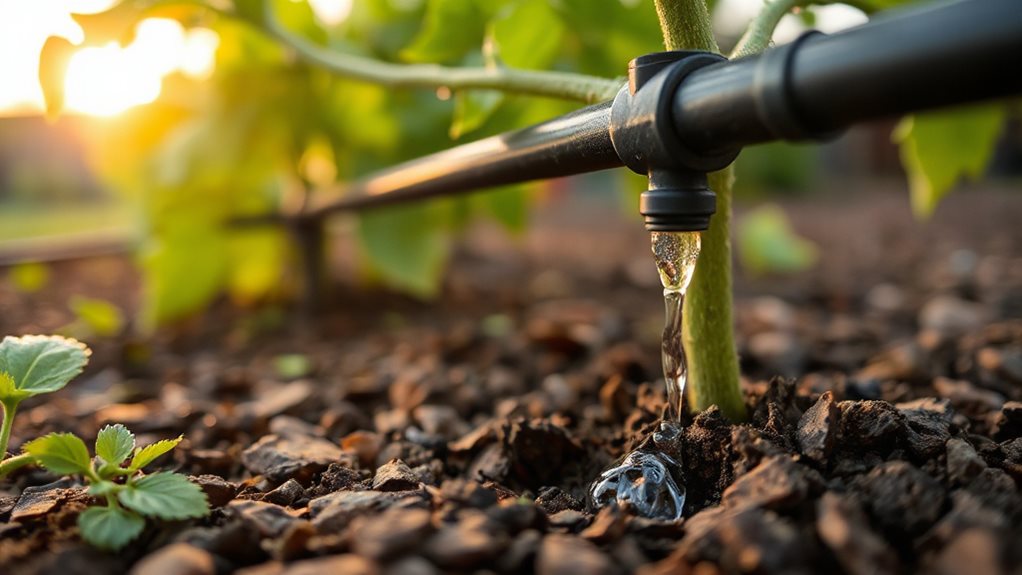
When it comes to watering your garden efficiently, drip irrigation offers a smart, targeted solution that delivers water right where plants need it most—the root zone.
You’ll use a network of tubes and emitters to slowly drip water directly to roots, minimizing evaporation. This low-pressure system runs on 10–20 psi, ensuring steady, precise hydration while conserving water and promoting healthier plant growth. Modern drip irrigation systems use plastic emitter design to regulate water flow and reduce clogging risks. Many gardeners pair drip lines with ground covers beneath trees and plants to help retain soil moisture and enhance visual appeal.
Why Drip Irrigation Saves Up to 80% More Water
You save up to 80% more water with drip irrigation because it delivers water directly to the root zone, where plants need it most.
Unlike sprinklers that lose moisture to evaporation or flood systems that waste water through runoff, this method keeps water use efficient and precise.
Drip systems also reduce pressure and flow waste compared with overhead sprinklers, making them compatible with low-pressure irrigation and efficient on varied garden layouts.
Efficient Water Delivery
Drip irrigation consistently delivers water with notable efficiency, often saving up to 80% compared to conventional methods, because it applies water directly to the root zone where plants need it most.
You minimize evaporation and runoff, maintain steady moisture, and enhance absorption—especially in sandy soils—while operating at low pressure, reducing waste and pumping needs over time.
Targeted Root Zone Irrigation
Water lands exactly where it’s needed most—around the roots—making every drop count.
You deliver moisture directly to the root zone, promoting deeper growth and increasing root surface area and volume.
Reduced Evaporation And Runoff
Because water is delivered directly to the soil and absorbed at the root zone, drip irrigation dramatically reduces losses from evaporation and runoff that commonly plague surface methods.
You minimize evaporation by limiting water’s exposure to air, while precise delivery prevents ponding and runoff.
This means less wasted water, healthier plants, and more efficient use of every drop—especially important if you’re gardening in drier climates or areas with water restrictions.
Grow Healthier Plants With Root-Zone Watering
Reaching deep into the soil, your plants naturally follow moisture and nutrients downward, and with root-zone watering, you’re guiding them to build stronger, more resilient root systems from the start.
You encourage deeper growth, improve water and nutrient uptake, and reduce transplant shock.
Using a soaker hose and mulch can help maintain consistent moisture for the root zone and conserve water by reducing evaporation, especially when watering in the early morning or evening soaker hose.
Stop Weeds and Erosion by Watering Smarter
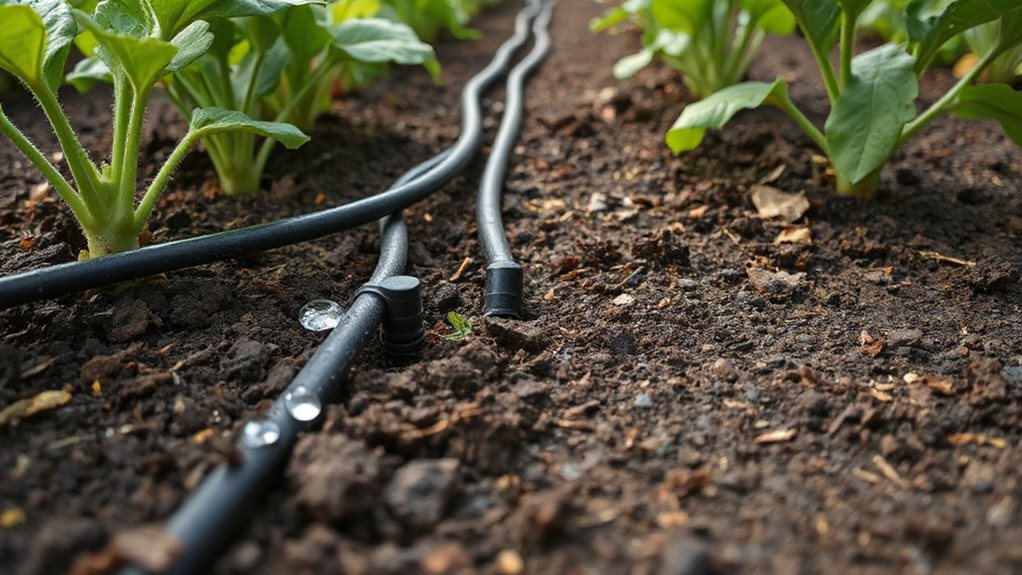
You can keep weeds at bay and protect your soil simply by supplying water where it’s needed most—right at the root zone. Drip irrigation delivers moisture directly to plants, starving weeds between rows.
Subsurface systems cut weed biomass by 93.2% and reduce erosion by minimizing runoff. Paired with mulch, it enhances efficiency, controls weeds, and keeps your garden healthy, productive, and easy to manage. Proper ventilation and moisture control also help prevent mold and pest issues in irrigation equipment by reducing humidity and organic buildup, such as drain flies.
Essential Drip Irrigation Parts and What They Do
Now that you’ve seen how targeted watering keeps weeds down and soil in place, it’s time to examine what makes drip irrigation work so effectively—the components that deliver water right where it’s needed.
You’ll connect to a garden faucet, use a backflow preventer and filter to protect your water supply, regulate pressure to 20–25 psi, then run half-inch tubing with emitters or quarter-inch lines to precisely nourish each plant.
For sites with heavy runoff or poor absorption, consider adding a French drain nearby to help manage excess water and protect your irrigation system.
Automate Watering: Timers and Sensors for Drip Systems
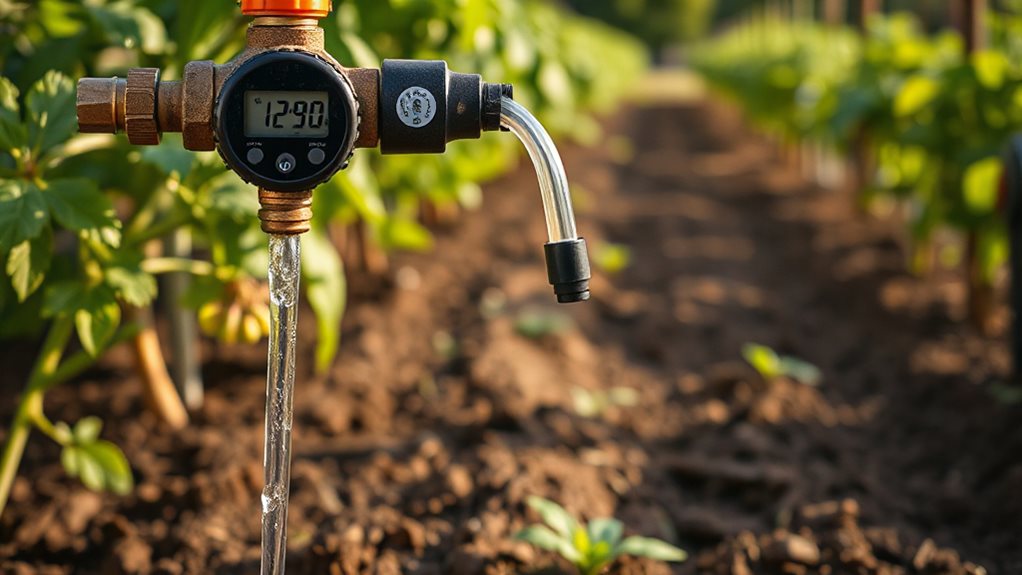
You can enhance your drip system’s efficiency by using smart timers that adjust watering based on real-time weather or plant needs, saving water without lifting a finger.
Pair them with sensors like rain, soil moisture, or sunlight detectors to automatically pause irrigation when conditions don’t require it.
With multi-zone scheduling and remote control via apps, you’ll keep your garden healthy while cutting waste and maintenance time.
Smart Timers For Efficiency
With smart timers, automating your drip irrigation becomes a seamless and efficient process that adapts to changing conditions without constant oversight.
You’ll save water and time by using weather data, zone-specific schedules, and remote control via smartphone.
Built-in sensors confirm delivery, while flow monitoring prevents waste.
You can override settings anytime, ensuring your garden gets exactly what it needs, when it needs it—no guesswork required.
Sensor Types And Benefits
Smart timers lay the foundation for efficient drip irrigation, but adding sensors takes control to the next level by responding directly to your garden’s real-time needs.
You can install soil moisture sensors belowground to measure water in the root zone, automatically pausing irrigation when moisture is sufficient. WaterSense-labeled models guarantee precision, durability in freeze-thaw cycles, and adaptability to watering restrictions, giving you reliable, long-term savings while supporting healthier plants and sustainable outdoor habits.
Automated Scheduling Tips
Typically, automating your drip irrigation system streamlines garden maintenance while maximizing water efficiency and plant health.
You can set precise schedules using apps like MarsPro, adjusting timing down to the second.
With remote control, you’ll monitor watering from anywhere, while alerts notify you of leaks or weather delays.
Programmable zones and smart sensors adapt to soil and slope, ensuring peak hydration with minimal waste, giving you confidence your garden thrives effortlessly.
Step-by-Step: Install Drip Irrigation in Your Garden
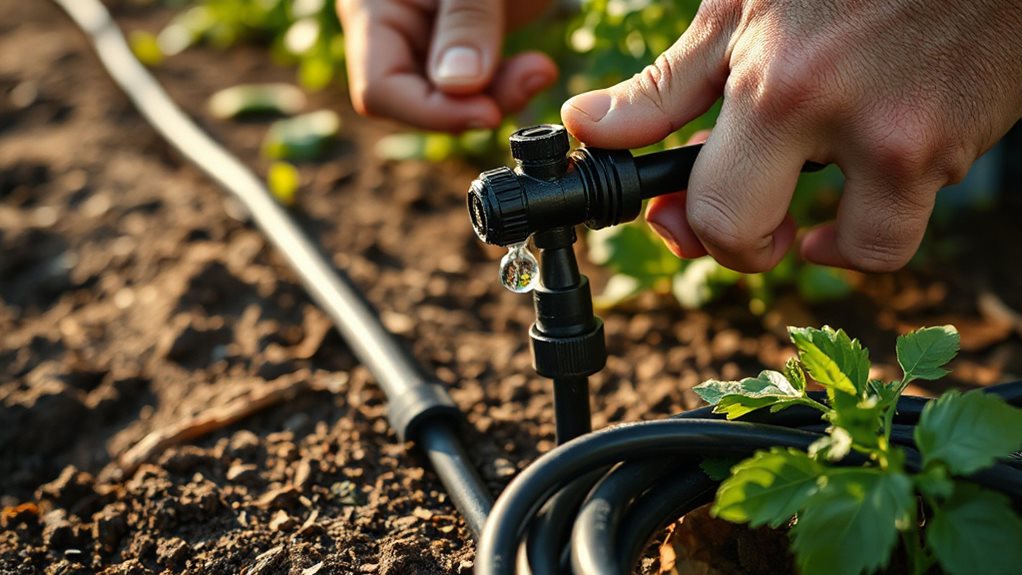
Once you’ve designed your garden’s drip irrigation layout, it’s time to bring the system to life by connecting it to your water source.
Attach a backflow preventer, pressure regulator, and filter to your outdoor faucet, then link the main supply tubing.
Lay it along your garden path, secure it with stakes, and cap the end.
Install shut-off valves, add drip lines or tape with emitters, and test the system for even coverage and leaks—your garden’s hydration foundation is now set.
Maintain Your Drip System to Prevent Clogs
Now that your drip irrigation system is up and running, keeping it in top shape means staying ahead of clogs and wear. Inspect lines regularly, flush the mainline, submain, and laterals in sequence, and check emitters for blockages.
Clean filters daily, backwash sand units every five hours, and use acid or chlorine treatments when needed. Monitor pressure, secure connections, and replace damaged parts promptly to make certain reliable, efficient watering all season.
Is Drip Irrigation Worth the Cost? ROI Explained
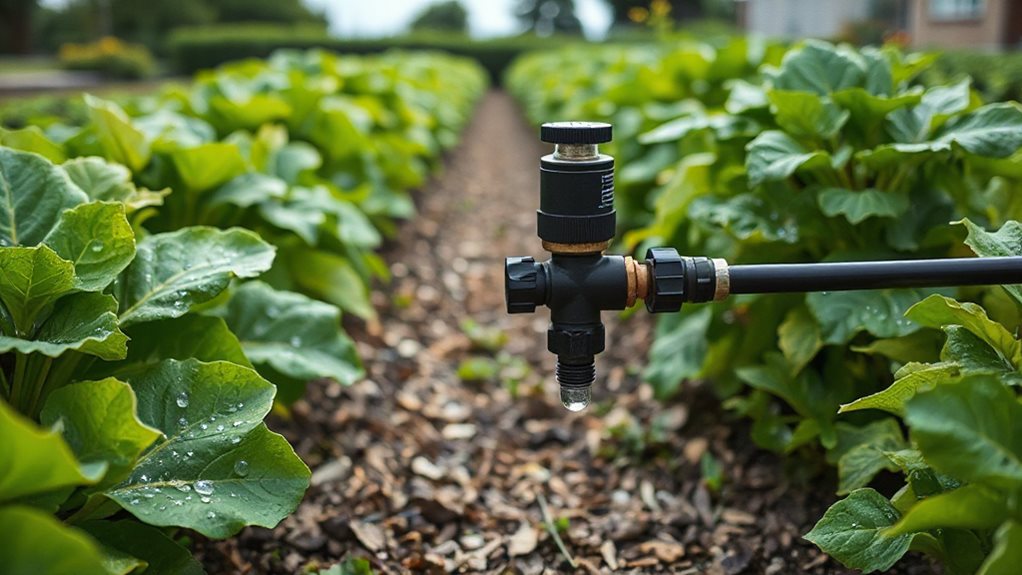
You’ll start seeing savings on your water bill right away, thanks to drip irrigation’s 90–95% efficiency and reduced evaporation.
Most homeowners recoup their system cost in just 1–2 years, especially when factoring in lower fertilizer use and healthier plants.
With DIY kits under $55 and professional installs often under $600, the break-even point comes quickly, making it a smart, cost-effective upgrade for your garden.
Long Term Savings
Saving money over time starts with how efficiently you use water, and drip irrigation puts that advantage to work right in your garden.
You’ll cut water use by 30–50%, lower energy costs with low-pressure operation, and extend system life to 15–20 years with minimal upkeep. These savings, combined with reduced fertilizer needs and healthier plants, deliver real long-term value you can count on.
Break Even Timeline
While long-term savings highlight the sustained benefits of drip irrigation, it’s the speed at which those savings begin that often seals the decision.
You’ll typically break even in just 9 months, thanks to water efficiency and lower operating costs. With smart design and proper setup, your system pays for itself quickly, making drip irrigation a practical, financially sound choice for gardeners who value both conservation and value.
When Drip Irrigation Isn’t Right for Your Garden
Though drip irrigation offers precision and efficiency for many garden types, it isn’t always the best fit for every setting. You’ll want to avoid it for large lawn areas, hard water conditions, or regions with frequent rainfall.
Poorly designed layouts and high maintenance demands can also make drip impractical, especially if you value simplicity and broad, uniform coverage.
Final Note
You’ve seen how drip irrigation delivers water directly to plant roots, cutting waste and enhancing garden health. It’s efficient, reduces weeds, and, with proper maintenance, lasts for years. While the upfront cost and setup time may give you pause, the long-term savings in water and effort make it a smart choice for most gardens. Just assess your garden’s needs—because even the best system isn’t always the right fit.

Nathan McPhail is a garden and home DIY expert who writes practical, easy-to-follow advice for homeowners and gardeners. Through Yardique, he shares hands-on tips covering gardening, lawn care, landscaping, home improvement, repairs, tools, and outdoor living. His focus is on helping readers solve everyday household and yard problems with straightforward guidance, useful techniques, and practical solutions.
Pingback: How Long Should Deck Stain Dry Before Rain?