
To anchor a shed securely, start by evaluating your soil type and foundation to choose the right method, such as ground anchors for natural soil or concrete bolts for slabs. Install anchors below the frost line where needed, guaranteeing they are positioned correctly for stability. Use rust-resistant materials and tighten components regularly to maintain safety. Proper anchoring prevents shifting during storms, and ongoing upkeep assures long-term security—exploring further will reveal essential tips for maximum stability.
TLDR
- Assess soil type and foundation to determine suitable anchoring method.
- Use ground anchors or concrete bolts based on surface and foundation type.
- Pre-drill holes and securely attach anchors, ensuring they are deep and properly spaced.
- Regularly inspect and tighten anchors to maintain stability over time.
- Incorporate rust-resistant materials and drainage solutions for long-term durability.
Why Proper Shed Anchoring Keeps Your Structure Safe
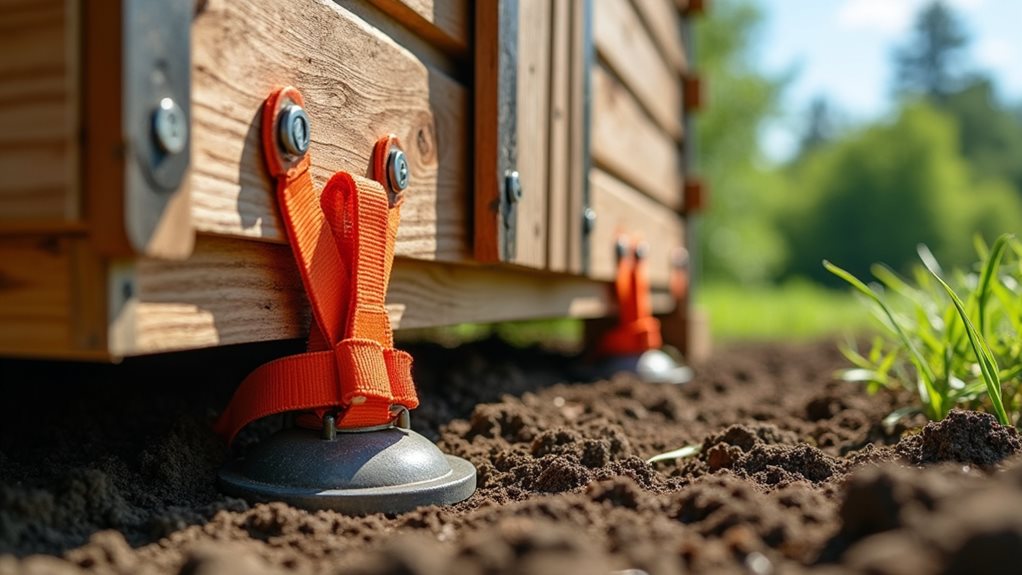
Proper shed anchoring is crucial for maintaining the safety and stability of your structure, especially during severe weather conditions like high winds and storms. By securely anchoring your shed, you reduce the risk of it tipping or shifting, which helps keep it to the ground. Proper shed anchoring also guarantees your shed remains safe, functional, and compliant with local safety regulations. Regularly inspecting for weak points and gaps in the shed’s foundation and securing potential entry points can prevent damage and displacement.
How to Assess Your Soil and Foundation for Anchoring
Before installing anchors for your shed, it’s essential to evaluate your soil and foundation to guarantee they can support the structure securely.
Conduct a soil assessment to check soil stability.
Determine the foundation type, whether concrete or ground.
Measure the frost line to install anchors below it, ensuring the chosen anchoring method withstands freeze-thaw cycles and soil conditions.
Choosing the Best Anchoring Method for Your Shed and Surface
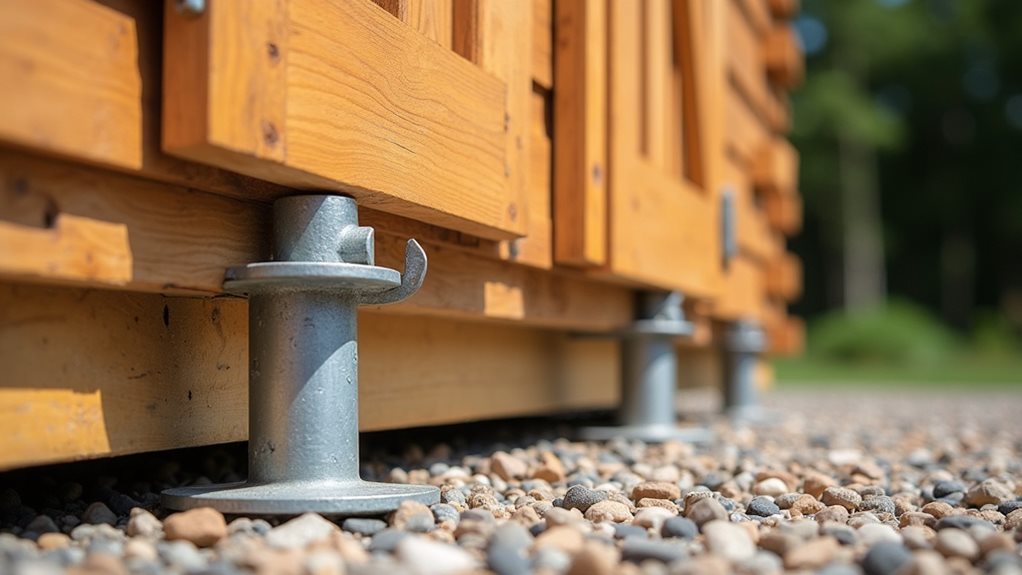
Choosing the most suitable anchoring method for your shed depends largely on the type of surface it’s installed on and the foundation you’ve established.
For concrete slabs, masonry bolts and anchor straps provide stability.
Ground anchors like screw-in or Penetrator anchors suit natural soil, especially under different soil conditions.
Proper selection guarantees your shed remains secure during storms and weather changes.
How to Install Ground and Concrete Anchors Step by Step
To install ground and concrete anchors effectively, you need to follow a clear sequence of steps that guarantee stability and safety. You’ll predrill holes for ground anchors, ensuring they’re deeply embedded at least 30 inches, spaced properly for maximum hold. Attach straps to slotted bolts. For concrete, drill and tighten concrete bolts into the slab to secure your shed confidently. Incorporate proper soil aeration techniques to improve the soil’s stability and water flow around the anchors, enhancing their long-term hold.
Tips for Ensuring Long-Term Shed Stability and Maintenance
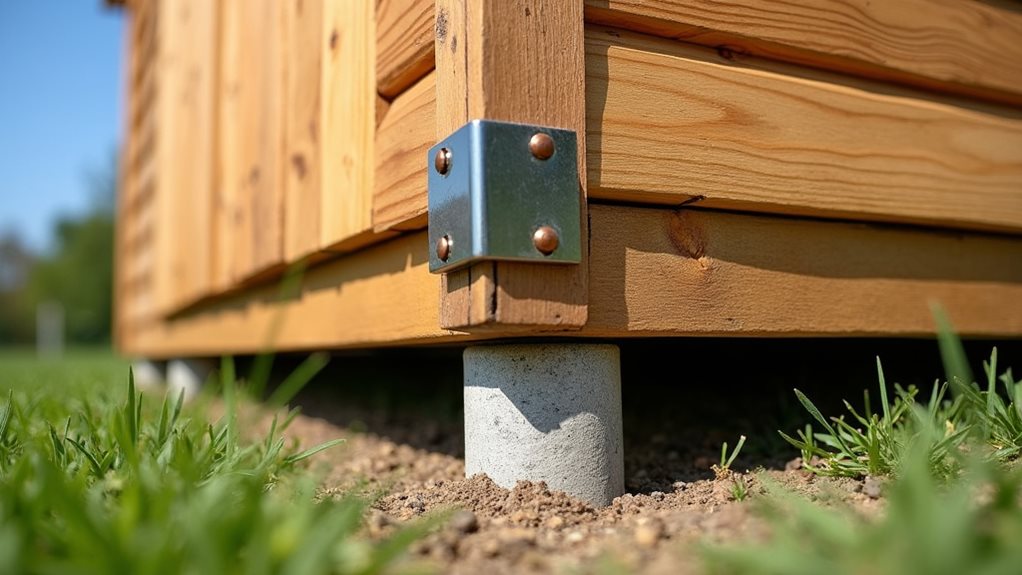
Maintaining the stability of your shed over time requires ongoing attention to its anchoring system. Regularly inspect and tighten all anchoring components to preserve holding strength. Use rust-resistant materials to prevent corrosion, especially in humid environments. After severe weather, re-anchor if needed, and keep the area clear of debris. Applying protective coatings extends the longevity of metal anchors, ensuring long-term stability. Incorporating proper drainage considerations can help prevent water accumulation around the foundation, reducing the risk of shifting or instability over time.
Final Note
Properly anchoring your shed guarantees it remains stable and safe over time, even under harsh weather conditions. By carefully evaluating your soil and selecting the appropriate anchoring method, you can prevent shifting or tipping. Following detailed installation steps and regularly maintaining your anchors will prolong your shed’s lifespan and safety. Investing time in these precautions provides peace of mind, knowing your structure is securely anchored and resilient against environmental forces.

Nathan McPhail is a garden and home DIY expert who writes practical, easy-to-follow advice for homeowners and gardeners. Through Yardique, he shares hands-on tips covering gardening, lawn care, landscaping, home improvement, repairs, tools, and outdoor living. His focus is on helping readers solve everyday household and yard problems with straightforward guidance, useful techniques, and practical solutions.