To prevent carpenter bees from drilling into wood, start by inspecting your property for small, round holes and signs of activity, especially in late spring and early summer. Fill existing holes with steel wool and seal them with wood filler or caulk to block future entry points. Applying stain or paint can make wood less attractive, while placing untreated nesting blocks or soft wood away from structures can divert bees. Using natural repellents like peppermint oil and timing nest sealings before bees begin nesting provides added protection—continuing this approach offers more effective control tips.
TLDR
- Seal existing holes with steel wool and wood filler or caulk to prevent further nesting.
- Apply stain or paint to make wood less attractive to carpenter bees.
- Install bee traps nearby to reduce local bee populations.
- Provide alternative nesting sites, like untreated wood blocks in shaded areas.
- Treat and seal wood early in spring before bees begin drilling.
How to Spot Signs of Carpenter Bee Infestation
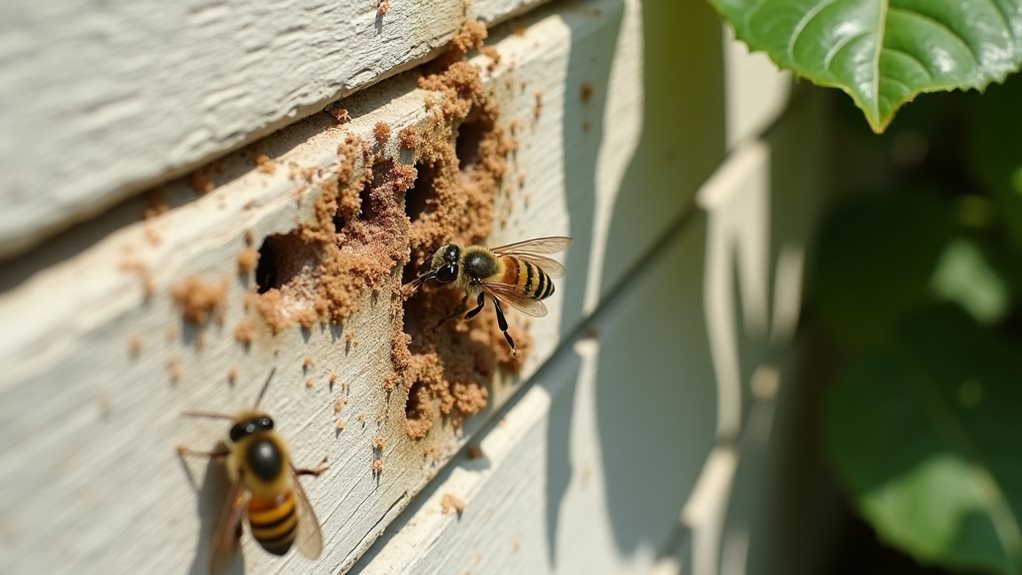
To spot signs of a carpenter bee infestation, it’s important to look closely at your wooden surfaces, especially those that are weathered or untreated.
Carpenter bee holes are small and round, often with wood shavings or sawdust nearby.
Signs of infestation include yellowish-brown staining, existing holes, and faint drilling sounds from active nests.
Regularly inspect for wood-boring insects, as they can cause structural damage over time if left untreated.
Understanding Carpenter Bees’ Preferences and Behavior
Understanding the habits and preferences of carpenter bees can help you better protect your wooden structures. Carpenter bees favor soft, weathered wood and tend to bore round holes for nesting in late spring and early summer. Recognizing their behavior, such as guarding nesting sites and nesting in specific wood types, is key to prevention and safeguarding your wood. Additionally, implementing windbreak ideas around vulnerable areas can help reduce environmental stressors that may attract or weaken wooden structures against pests.
Easy Ways to Block Carpenter Bees From Your Wood
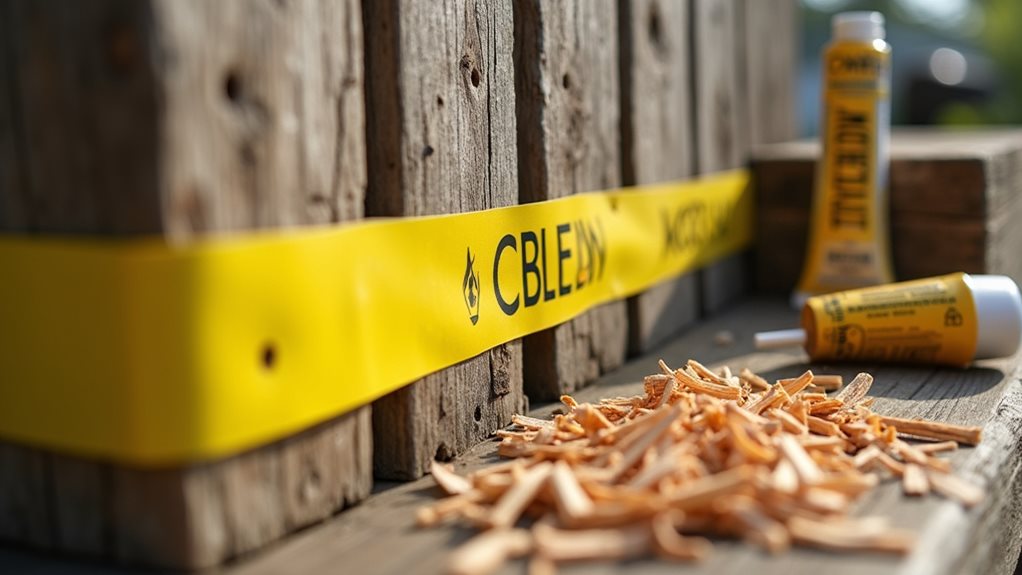
Blocking carpenter bees from damaging your wood involves simple preventive tactics. Fill existing holes with steel wool, then seal with wood filler or caulk to prevent re-entry. Apply stain or paint to make surfaces less attractive. Place bee traps nearby to reduce the population, and set up untreated wood blocks away from structures to divert drilling and provide alternative nesting sites. Using emergency heat sparingly during cold snaps can also help minimize the need for repairs caused by pest damage.
Natural Deterrents and Creating Alternative Nesting Sites
Applying natural deterrents can effectively discourage carpenter bees from drilling into your wood structures without harming beneficial pollinators. Using peppermint oil as a bee repellent, along with placing nesting blocks and soft wood in shaded, quiet areas, helps create alternative nesting sites. These strategies prevent drilling by offering appealing options that divert bees from your main structures. Incorporating native plants that attract beneficial insects can also support a balanced ecosystem and reduce pest activity around your property.
The Best Times and Methods to Remove Active Carpenter Bee Nests
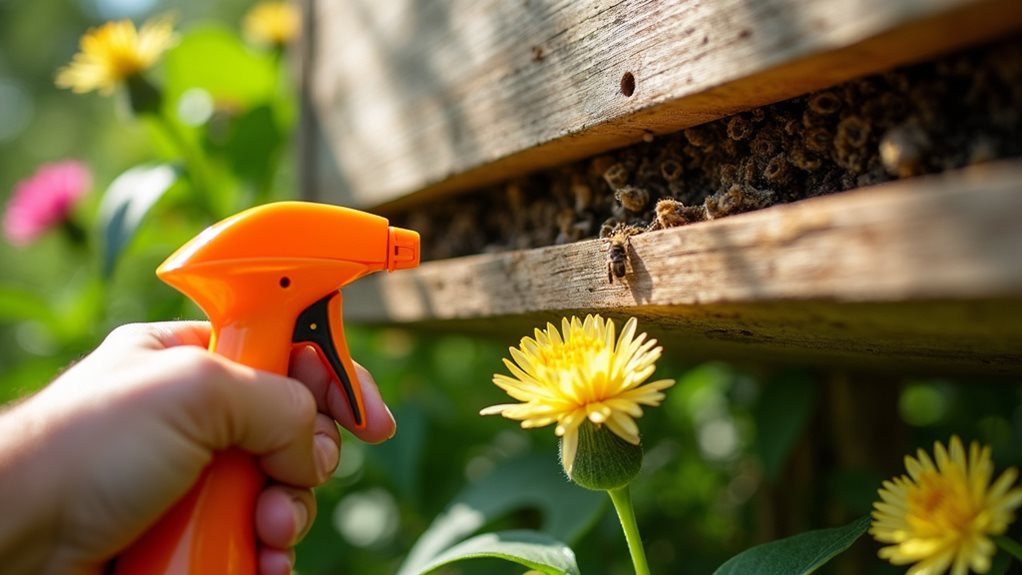
Timing is crucial when it comes to removing active carpenter bee nests, as doing so at the right time can reduce further damage and guarantee safety.
To prevent them from nesting, treat and seal holes in wood during early spring, before females begin nesting.
During late fall or early spring, seal existing holes with physical barriers like steel wool to block active nests effectively.
Final Note
By understanding carpenter bees’ habits and implementing preventative measures, you can effectively protect your wood structures. Regular inspections, sealing potential entry points, and using natural deterrents help reduce the risk of infestation. Creating alternative nesting sites also diverts bees away from essential wood. When nests are active, timely removal using safe methods minimizes damage. Consistent vigilance and informed actions enable you to safeguard your property while respecting these important pollinators’ role in the ecosystem.

Nathan McPhail is a garden and home DIY expert who writes practical, easy-to-follow advice for homeowners and gardeners. Through Yardique, he shares hands-on tips covering gardening, lawn care, landscaping, home improvement, repairs, tools, and outdoor living. His focus is on helping readers solve everyday household and yard problems with straightforward guidance, useful techniques, and practical solutions.