
To get rid of Japanese beetles on plants, start by inspecting for early signs like chewed leaves and clusters of shiny beetles. Manually remove them early in the day using a jar of soapy water or a brush. Apply organic repellents like neem oil weekly and set traps away from your precious plants, ensuring they are positioned downwind. Incorporating pest-resistant plants and biological controls can enhance your efforts. Continue examining these methods to uncover more effective strategies.
TLDR
- Manually remove beetles early in the morning or evening and drop them into soapy water to reduce their numbers.
- Use organic neem oil weekly to deter feeding and reproduction on affected plants.
- Hang traps away from valuable plants, downwind, and check regularly to capture beetles before they cause damage.
- Incorporate pest-resistant plants like boxwood, lilac, and magnolia to minimize attraction and feeding.
- Apply beneficial nematodes or milky spore bacteria in late summer to target soil-dwelling grubs and prevent future infestations.
Recognize the Signs of Japanese Beetle Infestation
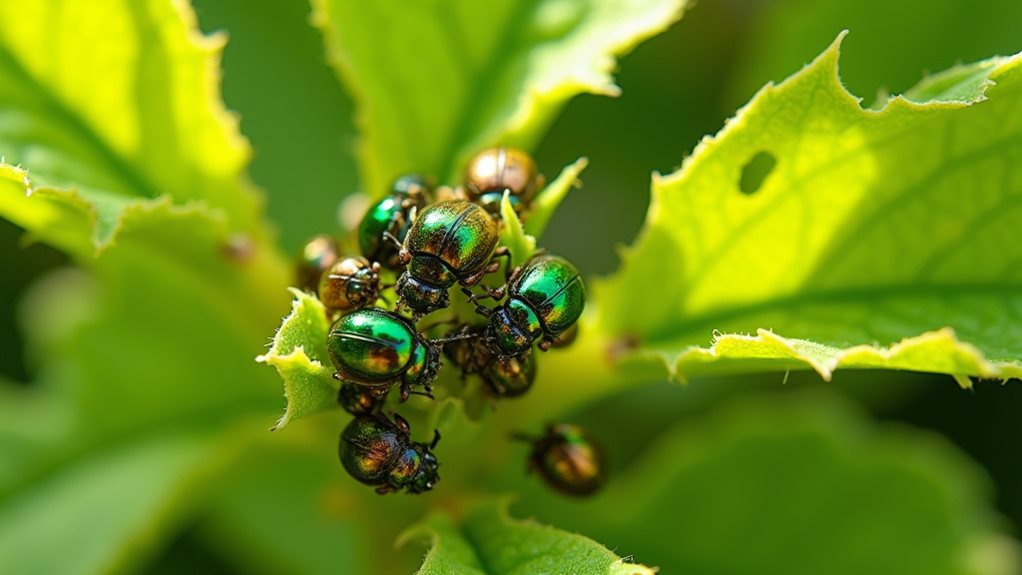
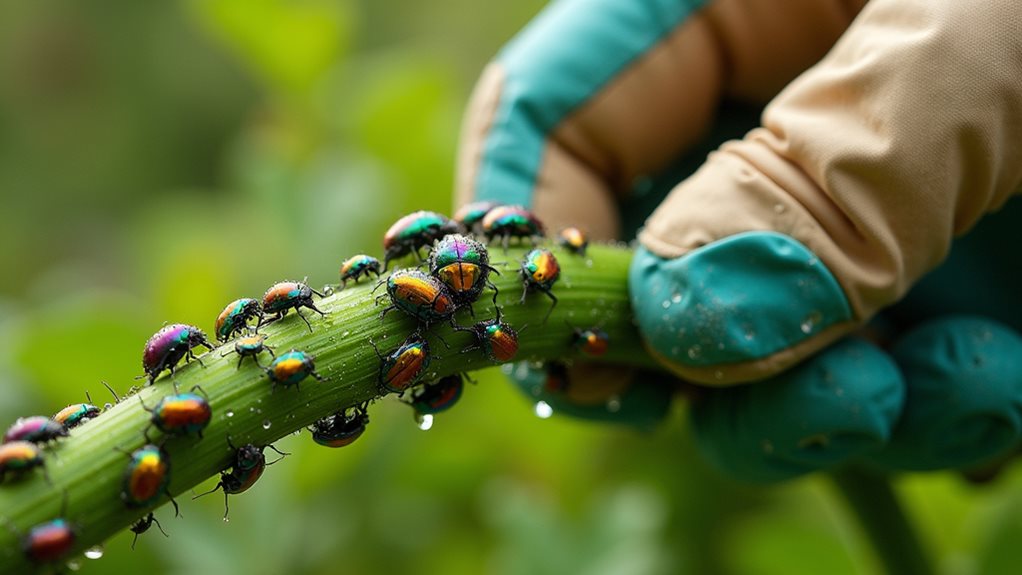
Recognizing the signs of a Japanese beetle infestation is essential for early intervention and effective control. You’ll notice leaves that look lacy or skeletonized from beetle feeding, clusters of shiny green Japanese beetles on plants, and chewed or missing flower petals. These signs indicate an infestation, helping you take action before it worsens and damages your plants. Additionally, monitoring for beneficial insect activity can help you assess whether natural pest management strategies are effectively controlling the beetle population.
Learn the Life Cycle and Behavior of Japanese Beetles
Understanding the life cycle and behavior of Japanese beetles is key to managing their impact on your plants. The Japanese beetle’s life cycle involves soil-dwelling grubs in spring and early summer, with adult beetles emerging from late June to August. These beetles feed on plants like roses and grapes, leaving behind damage and attracting more beetles through scent cues. Recognizing their watering needs and habitat preferences can also help in implementing effective control measures.
Manually Remove Beetles Early in the Season
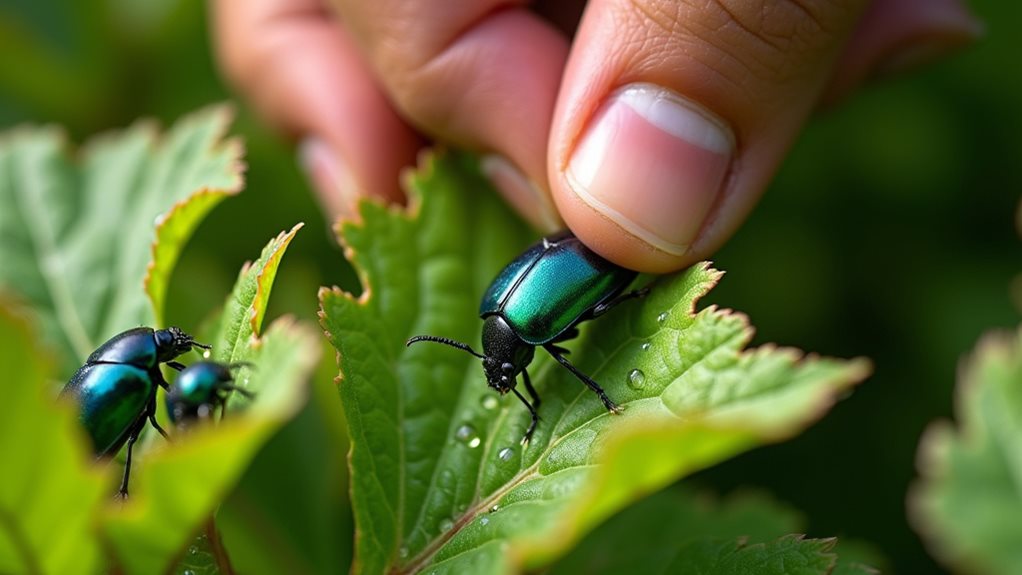
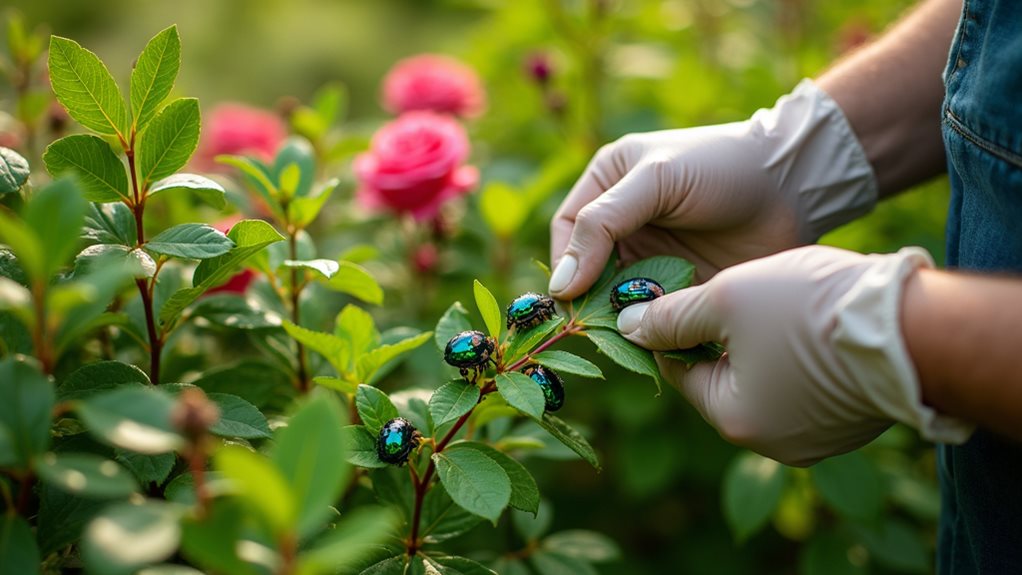
Manually removing Japanese beetles early in the season can be an effective way to control their population and protect your plants. You should do this in the morning or evening when beetles are less active. Gently knock them into a bucket of soapy water or use a small brush to carefully remove them, preventing further damage and reducing their numbers. Incorporate physical barriers like netting or screens to further deter beetles from reaching your plants.
Use Organic Remedies Like Neem Oil to Repel Beetles
Since neem oil is a natural remedy known for its effectiveness, applying it regularly can help deter Japanese beetles from feeding on your plants.
Neem oil, containing azadirachtin, disrupts beetle feeding and reproduction, making it a sustainable option.
When applied weekly, especially in early morning or late evening, neem oil markedly reduces beetle activity, protecting your plants organically.
Set Up Physical Barriers and Traps to Keep Beetles Away
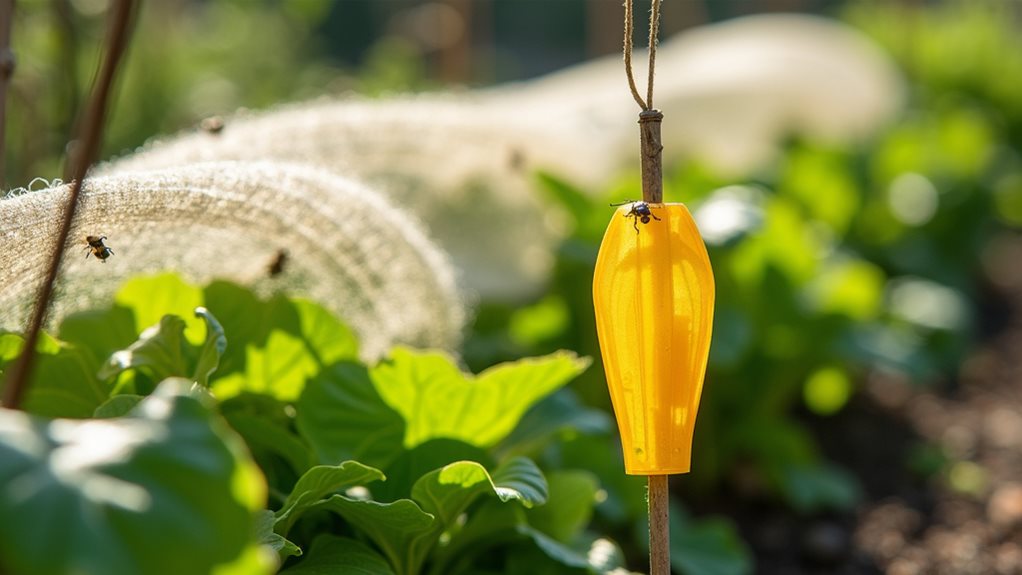
Setting up physical barriers and traps is an effective way to protect your plants from Japanese beetles. Proper placement of traps, such as hanging them away from your garden, helps divert beetles without attracting more to your plants. Using deer-resistant plants in your garden design can also help reduce overall pest pressure. Regularly inspecting and maintaining these barriers guarantees they remain effective in reducing infestations.
Proper Trap Placement
Proper trap placement is essential for effectively reducing Japanese beetle populations and protecting your plants.
To maximize effectiveness, hang beetle traps at least 10-15 feet away from your desired plants and downwind to prevent attracting beetles directly to them.
Position traps away from flowering plants to avoid unintentionally drawing beneficial insects, ensuring your garden stays balanced and healthy.
Physical Barrier Installation
Installing physical barriers is an effective way to prevent Japanese beetles from reaching your plants, especially when implemented early in the season. Use mesh netting or row covers to physically block beetles from foliage.
Ensure barriers are securely anchored to prevent crawling underneath. Regularly inspect and remove any beetles caught on or inside the barriers to maintain their effectiveness.
Trap Maintenance Tips
To effectively manage Japanese beetle populations, maintaining your traps is just as important as their initial setup. Regular trap maintenance involves checking and emptying traps to prevent escape and reduce scent cues that attract more beetles.
Always place traps downwind and away from *prized* plants. Hang them at the beetles’ flight height of 3 to 4 feet for best results.
Apply Biological Controls for Long-Term Pest Management
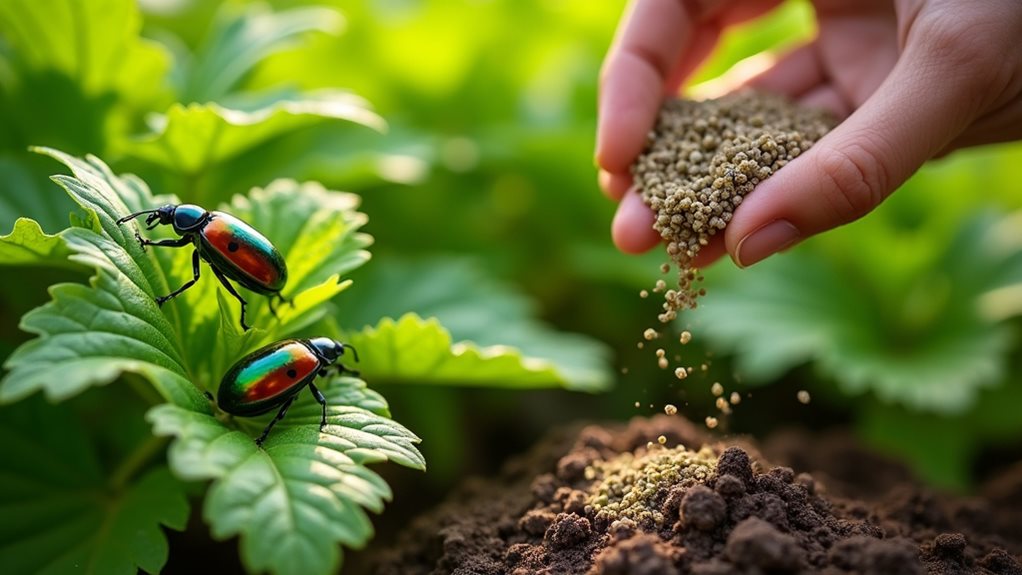
Applying biological controls like milky spore bacteria and beneficial nematodes can offer a sustainable solution for managing Japanese beetle populations over time.
Timing these treatments in late summer or early fall is vital to target the grubs before they become adults.
But consistent monitoring is necessary to assess their effectiveness.
When used correctly, these organic options are safe for children, pets, and beneficial insects, making them a responsible choice for long-term pest management.
Implementing these methods also supports soil health and enhances overall plant resilience.
Milky Spore Application
Milky spore is a natural biological control that effectively targets Japanese beetle grubs in the soil, offering a sustainable solution for long-term pest management.
Applying milky spore once per season, ideally in late summer or early fall, helps reduce beetle populations over time.
Water the area afterward to improve spore distribution and effectiveness, ensuring a healthier garden environment.
Nematode Treatments Timing
Nematode treatments for Japanese beetle control are most effective when applied during late summer or early fall, as this is when soil temperatures range between 60-70°F.
Proper timing guarantees nematodes are active when grubs are in the soil, and immediate watering helps activate them.
Multiple applications may be needed, especially if conditions aren’t ideal initially.
Monitoring Effectiveness
Have you considered how monitoring your plants can considerably influence the success of biological control methods against Japanese beetles? Regular monitoring during peak activity helps you assess the effectiveness of treatments like beneficial nematodes or milky spore.
Tracking beetle populations before and after applications allows you to adjust strategies, ensuring long-term pest management.
This approach also encourages a sense of community in protecting your garden.
Choose Pest-Resistant Plants to Minimize Damage
Choosing pest-resistant plants is a practical strategy to minimize Japanese beetle damage in your garden. Selecting species like boxwood, forsythia, lilac, dogwood, and magnolia reduces beetle attraction because these plants are less appealing. Incorporating native or less preferred plants creates a natural barrier, decreasing infestation severity and encouraging a healthier, more resilient garden environment. Additionally, planting native woody plants that provide reliable food and habitat can further discourage beetle activity and support beneficial insects.
Monitor Your Garden and Prevent Future Infestations
Monitoring your garden regularly is essential for catching Japanese beetle activity early and preventing widespread damage. By consistently checking plants in late June and early July, you can control beetle populations effectively. Aiming to prevent burrowing by inspecting the soil for grubs also helps control future outbreaks.
Avoid Common Mistakes That Worsen Beetle Problems
Using pheromone traps incorrectly can attract more beetles and beneficial insects, making your problem worse instead of better.
Overusing chemical sprays without manual removal can lead to rapid population rebounds, complicating control efforts.
Ignoring early signs of infestation allows beetle numbers to grow exponentially, making it much harder to manage the problem effectively.
Using Traps Incorrectly
When used improperly, Japanese beetle traps can actually make your problem worse rather than better. Placing traps too close to precious plants or using multiple traps in a small area can increase beetle concentrations.
This can attract more beneficial insects and undermine control efforts. Proper trap placement, downwind and away from plants, is crucial to guarantee they support your overall control strategy effectively.
Overusing Chemical Sprays
Overusing chemical sprays in your efforts to control Japanese beetles can backfire, often leading to more harm than good. Excessive reliance on chemical sprays can kill beneficial insects that naturally keep beetle populations in check, disrupting the balance.
Applying insecticides indiscriminately, especially during the day, can also harm pollinators and reduce long-term effectiveness.
Ignoring Early Signs
Failing to recognize early signs of Japanese beetle activity can considerably worsen the infestation and make control Japanese more difficult. Ignoring chewed leaves and clusters of beetles allows populations to grow, leading to severe plant damage.
Promptly monitoring and removing early signs helps prevent pheromone attraction and enhances the success of natural and organic control methods, saving time and effort.
Combine Multiple Strategies for Effective Japanese Beetle Control
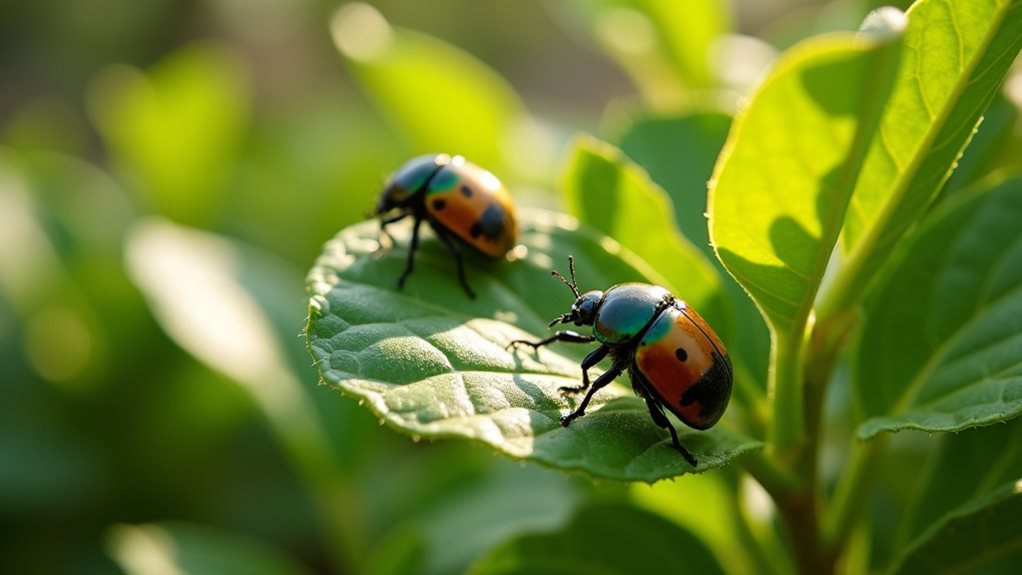
Combining multiple strategies is essential for effectively controlling Japanese beetles, as relying on a single method often proves insufficient.
You can manage their control by using traps alongside resistant plants, applying neem oil weekly, and removing infested leaves early.
Rotating treatments seasonally and monitoring beetle activity creates a strong, layered defense that keeps your garden healthier.
Final Note
By understanding the beetle’s life cycle and implementing integrated control methods, you can effectively reduce their presence in your garden. Regular monitoring, manual removal, and organic repellents like neem oil help keep populations in check. Combining physical barriers and pest-resistant plants further minimizes damage. Consistent effort and early intervention are key to managing Japanese beetles, ensuring your plants remain healthy and lively throughout the season while preventing future infestations.

Nathan McPhail is a garden and home DIY expert who writes practical, easy-to-follow advice for homeowners and gardeners. Through Yardique, he shares hands-on tips covering gardening, lawn care, landscaping, home improvement, repairs, tools, and outdoor living. His focus is on helping readers solve everyday household and yard problems with straightforward guidance, useful techniques, and practical solutions.