
You can cut your backyard water use by up to 75% with smart xeriscaping. Start by choosing native, drought-tolerant plants like lavender, agave, and sedum, and replace thirsty turf with ground covers such as creeping thyme. Group plants by water needs—hydrozoning—to avoid waste, and install drip irrigation with smart controls. Mulch beds with 2–4 inches of compost or gravel to retain moisture and block weeds, while amending soil with compost enhances water retention. Add permeable hardscapes to reduce lawn area and lower maintenance. These proven strategies save money, conserve resources, and create resilient surroundings that thrive with less water—there’s a smarter way to grow a beautiful yard. Set the sprinkler controller to water before dawn so less is lost to evaporation and wind.
TLDR
- Replace thirsty turf with drought-tolerant native plants like lavender, agave, and sedum to cut water use by up to 75%.
- Install drip irrigation with smart timers to deliver water efficiently and reduce waste by 11–76 gallons per square foot yearly.
- Group plants by water needs into hydrozones to prevent overwatering and boost landscape efficiency.
- Apply 2–4 inches of mulch like wood chips or gravel to retain moisture, suppress weeds, and reduce evaporation.
- Add permeable hardscapes such as gravel paths or pavers to lower irrigation needs and create functional, water-smart outdoor spaces.
Start With Xeriscaping: Slash Lawn Water Use by 75

You can cut your lawn’s water use by up to 75% simply by switching to xeriscaping—a smart, sustainable approach that converts thirsty turf into drought-resilient terrains.
You’ll save an average of 120 gallons daily, reduce outdoor water use by 50–75%, and lower your bills, all while conserving essential resources and joining a growing community of eco-conscious homeowners. Broccoli prefers cooler conditions and other cool-season vegetables can be strategically incorporated into xeriscaped edible beds to take advantage of seasonal moisture.
This water-saving transformation is made possible through the use of native plants that thrive in Southern California’s climate with minimal irrigation.
Plan Your Xeriscape in 5 Simple Steps
Start by evaluating your site’s sunlight, soil, and drainage so you can match plants to the right spots.
Choose drought-tolerant, native species that thrive in your conditions and group them by water needs to keep irrigation efficient.
Then, install a targeted system like drip lines and mulch well to lock in moisture and reduce waste.
Consider adding drought-resistant succulents such as agave and aloe to provide low-water texture and color to sunny areas.
Site Assessment First
Before diving into plant selections or hardscape materials, taking time to assess your site lays the foundation for a successful xeriscape that balances beauty and efficiency.
You’ll map your property’s layout, note sun exposure and soil type, identify wind patterns and drainage, then pinpoint views to highlight or block—ensuring your design works with nature, not against it.
Choose Plants Wisely
Smart plant selection converts a xeriscape from mere survival to thriving beauty, and it starts with matching the right species to your site’s unique conditions.
Choose native and adapted plants like echinacea, sedum, or blue fescue, grouping them by water needs and sun exposure.
Prioritize drought-tolerant species such as agave, lavender, or rosemary, and consider mature size, bloom time, and texture for lasting visual interest.
Install Efficient Irrigation
Often, the success of your xeriscape hinges on how efficiently you deliver water to plants, and that means installing an irrigation system designed for precision.
You’ll assess site conditions, create hydrozones, choose drip irrigation, integrate smart tech, and optimize schedules.
These steps guarantee water reaches roots directly, reduces waste, and adapts to weather, giving your grounds what it needs—no more, no less—so you save water without sacrificing beauty.
Pick Native Plants for a True Water-Wise Garden
A well-chosen mix of native plants can convert your backyard into a resilient, water-wise garden that thrives with minimal intervention. You’ll reduce irrigation needs by 30–50% while supporting local biodiversity.
These plants tolerate drought, require less maintenance, and improve soil health. By choosing natives, you’re investing in a sustainable, beautiful setting that belongs to your region’s natural ecosystem. Adding some heat- and drought-tolerant species like Lantana camara can provide colorful blooms while conserving water.
Replace Lawn With Drought-Tolerant Ground Covers

You can replace thirsty turf with drought-tolerant ground covers that thrive on little water once established, like creeping thyme or sedum, which spread quickly to form dense, weed-suppressing mats.
These low-water alternatives work well in full sun to light shade and require well-drained soil, making them ideal for slopes, rock gardens, or tight spaces where grass struggles.
Sedums such as Gold Moss Sedum Acre are especially low-maintenance and tolerate poor, rocky soils while remaining drought-tolerant once established.
Drought-Resistant Ground Cover Options
Replacing your thirsty lawn with drought-resistant ground covers starts by selecting species that thrive with minimal water while providing lasting beauty and functionality.
Choose sedum for rock gardens, asiatic jasmine for quick coverage, or kinnikinnick in colder zones.
These tough, low-growing plants conserve moisture, suppress weeds, and reduce erosion—all while welcoming pollinators and requiring little upkeep once established.
Low-Water Alternative Landscaping
Think beyond the traditional lawn by designing a setting that thrives on little water while providing lasting visual appeal—group drought-tolerant ground covers into hydrozoned areas so you irrigate only what’s necessary, and match each plant to its ideal environment, whether in full sun or tucked into shaded microclimates.
Use mulch to retain moisture, amend soil with compost, and add hardscaping to reduce watering needs.
Efficient Turf Replacement Strategies
Change your yard into a water-wise setting by swapping thirsty turfgrass for drought-tolerant ground covers that thrive with minimal irrigation. You’ll save 11–76 gallons per square foot yearly, especially when replacing overhead sprinklers with drip systems.
Programs in Las Vegas and Los Angeles offer rebates up to $5 per square foot, making it cost-effective. Join others in sustainable landscaping—cut costs, conserve water, and enjoy lasting, beautiful results with smart upgrades and proper plant establishment.
Cluster Plants by Thirst Level to Save Water

Grouping your plants by thirst level—known as hydrozoning—keeps your xeriscape efficient and sustainable while substantially cutting water waste. You’ll save 50–75% on water by clustering natives and drought-tolerant species with similar needs, reducing runoff and maintenance.
Place high-water plants near your home, and low-water ones farther out. This smart strategy matches irrigation to actual plant demands, preventing overwatering and nurturing a resilient, eco-friendly yard you can feel proud of. Plants also need water and nutrients to carry out photosynthesis and stay healthy.
Use Drip Lines and Timers to Water Smarter
Once you’ve grouped your plants by thirst level, the next step is making every drop count with a smarter watering system.
Use drip lines to deliver water directly to roots, cutting evaporation and runoff. Pair them with smart timers that adjust for weather, soil moisture, and plant needs—so you’re never overwatering. This precise, efficient approach saves up to 60% on water bills while supporting a resilient, sustainable xeriscape.
Mulch Beds to Lock in Moisture and Suppress Weeds

You can enhance your garden’s efficiency by choosing the right mulch, whether organic options like wood chips and straw or inorganic choices like gravel and lava rock, each offering unique benefits for moisture retention and weed control.
Apply a thick layer around your plants at the start of the growing season to reduce evaporation, keep soil temperatures steady, and cut down on watering needs by up to one third. Pairing mulch with drip irrigation not only suppresses weeds but also minimizes erosion and reduces reliance on herbicides, especially in drought-prone areas.
Mulch Types Compared
Often, the success of a xeriscaped yard hinges on choosing the right mulch to lock in moisture and block weeds.
You’ll want durable, low-maintenance options like gravel, decomposed granite, or rubber mulch, which last 10–20 years and excel in dry climates.
Pine straw and shredded hardwood work well for acid-loving plants, while bark nuggets and composted mulches enhance soil health over time.
Moisture Retention Boost
Maximizing moisture retention starts with installing mulch beds that act as a protective barrier against evaporation and weed competition.
You’ll conserve up to 70% more water by applying 2–4 inches of organic mulch, which shields soil from sun and wind.
Materials like hemp bedding or grass clippings retain moisture best, while proper depth improves water absorption, reduces erosion, and supports healthier root development in your drought-smart terrain.
Weed Suppression Tactics
A well-mulched bed doesn’t just lock in moisture—it also forms a powerful defense against unwanted weeds.
You can use hardwood mulch, gravel, or pecan shells to block sunlight and prevent weed seeds from sprouting. Lay weed barrier fabric first for tough infestations, then add mulch.
Pull weeds by hand regularly, and apply corn gluten meal or vinegar as natural backups.
Amend Soil With Compost for Better Water Retention
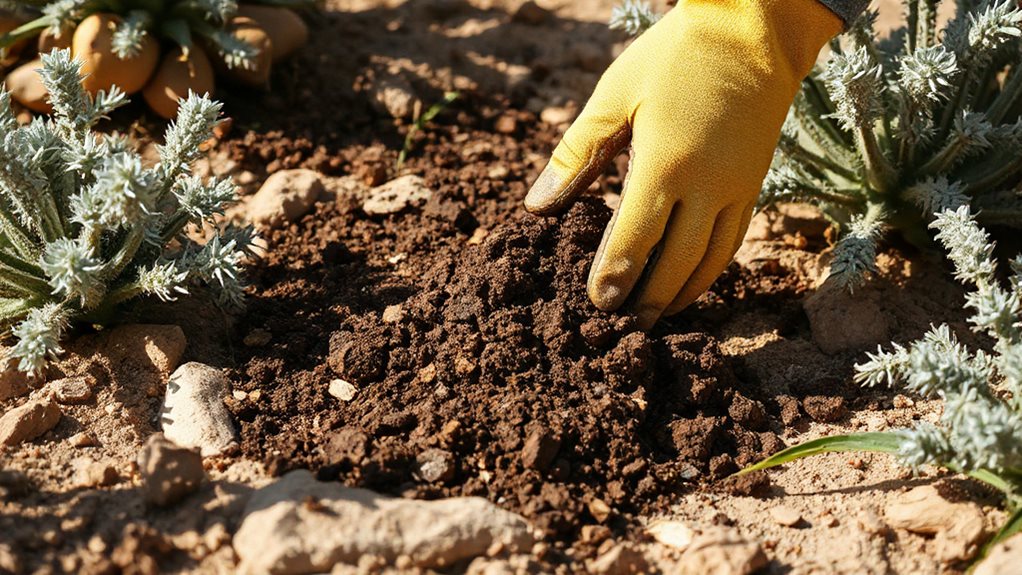
Enhance your backyard’s ability to retain water by amending the soil with compost—a simple step that delivers powerful results.
You’ll increase water retention up to 2.5 times, especially in sandy soils, while improving structure and reducing runoff.
Just 1–2 inches tilled into the top 6 inches increases drought resistance, cuts irrigation needs by a third, and builds healthier, more resilient soil over time.
Add Patios and Paths to Cut Thirsty Turf
You’ve already enhanced your soil’s ability to hold water by mixing in compost, setting a strong foundation for a drought-smart yard.
Now, add patios and paths to replace thirsty turf, using permeable pavers or gravel that cut water use by 50–70%. These hardscapes reduce irrigation needs, lower maintenance, and blend beautifully with drought-tolerant plants, creating functional, attractive spaces you’ll love while conserving water.
Prune, Weed, and Tune Irrigation Seasonally

Keeping your xeriscape healthy and water-efficient means staying proactive with seasonal care—pruning, weeding, and fine-tuning irrigation throughout the year.
Lightly trim to shape plants and remove deadwood, but avoid heavy cuts before frost.
Weed early and consistently to reduce competition.
Adjust watering deeply and infrequently, syncing with seasonal needs while gradually reducing reliance as plants establish.
Final Note
You’ve reduced water use by converting your yard into a resilient xeriscape. By choosing native plants, grouping them by water needs, and using mulch and compost, you’re conserving moisture and minimizing waste. Replacing turf with drought-tolerant ground covers and hardscapes cuts maintenance while supporting sustainability. Seasonal care keeps your system efficient. With smart planning and consistent upkeep, your scenery thrives with less water, lower costs, and lasting beauty—proving practicality and environmental care go hand in hand.

Nathan McPhail is a garden and home DIY expert who writes practical, easy-to-follow advice for homeowners and gardeners. Through Yardique, he shares hands-on tips covering gardening, lawn care, landscaping, home improvement, repairs, tools, and outdoor living. His focus is on helping readers solve everyday household and yard problems with straightforward guidance, useful techniques, and practical solutions.
Pingback: Why Plant Leaves Curl: Causes and Easy Fixes