Deer browsing cuts flower blooms dramatically, so protect your garden by planting deer‑resistant species like zinnias, salvia, black‑eyed Susan, and aromatic herbs such as lavender, bee balm, and Russian sage, which deter deer while attracting pollinators. Apply a 36% egg‑based spray with garlic or peppermint oil early in winter and reapply every six weeks, supplementing with thiram for short bursts and Bobbex on evergreens for up to 90% reduction. Install tightly secured netting or an electric fence with visible poly‑tape, spacing posts 8–10 feet apart and maintaining voltage. Proper timing, regular monitoring, and combining these tactics will keep deer away and keep your flowers thriving.
TLDR
- Plant deer‑resistant and aromatic species (e.g., Russian sage, lavender, bee balm) around vulnerable blooms to deter feeding.
- Apply homemade repellents—egg yolk mixed with garlic, cayenne, or peppermint oil—every few days, especially before winter.
- Install tight, taut netting or electric fencing with 8‑10 ft spaced posts; anchor and staple edges to block entry.
- Use physical barriers like peanut‑butter bait training to condition deer to avoid electric shock zones.
- Monitor and reapply repellents or maintain barriers regularly, adjusting timing to seasonal deer pressure.
Understanding Deer Browsing and Your Protection Options
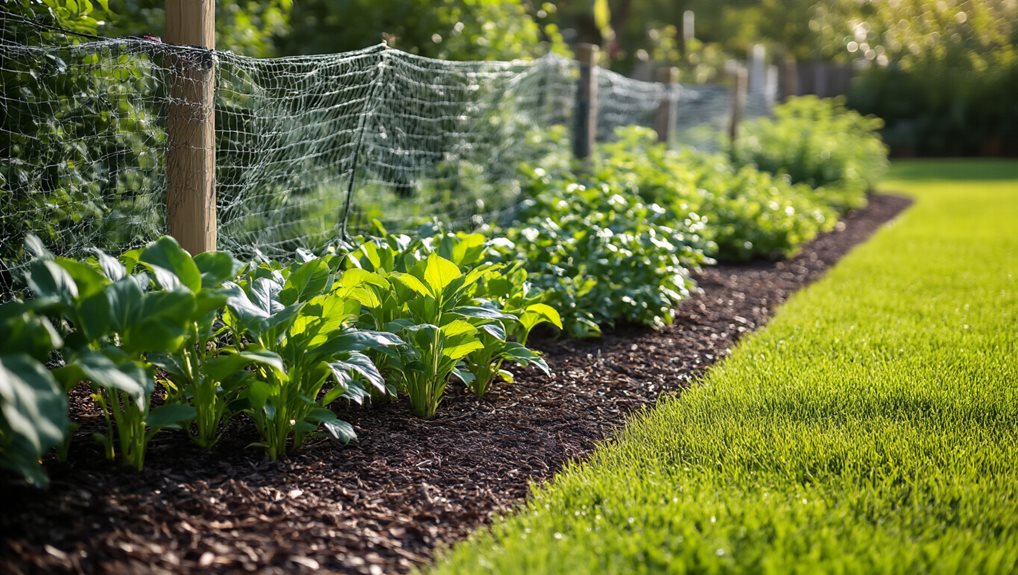
Why does deer browsing matter for your garden? You’ll see fewer blossoms, especially asters and goldenrods, when deer roam nearby; sites like Bird Hills lose 90 % of flowers. Winter intensifies browsing, with deer shifting to nighttime and targeting taller plants. Density, proximity to cover, and deep snow amplify damage, while fenced plots enhance flowering by up to 77 %. Pets and oak bio‑indicators help you gauge and deter pressure. High deer abundance is linked to forest biodiversity decline.
How to reduce deer pressure through landscape design deer-resistant planting strategies and habitat modification can help you maintain bloom density.
Choose Deer‑Resistant Flowers Your Garden Will Love
Ever wondered which blossoms can thrive in a deer‑heavy yard without becoming a snack? Choose sun‑loving annuals like Zinnias, Salvia, Verbena, Sweet Alyssum, and Snapdragons for continuous color, then add tough perennials such as Black‑Eyed Susan, Coneflower, Lamb’s Ear, Pincushion Flower, and Peony for season‑long resilience. Use a frost-aware planting calendar to time your fall plantings and protect tender blooms as temperatures shift, ensuring a longer window of beauty even after deer activity begins. Mix aromatic herbs—Bee Balm, Russian Sage, Lavender, Catmint, Hyssop—to deter deer while attracting pollinators, creating a thriving, shared garden space. frost date
Deploy Fragrant DIY Deterrents to Keep Deer Away
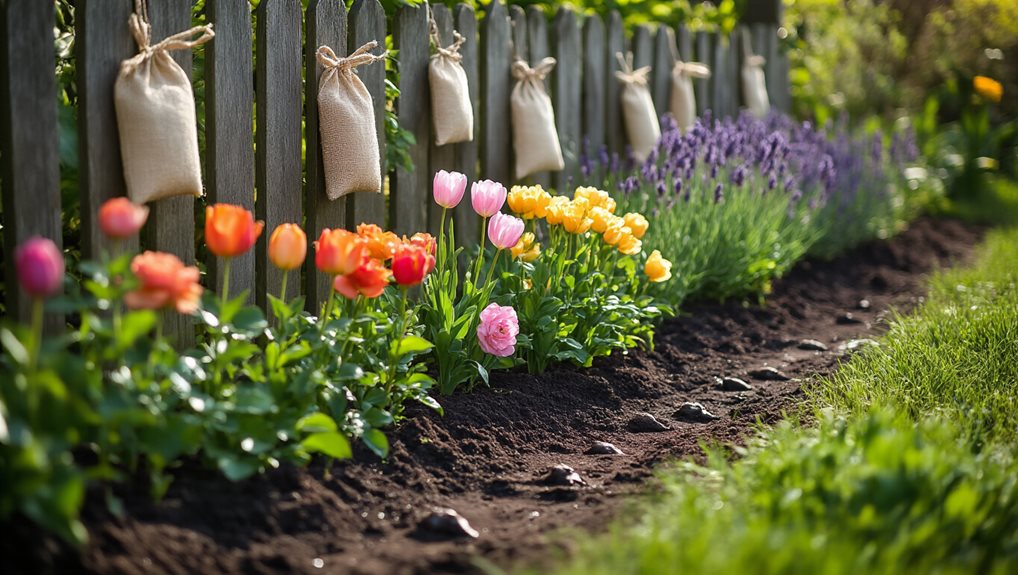
Looking to turn your garden into a fragrant barrier that keeps deer at bay without sacrificing beauty? Plant Russian sage, bee balm, lavender, oregano, and thyme around vulnerable blooms; their strong scents deter deer while attracting pollinators.
Mix egg‑based sprays with garlic, cayenne, or peppermint oil, then apply to foliage and borders, reapplying every few days for sustained protection.
Apply Deer‑Resistant Repellents Correctly for Maximum Protection
How can you maximize the protection of your garden when using deer‑resistant repellents? Apply egg‑based products like Deer Away at a 36% concentration early in winter for up to three months, then reapply every six weeks under moderate pressure; use thiram for short bursts, and Bobbex on evergreens for 90% reduction. Monitor sites regularly, adjust timing seasonally, and combine with other controls for best results.
Install Physical Barriers: Netting, Tubes, and an Electric Fence
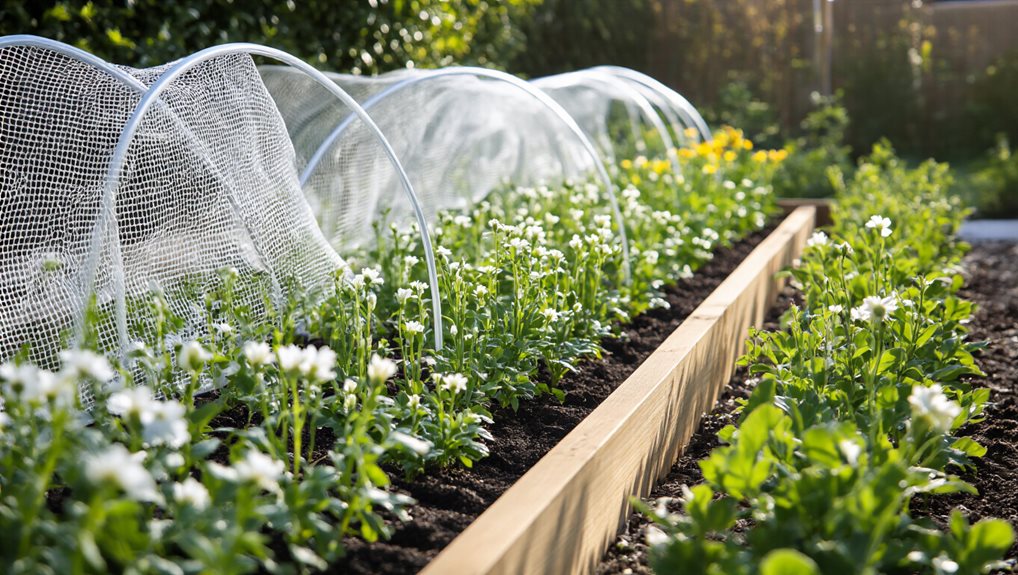
You’ll start by securing plastic netting tightly around each plant or bed, making sure the mesh is taut enough to block a deer’s reach while keeping the material low‑cost and easy to install.
When you set up an electric fence, use visible poly‑tape strands, space them correctly, and add a peanut‑butter bait to train deer to avoid the shock, remembering that regular maintenance keeps the voltage effective.
Terro ant bait guidance is included to illustrate proper product lifespan and replacement, ensuring you understand how long a bait lasts and how to store it safely in case you also manage indoor pests near gardens. Lifespan and Replacement Guidelines
Netting Installation Tips
Ever wondered how a well‑planned netting system can keep deer out without sacrificing garden access? Unpack the roll, inspect for damage, then measure and cut to fit, positioning posts 8‑10 feet apart and anchoring them securely. Attach netting with zip ties every two feet, stretch it taut, and secure the bottom with staples and extra netting to block under‑entry, ensuring a seamless, deer‑proof barrier.
Electric Fence Best Practices
A well‑installed netting system already gives you a solid physical barrier, but adding an electric fence creates a deterrent that deer can’t easily bypass.
Space 7‑foot T‑posts fifteen feet apart, drive one foot into soil, mount insulators at ten‑inch intervals, and string polywire at nose‑level, arranging three strands twenty‑four inches high.
Use a 5,000‑6,000‑volt energizer, ground it with three‑foot rods, and connect gates with insulated cable and a shut‑off switch.
Maintain Your Deer‑Resistant Defenses All Season Long
How can you keep your deer‑resistant defenses effective from spring through winter?
Rotate repellents every 10‑14 days, especially after rain, using strong scents like blood meal on new groundcovers; install six‑foot cylinders or netting around prized plants during high‑risk periods; interplant aromatic herbs with flowers, surround vulnerable beds with peonies or lavender, and monitor browsing, adjusting barriers and applications. Regular maintenance of protective gear and ensuring proper chain lubrication are essential for safe gardening tasks, and using a chain brake when handling heavy equipment helps minimize risks Safety equipment.
Final Note
By combining deer‑resistant plant selections, aromatic deterrents, properly applied repellents, and sturdy physical barriers, you create a layered defense that minimizes browsing damage. Regularly inspect and maintain each component—re‑apply repellents after rain, replace worn netting, and adjust fence tension—to ensure consistent protection throughout the growing season. This systematic approach lets you enjoy thriving flower beds without constantly battling deer, while keeping upkeep manageable and cost‑effective.

Nathan McPhail is a garden and home DIY expert who writes practical, easy-to-follow advice for homeowners and gardeners. Through Yardique, he shares hands-on tips covering gardening, lawn care, landscaping, home improvement, repairs, tools, and outdoor living. His focus is on helping readers solve everyday household and yard problems with straightforward guidance, useful techniques, and practical solutions.