Install a deep, fine‑mesh fence at least six inches underground with one‑inch or smaller apertures, and secure it with galvanized staples and tension wires; keep posts two‑and‑a‑half meters apart and bury the bottom L‑shaped section to prevent digging. Choose rabbit‑resistant plants like marigolds, lavender, and onions, and intermix them with vegetables to deter nibbling. Apply approved repellents, maintain the barrier by inspecting for holes, and use habitat‑modifying tactics such as dense hedges; continue for to discover more detailed strategies.
TLDR
- Install a 1‑inch (or smaller) mesh fence buried at least 6 inches (15 cm) deep, extending 12 inches (30 cm) underground with an outward flare to prevent digging.
- Use galvanized staples and tension wires to secure the mesh, and regularly inspect for holes or wear, repairing promptly.
- Choose rabbit‑resistant plants (marigolds, lavender, yarrow, onions) and intermix them with vegetables to deter feeding.
- Place dense hedging shrubs or thick groundcover around the garden perimeter to create an additional physical barrier.
- Apply approved repellents and maintain clean, undisturbed soil near fencing to reduce habitat attractiveness for rabbits.
Why Rabbits Target Your Garden‑Proof Garden & How to Spot Damage
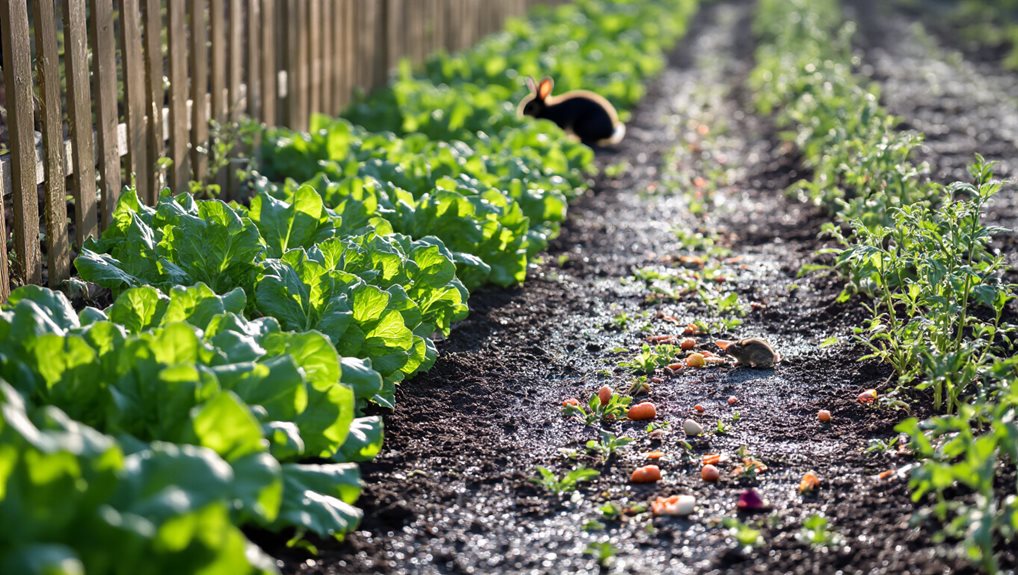
Why do rabbits keep eyeing your vegetable garden? You’ll notice their diet, 90 % grass, expands to beans, peas, cabbage, lettuce, carrots, and beets, especially tender seedlings, which they clip cleanly at a 45‑degree angle, leaving neat cuts near the soil line. Look for missing nubs, above‑ground chews, round pellet droppings, and five‑toe tracks to confirm rabbit activity. Their voracious appetite drives them to consume a wide variety of garden plants.
Choose the Most Effective Rabbit‑Proof Barrier for Your Garden Bed
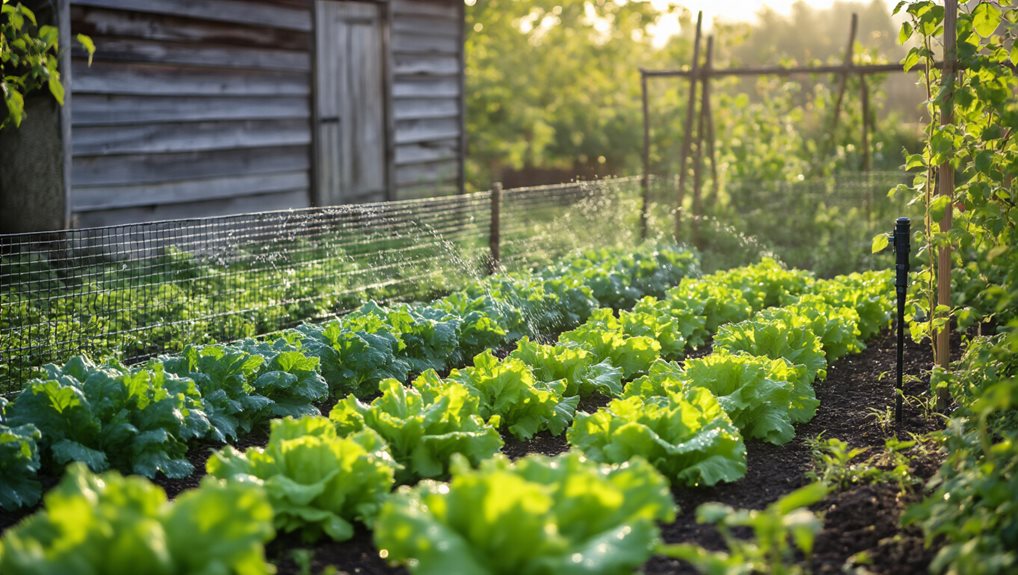
You’ll want to set the fence at least six inches deep, burying the mesh so rabbits can’t dig underneath, and choose a material with a one‑inch or smaller aperture to block even the smallest paws.
Using hardware mesh, a half‑inch gauge, gives you extra durability and prevents burrowing animals from slipping through gaps that chicken wire might miss.
Once the barrier is installed, inspect it regularly for holes or wear, and repair any damage promptly to keep your garden truly rabbit‑proof.
Mesh Fence Depth
How deep should your mesh fence go to keep rabbits out? A burial depth of at least 15 cm (6 inches) is essential, because rabbits can dig under shallow barriers, but extending the mesh 30 cm (12 inches) into the soil—preferably with a slight outward flare—creates a sturdy underground wall that deters even the most determined burrowers. Use 1‑inch or smaller holes, secure with galvanized staples, and check regularly for gaps, ensuring your garden feels safe and shared.
Underground Barrier Installation
When you install an underground barrier, start by selecting the material that best matches your garden’s layout and the rabbit pressure you face; chicken wire, rabbit netting, and hardware cloth each offer distinct advantages, yet all require a properly buried L‑shaped lip to stop tunneling. Dig a trench, bend the bottom 90°, secure with staples, backfill, and add mulch or soil to conceal the lip, ensuring a seamless, community‑wide defense.
Install and Maintain a Rabbit‑Proof Fence Without Gaps
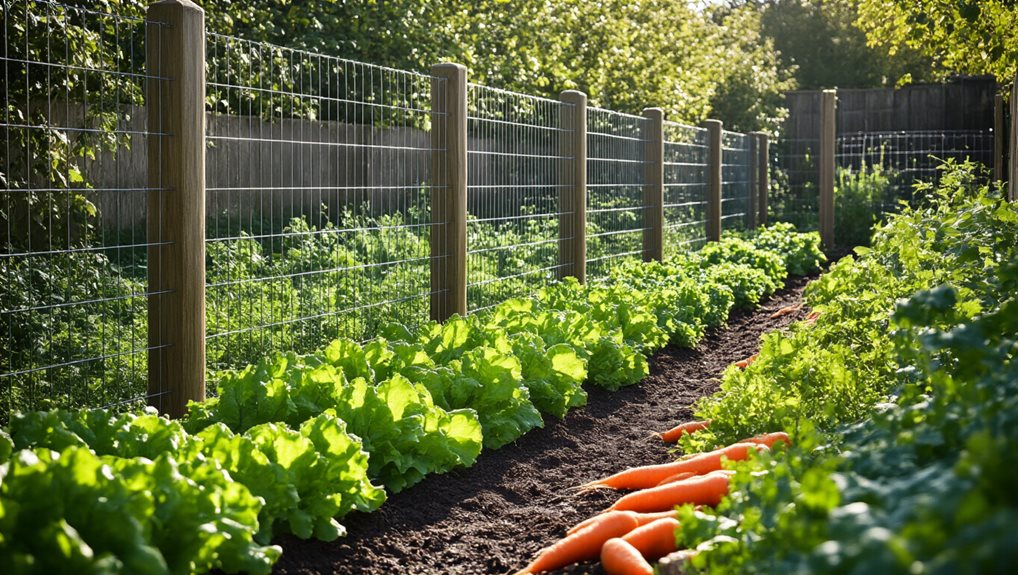
Where should you start when building a rabbit‑proof fence that stays truly gap‑free? Mark the line with string, set sturdy posts 2.5 m apart, hammer corner stakes 12 inches deep, and add intermediate posts every six feet.
Attach galvanized mesh to tension wires, pull netting taut, bend the bottom L‑shaped, bury it six inches, and check regularly for any openings. Deep-rooted plantings and groundcover nearby can help reduce soil disturbance around the fence by stabilizing the surface and supporting porosity, especially during heavy rains. Groundcover networks can also contribute to surface protection and erosion control, further supporting long-term soil health near fencing.
Select Rabbit‑Resistant Plants & Arrange Them for a Proof Garden
You’ll start by choosing rabbit‑resistant species—marigolds, lavender, yarrow, onions, and dense hedging shrubs—because their scent, texture, or toxicity discourages browsing. Then arrange those plants strategically: intermix herbs and marigolds within vegetable rows, place perennials like yarrow and salvia around the perimeter, and use thick hedges of boxwood or butterfly bush as entry barriers. This layered layout creates an unappealing zone that protects vulnerable crops while maintaining an attractive garden design. Incorporate an odor‑control mindset by using natural barriers and layered plantings that reduce attractants and create a less welcoming environment for rabbits odor control concepts.
Plant Selections
Why choose rabbit‑resistant plants for your vegetable garden?
You’ll blend aromatic herbs like lavender, mint, and rosemary with tough perennials such as yarrow, wormwood, and ornamental onion, while interspersing hardy vegetables—asparagus, rhubarb, and tomatoes—to create a cohesive, protective tapestry.
Adding marigolds, black‑eyed Susans, and zinnias reinforces deterrence, fostering a shared sense of security and belonging among fellow gardeners.
Strategic Plant Placement
How can you arrange rabbit‑resistant plants so they form a living barrier that protects your vegetables while still looking intentional?
Plant dense boxwood or cotoneaster hedges along plot edges, intermix Russian sage, yarrow, and marigolds for scent and texture, then add aromatic thyme or mint near carrots and beans. Include ornamental grasses and catmint masses to deter nibblers, while shrub borders of deutzia and viburnum provide seasonal interest and additional protection.
Apply Proven Repellents for a Rabbit‑Proof Garden
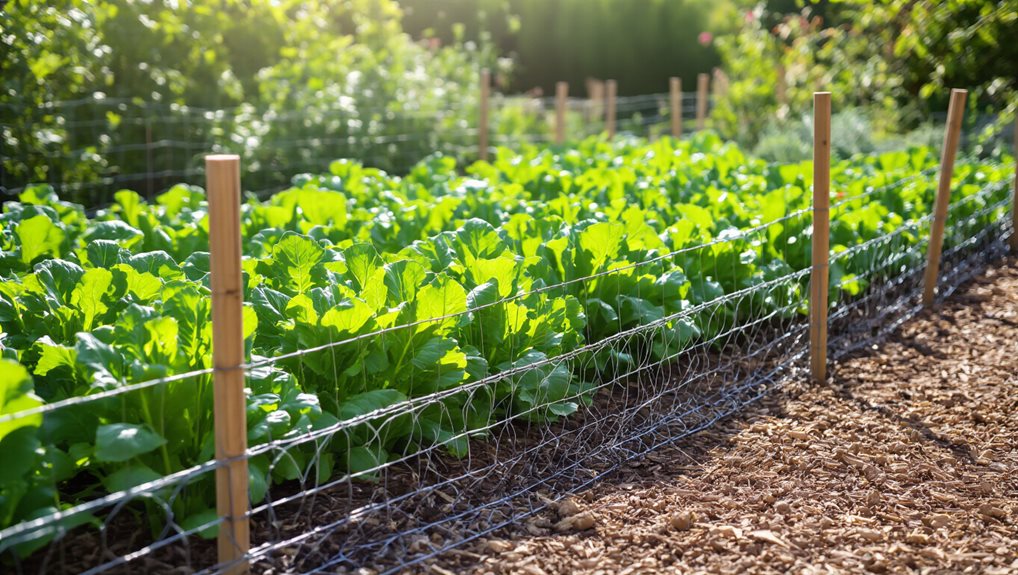
Ever wondered which repellents actually keep rabbits from nibbling your lettuce and tomatoes? Try spicy globe basil with Taishon marigolds, or spray a mix of Tabasco, chili pepper, and warm water on grass for an instant deterrent. Commercial odor repellents like Hinder work, but reapply after rain. Predator decoys, scent‑rich plants, and habitat cleanup together create a cohesive, rabbit‑proof garden that feels secure and shared.
Set Up Traps & Live‑Capture Within Legal Limits
Where do you begin when you need to capture rabbits humanely and stay within the law?
Choose a sturdy live trap from a garden center, bait it with apple slices or a rolled cabbage leaf, and position it near feeding spots under shade.
Check it daily—Wisconsin requires 24‑hour checks—refresh bait, then release the rabbit at least five miles away, complying with local regulations.
Modify Habitat to Make Your Yard Less Attractive
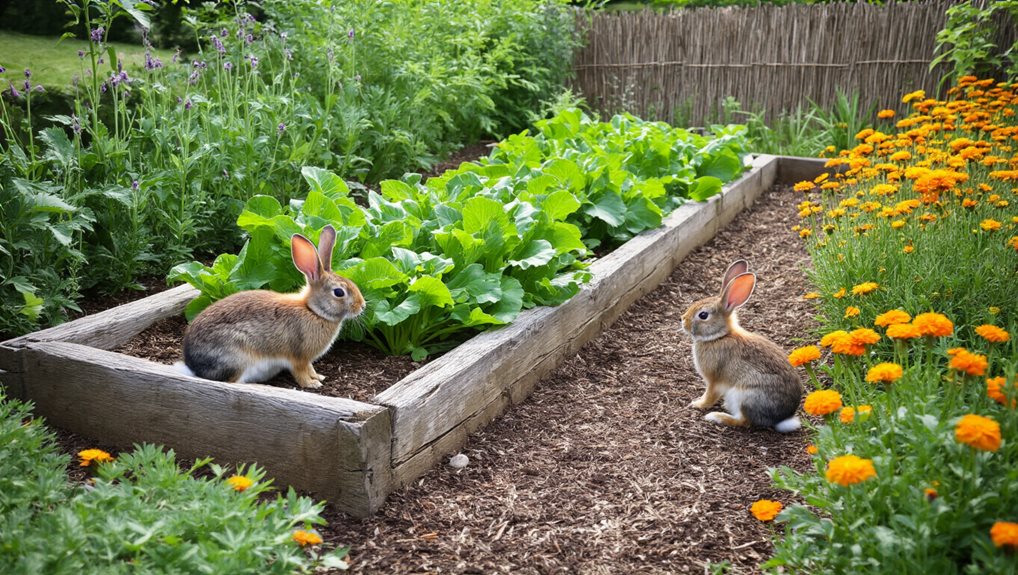
After setting up live traps and handling captures legally, the next step is to reshape your garden’s habitat so it no longer appeals to rabbits. Clear brush piles, stone debris, and tall weeds that give cover; mow or cut grasses near beds; remove vine thickets and shrub hideouts. Plant rabbit‑resistant herbs like lavender, and consider a sacrificial clover patch away from vegetables to divert attention. To further reduce rabbit risks, monitor and maintain soil and plant health to minimize gaps rabbits can exploit in early season growth. clover patch
Blend Tactics Into a Seasonal Rabbit‑Proof Garden Plan
Blend spring fences, herb containers, and taste repellents with summer raised beds, motion sprinklers, and companion scents; transition in fall with burlap wraps, sacrificial patches, and predator urine; then winterize using double‑layer wire, soap shreds, and extended tree wraps. Add a soil‑condition aware plan that accounts for soil type when choosing barrier materials and depths to ensure consistent protection across changing conditions frost line. Rotate repellents biweekly, patch gaps promptly, and synchronize each layer for continuous protection.
Monitor Results & Adjust Your Strategy Year‑Round
What you’ll notice first is that rabbit activity isn’t static; it shifts with the seasons, weather, and even the timing of your own garden tasks, so you need a monitoring system that captures those fluctuations and lets you fine‑tune your defenses continuously. Record transect counts monthly, track vegetation loss, inspect fences after storms, and adjust sprinklers or ultrasonic devices when habituation appears, ensuring your garden stays protected all year. Add a simple weather log to correlate rabbit activity with specific conditions and optimize your protective measures over time. habituation
Final Note
By combining a sturdy, gap‑free fence, rabbit‑resistant plant selections, targeted repellents, and seasonal habitat tweaks, you’ll keep rabbits from devouring your crops while maintaining a healthy garden ecosystem. Regularly inspect barriers for wear, adjust deterrents as growth cycles change, and stay within local wildlife regulations when using traps. This integrated, evidence‑based approach lets you protect yields year‑round without resorting to extreme measures, ensuring both productivity and environmental responsibility.

Nathan McPhail is a garden and home DIY expert who writes practical, easy-to-follow advice for homeowners and gardeners. Through Yardique, he shares hands-on tips covering gardening, lawn care, landscaping, home improvement, repairs, tools, and outdoor living. His focus is on helping readers solve everyday household and yard problems with straightforward guidance, useful techniques, and practical solutions.