To treat lawn grubs effectively, identify early signs like dead patches, spongy turf, or wildlife digging. Use soil probes or hand trowels to check for white grubs in a consistent pattern across your lawn. Timing is vital; apply preventive insecticides such as imidacloprid in June or July and curative options like carbaryl in late summer or fall during active feeding periods. Protect pollinators by applying treatments during early morning or late evening and avoiding flowering plants. For a more extensive approach, further details on control methods await you.
TLDR
- Identify grub damage early by inspecting turf for spongy patches and wildlife activity.
- Use a soil probe or hand trowel to check for white grubs in multiple lawn areas regularly.
- Apply preventive insecticides like imidacloprid in June or July before grubs hatch.
- Use biological controls such as beneficial nematodes, especially in warm, moist soil conditions.
- Schedule treatments during early morning or late evening to protect pollinators and follow product labels.
How to Recognize Signs of Lawn Grub Damage
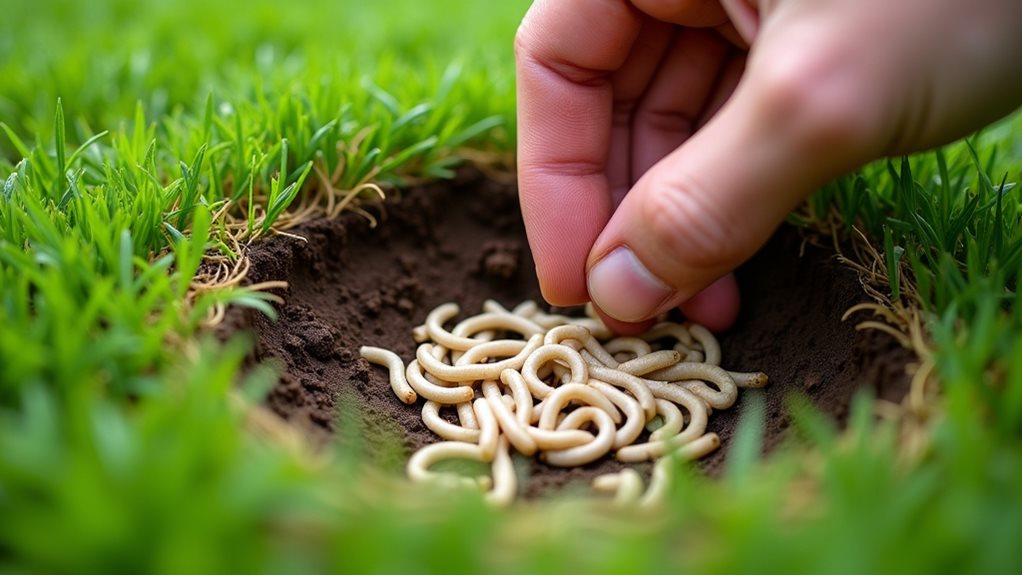
Recognizing signs of lawn grub damage can save your yard from extensive decline, but it requires careful observation. Signs of grubs include dead patches that won’t green up, turf that feels spongy or loose, and visible damage caused by root loss. A quick harvest of affected areas can help identify the problem early on. If wildlife digs in your yard, it’s often a sign of underground grub activity, indicating potential lawn grub damage.
How to Monitor Your Lawn for Grubs Effectively
Monitoring your lawn for grubs is an essential step in early detection and effective management, especially during peak infestation months like late summer to early fall. Use a soil probe or hand trowel to inspect a one-foot square section of turf, checking for white grubs and signs of damage. Monitoring multiple areas helps accurately assess infestation levels and guides treatment decisions. Regularly inspecting your lawn allows you to identify early signs of fungal issues, which can help prevent further damage caused by pests like grubs.
When Is the Best Time to Treat for Grubs?
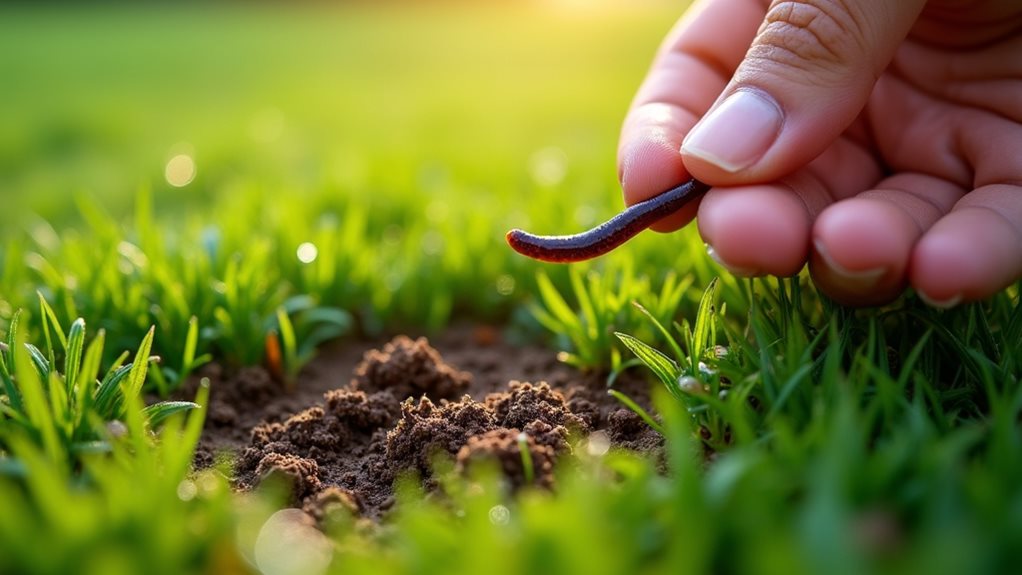
The most effective time to treat for grubs depends on their lifecycle and the season, with timing vital for success.
The best time for preventive insecticides is from mid-April to mid-June, targeting newly hatched grubs.
For curative treatments, late summer or early fall is ideal when grubs are actively feeding underground.
Apply preventive treatments in June or July for maximum control.
Which Products Work Best for Grub Control and How to Use Them
Choosing the right products for grub control depends on timing and the type of treatment you need, whether preventive or curative.
Effective insecticides like imidacloprid or trichlorfon work best when applied at specific times, such as early summer or in spring and fall, respectively.
Additionally, biological controls like beneficial nematodes can be effective if applied correctly and soil conditions remain favorable.
Fruits high in oxalates, such as blackberries, should be avoided when feeding sugar gliders, which highlights the importance of understanding nutritional balance for overall health.
Effective Insecticide Options
Several insecticide options are available for effective grub control, each suited to different times of the year and specific conditions.
Preventive insecticides with imidacloprid or chlorantraniliprole work best when applied in June or July, targeting hatchlings.
Curative treatments like carbaryl are effective in spring or fall when grubs are feeding actively, emphasizing proper application timing for maximum results.
Application Timing Tips
Timing plays a vital role in the effectiveness of grub control products, making it important to apply the right treatment at the right time.
For preventive grub control, apply in June or July before grubs hatch during peak activity.
Curative treatments should be used in spring or fall when active, feeding grubs are present, emphasizing that timing is essential for success.
Biological Control Methods
Biological control methods, such as applying beneficial nematodes, offer an environmentally friendly and targeted way to manage grub populations naturally.
These nematodes, like Steinernema and Heterorhabditis, seek out grub larvae underground when soil moisture is adequate.
For best results, apply during warm, moist conditions, and consider multiple applications every 2-3 weeks for sustained grub control.
Natural and Biological Ways to Control Lawn Grubs
Natural and biological methods offer effective alternatives to chemical treatments when managing lawn grubs. Beneficial nematodes, such as Steinernema species, seek out and infect grub larvae, providing environmentally friendly control.
A well-maintained lawn that encourages healthy turf growth a balanced ecosystem can naturally help suppress grub populations over time.
Milky spore disease targets Japanese beetle grubs with long-term suppression.
Maintaining healthy turf through proper care enhances natural resistance, reducing overall grub populations naturally.
Protecting Pollinators During Grub Treatments
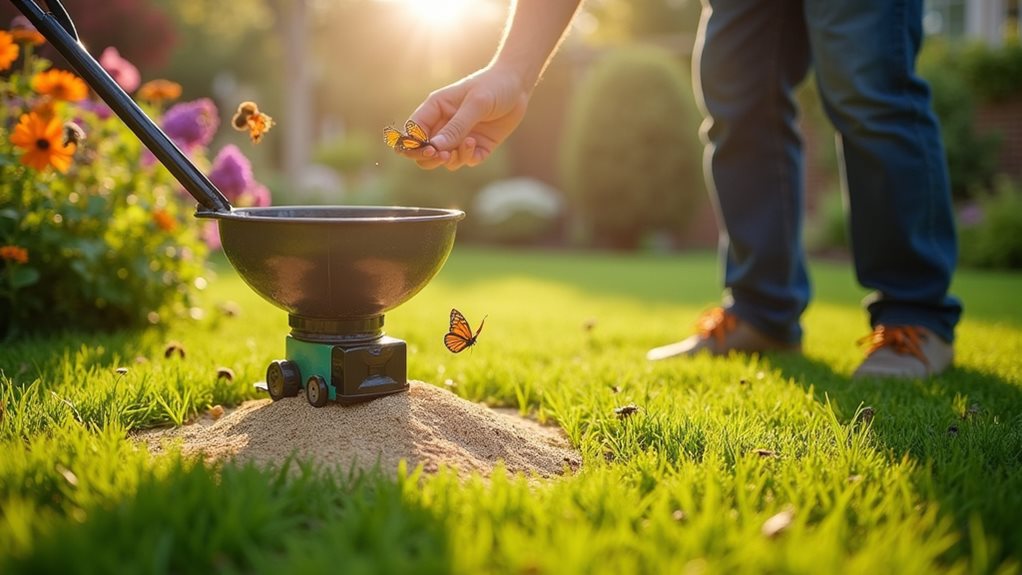
To protect pollinators during grub treatments, it’s important to time your applications carefully, such as spraying early in the morning or late in the evening when bees are less active.
Always choose insecticides labeled as safe for pollinators and follow the instructions precisely to minimize harm.
Additionally, avoid spraying or granular application near flowering plants and flowers, especially during bloom, to reduce the risk of exposing beneficial insects to harmful chemicals.
Being mindful of plant health signs can help ensure your lawn treatments don’t inadvertently cause stress to surrounding pollinators or your garden.
Timing of Pesticide Application
Timing your pesticide application carefully is essential to protect pollinators while effectively treating grub worms. The best timing of pesticide application is during late summer or early fall, such as June or July, when pollinators are less active.
Apply insecticides after mowing and avoid spraying on flowers or flowering weeds to work well and reduce harm.
Use of Pollinator-Friendly Products
Protecting pollinators during grub treatment is essential to maintaining a healthy ecosystem in your yard. Use pollinator-friendly products like neem oil, applied carefully during late summer, and avoid spraying on flowers or flowering weeds.
Schedule applications during early morning or late evening, and consider beneficial nematodes, which target grubs underground without harming pollinators or their habitats.
Safe Application Practices
Applying grub control products with care is crucial to minimize harm to pollinators and guarantee a healthy ecosystem in your yard. Use pollinator-friendly insecticides, such as neem oil.
Schedule application timing during early morning or late evening when pollinators are less active. Always follow label instructions, avoid flower beds, and prevent chemical exposure to protect beneficial insects.
What to Do If You Find Grubs in Your Lawn
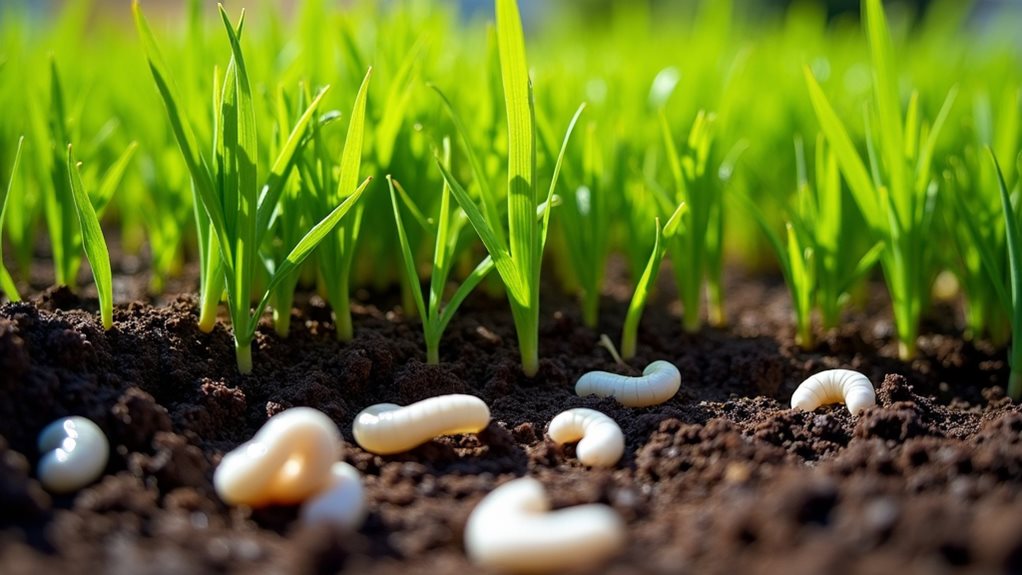
If you uncover patches of dead or thinning grass, it’s important to verify whether grubs are the cause before taking further action. When you find grubs in your lawn—more than five per square foot—treat for grubs using a grub control product containing imidacloprid, trichlorfon, or carbaryl. Water immediately after application to target eggs and minimize damage, supporting healthy lawn care. Identifying their presence early allows for targeted intervention, especially by assessing drainage hotspots and flow paths to prevent future pest issues.
Final Note
Treating your lawn for grub worms requires careful monitoring and timely intervention. Recognize the signs of damage, choose effective products, and consider natural methods to minimize chemical use. Always apply treatments during the ideal season to guarantee effectiveness and protect beneficial insects like pollinators. Regular inspection and prompt action help maintain a healthy, resilient lawn. Staying informed and practicing responsible pest control guarantees your yard remains lush and free of grub infestations.

Nathan McPhail is a garden and home DIY expert who writes practical, easy-to-follow advice for homeowners and gardeners. Through Yardique, he shares hands-on tips covering gardening, lawn care, landscaping, home improvement, repairs, tools, and outdoor living. His focus is on helping readers solve everyday household and yard problems with straightforward guidance, useful techniques, and practical solutions.