You can harvest radishes in just 25 days, making them ideal for beginners seeking fast, reliable results. Plant arugula, cress, and baby spinach every few weeks for continuous harvests under a month. Grow turnips, baby beets, and carrots in cool, loose soil for quick yields. Use cut-and-come-again lettuces and peppery greens like mizuna for steady picks. Try microgreens or pea shoots for harvests in days. Succession planting and shallow sowing in moist soil enhance success—there’s more to uncover with simple timing and spacing.
TLDR
- Radishes mature in just 21–28 days and are ideal for beginners due to their fast growth and low maintenance.
- Microgreens can be harvested in days, requiring only basic supplies and consistent moisture for reliable results.
- Arugula sprouts in 5–7 days and can be continuously harvested with cut-and-come-again methods every few weeks.
- Succession planting every 10–14 days ensures steady yields of fast crops like radishes and arugula without overwhelming harvests.
- Pea shoots and baby lettuces regrow after cutting, providing multiple harvests from a single planting with minimal effort.
Grow Radishes in Just 25 Days: Fastest of All

You can harvest most radish varieties in as little as 25 days, making them one of the fastest vegetables to grow from seed to table.
Plant seeds ¼–½ inch deep and 1–2 inches apart in cool, well-tilled soil with full sun.
Keep the soil moist, thin seedlings early, and succession plant every 10–14 days for a continuous harvest you can enjoy all season. Cooler temperatures also improve flavor and texture, similar to how cool weather benefits beets.
Radishes thrive in cool temperatures, and growing them under ideal conditions can accelerate maturity to just 21–28 days.
Harvest Arugula and Cress in Under a Month
You’ll see arugula sprouts in just 5–7 days, and with their bold, peppery kick, these fast-growing greens deliver big flavor even when harvested young at 3 inches tall.
Use the cut-and-come-again method, snipping outer leaves 1 inch above the soil to keep plants producing for weeks.
To enjoy a steady supply, sow new seeds every 14–21 days in cool weather or every 7–10 days with cress, which matures in as little as 14 days.
Keep the soil consistently moist, as new seeds should not be allowed to dry out for longer than 12 hours to ensure reliable germination.
Fast Germination, Big Flavor
Getting started with fast-growing greens pays off quickly when choosing arugula and cress, two flavorful crops that germinate in under a week under ideal conditions.
You’ll see sprouts in 4–7 days when soil stays between 40°F–70°F, with cress emerging in just 5 days at 65°F.
Even in cooler soil, both still sprout reliably, giving you a quick, rewarding harvest with rich, peppery flavor.
Harvest Young For Tenderness
Once the first sprouts of arugula and cress break through the soil, the clock starts on a quick path to harvest, with peak tenderness achieved well before the one-month mark.
You can snip baby leaves in as little as 14–20 days, ideal for tender, mild flavor. Cut 1 inch above the soil or pick outer leaves, allowing regrowth.
Succession planting every two to three weeks guarantees a continuous, fresh supply.
Sow Succession For Continuous Crop
Sowing in succession keeps your arugula and cress harvest coming reliably, even in small growing spaces.
Plant every two to three weeks from early spring through fall, skipping hot summer months to prevent bolting.
Sow seeds shallowly in moist, loose soil, thinning seedlings to 3–4 inches apart.
With consistent care, you’ll enjoy tender leaves in about 30 days, and continuous plantings guarantee fresh greens all season long.
Pick Spinach and Salad Greens Ready in 30 Days
Often ready for harvest in just 25 to 30 days, baby spinach delivers a quick, nutritious payoff for beginner gardeners who want visible results fast.
You’ll see germination in 5–10 days, with tender leaves reaching 2–3 inches by the baby leaf stage. Plant in cool soil, 50–70°F, with 6–8 hours of sun, and keep moisture consistent to prevent bolting. Proper soil temperature is important for germination, especially since cool-season greens thrive in 50–65°F soil.
Try Fast Turnips, Beets, and Baby Carrots

While you’re looking for quick returns from your garden, turnips, beets, and baby carrots stand out as reliable, fast-maturing root crops that thrive with minimal fuss.
You can harvest tender turnips in 30 days, baby beets in 40, and young carrots in just 35–45 days.
Succession planting every 10–14 days guarantees steady yields, while cool-season timing and proper spacing maximize your success.
Weeds can compete vigorously for resources, so plan to manage rapid weed growth to protect your crops.
Choose Quick Bush Beans and Lettuce Varieties
Grab a packet of bush bean seeds and a tray of lettuce starts to kick off a fast, rewarding harvest with minimal effort.
You’ll love Provider or Contender beans, ready in 50 days and perfect for small spaces without staking.
Pair them with Black Seeded Simpson or Oak Leaf lettuces, which regrow after cutting and thrive in cool soil.
Consider planting peppers in 5-gallon buckets with one seedling per bucket to keep container-grown plants healthy and manageable (one pepper seedling).
Grow Peppery Mustard, Mizuna, and Rocket Fast

You can grow peppery mustard, mizuna, and rocket quickly by sowing seeds in early spring as soon as the soil hits 40°F, spacing them properly to guarantee good airflow and steady growth.
These fast-growing greens thrive with a cut-and-come-again approach, letting you harvest outer leaves while the plant keeps producing, which extends your yield over weeks.
With their bold flavor and quick harvest time—some ready in under 40 days—they’re ideal for beginners wanting fresh, homegrown salads in no time.
Peppery Flavor, Quick Harvest
Get ready to enjoy bold, peppery flavors in record time by growing mustard greens, mizuna, and rocket—three fast-maturing leafy greens that thrive in cool weather and deliver harvestable leaves in just 20 to 50 days.
You’ll love their easy care, quick growth, and adaptability to containers or small gardens. Keep soil moist, provide partial shade in warmer areas, and sow every few weeks for a continuous, fresh supply of zesty, nutrient-rich greens perfect for salads and intercropping.
Sow Seeds Early Spring
Peppery mustard, mizuna, and rocket thrive when sown early in the season, making them ideal for cool spring gardens where they establish quickly before temperatures rise.
Sow seeds ¼–½ inch deep, 4–6 weeks before the last frost, as soon as soil is workable. Keep beds moist, thin seedlings to 3–6 inches, and succession plant every two weeks for a continuous harvest.
Cut And Come Again
Harvesting your greens the right way can convert a one-time crop into a long-lasting supply.
Cut outer leaves of mustard, mizuna, or rocket one inch above the crown, leaving inner growth intact.
These fast-growing greens regrow quickly, offering multiple harvests.
Use clean scissors weekly, and enjoy fresh, peppery leaves for months with minimal effort, all from a single planting.
Use Microgreens and Pea Shoots for Harvests in Days

Often overlooked by novice gardeners, microgreens and pea shoots offer a fast, reliable way to enjoy homegrown produce in just days—not weeks.
Soak seeds for 12–24 hours, then keep them dark and moist for 3–5 days. Once sprouted, expose them to 12 hours of light daily.
Harvest microgreens at 2 inches or let pea shoots grow to 3–4 inches, cutting just above the soil for tender, nutrient-rich greens.
Start From Seed or Seedlings? Best Options for Speed
You’ve already seen how microgreens and pea shoots can land on your plate in just days, but if you’re ready to take the next step into slightly longer—yet still fast—harvests, it’s time to decide whether to start from seed or seedling.
For speed, radishes, lettuce, and spinach thrive when direct sown, sprouting quickly and growing fast in cool soil. Green beans also do well from seed, especially bush types that mature in about 50 days.
But with zucchini, starting from seedlings gives you a faster, more reliable harvest, cutting weeks off your wait and enhancing your confidence as a new grower.
Plant in Waves: Keep Harvesting All Season
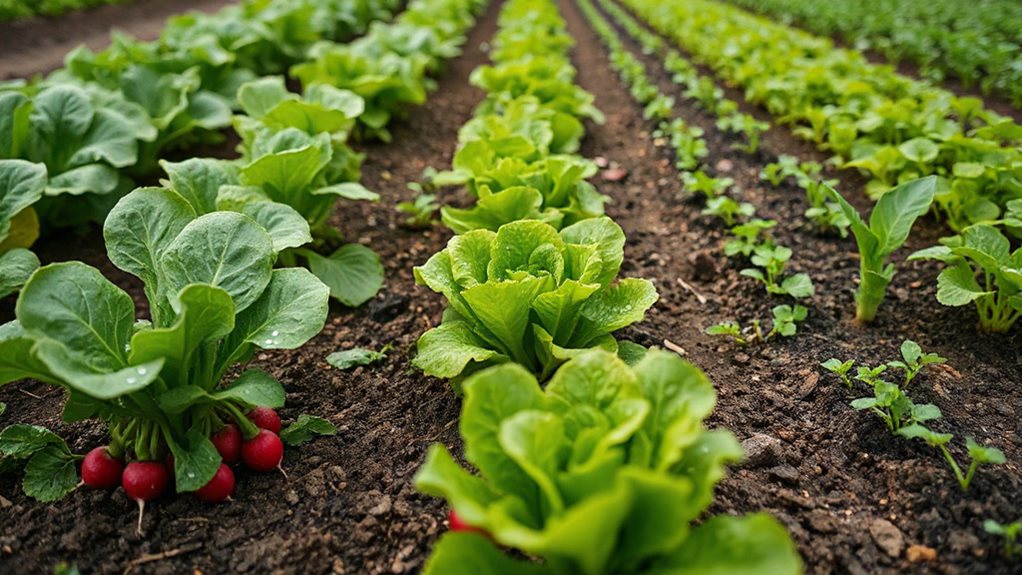
Space out your sowings and you’ll keep fresh produce coming all season without a glut or gap.
Plant lettuce, radishes, or beans every 1–2 weeks to guarantee continuous harvests.
This wave planting method maximizes space, reduces waste, and buffers against weather or pests.
You’ll enjoy steady yields, pick selectively, and maintain momentum—perfect for beginners wanting reliable, low-fuss results from their garden.
Final Note
You’ll enjoy quick results by growing radishes, arugula, and microgreens, all ready in weeks. Planting in succession every 10–14 days guarantees a continuous harvest. Choose fast-maturing varieties of lettuce, bush beans, and root crops for reliable yields. Starting from seed saves time and expands options, while proper spacing and watering enhance growth. With minimal effort and smart planning, you’ll harvest fresh, nutritious produce consistently—all season long.

Nathan McPhail is a garden and home DIY expert who writes practical, easy-to-follow advice for homeowners and gardeners. Through Yardique, he shares hands-on tips covering gardening, lawn care, landscaping, home improvement, repairs, tools, and outdoor living. His focus is on helping readers solve everyday household and yard problems with straightforward guidance, useful techniques, and practical solutions.