
Identify brown patches, silver‑dollar circles, yellow rust dots, or pinkish‑red tips, then check margins for dark purple‑brown edges and cobweb‑like mycelium; note merging areas, thinning grass, and rotting crowns to gauge severity. Choose resistant varieties like tall fescue, perennial ryegrass, or Kentucky bluegrass cultivars such as Adelphi, and blend mixes for sun exposure. Water deeply once or twice a week for about an hour, delivering half an inch, early in the morning. Mow at 2–3 inches, never cutting more than a third, keep blades sharp, and aerate regularly to improve drainage. Apply a lawn‑specific curative fungicide at the first sign of disease, rotating modes of action every two to three weeks; continued guidance will show you how to fine‑tune each step.
TLDR
- Identify the fungus early by spotting characteristic patches, mycelium, and spores, then assess severity to target treatment.
- Improve drainage and reduce moisture buildup with proper site planning, runoff channels, and aeration.
- Choose disease‑resistant grass varieties or blended seed mixes suited to your climate and shade conditions.
- Water deeply 1–2 times weekly in the early morning, delivering about ½ inch per session to keep foliage dry.
- Mow at 2–3 inches with sharp blades, aerate regularly, and apply a curative fungicide promptly, rotating modes of action.
Identify the Lawn Fungus and Assess Damage
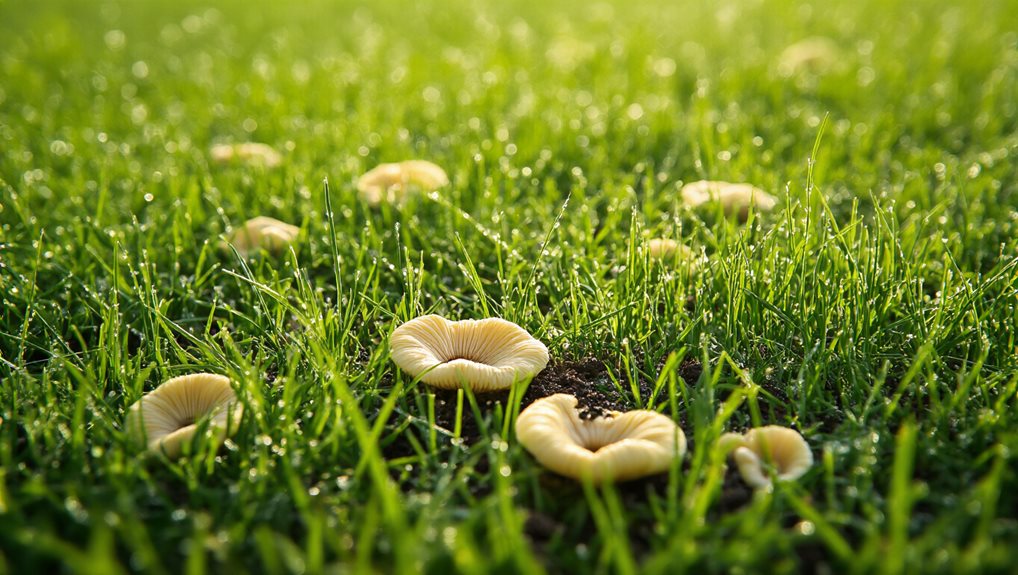
Where can you tell which fungus is attacking your lawn and how badly it’s damaged the turf? You’ll spot brown patch’s circular dead grass, dollar spot’s silver‑dollar circles, rust’s yellow dots, red thread’s pinkish‑red tips, and snow mold’s crusty white patches.
Examine leaf margins for dark purple‑brown edges, cobweb‑like mycelium, and orange‑yellow spores.
Note merging patches, thinning areas, and rotting crowns to gauge severity and plan targeted treatment. Fungal disease requires timely identification and proper cultural practices to prevent spread.
To help prevent spread, identify drainage patterns in your yard and consider how proper planning of runoff channels can reduce moisture buildup that favors fungal growth. drainage planning
Select Disease‑Resistant Grass and Seed Mixes
After you’ve identified the fungus and gauged its impact, the next step is to choose grass varieties and seed blends that naturally resist those pathogens. Opt for tall fescue or perennial ryegrass in humid zones, Kentucky bluegrass cultivars like Adelphi for stripe smut, and region‑specific mixes such as Pennington Smart Patch with microbials. Blend multiple cultivars to diversify resistance, match sun exposure, and use adapted seed for lasting lawn health. Bamboo is a fast-growing option to create vertical screens that reduce shade on the lawn and limit disease spread by improving airflow in dense plantings vertical greens and by pairing with proper pruning and site selection to maintain air movement.
Water Deeply 1‑2 Times Weekly to Keep Lawn Fungus at Bay

Water deeply once or twice a week, aiming for 60‑minute sessions that deliver ½‑inch per application, preferably between 4 AM and 8 AM, so moisture penetrates the root zone, reduces surface wetness, and discourages disease-causing fungi while supporting beneficial microbes. Consistent maintenance and choosing high-quality irrigation practices can help sustain a healthier turf over time, especially when paired with proper drainage and soil conditioning. smaller nozzle openings
Mow and Aerate for a Fungus‑Free, Healthy Lawn
Keeping your lawn’s moisture balanced through deep, infrequent watering sets the stage, the next line of defense: proper mowing and aeration.
Mow at 2‑3 inches, never cutting more than one‑third, using sharp blades and grasscycling clippings to keep air flow and reduce thatch.
Aerate regularly to improve drainage, root health, and nutrient access, which together create a resilient, fungus‑free turf that feels like a shared, thriving community.
Apply Lawn‑Specific Fungicides Only When the Disease Appears
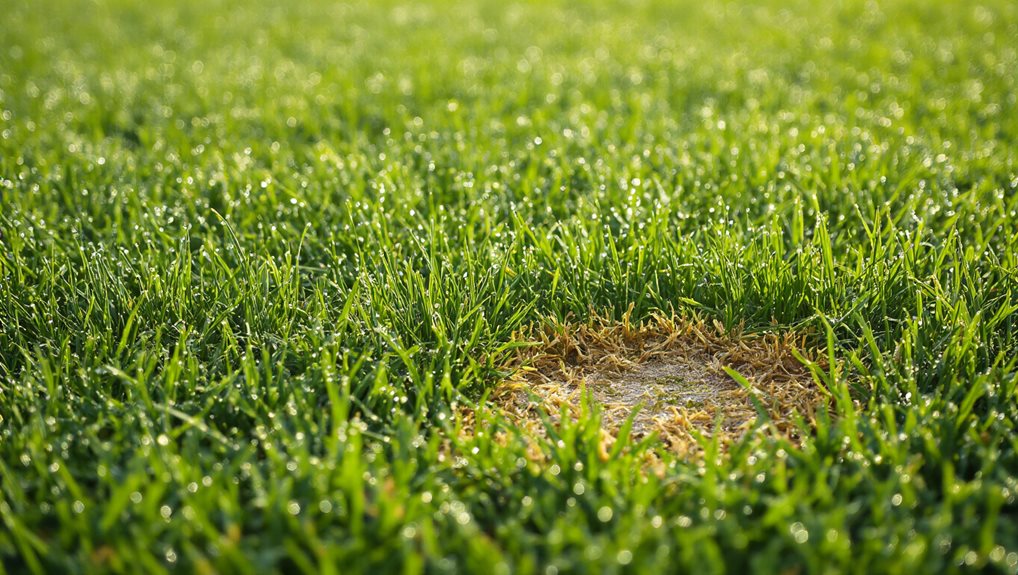
When you spot the first signs of powdery mildew, brown patch, or any fungal blemish on your lawn, act quickly and apply a lawn‑specific curative fungicide—delaying treatment can let the pathogen spread and damage the turf beyond repair.
Choose a product matched to your grass, follow label dosage, spray evenly with a calibrated sprayer, water as directed, and re‑treat every two to three weeks, rotating modes of action to keep resistance at bay.
Final Note
By correctly identifying the fungus, selecting resistant grass, watering deeply but infrequently, mowing at the proper height, and aerating regularly, you’ll create an environment that discourages disease. Apply a targeted fungicide only when symptoms appear, following label directions to avoid resistance. Consistent, informed care will keep your lawn healthy and limit fungal spread, ensuring a resilient, attractive turf throughout the season.

Nathan McPhail is a garden and home DIY expert who writes practical, easy-to-follow advice for homeowners and gardeners. Through Yardique, he shares hands-on tips covering gardening, lawn care, landscaping, home improvement, repairs, tools, and outdoor living. His focus is on helping readers solve everyday household and yard problems with straightforward guidance, useful techniques, and practical solutions.