
To set up drip irrigation in raised beds, you first measure your beds carefully to determine tubing length and emitter placement for uniform watering. Connect mainline tubing along the bed’s perimeter with fittings, then install emitters every 6 to 12 inches depending on plant density, securing the tubing with garden staples. Test the system to verify proper coverage, add filters to prevent clogs, and adjust your watering schedule. Following these steps will optimize your system’s efficiency; investigate more details to perfect your setup.
TLDR
- Measure and plan the layout, ensuring even emitter placement for uniform watering across the raised beds.
- Connect mainline tubing along the bed perimeter, then run lateral lines to reach all plants.
- Install emitters every 6-12 inches based on plant density, securing tubing with staples.
- Attach a filter and pressure regulator to prevent clogs and maintain proper water flow.
- Test the system, then set a watering schedule for deep, infrequent watering, adjusting as needed.
Why Drip Irrigation Works Best in Raised Beds
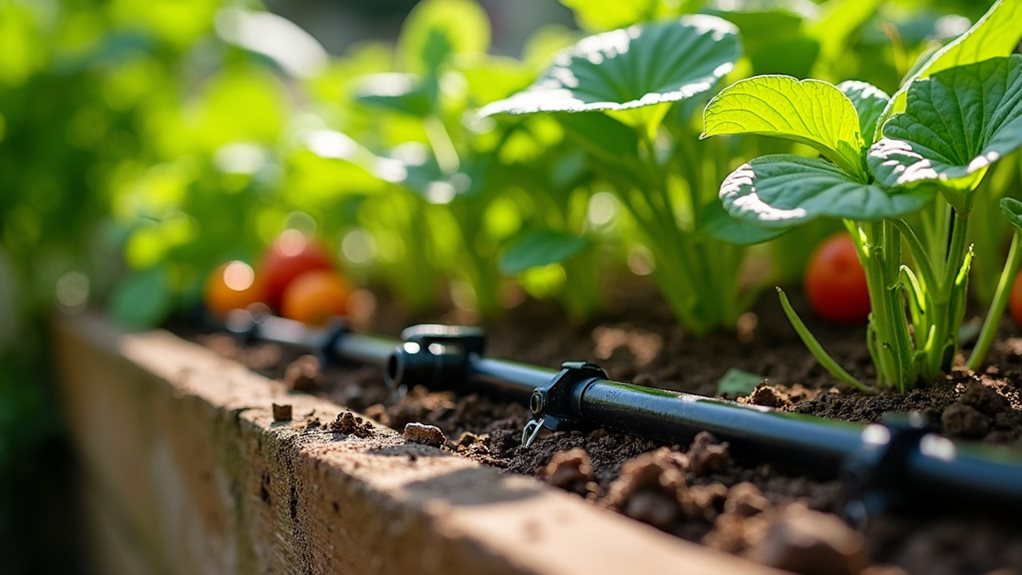
Because raised beds typically have loose, well-draining soil, drip irrigation is especially effective for maintaining consistent soil moisture and water efficiency.
The system delivers water directly to plant roots through emitters, reducing waste and evaporation.
This targeted watering minimizes runoff and soil erosion, ensuring a reliable watering system that promotes healthy, deep root growth in your raised beds.
Plan Your Raised Bed Drip System Layout
To effectively plan your raised bed drip system layout, start by measuring each bed accurately to determine the total dripline needed. Ensure even emitter spacing for uniform watering. Design your raised bed layout with mainline tubing along the perimeter, incorporating risers and connectors for easy access. Plan tubing routing that allows for system expansion without complicating irrigation planning. Consider the watering schedule to ensure consistent moisture levels throughout the growing season.
Gather Supplies and Tools for Easy Installation
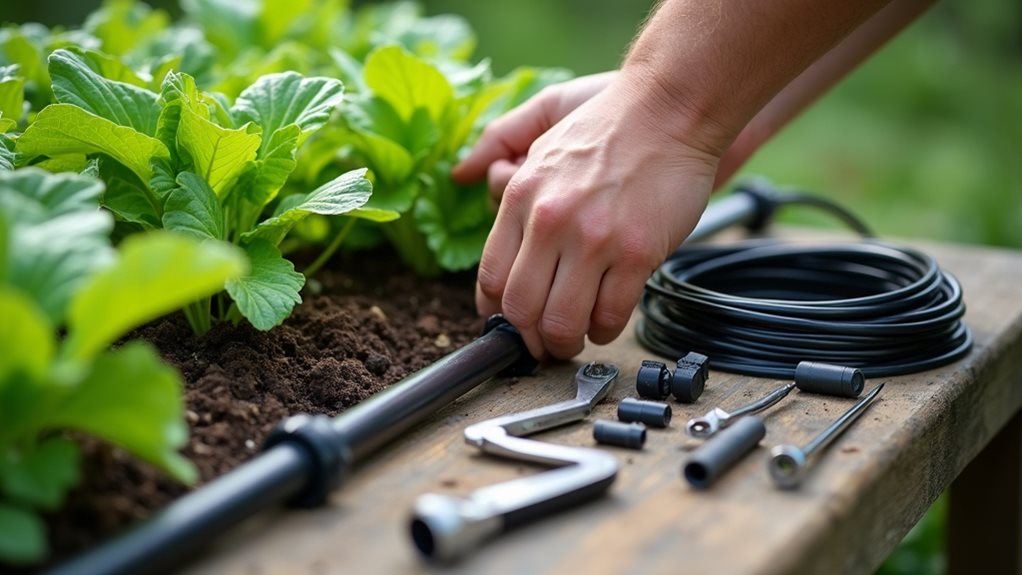
To set up your drip irrigation system effectively, you need to gather essential supplies such as hoses, fittings, and tubing that match your bed size. Having the right tools, like punch tools, clamps, and scissors, makes installation smoother and guarantees secure connections. Taking the time to prepare these items beforehand helps prevent delays and assures a reliable watering setup. Additionally, understanding how to measure and mark your beds accurately ensures the irrigation system covers the entire area efficiently.
Essential Supplies Checklist
Gathering the right supplies is a crucial first step in setting up an efficient drip irrigation system for your raised beds. You’ll need a hose tap with a pressure regulator, irrigation tubing in various lengths, and emitters for even watering.
Fittings, a punch tool, and yard staples guarantee secure connections and stable placement, making installation straightforward and dependable.
Necessary Tools Overview
Equipping yourself with the right tools and supplies is crucial for a smooth and effective installation. Gather irrigation tubing, fittings, punch tools, outdoor staples, scissors, and a tubing cutter to measure and cut accurately.
Additionally, a hose adapter with a pressure regulator, filter, and coupler guarantees proper water connection, helping you secure your system and maintain consistent watering in your raised beds.
How to Install Your Drip Irrigation System
Installing your drip irrigation system requires careful planning and precise connections to guarantee consistent watering throughout your raised beds. Measure and cut ½ inch solid tubing to fit, leaving extra for clamps. Connect tubing with punch tools and barbed couplers. Attach emitters every 6 to 12 inches. Secure everything with garden staples. Use a pressure regulator. Finally, test the system for proper coverage. Incorporating a filter helps prevent clogs and ensures even water distribution over time.
Adjust Drip Lines and Zones for Even Watering
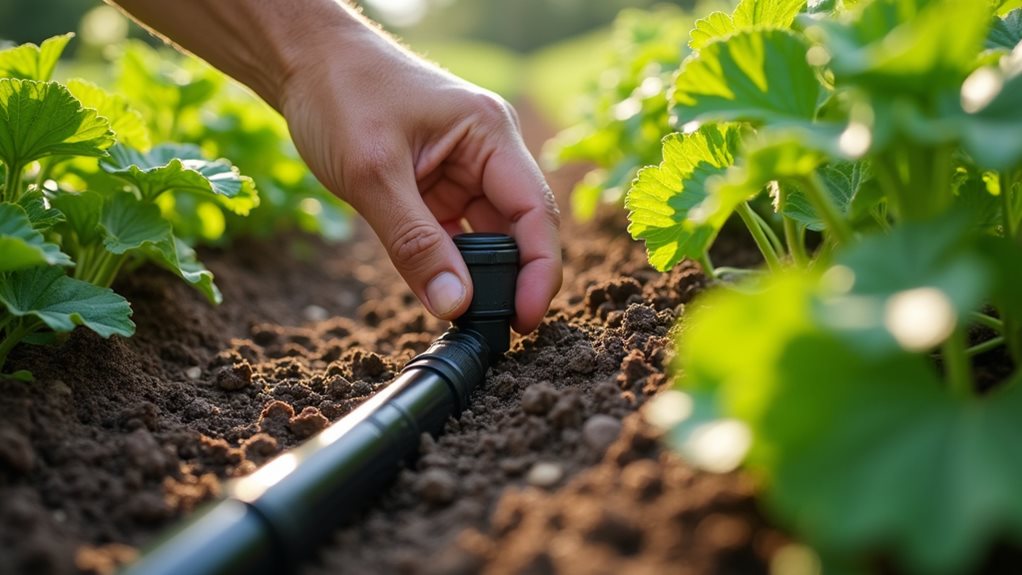
To guarantee your raised beds are watered evenly, you need to carefully space your drip lines between 6 and 12 inches apart, depending on plant density and bed size.
Using multiple lines and staggering their emitters helps distribute water more uniformly, preventing dry spots and overwatering.
Don’t forget to adjust zone settings and flow rates to match the specific needs of your plants and soil conditions, making certain of consistent moisture across all zones. Additionally, ensuring proper zone configuration can help prevent moisture buildup that promotes fungal growth.
Proper Drip Line Spacing
Proper drip line spacing is essential for achieving even water distribution across your raised beds, preventing dry spots and promoting healthy plant growth.
For watering uniformity, space drip tubing every 6 to 12 inches, with emitters every 6 inches in densely planted areas.
Adjust spacing based on plant roots and soil, ensuring your irrigation setup supports efficient, consistent watering throughout your raised beds.
Zone Separation and Control
Dividing your raised beds into separate zones is a crucial step in achieving even water distribution, as it allows you to tailor irrigation to the specific needs of different plant groups or areas.
Use zone valves and shut-off valves for zone separation, paired with a multi-zone timer to automate watering.
Adjust emitter flow rates and pressure regulation for ideal water distribution and consistent coverage.
Maintain and Troubleshoot Your Drip System
Regular maintenance is vital to keep your drip irrigation system functioning effectively and to prevent common issues such as clogged emitters or leaks.
You should regularly flush the lines, check fittings and connections for leaks, and replace faulty parts promptly.
Using a pressure gauge helps maintain ideal pressure, while winterizing your system guarantees it stays protected during cold months.
Additionally, inspecting the clipping management components and ensuring they are clear can help prevent blockage and maintain proper water flow.
Set Up Your Watering Schedule for Healthy Plants
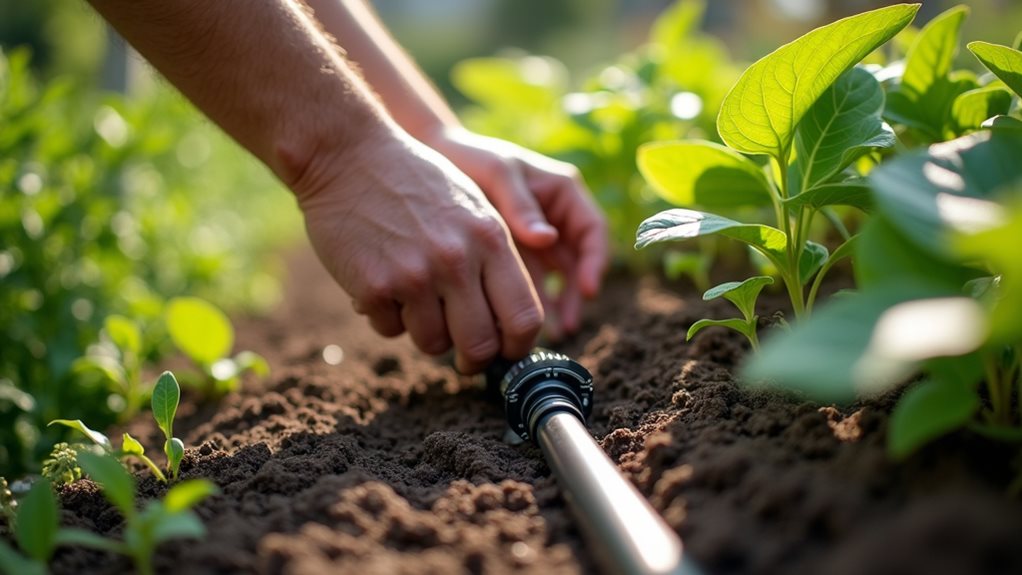
Establishing an effective watering schedule is essential for maintaining healthy plants in your raised beds, especially when using a drip irrigation system. You should water deeply and infrequently, about 45 minutes twice weekly, adjusting based on soil moisture, climate, and plant needs. Incorporate proper watering techniques to prevent overwatering and root rot, which are common issues for tropical plants. Use a timer for consistency, mulch beds, and regularly check soil moisture with a meter to prevent issues.
Final Note
Setting up a drip irrigation system in raised beds guarantees efficient water delivery directly to your plants’ roots, reducing waste and promoting healthy growth. Proper planning, careful installation, and regular maintenance are crucial for peak performance. By adjusting zones and schedules based on your plants’ needs, you can create a reliable watering routine that conserves water and minimizes manual effort. With these steps, you’ll establish a sustainable, effective irrigation system that supports your garden’s long-term success.

Nathan McPhail is a garden and home DIY expert who writes practical, easy-to-follow advice for homeowners and gardeners. Through Yardique, he shares hands-on tips covering gardening, lawn care, landscaping, home improvement, repairs, tools, and outdoor living. His focus is on helping readers solve everyday household and yard problems with straightforward guidance, useful techniques, and practical solutions.