To get rid of voles in your yard, start by recognizing their damage—shallow runways, gnaw marks, and small holes near burrows. Modify their habitat by removing dense ground cover, installing underground fencing, and controlling moisture to make your yard less attractive. Use organic repellents like castor oil mixtures, peppermint spray, or plant toxin-free bulbs, and set live traps along runways. Regular monitoring allows you to adjust methods effectively. Continue exploring these strategies to protect your yard effectively.
TLDR
- Remove dense ground cover, weeds, and shrubbery to eliminate vole hiding spots.
- Install underground fencing or physical barriers buried at least 3 inches deep to block tunnels.
- Use organic repellents like castor oil mixtures and essential oils to deter voles naturally.
- Place live traps along runways, check frequently, and release captured voles away from your yard.
- Regularly monitor for vole signs, adjust control methods, and maintain habitat modifications for long-term prevention.
How Can You Recognize Vole Damage in Your Garden?
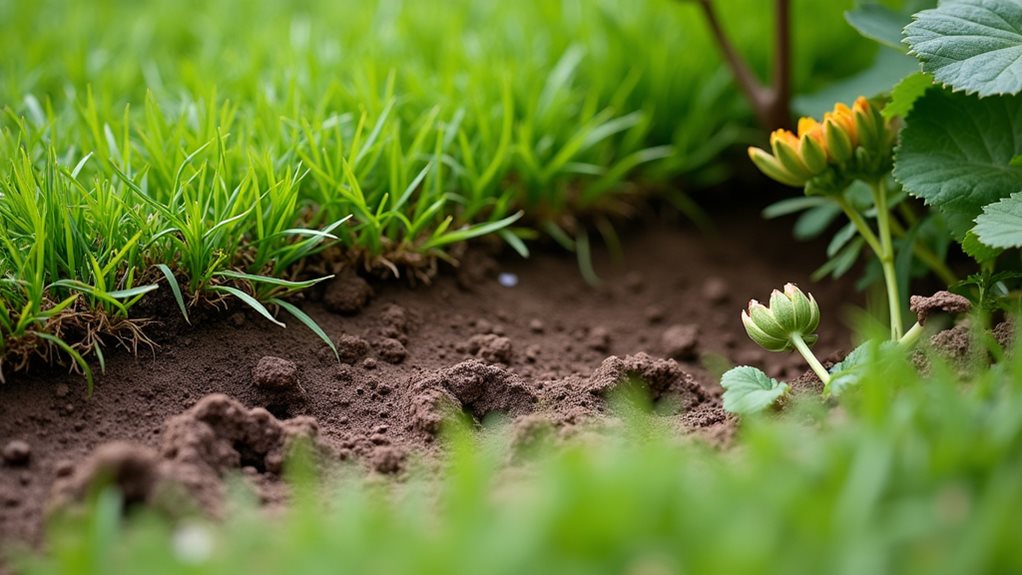
How can you tell if voles are damaging your garden? Look for vole damage, such as shallow runways 1-2 inches wide across ground cover. Small holes near burrow entrances and gnaw marks on plant stems or roots are also signs.
A running surface indicates frequent activity, and pellet-shaped droppings near burrows help confirm vole presence. These signs can signal potential harm to your plants. Additionally, placement and structure of nearby plantings can influence vole activity, making it easier to identify and manage their presence.
How Do You Modify the Habitat to Prevent Voles?
Modifying your yard’s habitat is a proactive step toward preventing vole infestations. You can do this through habitat modification, such as removing dense ground cover, weeds, and shrubbery to eliminate hiding spots. Installing physical barriers like underground fencing or barriers can also help prevent voles from entering your garden areas. Additionally, controlling vegetation, reducing moisture by draining standing water, and performing yard cleanup all help create an environment less attractive and accessible to voles. Incorporating effective physical barriers into your landscape design can significantly decrease the likelihood of an infestation.
What Are the Best Organic Repellents and How Do You Use Them?
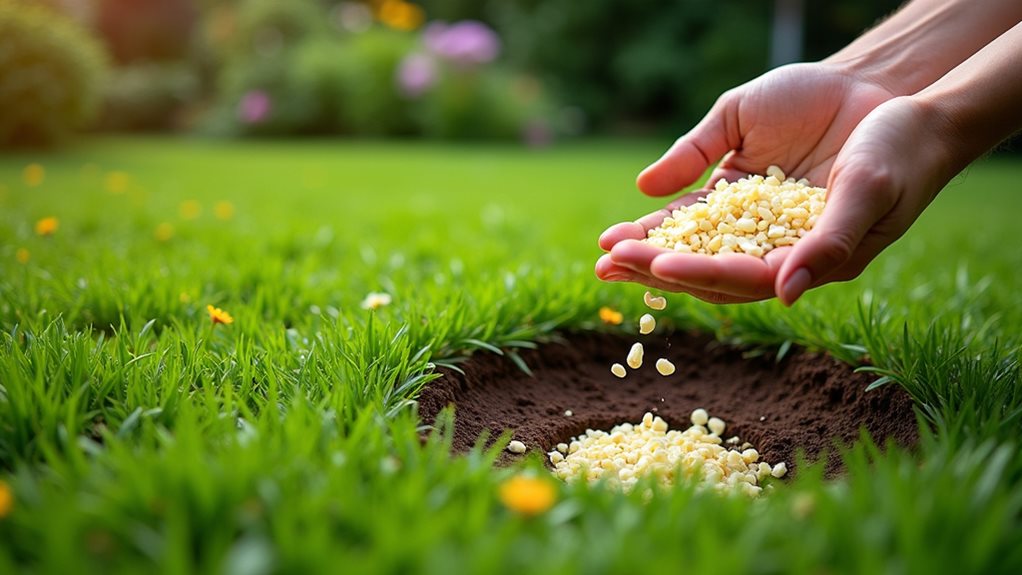
Organic repellents offer a natural and effective way to deter voles from your yard without resorting to chemical solutions.
You can create a homemade mixture with castor oil, dish soap, and water, or add cayenne pepper for extra deterrence.
Planting toxin-free bulbs and spraying essential oils like peppermint also enhance organic control, providing ongoing protection.
How Can You Trap and Exclude Voles Effectively?
Effective trapping and exclusion methods are key to managing vole populations and protecting your yard. Use live traps placed directly on surface runways, setting multiple traps for better results, and check them often to release voles away from your property. Install mesh fencing around gardens and burrows, burying it at least 3 inches deep, and extend barriers above ground to prevent tunneling. Additionally, reinforcing physical barriers with layered deterrent measures such as chicken wire, clips, and anti-digging techniques can further enhance protection.
How Do You Monitor and Adjust Your Vole Control Strategy?
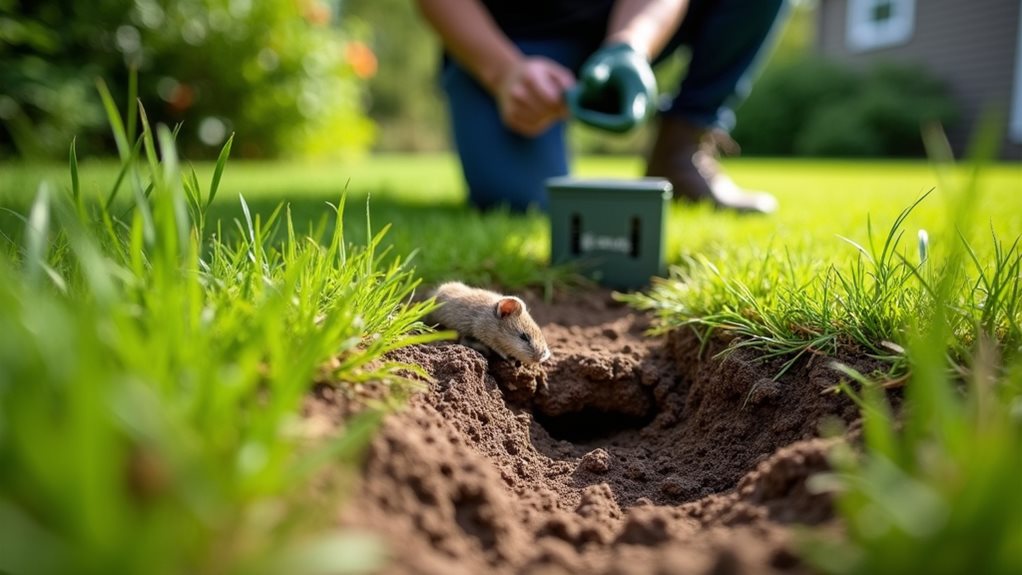
Monitoring your vole control efforts is essential to determine whether your strategies are working effectively. Regularly assess vole activity by observing signs like runways, burrows, and gnaw marks.
Keep detailed records of sightings, damage, and trap catches to identify patterns. Incorporate pest identification techniques to distinguish vole damage from other pests for more targeted control.
Adjust your control strategies by increasing trap placement, applying repellents more often, and evaluating habitat modifications to reduce vole activity over time.
Final Note
Effectively managing voles requires consistent observation and habitat modification, combined with targeted trapping and natural repellents. By identifying signs of damage early and making strategic adjustments, you can reduce their presence and protect your garden. Regular monitoring allows you to refine your approach, ensuring your efforts remain effective over time. With patience and persistence, you can create a less inviting environment for voles, ultimately safeguarding your yard’s health and your peace of mind.

Nathan McPhail is a garden and home DIY expert who writes practical, easy-to-follow advice for homeowners and gardeners. Through Yardique, he shares hands-on tips covering gardening, lawn care, landscaping, home improvement, repairs, tools, and outdoor living. His focus is on helping readers solve everyday household and yard problems with straightforward guidance, useful techniques, and practical solutions.