Position your windbreak perpendicular to prevailing winds, using tall, dense plantings like evergreens or multi-row designs for maximum protection. Aim for a height at least two to three times your crop’s height—taller barriers shield up to 10 times their height downwind. Stagger shrubs and trees to close gaps, reduce turbulence, and maintain 40–60% density. Choose flexible, wind-resistant species and extend the line beyond your garden. There’s more to optimizing placement and plant selection than just height.
TLDR
- Position windbreaks perpendicular to prevailing winds for maximum protection and reduced plant damage.
- Use evergreen shrubs and trees like Tea Olive for year-round, dense wind shielding.
- Plant double or multi-row windbreaks spaced 10–15 feet apart to enhance coverage and block gusts.
- Ensure windbreak height is 2–3 times crop height to effectively reduce wind at plant level.
- Fill gaps with groundcovers like Mossy Stonecrop to minimize soil erosion and strengthen root zones.
Stop Garden Wind Damage With the Right Windbreak

Protect your garden from harsh winds by choosing the right windbreak—because unchecked gusts don’t just dry out soil and damage leaves, they can stunt growth or even kill young plants.
You’ll create sheltered growing spaces using layered hedges, slatted fences, or temporary covers. Match solutions to your layout and climate, and watch your plants thrive with less stress and stronger roots. Effective windbreaks can reduce wind speed over a distance of up to 7 times their height, so proper placement is key for maximum protection 5–7 times their height.
Size Your Windbreak: Height Determines Protection Zone
Your windbreak’s height directly controls how far its protection reaches, so choose wisely based on your garden’s size.
A 10-foot-tall row of trees can shield an area up to 100 feet downwind, but for larger plots, you’ll need taller or multiple rows spaced every 10 to 20 times their height.
Aim for a height at least two to three times that of your crops to guarantee effective wind reduction where it matters most.
Consider adding a retaining wall or drainage feature if slope and runoff from a higher neighbor could undermine your windbreak’s soil and plantings.
Height Defines Protection Range
While windbreak effectiveness depends on several factors, the height of your planting ultimately sets the boundaries for protection.
You can expect solid wind reduction up to 10 times the height downwind, so a 10-foot tree row shields about 100 feet.
Taller, denser windbreaks extend protection further—up to 30H—ensuring your garden stays calmer, healthier, and more resilient in strong winds.
Match Scale To Garden Size
A windbreak’s height sets the stage for how far protection reaches, but choosing the right scale guarantees it fits your garden without overcrowding or falling short.
Match your space: small gardens thrive with double rows 8–10 feet apart, while larger areas need five rows spaced 15–25 feet.
Use staggered planting, account for mature widths, and align rows with prevailing winds to create effective, lasting shelter.
Place It Right: Block Prevailing Winds Effectively
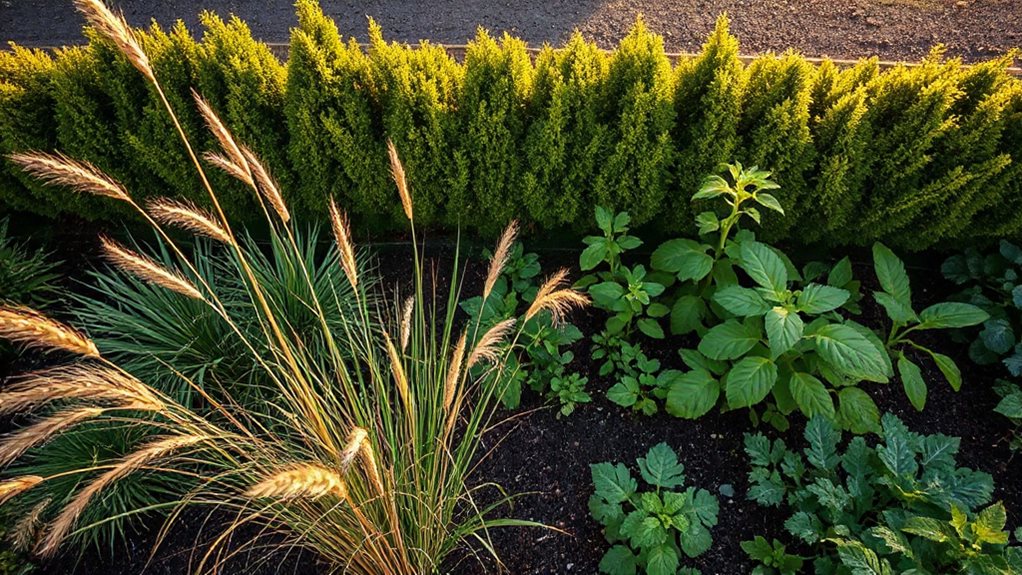
Start by identifying the prevailing wind direction in your area, since most gusts typically come from the north-northwest in many regions.
Position your windbreak perpendicular to these winds for maximum effectiveness, ensuring it covers vulnerable spots in your yard.
Close any gaps in planting to maintain a solid, permeable barrier that reduces wind speed without causing turbulence.
Consider installing a French drain or other drainage solutions if windbreak placement affects water runoff to neighboring properties and local drainage rules apply.
Find Prevailing Wind Direction
How do you make certain your windbreak actually works?
Start by identifying the prevailing wind direction, the most dominant airflow in your area, even if it occurs just 10–15% of the time.
Use tools like USDA’s Wind Rose or Global Wind Atlas to pinpoint seasonal patterns.
Align Perpendicular For Maximum Effect
Now that you’ve identified the prevailing wind direction using tools like the USDA’s Wind Rose or Global Wind Atlas, it’s time to position your windbreak for maximum impact.
Align it perpendicular to the wind for optimal shielding, reducing wind speed by up to 50% at 10 times its height downwind.
Make sure the length exceeds height by a 10:1 ratio, and extend it 100 feet beyond the area protected to minimize end turbulence and maximize coverage.
Close Gaps To Maintain Protection
Keep your windbreak working hard by closing gaps that could let prevailing winds slip through.
Inspect annually for damage, disease, or thinning, and prune strategically to sustain density.
Remove weeds that compete for resources, and repair supports after storms.
Thin overcrowded areas to improve airflow while maintaining coverage, and replant where needed to make sure your barrier stays strong, effective, and resilient over time.
Match Density to Your Garden’s Needs
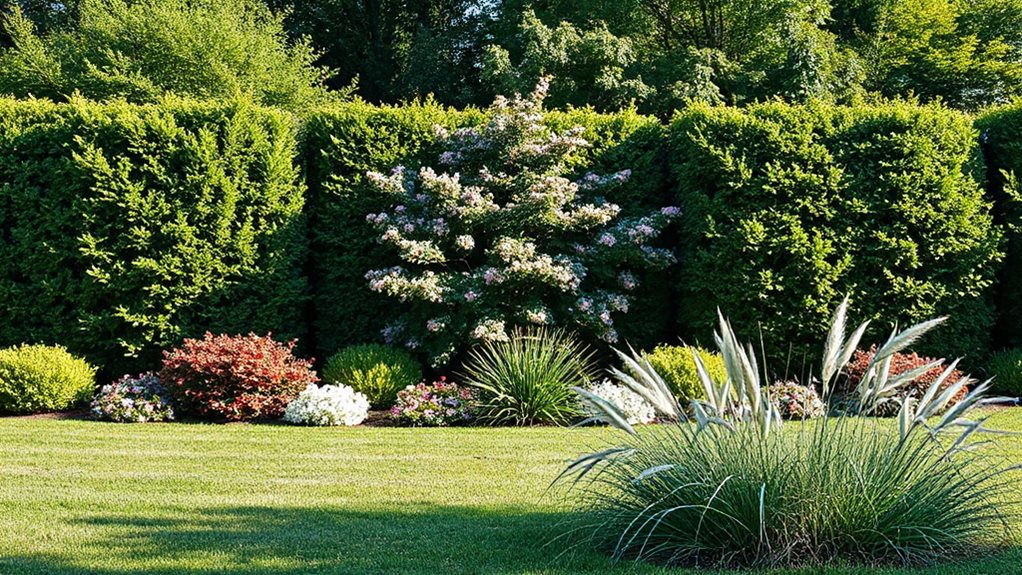
While your garden’s purpose shapes its design, matching windbreak density to your specific needs guarantees effective protection without unintended consequences.
Aim for 40–60% density to shield crops and reduce soil erosion, or increase to 60–80% for livestock areas.
Use multiple rows with evergreens where snow control or winter protection matters most.
Consider adding layered plantings of shade-loving and soil-stabilizing species like native groundcovers to enhance erosion control and year-round interest.
Design Multi-Row Windbreaks for Full Coverage
When planning a windbreak that delivers full coverage, designing multiple rows is your best strategy for creating a resilient, long-lasting barrier.
Space rows 10–15 feet apart, using staggered patterns to block wind effectively.
Place shade-tolerant, bushy shrubs on the windward side, taller trees like White Mulberry leeward, and evergreens closest to your garden for maximum protection and productivity.
Include heat- and sun-loving species like Bougainvillea in outer rows to add color and withstand harsh conditions.
Choose Plants That Protect Year-Round
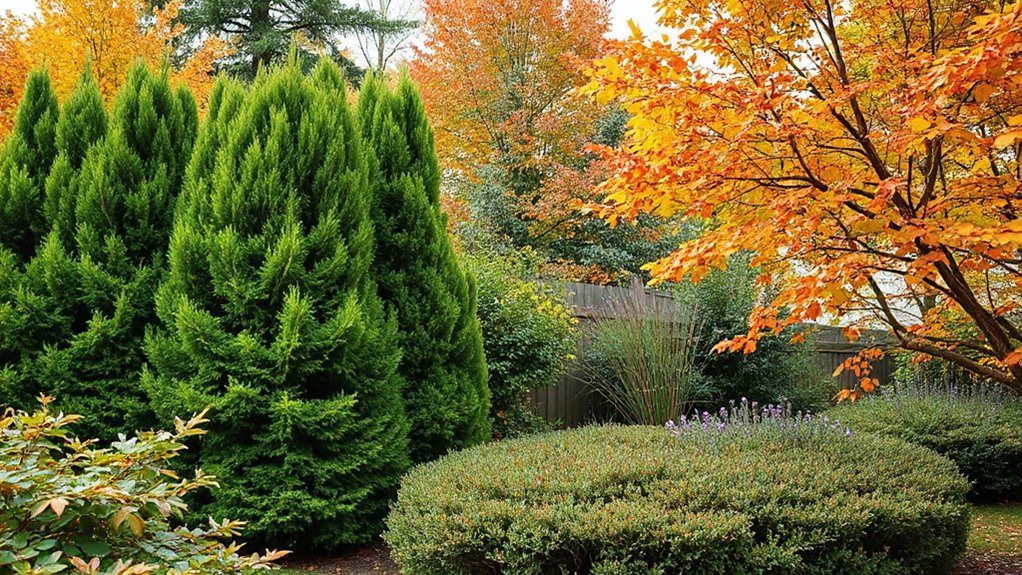
You’ve designed a multi-row windbreak for full coverage, but now it’s time to guarantee that protection holds strong through every season.
Choose evergreens like Shumard Oak and Tea Olive, which keep dense foliage year-round.
Opt for flexible-stemmed Bald Cypress and wind-resistant Switch Grass.
These plants won’t just survive—they’ll shield your garden reliably, no matter the weather, giving you peace of mind with every breeze.
Consider adding low-growing, drought-tolerant groundcovers such as Mossy Stonecrop to fill gaps and reduce soil erosion.
Final Note
You’ve got the tools to shield your garden from damaging winds. By sizing and positioning your windbreak correctly, you extend protection where it’s needed most. Matching density to your plants’ needs and using multi-row designs enhances effectiveness, especially with year-round coverage. Choose hardy, dense vegetation that blocks prevailing winds without creating turbulence. With smart planning, your windbreak won’t just guard plants—it’ll enhance growth, reduce stress, and support a healthier, more resilient garden ecosystem over time.

Nathan McPhail is a garden and home DIY expert who writes practical, easy-to-follow advice for homeowners and gardeners. Through Yardique, he shares hands-on tips covering gardening, lawn care, landscaping, home improvement, repairs, tools, and outdoor living. His focus is on helping readers solve everyday household and yard problems with straightforward guidance, useful techniques, and practical solutions.