You can deter squirrels by spraying a capsaicin‑based pepper mix on beds and decks, misting peppermint oil around perimeters, and reapplying after rain; combine these fast‑acting repellents with a homemade cayenne‑vinegar spray that avoids direct contact with edible foliage. Plant spicy chilies, mint, rosemary, and garlic near borders, and install a low‑profile mesh fence buried four inches deep or hoop netting on raised beds. Adding coffee grounds or decoys creates sensory barriers, and the layered approach keeps squirrels out while you explore more details.
TLDR
- Use capsaicin‑based sprays (pepper or cayenne) on beds and perimeters, reapplying after rain to deter chewing.
- Mist peppermint oil around garden edges; combine with capsaicin for immediate, lasting deterrence.
- Plant aromatic, pest‑repellent species such as mint, rosemary, garlic, and marigold around bed borders to create a scent barrier.
- Install low‑profile plastic mesh or hoop netting, burying the base 4 inches deep to block digging access.
- Apply an apple‑cider‑vinegar spray (vinegar, water, a soap) to foliage, avoiding direct contact with edible parts.
Understand Why Squirrels Damage Garden Beds
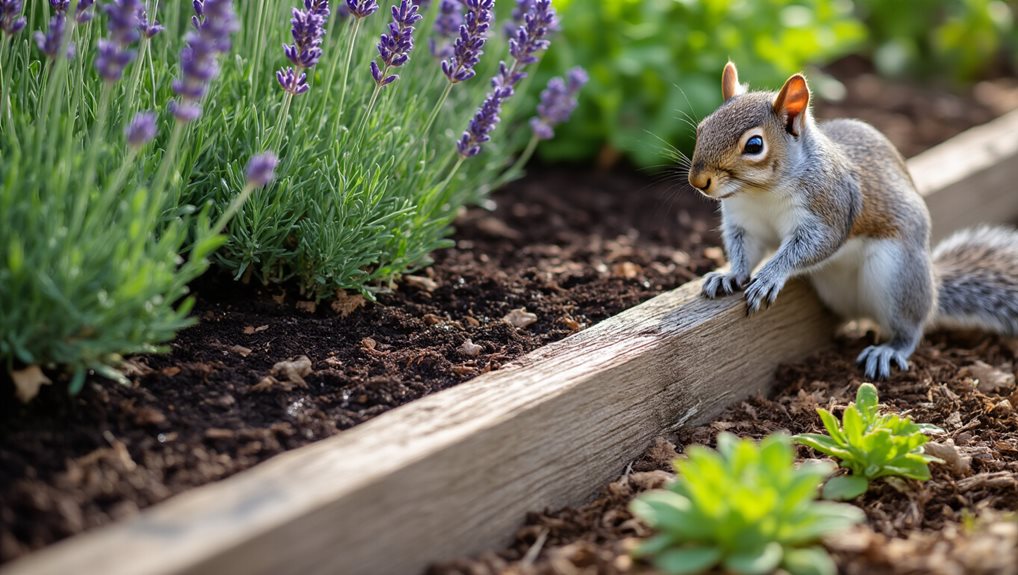
Why do squirrels keep digging up your garden beds? You’ll notice them burying nuts and food caches, turning loose soil into a pantry, uprooting delicate plants, and targeting bulbs like tulips and crocus for storage.
Their soft‑fruit raids leave half‑eaten crops, while gnawing on bark and wood damages trees. This disturbance destroys seeds, ruins layouts, and can spread parasites, making your garden feel less secure. They also core aeration
Apply Fast‑Acting Natural Repellents
You can spray a capsicum‑based repellent, which delivers capsaicin’s irritating heat instantly to foliage, deterring squirrels before they start chewing. At the same time, a light mist of peppermint oil creates a strong, minty scent that confuses their foraging instincts and masks plant aromas. The combination also helps minimize repetitive pest behaviors by addressing immediate needs for relief and security. environmental enrichment
Spicy Capsaicin Spray
Ever wondered how a simple kitchen spice can keep squirrels out of your garden beds? Mix cayenne pepper with water or use a 0.35% capsaicin oil spray, then coat beds, decks, or feeders; squirrels will sneeze, rub faces, and retreat instantly, because capsaicin irritates their mucous membranes without harming them.
Apply 5 ml per spot, reapply after rain, and enjoy humane, eco‑friendly protection.
Peppermint Oil Mist
Cayenne pepper’s sting works well for quick knock‑back, but peppermint oil offers a complementary, fast‑acting scent barrier that exploits squirrels’ heightened olfactory sensitivity.
You’ll soak cotton balls or bark in pure peppermint oil, place them near entry points, or dilute the oil and spray a mist around perimeters, avoiding edible plants.
Refresh the scent after rain or wind, and combine it with barriers for sustained deterrence.
Mix Squirrel‑Proof Homemade Sprays
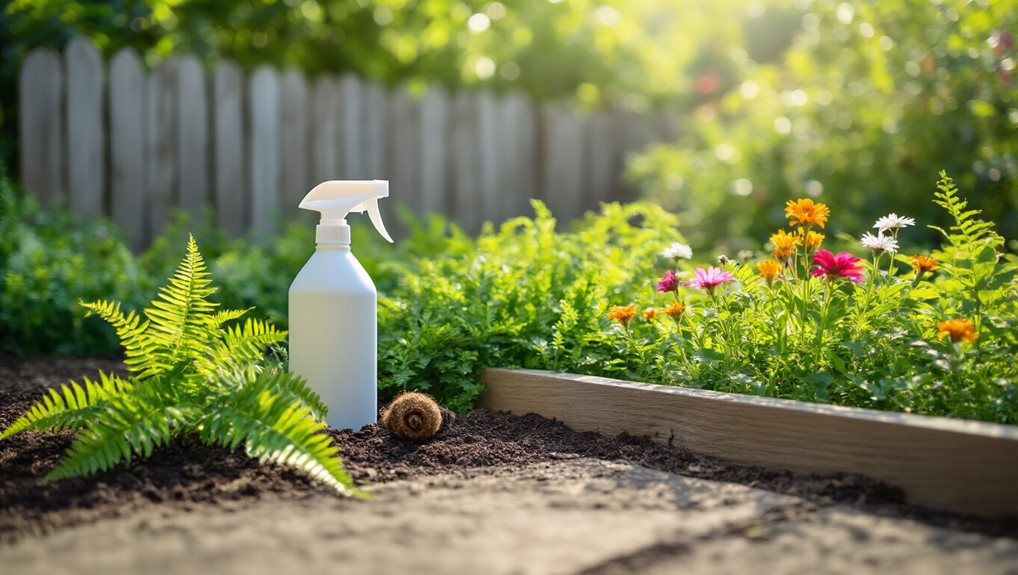
You can enhance your garden’s defenses by whipping up a cayenne‑pepper spray, which blends ground cayenne, chili powder, and black pepper steeped in hot water to create a potent, spicy mist that squirrels avoid.
Pair that with an apple cider‑vinegar blend—mix equal parts vinegar and water, add a few drops of dish soap, and you’ll have a sour‑tasting barrier that deters rodents without harming plants.
Apply both solutions liberally to foliage and repeat after rain to keep the squirrels at bay.
Cayenne‑Pepper Spray
How can a simple kitchen ingredient become a reliable shield for your garden? Mix one tablespoon ground cayenne pepper with a cup of water, stir, and pour into a spray bottle; mist birdseed, pole surfaces, and vulnerable plant leaves. Reapply every few days, especially after rain, and avoid direct contact with edible foliage. This capsaicin‑based spray deters squirrels by irritating their noses and mouths while leaving birds unharmed.
Apple Cider‑Vinegar Blend
If the heat of cayenne pepper spray works, the sharp scent of apple cider vinegar can offer a comparable, low‑cost barrier for your garden.
Mix equal parts vinegar and water, add a drop of peppermint oil or crushed garlic for extra punch, then spray hard surfaces and pots, reapplying after rain.
Avoid foliage, use cloths in crawlspaces, and stay consistent for lasting deterrence.
Plant Squirrel‑Proof Herbs & Flowers
Ever wondered which herbs and flowers can turn your garden beds into a squirrel‑free zone? Plant spicy chilies, cayenne, or Sichuan peppers for their pungent scent, and surround them with aromatic mint, rosemary, sage, or vanilla to create an odor barrier.
Add strong‑smelling onions, garlic, or ginger, and intersperse lavender, marigold, nasturtium, and daffodil for extra repellent power. Pest‑repellent plants can enhance the effectiveness of a natural barrier when grown strategically around bed borders.
Install Squirrel‑Proof Physical Barriers
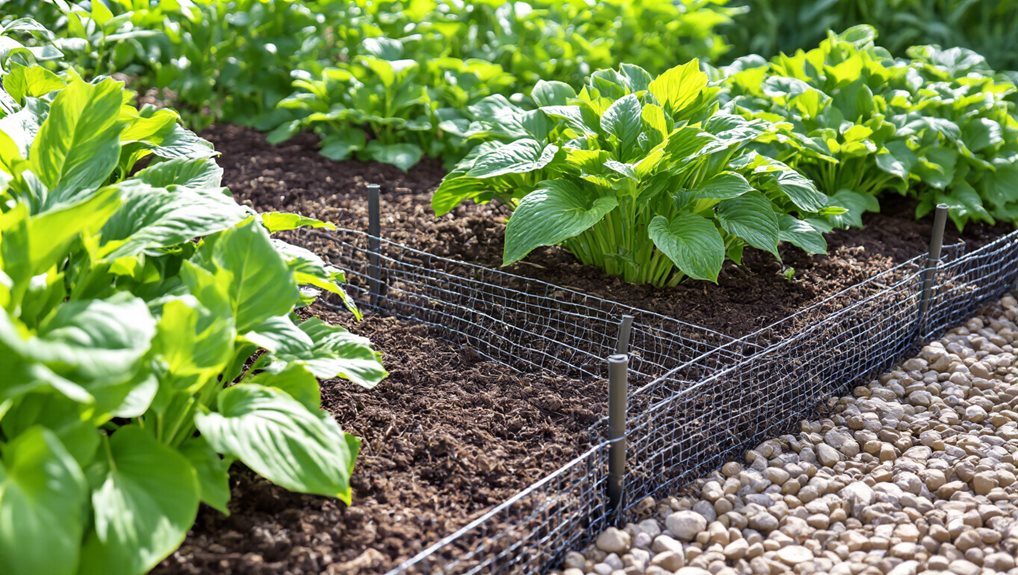
A solid physical barrier is often the most reliable way to keep squirrels out of garden beds, and several low‑cost options let you customize protection without sacrificing plant health.
You can install flexible plastic mesh fencing, burying its base four inches deep and anchoring it with step‑in posts; set up raised‑bed hoop netting using bamboo stakes and hose hoops; or apply snow‑fencing covers secured with sod staples. These barriers blend into the garden, support vines, and deter squirrels while maintaining a cohesive, welcoming space. Proper air circulation and spacing around the barrier help prevent plant stress that can invite pests and disease maintenance considerations.
Squirrel‑Proof Sensory Deterrents: Coffee, Decoys & More
Physical barriers keep squirrels out, but once the fence is in place you’ll still need sensory tricks to stop the curious critters from testing the perimeter.
Sprinkle coffee grounds into soil or mulch for a strong scent that deters, yet enriches, and reapply after rain.
Place peppermint‑oil soaked cotton balls, cayenne pepper, or predator‑scent decoys nearby, rotating scents regularly to prevent habituation while maintaining a welcoming, communal garden atmosphere.
Combine Strategies for a Simple, Ongoing Defense
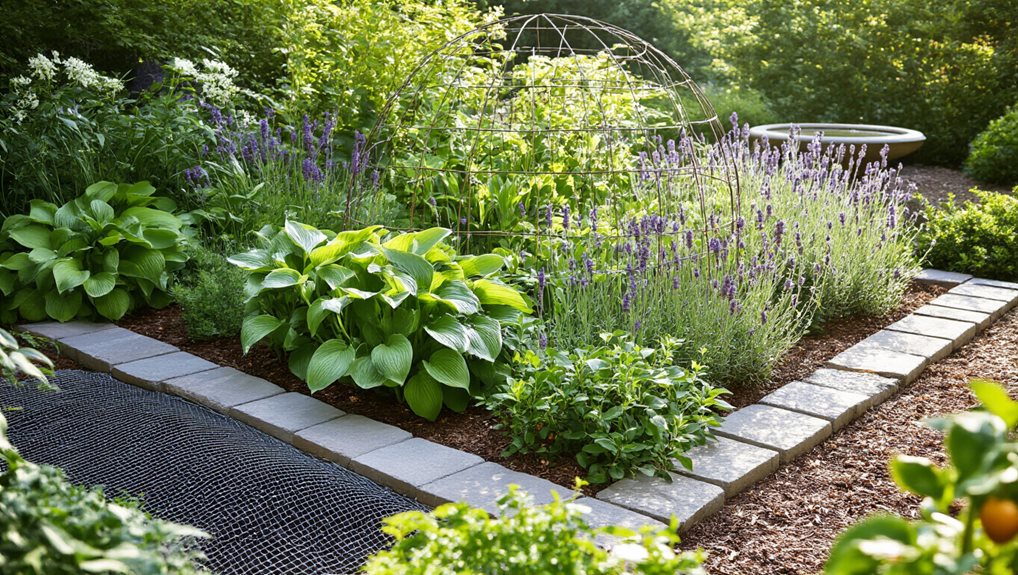
How can you turn a garden into a sturdy, low‑maintenance strong without relying on a single method? Combine a hoop‑net barrier, metal‑sided raised beds, and anti‑digging layers, then weave in repellent plants and coffee‑ground mulch.
Secure covers with clips, reinforce soil with chicken wire, and reapply scent deterrents regularly. This layered system offers continuous protection while keeping your garden community thriving. Rebates and financing
Final Note
By combining natural repellents, homemade sprays, squirrel‑proof plants, and sturdy barriers, you’ll create a resilient defense that deters rodents without harming them. Regularly rotate sensory deterrents like coffee grounds or decoys to prevent habituation, and monitor the garden to adjust tactics as needed. This layered approach not only protects your beds but also supports a balanced ecosystem, allowing you to enjoy a thriving garden with minimal ongoing effort.

Nathan McPhail is a garden and home DIY expert who writes practical, easy-to-follow advice for homeowners and gardeners. Through Yardique, he shares hands-on tips covering gardening, lawn care, landscaping, home improvement, repairs, tools, and outdoor living. His focus is on helping readers solve everyday household and yard problems with straightforward guidance, useful techniques, and practical solutions.