To extend gutter downspouts away from your foundation, measure and choose an appropriate extension—like flexible pipes or splash blocks—that directs water at least 4 to 6 feet from your home, preventing erosion and water damage. Dig a trench with a slight slope of 1/8 to 1/4 inch per foot, connect the extension securely, and backfill with soil, ensuring water flows freely. Keep slope and clearance in check to avoid pooling, and uncover additional tips for effective drainage.
TLDR
- Measure and plan a route that directs water at least 4 to 6 feet from the foundation.
- Use flexible or rigid extensions, ensuring they are securely connected and properly sloped away from the house.
- Dig a trench with a 1/8 to 1/4 inch per foot slope for underground piping or extensions.
- Secure extensions with stakes or brackets to prevent movement or disconnection during weather events.
- Regularly inspect and maintain the extensions to ensure proper drainage and prevent clogs or displacement.
Why Proper Downspout Extensions Protect Your Foundation
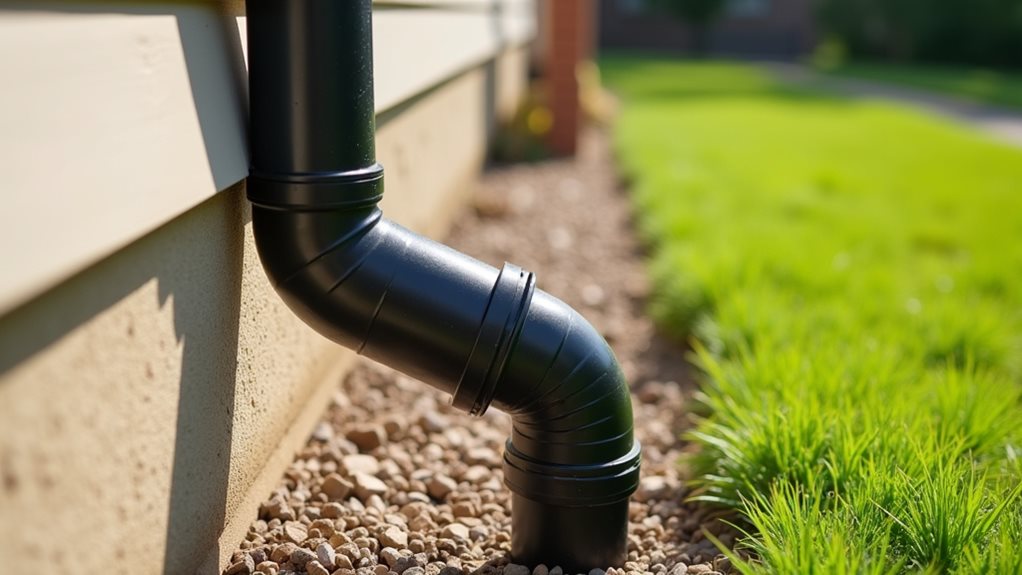
Proper downspout extensions are essential because they direct rainwater at least 4 to 6 feet away from your foundation, ensuring effective foundation protection. By guiding water away through drainage piping and discharge points, you prevent water intrusion, soil erosion, and frost heave. This keeps your soil stable, reduces basement flooding, and minimizes long-term damage to your home’s structure. Incorporating proper drainage solutions can also help prevent soil compaction, which can contribute to water pooling and increased moisture around your foundation.
How to Choose the Best Downspout Extension for Your Home
Choosing the right downspout extension depends on your home’s layout, climate, and drainage needs.
For foundation protection, direct water flow at least 4 to 6 feet away using flexible downspouts or underground drainage pipes for long-term solutions.
Consider splash blocks for light rain or proper slope adjustments to guarantee consistent water diversion and secure extensions against movement.
Additionally, ensuring proper soil drainage and avoiding waterlogging around your foundation can be achieved by incorporating layering techniques and adjusting soil composition to promote efficient runoff.
Step-by-Step: Installing Your Downspout Extension Easily
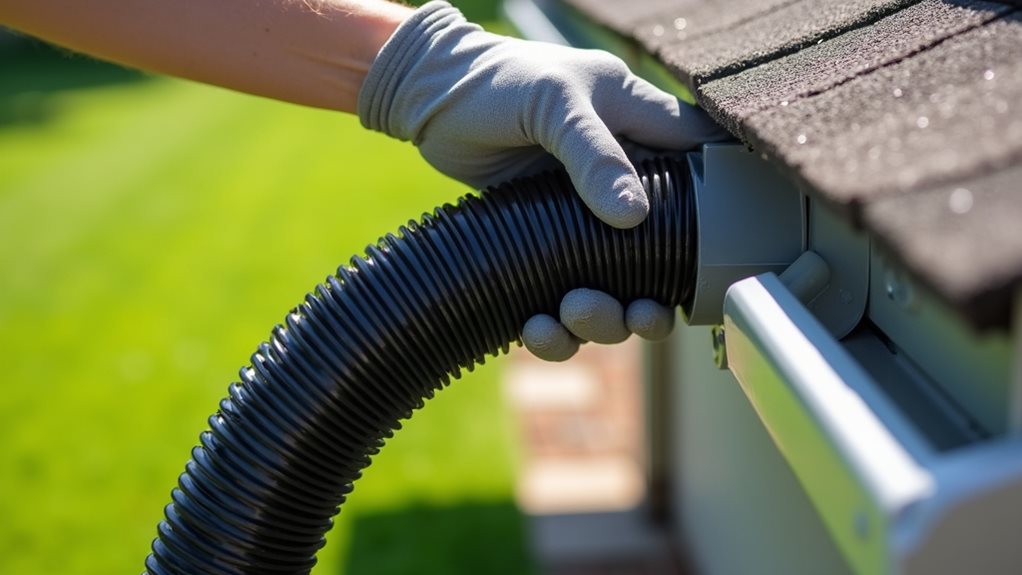
To install your downspout extension efficiently, start by selecting a route that directs water at least 10 feet from your foundation.
Ensure the proper slope of 1/8 to 1/4 inch per foot for drainage.
Dig a trench, connect the pipe securely using fittings, and backfill carefully, maintaining the slope for ideal drainage and stability.
Additionally, verify that the water flow is sufficient after installation to prevent water hammer and ensure proper system functioning.
Common Mistakes When Extending Downspouts and How to Avoid Them
One common mistake isn’t extending downspouts far enough from the foundation, which can lead to water pooling and damage.
Failing to secure flexible extensions properly or ignoring proper slope can cause runoff to flow back toward your house or create standing water.
Additionally, overlooking obstructions or using unsuitable materials can block drainage or cause leaks, reducing the system’s effectiveness and risking long-term issues.
Improper Extension Lengths
Extending downspouts too short or too long can create significant problems for your home’s foundation. A proper length guarantees runoff is directed at least four feet away, preventing water damage and erosion.
An improper downspout extension disrupts the slope away from your foundation, risking pooling, basement leaks, and soil erosion. Accurate lengths are essential for effective drainage and long-term protection.
Blockages and Debris
Blockages caused by leaves, debris, and sediment buildup are common issues that can compromise the effectiveness of your downspout extensions. Debris can clog outlets or cause overflow, especially if screens or guards aren’t in place.
Regularly clean your extensions and check for debris buildup to prevent clogs. This will help guarantee proper water flow and avoid pooling near your foundation.
Poor Discharge Placement
Are you aware that poor discharge placement is a common mistake that can severely impact your gutter system’s effectiveness? Incorrectly directing water runoff with a downspout extension toward basement windows, walkways, or erosion-prone areas can cause damage.
Proper slope and secure extensions help protect your foundation, guarantee efficient drainage, and prevent water pooling near your home.
Tips to Maintain and Troubleshoot Your Downspout Extensions
Regularly inspecting your downspout extensions helps identify clogs, debris, or displacement that could disrupt water flow and cause erosion near your foundation. Making sure they’re securely attached with stakes or brackets prevents movement, especially during storms or foot traffic. Additionally, checking the slope and cleaning out dirt or leaves guarantees water flows properly at least 4–6 feet away from your home, reducing the risk of damage. Ensuring proper soil drainage around your foundation can further protect against issues caused by poor water management.
Regular Inspection and Cleaning
Inspecting and cleaning your downspout extensions regularly is crucial to make sure they function properly and protect your home’s foundation.
During maintenance, check for clogs, debris, or damage, especially after storms or heavy rains.
Clear out obstructions and verify extensions are securely connected and sloped correctly.
Regular inspection prevents pooling, erosion, and costly water damage, maintaining your drainage system’s integrity.
Proper Installation Techniques
Proper installation of your downspout extension is key to ensuring they function effectively over time.
Maintain a consistent slope of 1/8 to 1/4 inch per foot to drain water away from your foundation.
Use pipe fittings correctly to prevent leaks, secure flexible extensions with stakes, and backfill carefully to protect the pipe and foundation.
When to Call a Professional for Gutter Drainage Solutions
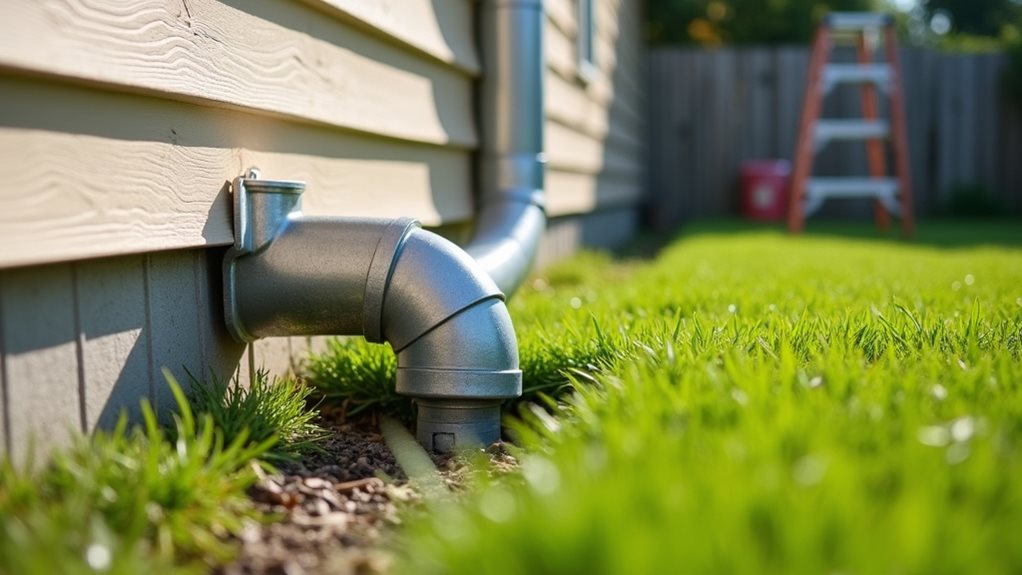
Knowing when to call a professional for gutter drainage solutions is essential to prevent costly damage to your home.
If you need underground installation, such as French drains, or face complex grading issues, a specialist is necessary.
Contact a licensed contractor for utility concerns, foundation damage, or permits, especially when extensive modifications or custom systems are required for proper water diversion.
A professional can also help design erosion control systems that incorporate appropriate plantings and stabilization techniques to ensure long-term landscape resilience.
Final Note
Properly extending your gutter downspouts is essential to protect your foundation from water damage and erosion. By choosing the right extension, installing it correctly, and maintaining it regularly, you can guarantee effective drainage and prevent costly repairs. While DIY solutions work for many, don’t hesitate to consult a professional if you encounter persistent issues or complex drainage challenges. Taking these steps safeguards your home’s structural integrity and prolongs its lifespan.

Nathan McPhail is a garden and home DIY expert who writes practical, easy-to-follow advice for homeowners and gardeners. Through Yardique, he shares hands-on tips covering gardening, lawn care, landscaping, home improvement, repairs, tools, and outdoor living. His focus is on helping readers solve everyday household and yard problems with straightforward guidance, useful techniques, and practical solutions.