First, identify your soil—sandy, loamy, clay, or silty—and slope gradient, then match plants that thrive in those conditions. For wet banks, plant native shrubs like black chokeberry, buttonbush, or three‑leaf ninebark; they root deeply and hold moisture. Low‑maintenance grasses such as tall fescue, switchgrass, or buffalograss, combined with a 3‑inch wood‑chip mulch, establish strong rhizomes in 2–4 years. Fast‑spreading perennials—periwinkle, creeping phlox, pachysandra, wild ginger, or ostrich fern—cover shade‑tolerant slopes quickly. Aggressive‑rooted trees (willow, river birch, bald cypress) and vines (English ivy, Asiatic jasmine) add vertical stability when planted in zig‑zag patterns with mulch and biodegradable netting. Space shrubs 3–4 ft apart, groundcovers 8–12 in, and monitor soil‑moisture sensors to adjust irrigation and mulching, ensuring continuous root development and erosion resistance. Continue for and you’ll uncover deeper design strategies.
TLDR
- Choose native shrubs like Aronia melanocarpa, Cephalanthus occidentalis, and Itea virginica for wet‑bank stabilization on slopes with moderate to steep gradients.
- Plant low‑maintenance grasses such as tall fescue, switchgrass, or buffalograss with erosion‑control blankets and 3‑inch wood‑chip mulch; allow 2‑4 years for deep root anchoring.
- Use fast‑spreading, shade‑tolerant perennials (Vinca minor, creeping phlox, Pachysandra, wild ginger, ostrich fern) to quickly establish ground cover on shaded slopes.
- For saturated soils, plant aggressive‑rooted trees like willows, river birch, or bald cypress in a zig‑zag pattern, supplemented with mulch and biodegradable netting during establishment.
- Space shrubs 3‑4 ft apart and groundcovers 8‑12 in apart, maintain dense planting, and monitor soil‑moisture sensors to adjust irrigation and mulching for optimal erosion control.
Identify Soil Type and Slope Gradient for Erosion Control Planting
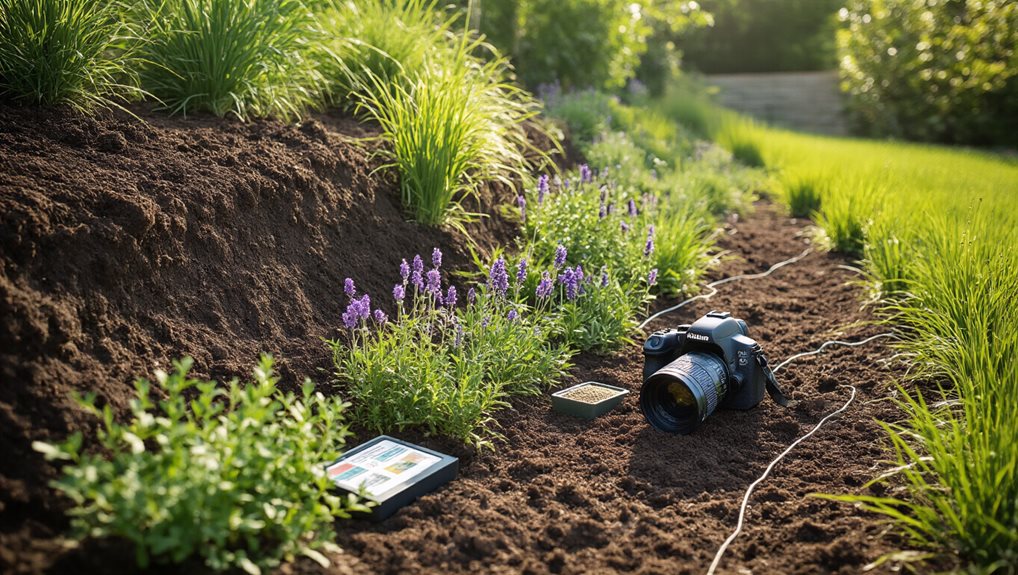
How do you determine which plants will hold your yard’s soil in place? First, identify soil type—sandy, loamy, clay, or silty—because each reacts differently to water, wind, and compaction. Then assess slope gradient: low to moderate (≤33 %) needs mulching, moderate to steep (33‑50 %) requires deep‑rooted cover, and steep (>50 %) calls for terraces or retaining structures. Combine these insights to choose vegetation that matches both soil and slope. Heavy rainfall can dramatically increase erosion risk on any slope. To prevent moisture-related issues when selecting plants, consider how different plant types adapt to moisture content and how this interacts with soil texture.
Choose Native Shrubs to Anchor Wet‑Bank Soil
A handful of native shrubs—such as Aronia melanocarpa, Cephalanthus occidentalis, Itea virginica, Physocarpus opulifolius, and Rhus aromatica—excel at anchoring wet‑bank soil because their dense, spreading root systems and suckering habits bind the substrate while tolerating the saturated conditions typical of stream edges and rain‑garden slopes. Plant them where moisture persists, and you’ll see stable banks, vibrant seasonal color, and a cohesive, resilient landscape that feels like home.
Deploy Low‑Maintenance Grasses and How to Plant Them on Slopes
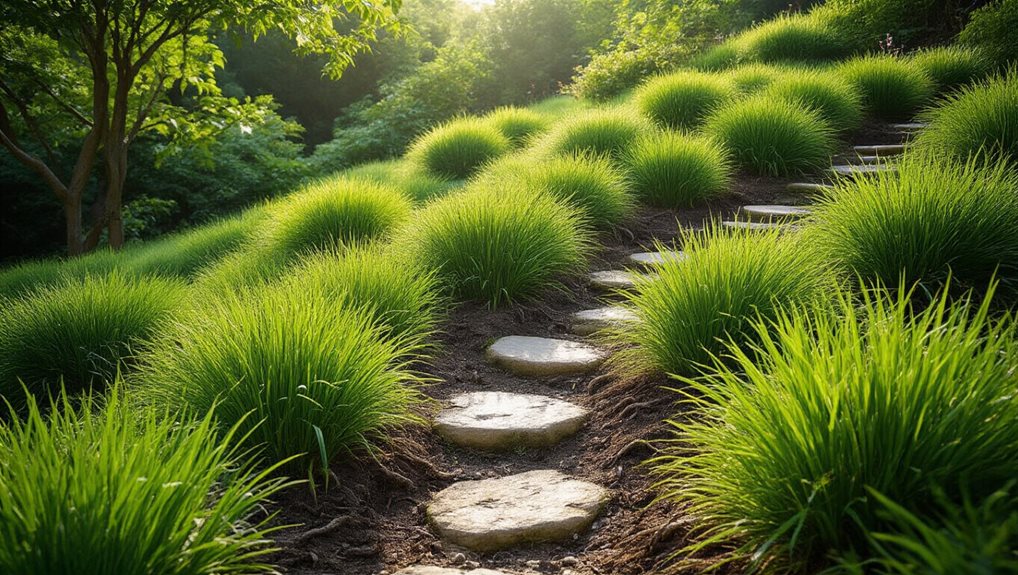
Ever wondered why low‑maintenance grasses are the go‑to solution for stabilizing slopes? Plant tall fescue, switchgrass, or buffalograss using erosion‑control blankets, slice openings, and hand‑water to limit runoff; add a 3‑inch wood‑chip mulch layer for early stability. Expect two to four years for deep root anchoring, then let dense rhizomes spread naturally, creating a resilient, low‑maintenance canopy that protects soil and invites community pride. Maintain proper safety precautions and site maintenance to ensure equipment and workers stay protected during installation and ongoing care chain safety.
Plant Fast‑Spreading Perennials on Eroded Slopes
You’ll want fast‑spreading perennials that quickly form dense mats, because their vigorous root systems bind soil and prevent runoff on eroded slopes.
Choose shade‑tolerant species like Vinca minor or creeping phlox, which thrive under canopy cover and still deliver strong surface stability.
These plants establish rapidly, creating a living mulch that holds moisture, reduces erosion, and requires minimal maintenance. Hot composting methods, when managed with regular turning and temperature control, can accelerate the production of organic material that supports soil health in shaded beds. temperature control
Rapid Soil‑Holding Spreaders
How can you quickly stabilize a sloping yard without waiting years for trees to mature? Choose rapid soil‑holding spreaders like creeping phlox, bugleweed, and Vinca minor, which form dense evergreen mats that anchor soil, resist erosion, and bloom attractively. Add creeping junipers or vining honeysuckles for vigorous coverage, diverse foliage, and root systems that bind particles, creating a resilient, unified slope.
Shade‑Tolerant Slope Stabilizers
Why settle for bare, eroding slopes when you can turn shade‑tolerant perennials into a living retaining wall? Plant pachysandra for evergreen mats that spread via rhizomes, anchoring north‑facing slopes under trees.
Add wild ginger’s heart‑shaped leaves and brown spring flowers for extra root density.
Pair with ostrich fern’s tall runners to boost structural stability, creating a cohesive, low‑maintenance slope community.
Integrate Trees to Stabilize Sloping Wet Areas
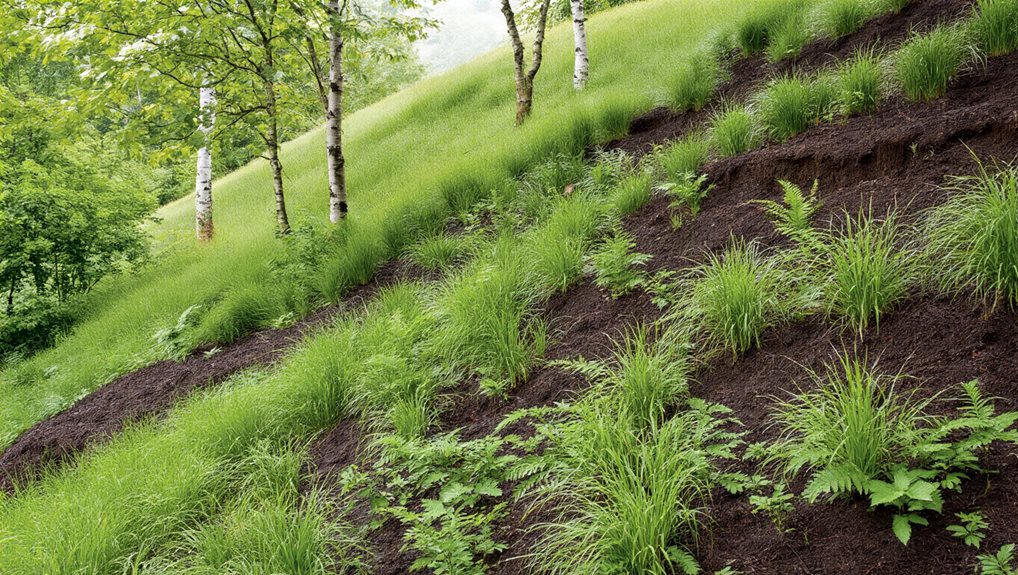
Where does your sloping wet area need the most stability? Plant aggressive‑rooted willows, river birch, or bald cypress to anchor saturated soils, their deep and lateral roots forming underground nets that resist washout.
Stagger trees in a zigzag pattern, mulch to retain moisture, and use biodegradable netting during establishment.
Their canopies intercept rain, reduce runoff velocity, and transpire excess water, creating a resilient, cohesive slope that feels like part of your yard’s living community.
Rooting depth and pattern rooting depth help stabilize soils by forming dense underground networks that resist erosion and soil displacement, especially on slopes.
Use Vines and Groundcovers to Hold Soil on Steep Hills
Ever you need to secure a steep hillside, vines and low‑growing groundcovers act like living blankets that bind the soil together, their intertwined stems and root networks distributing the weight of rainwater and reducing erosion. Plant English Ivy, Asiatic Jasmine, or creeping phlox for deep anchorage; add fast‑spreading thyme, bearberry, or Salvia Bee’s Bliss to create dense mats that hold topsoil, while Vinca Minor and Ajuga suppress weeds, ensuring a cohesive, resilient slope. Regular pruning and maintenance, including sanitary tool care and proper cuts, help keep these plants healthy and effective at erosion control. Pruning Tools and Clean Cuts
Combine Multi‑Use Natives for Year‑Round Erosion Defense
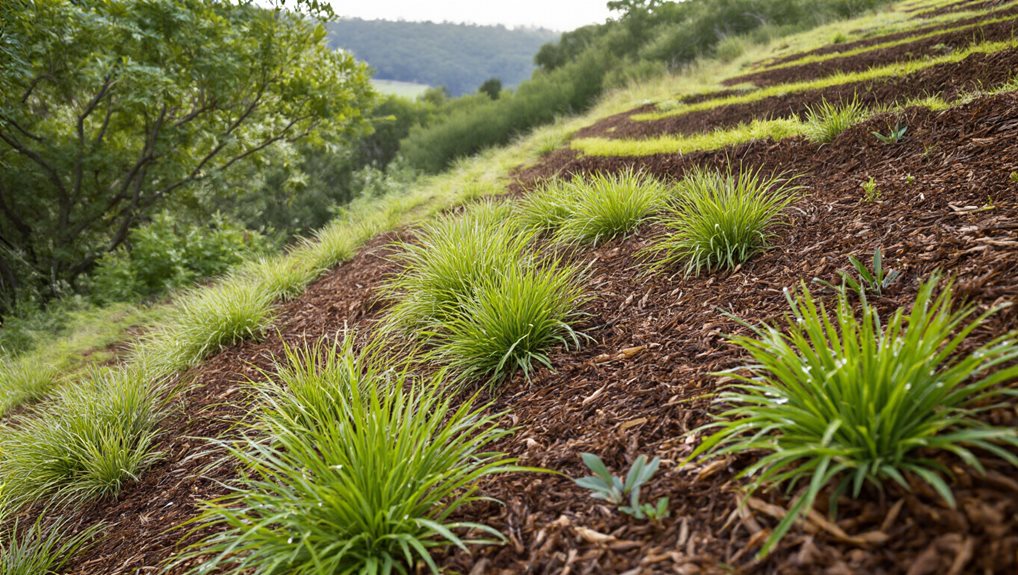
How can you keep a slope protected all year without constant replanting? Combine deep‑rooted grasses like switchgrass with fibrous‑rooted sedges, add evergreen shrubs such as mountain mahogany, and intermix willows for spring vigor. This layered root system creates continuous ground cover, anchors soil, and reduces bare spots, delivering up to 90% sediment loss reduction while fostering wildlife habitat and low‑maintenance resilience.
Match Plant Moisture Needs to Site Water Profile
What moisture level does your soil actually provide, and how does that align with the needs of the plants you intend to use for erosion control? Assess your site’s water retention: sandy soils hold little TAW and need frequent irrigation, while silt loam or silty clay loam retain 12‑17% VWC, ideal for most shrubs and trees.
Match plant moisture thresholds—21‑40% soil moisture for woody species—to your soil’s VWC, ensuring you stay above the wilting point but below saturation.
Design Overlapping Root Layouts for Maximum Hold
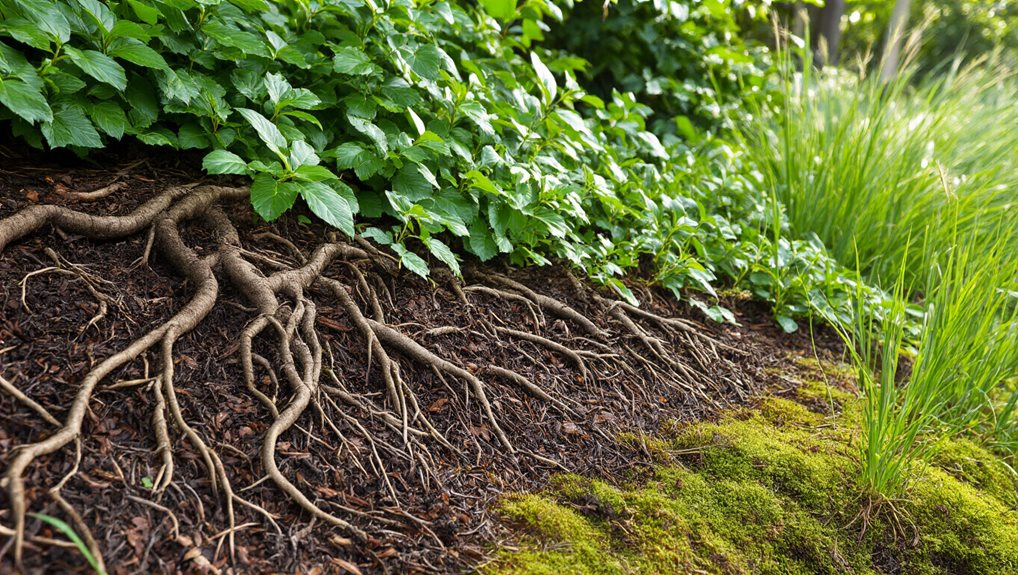
Since your soil’s moisture level determines which plants will thrive, the next step is arranging their root systems so they reinforce each other.
Plant deep‑rooted trees beneath shrubs with vigorous lateral rhizomes, then intersperse groundcovers that spread via suckers or stolons; this creates overlapping mats where taproots anchor, while spreading roots bind surface soil, ensuring continuous, mutual reinforcement across slopes.
Maintain and Monitor Erosion‑Control Plantings
You should set up a regular inspection schedule, checking after storms for soil displacement and any gaps in plant cover, while also monitoring soil moisture to catch drying or waterlogging early.
If you notice thinning or uneven growth, adjust plant density by adding seedlings or thinning excess to keep the root network continuous and effective.
Promptly repairing mulch loss, replanting in washed‑out spots, and tweaking spacing will sustain the erosion‑control system throughout the seasons.
Inspect Inspection Schedule
How often should you walk the slopes and waterways to ensure your erosion‑control plantings stay effective? Walk them weekly during the growing season, then bi‑weekly after rains, noting rills, gullies, or bare spots; mow grassed waterways twice yearly, clip shrubs as needed, and confirm root mats are dense. Record observations, repair damage promptly, and adjust schedules to keep the community’s landscape stable and thriving.
Soil Moisture Monitoring
A reliable soil‑moisture monitoring system keeps erosion‑control plantings healthy by letting you detect drying or water‑logging before damage appears, so you can adjust irrigation, mulching, or planting density in time.
Install a shallow sensor at 25‑30 % root depth and a deeper one, use wireless Toro or Turf Guard probes, and integrate data with weather forecasts and cloud dashboards to set trip points, prevent stress, and maintain community resilience.
Adjust Plant Density
Why does plant density matter for erosion control? You’ll find that high stem density and expansive leaf area create a continuous root network that shields soil, while spacing ground covers 8‑12 inches apart and shrubs 3‑4 feet apart speeds coverage during critical establishment. Trim weeds, trim edges, and monitor for stress; dense planting enhances infiltration, strengthens shear, and keeps your yard’s ecosystem thriving.
Final Note
By matching plant selection to soil type, slope, and moisture, you’ll create a resilient, low‑maintenance erosion‑control system that holds soil, filters runoff, and enhances aesthetics. Native shrubs anchor wet banks, grasses and perennials protect slopes, and strategically placed trees add long‑term stability. Overlapping root networks maximize hold, while regular monitoring ensures early detection of stress or failure. Implementing these practices now safeguards your yard and reduces future repair costs.

Nathan McPhail is a garden and home DIY expert who writes practical, easy-to-follow advice for homeowners and gardeners. Through Yardique, he shares hands-on tips covering gardening, lawn care, landscaping, home improvement, repairs, tools, and outdoor living. His focus is on helping readers solve everyday household and yard problems with straightforward guidance, useful techniques, and practical solutions.