
Use a mix of 40 % screened topsoil, 40 % well‑aged compost, and 20 % coarse sand to give your raised beds the structure, nutrients, and drainage most vegetables need, and add a few inches of volcanic rock or perlite for extra aeration and moisture retention. Blend the components on a tarp in equal‑part layers, keep the mixture moist but not soggy, and test pH before adjusting with vermiculite or coir if necessary. This balanced blend prevents compaction, supports healthy root growth, and promotes consistent yields—more details await if you keep exploring.
TLDR
- Use a 40 % topsoil + 40 % compost + 20 % coarse sand (or 75 % loam + 25 % organic matter) blend for optimal structure, nutrients, and drainage.
- Incorporate 20 % aeration material such as coarse sand, perlite, or pumice to create air pockets and prevent compaction.
- Aim for a bed depth of 12–18 inches; test and adjust pH, adding vermiculite or coir for moisture balance if needed.
- Blend ingredients on a tarp, turning and folding until the mixture is uniform and marble‑like, then level and compact lightly.
- Maintain loose soil by adding 1–2 inches compost each spring and aerating with a broad fork, avoiding heavy foot traffic on the bed surface.
Ideal Raised‑Bed Vegetable Soil Mix: 40 % Topsoil, 40 % Compost, 20 % Coarse Sand
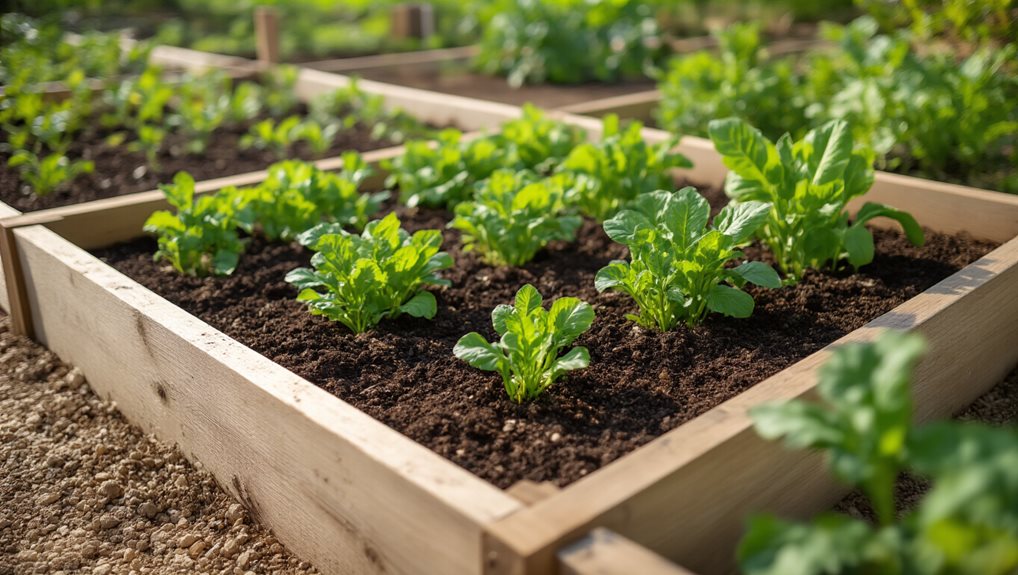
Ever wondered why a 40% topsoil, 40% compost, and 20% coarse sand blend works so well in raised vegetable beds? You get structure and nutrients from screened topsoil, moisture‑holding clay, and a clean base, while compost supplies nitrogen-rich organic matter and beneficial microbes that enhance fertility. The coarse sand creates drainage channels, preventing waterlogging and supporting healthy root systems, yielding productive, easy‑to‑maintain beds. Using shallow‑rooted plants requires only about 6 inches of soil depth, which this mix readily provides. Strawberries are not recommended here
Why Volcanic Rock & Coarse Sand Boost Drainage in Raised‑Bed Soil?
How does volcanic rock paired with coarse sand alter drainage in a raised‑bed garden? You’ll find the porous volcanic rock creates countless tiny air pockets that let water flow quickly while acting like sponges that hold moisture, and the coarse sand’s gritty particles keep pathways open, preventing compaction. Together they enhance drainage up to 40 %, reduce root rot risk, and maintain balanced moisture, giving your vegetables a thriving, well‑aerated home, especially when combined with a proper preparation and sealing routine to protect the soil from moisture intrusion.
How to Combine the 103 Equal‑Part Blend for Consistent Raised‑Bed Soil
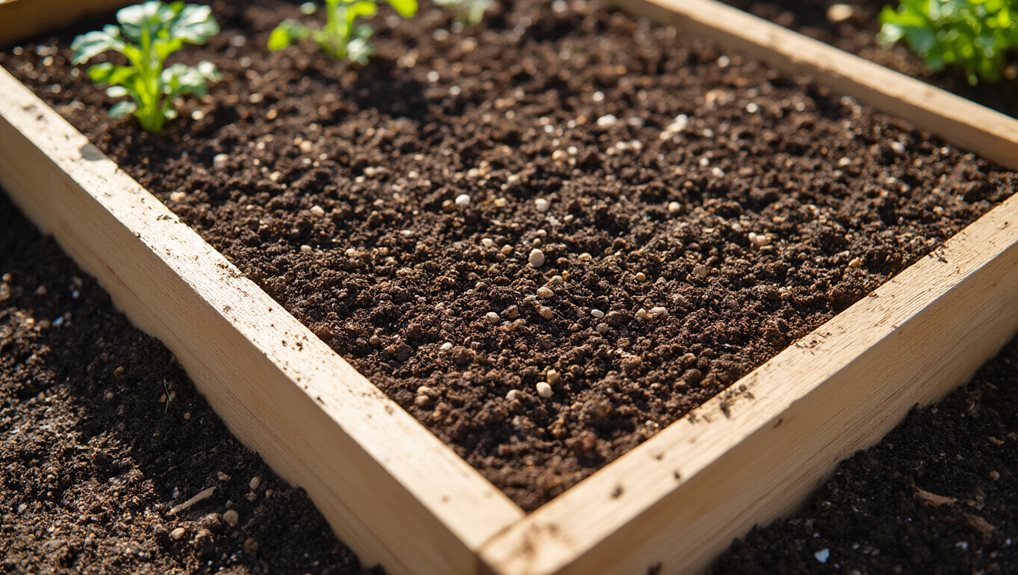
You’ll start by measuring the bed’s volume and then dividing it into three equal parts for topsoil, compost, and coarse sand, keeping the bonus material at roughly four percent of the total.
When you combine the ingredients, use a shovel or hoe to blend them directly in the bed, adding water gradually so the mixture stays moist but not soggy.
Finally, give the blend a thorough stir, breaking up any clumps, to ensure a uniform, well‑draining soil that’s ready for planting.
Measure Blend Ratios
When you start measuring the 103 equal‑part blend, the key is to treat each component—topsoil, coarse sand, and compost—as an identical volume, which guarantees the final mix stays balanced and drains well.
Use a 5‑gallon bucket for each ingredient, fill one‑third of the total cubic feet with topsoil, one‑third with sand, and one‑third with compost, then double‑check totals before loading the bed.
Mixing Technique Tips
Where does the best consistency come from—right from the moment you start combining the 103 equal‑part blend? Begin by layering organic filler, topsoil, then compost, lightly watering each tier to settle. Turn the mix with a shovel or hoe, adding water gradually until it feels like a wrung‑out sponge. Rake, probe for uniform color, and re‑mix any streaks, then let it settle overnight before planting.
Balancing Weight & Aeration With a 50/50 Potting‑Mix / Garden‑Soil Ratio
You’ll notice the 50/50 blend gives a solid weight‑to‑volume ratio, letting the raised bed stay stable while still feeling light enough to handle. The compost portion creates ample pores for root oxygen, and the screened topsoil prevents the mix from compacting, so water drains evenly and air circulates freely. By balancing these two ingredients you achieve a durable, well‑aerated medium that supports healthy vegetable growth without excessive bulk. Proper spacing for roots and careful design of raised beds, such as avoiding traditional rows in favor of open-base layouts, further enhances drainage and root access, helping transplants establish quickly and thrive. Raised Bed Design
Weight‑To‑Volume Ratio
How much weight will your raised beds actually bear, and can you keep them stable while still giving roots the air they need?
A 50/50 blend gives roughly 1.2 t/yd³, adding 15 % for compression, so a 10 × 6 × 2‑ft bed (120 ft³) weighs about 0.5 yd³ of mix, roughly 0.6 ton.
This moderate load balances nutrient retention with manageable structural stress.
Aeration‑Boosting Mix Ratio
A 50/50 blend of topsoil and compost gives you a solid foundation, but adding aeration materials lets the mix stay light while still supporting nutrient‑dense crops. Include 20 % coarse sand, perlite, or pumice to improve drainage, then adjust to 40 % soil, 40 % compost, 20 % aeration for a balanced, airy texture. Top‑dress annually with compost to preserve pockets and sustain thriving vegetables.
Why Ground Bark Stops Compaction in Raised‑Bed Vegetable Soil
Why does ground bark keep your raised‑bed soil from turning into a hardpan? A 3‑4‑inch bark layer cushions foot traffic and rain impact, spreading weight evenly, while its porous structure holds moisture, slowing compaction. As bark decomposes, it adds organic matter, creates pore space, and encourages earthworms and fungi that bind aggregates, resulting in looser, healthier soil that supports deep roots and thriving vegetables. This process also enhances soil biodiversity and improves water infiltration, helping to prevent surface crusting and erosion on the beds soil structure and supporting long‑term garden resilience.
Boosting Fertility With Composted Cow or Poultry Manure
Ground bark’s cushioning effect keeps your raised‑bed soil from turning into a hardpan, and the next step in building a thriving vegetable bed is enriching that loose, well‑draining medium with nutrient‑dense organic matter.
Use fully composted cow or poultry manure, mixing it 6‑8 inches deep to boost nitrogen, phosphorus, potassium and micronutrients, improve aggregation, increase water‑holding capacity, and invite beneficial microbes, while avoiding the burn risk of fresh manure.
Materials to Skip When Building Raised‑Bed Vegetable Soil
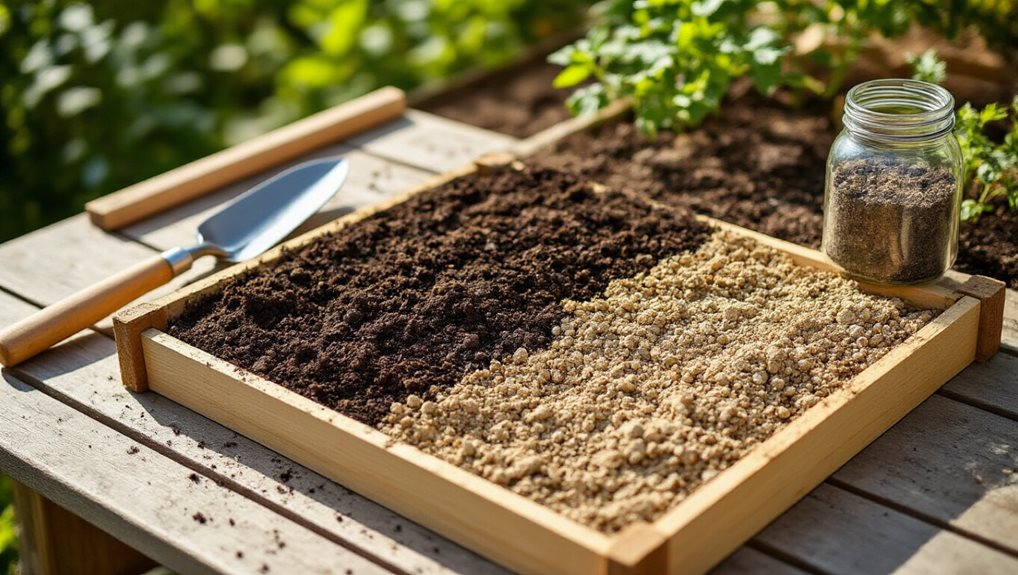
Where should you draw the line on what goes into a raised‑bed mix?
Avoiding the wrong materials is just as important as adding the right ones, because certain inputs—potting‑soil blends, uncomposted bark, straight compost, fresh manure, and synthetic fertilizers—each bring distinct drawbacks that can undermine soil structure, nutrient balance, and plant health.
Skip these items to protect your garden’s productivity and community.
Step‑by‑Step: Mix Your Soil on a Tarp for Even Distribution
Lay out your compost, topsoil, and sand on a clean tarp, then spread each component in a thin, even layer so you can see the ratios clearly. Using a shovel or your hands, move the materials back and forth, turning and folding until the mix feels uniform and no pockets remain. Finally, press the blended soil flat, check that the texture is consistent, and adjust moisture if needed before transferring it to your raised beds. Regularly rotate crops and observe soil health to sustain productivity over time, leveraging the chart’s flexible guidelines for nutrient balance and pest resistance soil health guidance.
Gather Materials on Tarp
A sturdy black‑plastic silage tarp, the kind farms use for occultation, provides the ideal surface for mixing soil evenly across a raised‑bed garden, and because it’s reusable for years it offers a cost‑effective, durable solution.
Lay the tarp, smooth it, then pull it off, spreading compost, sand, and any amendments in 4‑5‑inch rows, raking each layer flat before planting, ensuring a cohesive, nutrient‑rich bed that feels like a shared, thriving garden.
Layer and Blend Evenly
After spreading the tarp and laying down your compost, sand, and amendments, the next step is to layer and blend the materials so every part of the raised bed receives the same nutrient balance.
Pile the components at the center, then use a shovel or pitchfork to turn them, folding the tarp edges inward repeatedly.
Aim for twenty‑to‑thirty rolls, breaking clumps as needed, until the texture looks uniform and marble‑like.
Flatten and Check Consistency
How do you ensure the tarp stays flat and the soil remains uniformly mixed before you begin the final leveling?
Lightly till the moist soil, add amendments, then spread the mix on a tarp, unfolding it accordion‑style from the center while a partner holds the edges.
Pull the tarp tight, secure it with sandbags spaced every few feet, and rake gently to confirm an even, consistent surface.
How to Keep Your Raised‑Bed Soil Loose Year After Year?
Why should you worry about soil loosening in raised beds? Because compacted roots choke roots, reduce water flow, and limit nutrient exchange, undermining your garden’s health and community feel. Add 1–2 inches of compost each spring, use a broad fork at 45° to aerate without tilling, keep stepping stones on edges, and top off beds annually. This routine preserves airy structure, supports microbes, and keeps your shared garden thriving.
Your Quick Checklist for Perfect Raised‑Bed Vegetable Soil
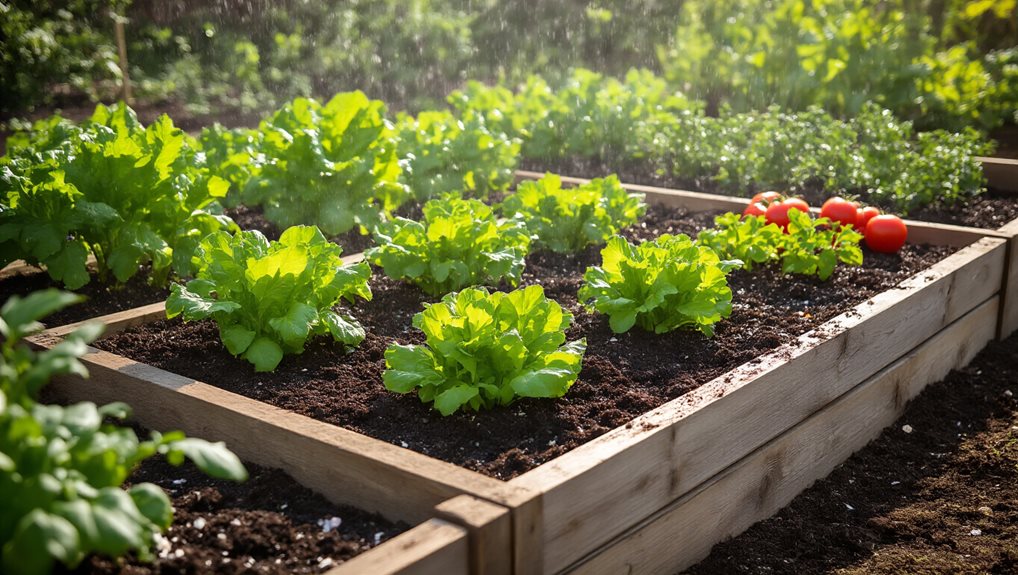
Keeping your raised‑bed soil loose year after year sets the stage for a solid foundation, and now it’s time to translate that into a concrete checklist for perfect vegetable soil.
Measure 40 % topsoil, 40 % compost, 20 % coarse sand (or 75 % loam/25 % organic matter), ensure 12–18 in depth, verify drainage, blend on a tarp, test pH, and add vermiculite or coir for moisture balance.
Final Note
By sticking to the 40 % topsoil, 40 % compost, and 20 % coarse sand formula, you’ll create a light, well‑draining medium that resists compaction and supports strong root growth. Adding volcanic rock or ground bark further improves aeration, while a 50/50 potting‑mix to garden‑soil ratio balances weight and moisture retention. Skip heavy additives like pure clay or peat, and mix on a tarp for uniformity. Maintain looseness with yearly aeration, and your raised beds will stay productive year after year.

Nathan McPhail is a garden and home DIY expert who writes practical, easy-to-follow advice for homeowners and gardeners. Through Yardique, he shares hands-on tips covering gardening, lawn care, landscaping, home improvement, repairs, tools, and outdoor living. His focus is on helping readers solve everyday household and yard problems with straightforward guidance, useful techniques, and practical solutions.
Pingback: How to Extend Downspouts Away From Your Foundation