
First, confirm compaction by feeling a hard, dense soil when you press a shovel in and noting thin, yellow patches that wilt despite watering. Run a quick penetration test; if a hand‑held rod meets resistance over 300 psi, you have a compacted layer. Follow with core aeration to create holes, then spread a thin topdressing of high‑quality compost or compost‑biochar blend and rake lightly so it integrates without smothering the grass. Limit foot traffic, water deeply but infrequently, and monitor recovery with visual cues and occasional soil readings—more details await if you keep exploring. A zero turn mower makes sense above roughly an acre, where a lawn tractor starts to feel slow.
TLDR
- Perform a penetration test; if resistance exceeds 300 psi, plan core aeration to break the compacted layer.
- Core‑aerate the lawn, spacing holes 2–3 inches apart, to improve air, water, and nutrient flow to roots.
- Immediately after aeration, apply a thin layer of high‑quality organic amendment (compost or compost‑biochar) and lightly rake it in.
- Water deeply but infrequently, using a cycle‑and‑soak schedule to encourage deep root development and prevent runoff.
- Monitor recovery with visual checks and soil readings; adjust traffic patterns, overseeding, and fertilization as needed.
Identify Compaction Signs on Your Lawn
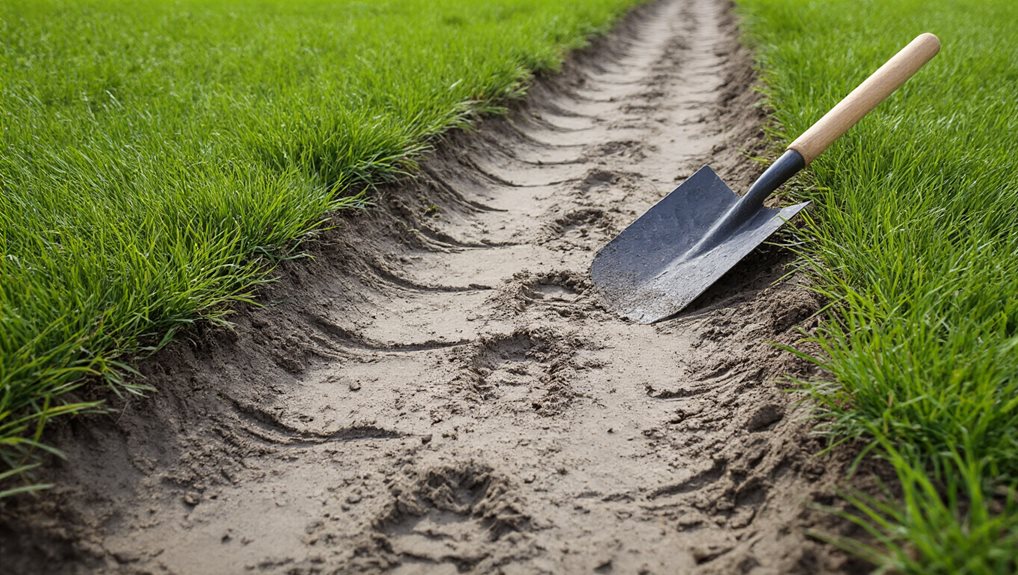
You’ll notice a hard, dense feel when you press a shovel into the ground, and the turf feels solid underfoot, preventing deep root growth.
Water will pool and linger, creating puddles that runoff instead of soaking in, while grass turns thin, patchy, yellow, and wilts despite irrigation, indicating shallow, stressed roots. Heavy foot traffic can quickly worsen compaction, especially on wet soil. In a Square Foot Garden approach, these symptoms can be mitigated by planning for proper soil structure, mulch, and moisture management to improve drainage and root growth. No-dig practices help preserve soil structure and reduce disruption during remediation.
Test Lawn Soil Compaction Quickly With Simple Tools
You can start with a quick penetration test by pushing a 4‑inch screwdriver or a garden spade into moist soil; if it slides in easily beyond three inches, the ground is likely loose.
The soil probe method, using a thin wire flag or similar rod, lets you gauge resistance across several spots, giving a broader picture of compaction.
For a DIY float test, simply drop a small, weighted float into a shallow trench and observe how far it sinks—shallow sinking indicates high density, while deeper sinking suggests healthier, aerated soil.
Penetration Test
Penetrometer testing offers a quick, hands‑on way to pinpoint compacted zones in your lawn, letting you assess soil strength without expensive lab work.
You push the hand‑held rod at roughly one inch per second, record the depth where resistance exceeds 300 psi for the top of a compacted layer, and note where it falls below that threshold for the bottom.
These two numbers reveal the zone’s thickness, guiding targeted aeration.
Soil Probe Method
After confirming compacted zones with a penetrometer, the next step is to collect actual soil samples, and a stainless‑steel soil probe makes that process quick and reliable. Push the probe 4‑6 inches into moistened soil, twist, pull up the core, then repeat in a zig‑zag pattern across 10‑15 spots.
Mix cores in a clean bucket, break clods, dry, and fill a test bag for precise analysis.
DIY Float Test
Ever wondered how a simple water test can reveal hidden soil compaction in your lawn? Gather a handful of topsoil from 2‑4 inches deep at ten zig‑zag spots, mix in a bucket to a dough‑like consistency, then drop a ball into a half‑filled glass of water. If it floats longer than 30‑60 seconds, compaction’s likely; sinking quickly means aerated, healthy soil.
Repeat across the yard for a reliable image.
Choose an Aeration Method to Relieve Lawn Soil Compaction
Core aeration creates holes that allow air, water, and nutrients to reach the roots, which can help relieve compaction more quickly in heavily trafficked lawns. ventilation and airflow are important factors to consider when choosing an aeration approach, since improved air exchange supports microbial activity and nutrient uptake.
Add Organic Matter to Fix Lawn Soil Compaction
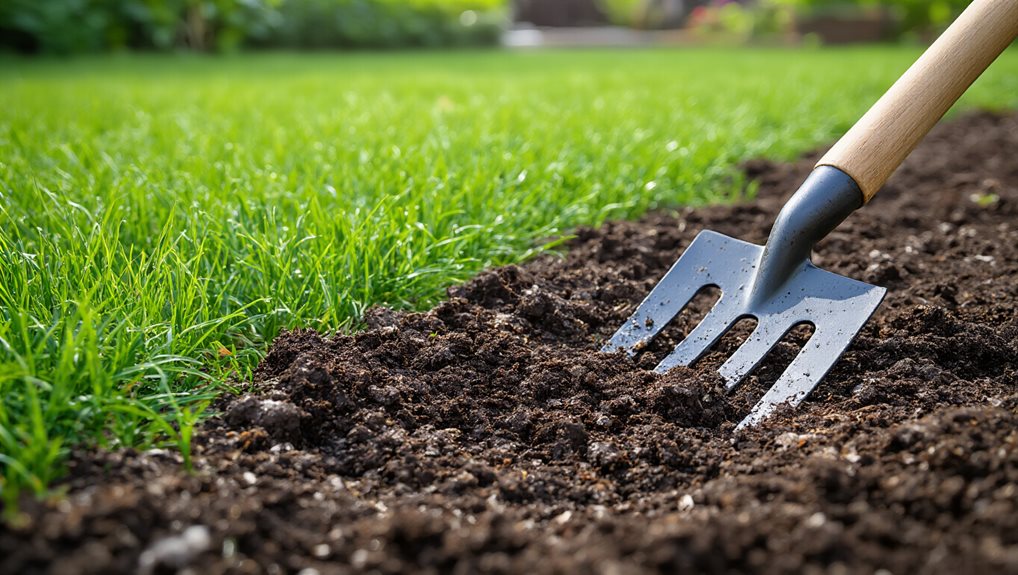
You should pick a high‑quality organic amendment—like compost, mulch, or a compost‑biochar blend—to restore porosity and feed microbes, because these materials loosen compacted particles and improve water infiltration. In addition, maintaining proper ventilation and using dehumidification practices can help keep the root zone drier during the establishment period, supporting faster recovery for newly loosened soil soil moisture management. Apply the chosen matter as a thin, even topdressing after aeration or in early fall, raking it lightly into the surface so it integrates without smothering the grass.
Choose Organic Matter
Why should you prioritize adding organic matter when tackling compacted lawn soil? Choose high‑quality compost, well‑rotted manure, or leaf mulch because they create crumbly aggregates, boost aeration, and increase water‑holding capacity, while slowly releasing nitrogen, phosphorus, and sulfur. These amendments nurture microbes, improve drainage, and reduce surface crusting, fostering a resilient, thriving lawn community.
Compost Benefits for Soil
A handful of well‑rotted compost can convert compacted lawn soil, because its organic particles create crumbly aggregates that loosen dense clay, enhance porosity, and improve water infiltration.
It enriches the ground with slow‑release nutrients, stabilizes pH, and invites beneficial microbes that protect against disease.
You’ll notice better drainage, reduced runoff, and stronger root networks, fostering resilient, thriving turf.
Timing and Application Tips
When should you schedule aeration and organic‑matter application to get the most benefit? Aerate in early fall or spring, then immediately spread ¼‑½ inch compost or sand, followed by a deep, infrequent watering to push material into the fresh cores. Apply liquid biostimulant right after aeration, and keep compost tea thin during winter. Expect visible improvement within two to six weeks.
Manage Traffic and Water to Prevent Future Lawn Soil Compaction
How can you keep your lawn from sinking under the weight of everyday use while still providing enough moisture for healthy root development?
Designate pathways and rotate mowing, avoid traffic on wet soil, and schedule deep, infrequent watering to promote deep roots.
Use light equipment, reroute play areas, and employ the cycle‑and‑soak method, ensuring each step supports soil structure and long‑term resilience.
Select climate‑appropriate systems and consider rebates and financing options to maximize efficiency and future savings Inflation Reduction Act.
Monitor Recovery From Lawn Soil Compaction and Adjust Your Plan
Ever noticed that once‑compacted patches are slowly regaining their vigor, yet you’re not sure whether the recovery is truly on track?
Check visual cues—denser turf, fewer weeds, disappearing puddles, and grass filling pathways—while testing soil resistance with a screwdriver, penetrometer, or hand probe.
Record at least ten readings per acre, compare infiltration rates, and adjust aeration, overseeding, or fertilization schedules accordingly to keep the lawn thriving. Incorporating natural soil improvements such as compost and soil health practices can further support recovery by feeding beneficial microbes and improving structure, which helps sustain long‑term growth after aeration. compost benefits
Final Note
By recognizing compaction signs, testing soil quickly, and selecting the right aeration technique, you’ll restore aer and promote healthy root development. Adding organic matter improves structure, while managing traffic and watering prevents future compaction. Regular monitoring lets you adjust practices, ensuring sustained lawn vitality. Follow these steps, and your lawn will recover efficiently, delivering a resilient, thriving turf.

Nathan McPhail is a garden and home DIY expert who writes practical, easy-to-follow advice for homeowners and gardeners. Through Yardique, he shares hands-on tips covering gardening, lawn care, landscaping, home improvement, repairs, tools, and outdoor living. His focus is on helping readers solve everyday household and yard problems with straightforward guidance, useful techniques, and practical solutions.
Pingback: How to Extend Downspouts Away From Your Foundation