Vinyl fences are durable, low-maintenance, and resistant to weather, offering a sleek appearance with minimal upkeep, though they cost more initially. Wooden fences are more affordable upfront and customizable but require regular staining or painting and are susceptible to rot and pests. Vinyl tends to last longer, around 25 years, while wood lasts about 10-15 years. The choice depends on your priorities; consider further to find the best fit for your property.
TLDR
- Vinyl fences offer greater durability and lower maintenance, lasting over 25 years, while wood fences typically last 10-15 years with regular upkeep.
- Wood fences provide extensive customization in style, color, and height, whereas vinyl fences feature pre-fabricated designs with limited customization.
- Vinyl fences have a higher initial cost but are more cost-effective long-term due to reduced maintenance and longer lifespan.
- Wood is biodegradable and eco-friendly, but requires frequent staining or painting; vinyl is recyclable but energy-intensive to produce.
- Vinyl fences withstand harsh weather conditions better, making them ideal for large areas, while wood fences suit moderate climates and smaller properties.
What Are the Main Differences Between Vinyl and Wooden Fences?
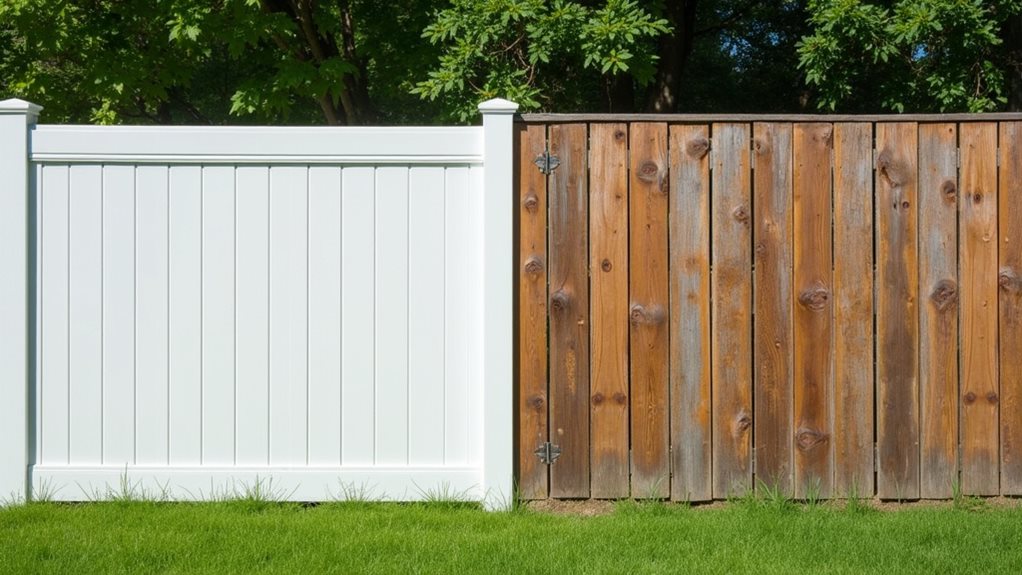
The main differences between vinyl and wooden fences lie in their materials, appearance, customization options, and maintenance requirements.
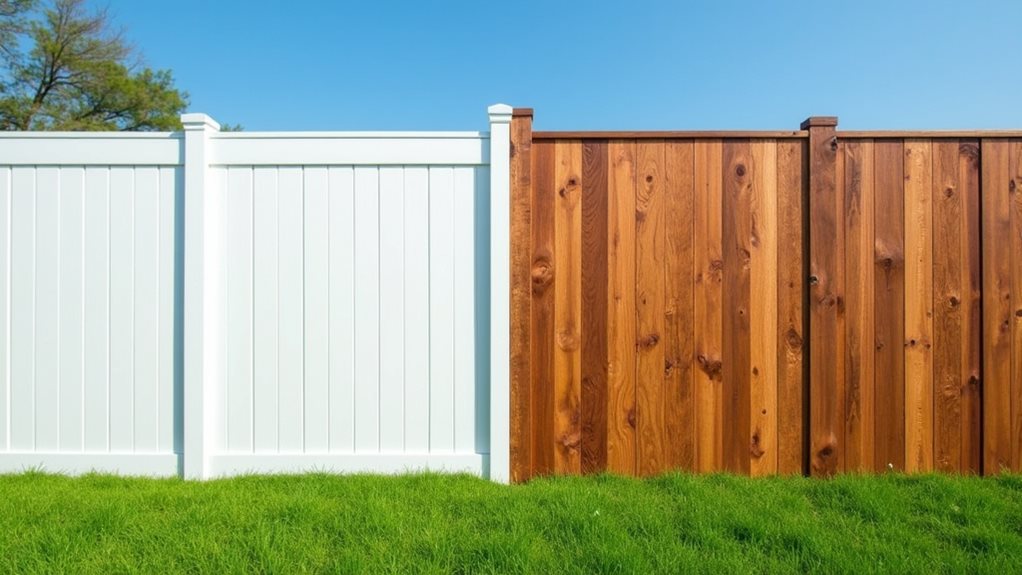
Vinyl fences, made from durable PVC, offer a sleek look and low maintenance, lasting over 25 years.
Wood fences, crafted from natural materials, provide a warm, rustic appearance but require regular care. They also have a shorter lifespan and more flexible design options.
How Much Do Vinyl and Wood Fences Cost?
The initial costs of installing a fence vary considerably between vinyl and wood, with wood generally being less expensive upfront but potentially more costly over time. While vinyl fences have higher initial prices, their lower maintenance needs can make them more economical in the long run. Additionally, vinyl fencing often offers longer-lasting durability, which can reduce replacement expenses down the line. Understanding these cost differences helps you choose a fencing option that fits both your budget and long-term plans.
Initial Installation Expenses
While vinyl fences typically cost more upfront than wood fences, understanding the specific expenses involved can help you make an informed decision.
The initial cost for vinyl fencing ranges from $25 to $45 per linear foot, mainly due to higher material prices.
Installation and labor costs are lower for vinyl fences.
In contrast, wood fences have lower upfront expenses but may involve higher total fencing costs over time.
Long-Term Cost Benefits
Over a span of 10 to 15 years, vinyl fences often prove to be more cost-effective than wood fences, despite their higher initial price.
Their durability reduces maintenance needs, which lowers long-term costs.
The cost-benefit becomes clear after about eight years, as vinyl’s lifespan and minimal upkeep lead to greater long-term savings and a higher return on your initial investment.
Which Fencing Material Is More Durable and Lasts Longer?
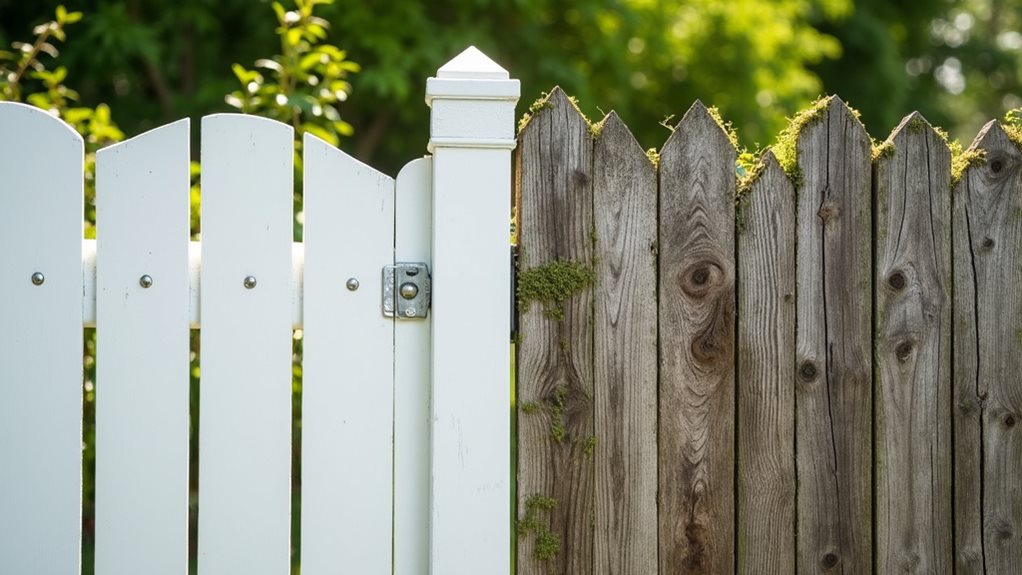
Vinyl fences are generally more durable and longer-lasting than wood, often exceeding 25 years with minimal upkeep. This is thanks to their resistance to rot, warping, and pests.
Wood fences, while attractive, tend to last only 10-15 years. They are more vulnerable to environmental damage such as moisture and insects.
Material Composition Strength
Vinyl fences are generally recognized for their impressive durability, thanks to their construction from PVC, a material that resists warping, splintering, and rotting even under harsh weather conditions.
Their material composition includes reinforcement like ribbing or supports, which enhances strength and impact resistance.
Compared to wood fences, vinyl fencing offers superior durability and environmental resistance, ensuring longevity with less maintenance.
Resistance to Environmental Elements
When considering how well a fence withstands the elements, durability and longevity become key factors.
Vinyl fencing offers superior weather resistance and environmental durability, maintaining structural integrity despite UV rays and extreme weather.
Unlike wood, which can suffer moisture damage and deterioration, vinyl fences typically last over 25 years with minimal upkeep, making them a reliable choice for long-term resilience.
Maintenance Impact on Longevity
The level of maintenance required for a fence directly influences its durability and lifespan. Regular maintenance, like sealing or staining, can extend a wood fence’s longevity.
Neglect leads to rot and warping. Vinyl fences, with minimal upkeep—just washing—resist weather damage, pests, and staining.
This makes them more durable and long-lasting in harsh conditions.
What Are the Maintenance Needs for Vinyl and Wooden Fences?
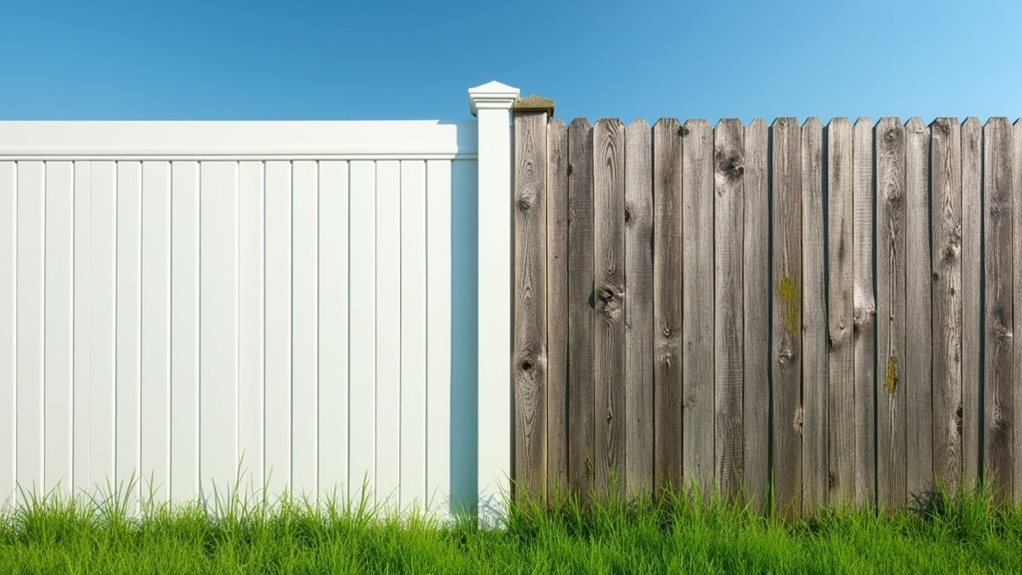
Maintaining a fence effectively depends on the material you choose, as each type has different care requirements that can influence long-term costs and effort.
Vinyl fences need only occasional cleaning with soap and water, offering excellent weather resistance.
Wooden fences require regular upkeep, including cleaning, staining, or painting every 2-3 years, and repairs for weather damage or rot.
Additionally, natural mulch and other organic amendments can be used around wooden fences to help retain moisture and suppress weeds, prolonging the lifespan of the wood.
What Style and Design Options Do Vinyl and Wooden Fences Offer?
Choosing the right fence involves considering not just durability and cost, but also the available style and design options that complement your property’s aesthetic.
Wooden fences offer a variety of fence styles, like picket and lattice, with extensive customization in height and color.
Vinyl fencing provides sleek decorative elements, such as scallops and post caps, enhancing fence aesthetics with minimal effort.
Additionally, timing for installation can influence the overall appearance and longevity of your fence, ensuring it remains attractive and functional for years to come.
Which Fence Material Provides Better Privacy and Security?
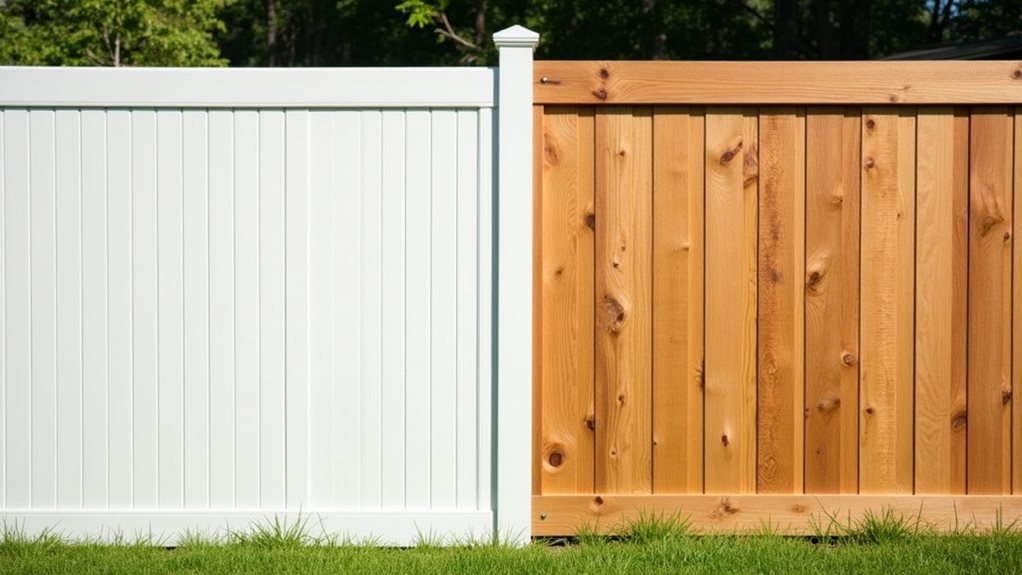
Both vinyl and wood fences can offer full privacy when designed with solid panels or closely spaced pickets. However, they differ in consistency over time. Vinyl fences provide seamless, impact-resistant barriers that maintain privacy and security without deterioration. Wood fences, with their customization options, can be built taller or sturdier, offering effective security and privacy, especially in high-impact areas. Additionally, wood fences can be reinforced with heavy-duty materials to enhance durability in challenging conditions.
How Do Vinyl and Wood Fences Impact the Environment?
The environmental impact of fencing materials plays a significant role in decision-making, especially for homeowners concerned about sustainability.
Wood fences are biodegradable and come from renewable resources, but their impact depends on sustainable harvesting.
Vinyl fences, made from recyclable PVC, involve energy-intensive production that increases carbon emissions.
However, their durability and recyclability can make them a more eco-friendly choice over time.
Additionally, considering moisture management techniques can help prevent mold and extend the lifespan of your fencing material.
How Easy Is It to Install and Personalize Vinyl and Wooden Fences?
Installing a fence can vary considerably in complexity depending on the material you choose, as well as your experience with DIY projects.
Vinyl fences offer a straightforward installation process with pre-fabricated panels, requiring less manual labor and allowing quick customization.
Wooden fences involve more manual work, but provide greater flexibility for personalization and modification, like staining or adding decorative elements.
Additionally, proper leveling is essential in both types to ensure stability and prevent future issues.
Which Fence Material Is Better for Different Climates and Property Sizes?
Choosing the right fencing material depends heavily on your local climate and the size of your property.
Vinyl fences excel in harsh weather, offering durability and weather resistance over large areas with less maintenance. However, they can crack in extreme cold.
Wood fences suit moderate climates and smaller properties. They have a lower wood fence cost, but require ongoing maintenance for durability.
Final Note
Choosing between vinyl and wood fences depends on your priorities like cost, durability, maintenance, and aesthetics. Vinyl offers low upkeep and a modern look, while wood provides natural charm and customization options. Consider your climate and property size to select the most suitable material. By evaluating these factors carefully, you’ll make an informed decision that balances practicality with your personal style, ensuring your fence enhances your property’s value and privacy for years to come.

Nathan McPhail is a garden and home DIY expert who writes practical, easy-to-follow advice for homeowners and gardeners. Through Yardique, he shares hands-on tips covering gardening, lawn care, landscaping, home improvement, repairs, tools, and outdoor living. His focus is on helping readers solve everyday household and yard problems with straightforward guidance, useful techniques, and practical solutions.