
To fix a sagging gutter, start by inspecting for signs like water overflow, bowing, or pulling away from the roofline. Remove old or loose brackets, fill existing screw holes with weatherproof caulk, and drill new holes slightly above the old ones, spacing them evenly. Attach new brackets securely, ensuring the gutter maintains a proper pitch of about 1/4 inch per 10 feet, and support sections properly during reinstallation. This step-by-step process helps prevent future sagging—continue exploring to learn more practical tips.
TLDR
- Inspect gutters regularly for signs of sagging, such as water overflow or bowing, to identify early issues.
- Remove old brackets and fill screw holes with weatherproof caulk before installing new support brackets.
- Drill new holes slightly above old ones to adjust gutter pitch to about 1/4 inch per 10 feet.
- Secure gutters with properly positioned brackets or hangers, ensuring they click into place and are tightly fastened.
- Maintain proper drainage around your home and regularly tighten spikes and brackets to prevent future sagging.
How to Detect Sagging Gutters and Understand Why It Happens
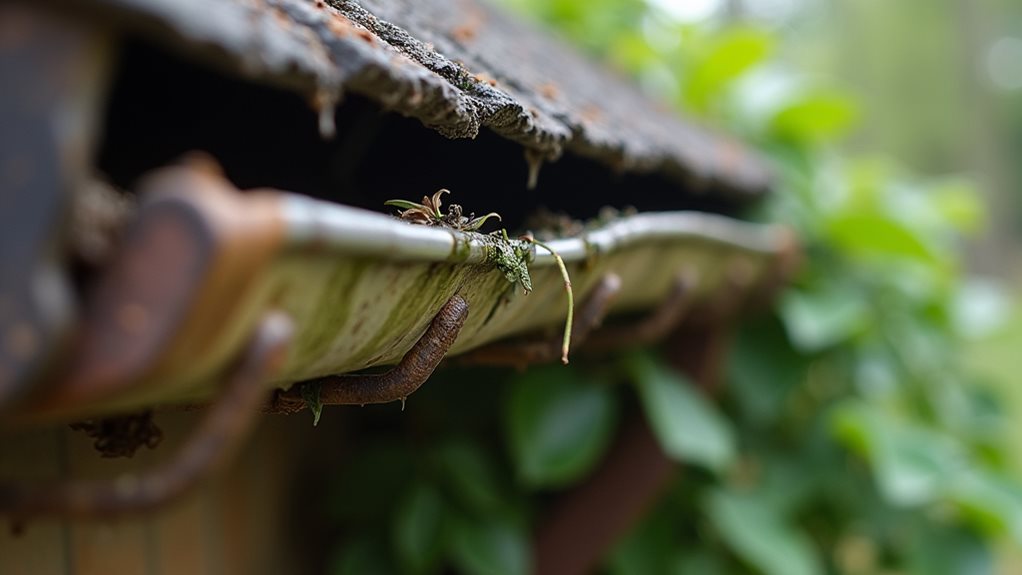
Detecting sagging gutters early is essential to prevent costly damage, and the first step is knowing what signs to look for. Sagging gutters may bow, pull away from the roofline, or overflow water. Loose spikes, damaged gutter hangers, and faulty brackets often cause these issues. Regular inspections help you identify and address these problems before they worsen. Using height adjustment features on some models can also help ensure proper gutter alignment and prevent sagging.
Essential Tools and Materials for Fixing Sagging Gutters
To effectively fix a sagging gutter, you need the right tools and materials on hand. A drill with screwdriver bits is essential for attaching brackets securely. Matching gutter brackets and hangers made of aluminum, steel, or plastic guarantee proper support. Additionally, having weatherproof caulk or epoxy, along with safety gear like gloves and goggles, helps reinforce repairs and keep you protected during the process. Be mindful of the soil acidity when working around mulch, as it can affect plant health and repair strategies.
Necessary Repair Tools
Fixing a sagging gutter requires the right set of tools and materials to guarantee a secure and durable repair.
You’ll need a sturdy ladder to reach the gutter, a drill and screws for fastening brackets, and possibly a pry bar for adjustments.
All these items can be found at your local hardware store, ensuring you’re fully equipped for the job.
Essential Materials Needed
Gathering the right materials is vital for guaranteeing a secure and lasting repair of your sagging gutter. You’ll need gutter brackets or hangers, fasteners like long hex head screws, a drill, weatherproof caulk, and possibly epoxy for reinforcement.
Pre-drilling holes, especially in older fascia boards, helps secure proper attachment, creating a sturdy and reliable gutter system.
How to Reinforce or Replace Gutter Support Brackets
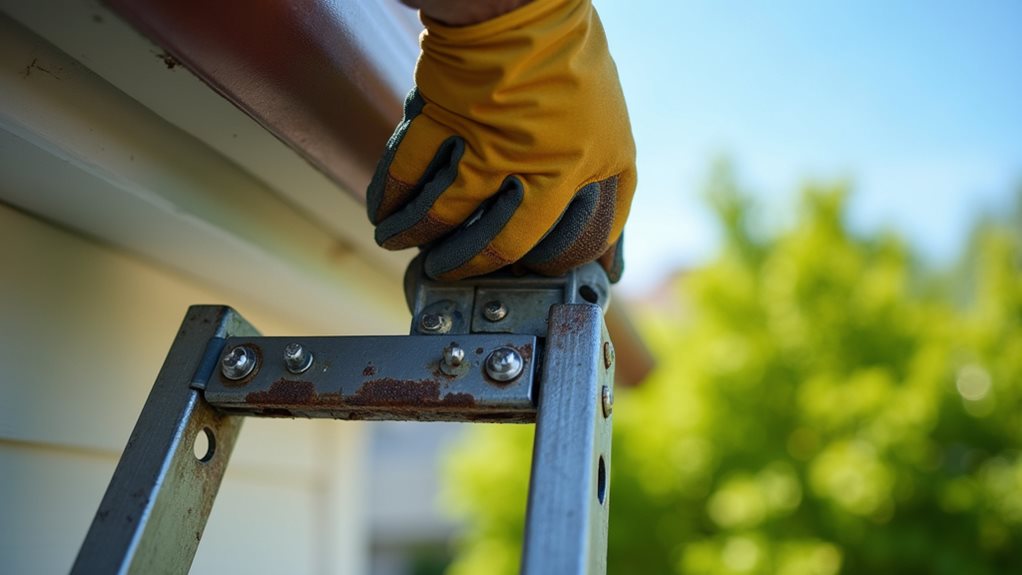
Reinforcing or replacing gutter support brackets is essential for restoring your gutter system’s stability, especially if sagging has become a persistent problem.
You should remove old brackets by unscrewing them from the fascia board. Fill old screw holes with weatherproof caulk, and drill new holes directly above the old ones, spaced about 1.3 cm apart.
Attach new brackets securely to prevent sagging gutters.
Steps to Support and Reinstall Gutter Sections Properly
To properly support and reinstall gutter sections, it’s important to work carefully and methodically to guarantee the system functions correctly and remains secure.
During gutter repair, support gutter sections with a helper. Remove old brackets, and align new brackets with existing or drilled holes.
Push the gutter into place until it clicks, then tighten all fasteners to prevent future sagging gutters.
Ensuring proper growth conditions can help maintain the integrity of the gutter system and prevent issues like sagging or detachment.
Adjusting Gutter Pitch to Prevent Future Sagging
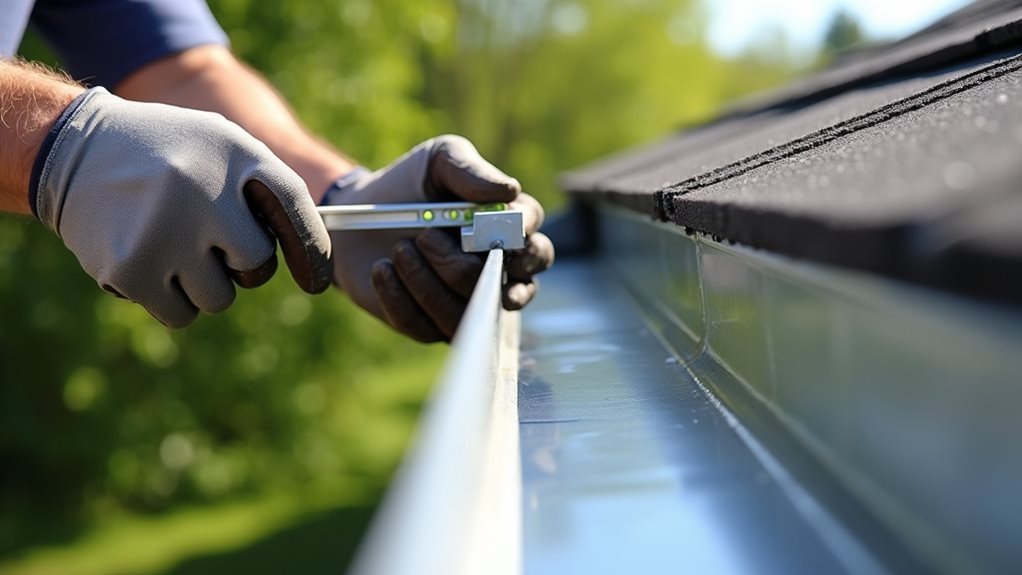
Adjusting the gutter pitch is an essential step in preventing future sagging and ensuring proper water flow.
To do this, you’ll need to adjust gutters by drilling new holes for brackets slightly above the old ones.
Maintain a gutter pitch of about 1/4 inch per 10 feet.
Consistent pitch along the entire length reduces weight and protects against sagging gutters.
Additionally, ensuring proper soil drainage around your home can help support the gutter system and prevent excessive strain on brackets.
Common Mistakes to Avoid When Repairing Your Gutters
When repairing your gutters, it’s important to follow safety precautions, such as using stable ladders and securing your tools, to avoid accidents. Using the wrong fasteners, like nails instead of screws, can lead to loose gutters that sag over time. Ignoring the proper gutter pitch can cause water pooling and additional stress. Additionally, neglecting existing damage or rust can weaken the entire system, making future repairs more difficult and costly. Since debris like insects and bugs can accumulate and cause issues, ensuring your gutters are clean and well-maintained can help prevent further damage and unwanted pests.
Neglecting Safety Precautions
Neglecting safety precautions while repairing your gutters can lead to serious injuries or accidents that could have been easily prevented.
Always guarantee ladder stability by placing it on flat ground and support it with a helper or secure it properly.
Wear safety gear like gloves and eye protection, and be mindful of working conditions to avoid unnecessary risks.
Using Incorrect Fasteners
Using the wrong type or size of fasteners is a common mistake that can significantly compromise your gutter repair. Loose fasteners, old holes, or low-quality gutter screws won’t provide proper installation, risking sagging gutters or detachment.
Always choose the right fasteners for your gutter material, replace damaged ones, and guarantee proper installation to maintain gutter stability.
Ignoring Gutter Pitch
Failing to check and maintain the proper gutter pitch during repairs is a common mistake that can lead to long-term drainage problems and increased wear on your system.
Ignoring the correct gutter pitch causes sagging gutters, water pooling, and poor gutter alignment.
To repair gutters effectively, guarantee the pitch is about 1/4 inch per 10 feet, preventing future damage and ensuring proper water flow.
Preventative Tips to Keep Your Gutters Secure and Sag-Free
To keep your gutters secure and prevent sagging, regular maintenance and proactive measures are vital.
Tighten gutter spikes and support brackets every 1-2 years, especially in high-flow areas.
Make certain of proper gutter pitch at about 1/4 inch per 10 feet and remove debris regularly.
Replacing worn components promptly keeps your gutter system strong and level, reducing sagging risks.
Consider inspecting and organizing your cable management to ensure all components remain secure and functional.
Final Note
Fixing a sagging gutter requires careful inspection to identify the cause, such as inadequate support or improper pitch. Use the right tools and materials to reinforce brackets or replace sections as needed, ensuring proper installation and alignment. Regular maintenance and adjustments can prevent future sagging, prolonging your gutter system’s lifespan. By addressing issues promptly and avoiding common mistakes, you’ll keep your gutters secure and functional, protecting your home from water damage and costly repairs.

Nathan McPhail is a garden and home DIY expert who writes practical, easy-to-follow advice for homeowners and gardeners. Through Yardique, he shares hands-on tips covering gardening, lawn care, landscaping, home improvement, repairs, tools, and outdoor living. His focus is on helping readers solve everyday household and yard problems with straightforward guidance, useful techniques, and practical solutions.