To build a simple garden shed cheaply, start by planning a small, manageable size and choosing recycled materials like pallets, salvaged wood, or corrugated metal for siding and roofing. Use affordable foundation options such as deck blocks or gravel, and repurpose old doors or windows whenever possible. Construct the frame with straightforward techniques, focusing on stability. Finish with low-cost options like tarps or asphalt shingles, and incorporate organization features using recycled crates. Keep exploring for more budget-friendly tips to enhance your project.

TLDR
- Use reclaimed materials like pallets, salvaged wood, and recycled doors to reduce costs and promote sustainability.
- Build a basic foundation with inexpensive concrete blocks or compacted gravel for stability.
- Opt for simple, DIY construction techniques with affordable siding, roofing, and framing options.
- Break the project into phases to manage expenses and ensure efficient use of resources.
- Incorporate eco-friendly plant control methods and organization features for a functional, low-cost shed.
Why Building a Cheap Garden Shed Is a Smart Choice
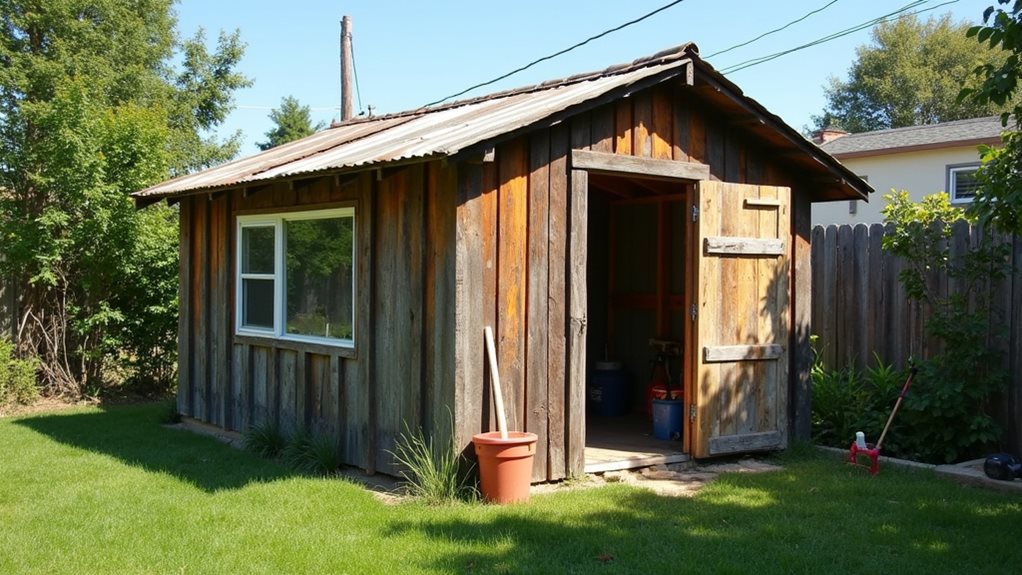
Building a cheap garden shed is a smart choice because it allows you to save money while still gaining a functional and durable storage space. An inexpensive DIY project using recycled materials like pallets and salvaged windows makes constructing storage sheds accessible, sustainable, and cost-effective. This approach encourages resourcefulness and creates a practical solution that enhances your outdoor space without overspending. Incorporating eco-friendly plant control methods can also help maintain a healthy garden environment around your shed.
Planning Your Budget-Friendly Shed Step-by-Step
Planning your budget-friendly shed step-by-step guarantees you make the most of your resources without overspending. Start by determining your shed size.
Then investigate DIY shed ideas using inexpensive materials like pallets or plywood.
Budget around $100–$500 for the foundation, and prioritize repurposing old doors and windows.
Break the project into phases to maximize storage space and control costs effectively.
Additionally, ensuring proper hygiene in the shed can help prevent unwanted pests like spiders from establishing themselves.
Picking Affordable Materials and Reclaimed Wood
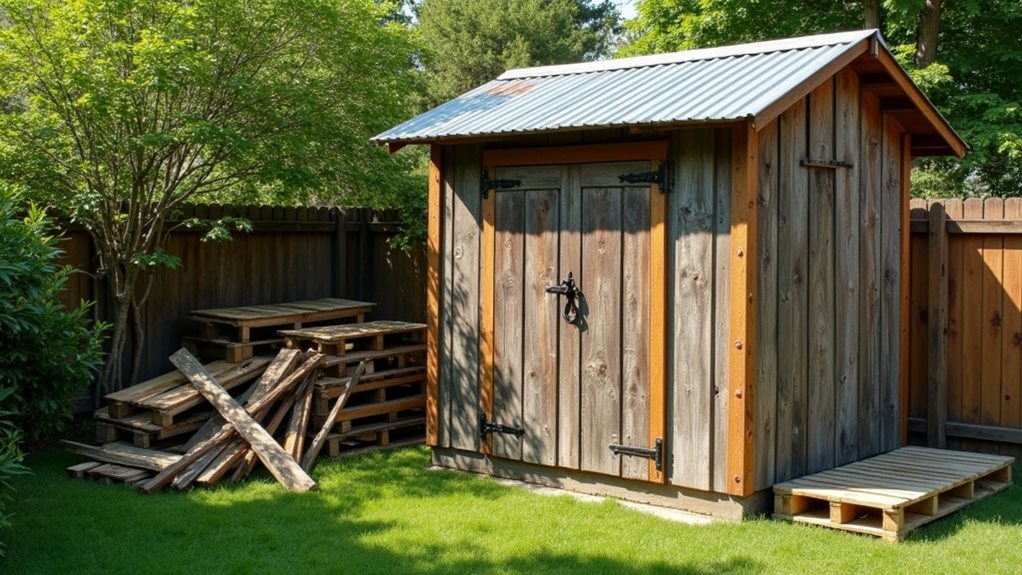
Using reclaimed lumber, such as cedar fence planks or old pallets, allows you to cut costs while building a durable shed. Sourcing these materials from salvage yards, online marketplaces, or neighborhood exchanges can substantially lower expenses and contribute to a rustic look. Proper cleaning and pressure washing guarantee the reclaimed wood is safe and weather-resistant for outdoor use. Additionally, inspecting and ensuring the propane tank safety is crucial if you plan to use propane-powered tools or appliances during construction.
Sourcing Reclaimed Lumber
Sourcing reclaimed lumber is an effective way to reduce costs and add character to your garden shed, especially when you know where to look. You can find reclaimed lumber from old fencing, pallets, or demolition sites, often at little or no cost.
Always check the wood’s integrity, pressure wash to remove mold and dirt, and make certain it’s sound for building.
Cost-Effective Material Choices
Choosing affordable materials for your garden shed can markedly reduce overall costs while still providing durability and visual appeal. Reclaimed wood, such as pressure washed pallets or old fencing, adds rustic charm and is cost-effective.
Budget-friendly siding options like corrugated metal or plywood, combined with basic framing lumber, create a sturdy, inexpensive structure that fits within your budget.
How to Build a Foundation and Frame on a Budget
Building a sturdy foundation for your garden shed doesn’t have to be expensive or complicated. Using inexpensive concrete or deck blocks, which cost less than $10 each, provides a low-cost foundation. Carefully leveling the blocks on compacted gravel or soil guarantees stability. With a solid foundation, you can confidently build a shed that lasts, all while saving money. Incorporating soil amendments like compost can also improve drainage and soil stability around the foundation area.
Cost-Effective Siding, Doors, and Roofing Tips
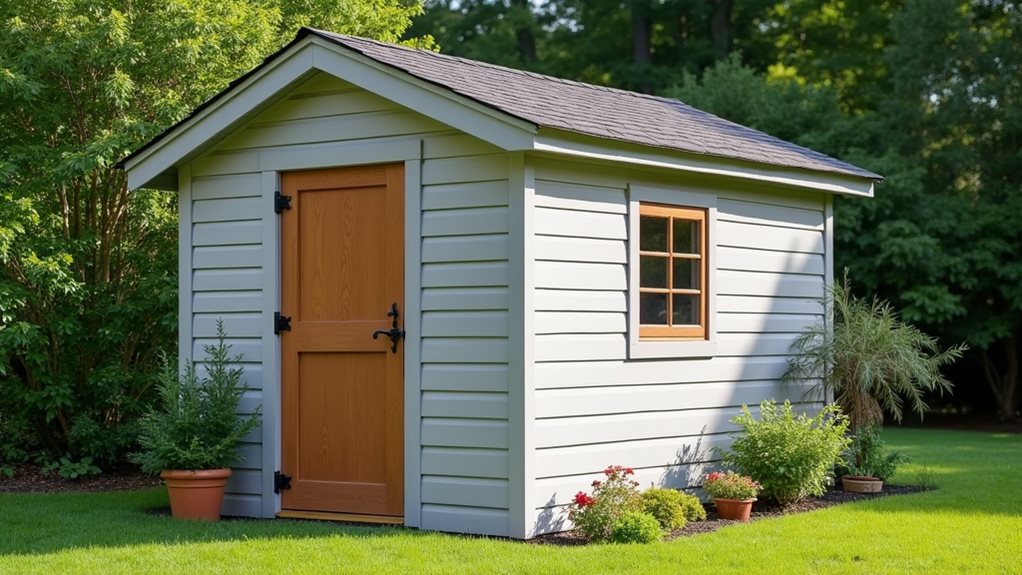
Using reclaimed wood or corrugated metal sheets for siding can notably cut costs while giving your shed a unique, rustic appearance.
Building your own barn-style doors from leftover plywood and inexpensive hinges offers a practical, budget-friendly solution that still looks good.
For roofing, affordable options like asphalt shingles or tarps are simple to install and protect your shed from the elements without breaking the bank.
Additionally, incorporating tropical plants with red flowers around your shed can enhance its aesthetic appeal and create a vibrant, inviting outdoor space.
Reclaimed Wood Siding Options
Reclaimed wood siding offers an affordable and sustainable option for your garden shed, especially when sourced from materials like cedar fence planks or disassembled pallets.
Using reclaimed wood creates an inexpensive, rustic look that adds character.
Make certain the siding is sound and dry before installation, and consider sealing or staining it to enhance weather resistance and extend its lifespan.
DIY Barn Door Techniques
DIY barn door techniques offer a cost-effective way to add rustic charm and functionality to your garden shed. Using reclaimed wood or pallet slats, you can craft a barn door that slides on simple, second-hand hardware, creating a rustic design.
Adding vintage handles or painted accents enhances the look without raising costs, making your shed uniquely yours.
Affordable Roofing Materials
Affordable roofing materials can substantially reduce the overall cost of building a garden shed while still providing durability and weather resistance.
Options like asphalt shingles, which cost around $1 to $4 per square foot, and corrugated metal sheets, priced at $1 to $3 per linear foot, offer practical solutions.
Recycled roofing materials further cut costs and promote environmental sustainability.
Finishing Touches and Organizing Your Shed for Less
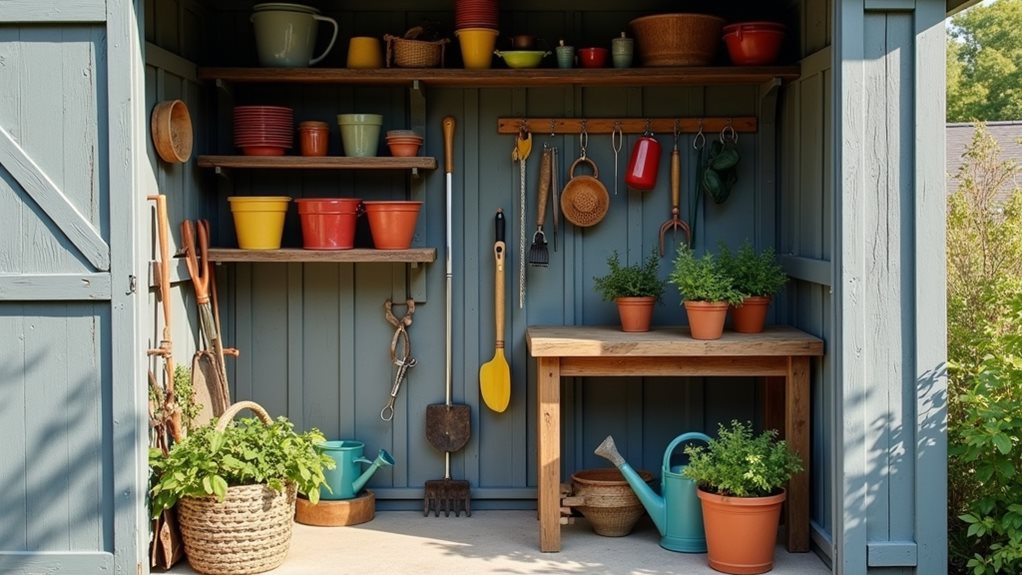
Even after building a basic shed, adding finishing touches and organizing your space can considerably improve its functionality without increasing costs. Use inexpensive shelving options like recycled crates or old furniture to maximize storage. Install wall-mounted racks or pegboards made from scrap materials. Label storage areas with painted signs to keep everything organized, accessible, and clutter-free. Incorporating adjustable shelving can help customize storage as your needs change.
Final Note
Building a budget-friendly garden shed is achievable with careful planning, affordable materials, and resourcefulness. By selecting reclaimed wood, cost-effective siding, and reused components, you can greatly reduce expenses while creating a durable, functional space. Proper foundation and framing techniques guarantee longevity, while finishing touches keep costs low without sacrificing quality. With patience and attention to detail, you’ll end up with a practical shed that meets your needs without exceeding your budget.

Nathan McPhail is a garden and home DIY expert who writes practical, easy-to-follow advice for homeowners and gardeners. Through Yardique, he shares hands-on tips covering gardening, lawn care, landscaping, home improvement, repairs, tools, and outdoor living. His focus is on helping readers solve everyday household and yard problems with straightforward guidance, useful techniques, and practical solutions.