Pull young weeds early to prevent seeding and reduce regrowth. Block sunlight with layered cardboard and leaf mulch, or use wood chips in perennial beds to suppress weeds and improve soil. Apply seed-free straw on pathways and top with compost to smother seedlings while feeding beneficial microbes. Mow lawns low and often, and spot-treat stubborn weeds with 20% vinegar under full sun. Water at the base with drip irrigation, skip tilling, and build healthy soil yearly—your next steps reveal even greater control.

TLDR
- Remove weeds early before they seed to prevent spread and improve control effectiveness.
- Use thick mulch layers like wood chips or cardboard to block sunlight and suppress weed growth.
- Apply vinegar-based sprays with 20% acetic acid to kill young weeds naturally and safely.
- Plant living groundcovers such as white clover to crowd out weeds and enrich soil.
- Water precisely with drip irrigation and keep soil covered to limit weed germination.
Pull Weeds Early Before They Spread

You’ll almost always get the upper hand on weeds by tackling them early—before they grow tall, set seed, or steal critical resources from your crops.
Pulling small weeds is easier, cheaper, and more effective than managing larger ones. Early removal prevents seed spread, reduces resistance risk, and enhances crop yields. Applying mulch or clippings can help suppress new weed growth and retain soil moisture.
Staying ahead of weed growth helps protect the critical weed-free period for your plants.
Stay ahead by monitoring closely and acting fast, so your garden stays healthy and productive.
Smother Weeds With Cardboard and Leaves
Lay down plain brown cardboard over weedy areas, making sure to overlap the edges by 4–6 inches to block light and stop weeds from emerging.
Cover the cardboard with a thick layer of leaves or organic mulch, which helps retain moisture and adds nutrients as they break down.
This combo not only smothers existing weeds but also prevents new seeds from sprouting, giving you a cleaner bed with less work over time.
Coconut coir chips are especially useful here because they absorb 4–6× weight in water, helping the mulch layer retain moisture while resisting compaction.
Cardboard Layer Blocks Weeds
Pulling weeds constantly? Lay down cardboard to block them effectively. Use plain brown corrugated sheets, overlap them well, and secure with stakes. Soak with water to help them settle.
Top with 4+ inches of mulch—wood chips work great. Cardboard suppresses weeds, retains moisture, and breaks down naturally, improving your soil while giving you easier, long-term garden care.
Leaf Mulch Suppresses Growth
Building on the foundation of cardboard weed control, topping it with leaf mulch takes suppression to the next level—blocking sunlight, stabilizing soil moisture, and preventing weed seeds from gaining a foothold.
Apply 2–3 inches of shredded leaves in flower beds, or up to 12 inches in vegetable gardens. Maple and oak leaves enhance turf health, while frequent nitrogen helps control crabgrass. Avoid black walnut or eucalyptus.
Mulch Perennial Beds With Woodchips

Raise your garden’s resilience by blanketing perennial beds with a generous layer of wood chips—a simple step that delivers powerful results.
Apply 4 inches deep to block sunlight, suppress annual and perennial weeds, and reduce pulling. Over time, decomposing chips enhance soil, increase moisture retention, and support beneficial microbes.
Top up every two years, and insulate roots while stabilizing soil temperature for healthier, low-maintenance growth. Galvanized metal raised beds can also help define bed edges and improve drainage for adjacent plantings, offering durable drainage benefits.
Use Seed-Free Straw to Block Garden Weeds
Choose certified weed-free barley straw to effectively block garden weeds without introducing new ones.
It suppresses weed growth by blocking sunlight and releasing natural compounds that inhibit seed germination, while also improving soil health as it breaks down.
Make sure to spread it loosely on bare soil, especially along pathways, for best results.
You can also reduce mushroom problems by improving drainage and avoiding overwatering, which helps limit the decomposing material that fungi feed on.
Straw Selection Tips
While not all straw is created equal for weed control, selecting the right type can make a significant difference in keeping your garden beds clean and productive.
Choose certified weed-free barley straw, as it releases tannins that suppress weeds and enhance soil.
Avoid non-certified sources, shake out chaff, and apply loosely under 4 inches deep to block weeds while supporting healthy soil life.
Weed Suppression Benefits
You’ll often find that seed-free straw works wonders as a natural defense against garden weeds, thanks to its ability to block sunlight and create a physical barrier that prevents weed seeds from sprouting.
It retains moisture, improves soil health, and, when steam-treated, guarantees no new weeds emerge, giving you a cleaner, low-maintenance garden you can feel proud of.
Layer Compost to Feed Soil and Kill Weeds
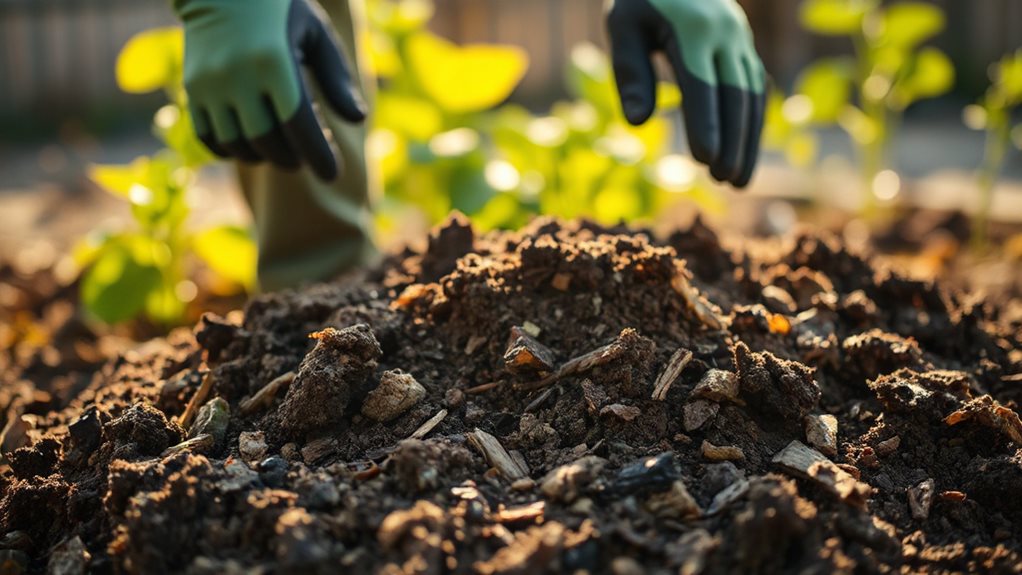
Applying a thick layer of compost not only enhances your soil but also acts as a powerful defense against garden weeds.
Use 2–3 inches of weed-free compost to block light and smother seedlings, while feeding microbes and improving soil health.
Combine with cardboard for better suppression, and avoid piling it against plant stems.
This simple, natural method nourishes your garden and reduces weeding over time.
Also, improving surface drainage and avoiding areas where water pools can further reduce weed-friendly conditions, since standing moisture encourages weed germination and growth improve drainage.
Bake Weeds Out With Solarization
After enriching your soil with compost to suppress weeds and increase fertility, you can take a more intensive approach by leveraging the sun’s power to clear stubborn infestations.
Cover moist soil with clear plastic for 4–8 weeks during hot summer months, trapping heat to kill weeds, seeds, and pathogens.
This hydrothermal method works best in sunny, warm areas, effectively reducing weed pressure without chemicals while preparing a clean bed for planting.
Plant White Clover as a Living Weed Barrier
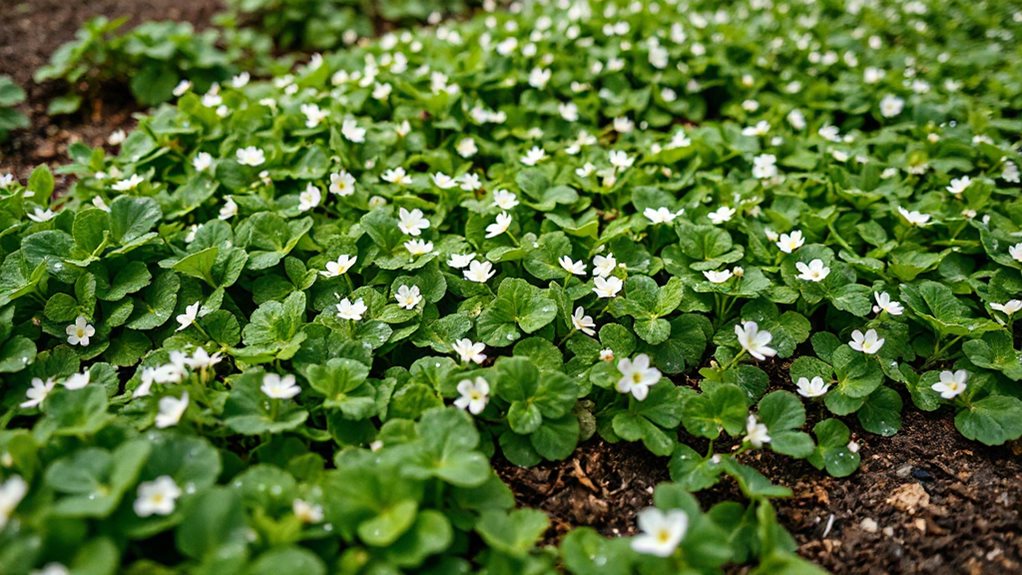
You can plant white clover as a living weed barrier that thrives in pathways and around crops, using its dense growth to block sunlight and reduce weed emergence.
It’s easy to establish from seed in raised beds or strip-tilled rows, and it tolerates light herbicide use when needed, though it does require consistent moisture during establishment.
Once it’s growing, its thick root system not only suppresses weeds but also fixes nitrogen, improving soil health for nearby plants.
White Clover Benefits
Thriving where other groundcovers struggle, white clover earns its place in your garden as a living weed barrier that works year after year.
You’ll suppress weeds, fix 80–130 lb. N/A, and improve soil health. Its dense cover blocks invaders, while roots reduce compaction and enhance moisture retention.
You gain a resilient, low-maintenance groundcover that supports crops, cuts herbicide use, and enriches soil—all while welcoming beneficial insects to your growing space.
Easy Establishment Tips
When establishing white clover as a living weed barrier, timing and technique make all the difference in securing a dense, persistent stand.
Seed into tilled strips 16 inches wide, spaced 4 feet apart, and irrigate weekly with 1–2 inches of water.
Use drip irrigation for cash crops to reduce competition.
Spread seeds in pathways around fruit trees, and mow regularly to maintain a low profile that suppresses weeds without overtaking your garden.
Dense Growth Advantage
Often overlooked, white clover’s dense growth habit gives it a powerful edge as a living weed barrier in sustainable gardens and farms.
You’ll see it outcompete weeds by shading soil and blocking sunlight, thanks to its thick foliage and extensive roots. Once established, it forms a resilient ground cover that suppresses weed biomass by up to 80%, reducing your need for herbicides while supporting healthy, biologically active soil.
Mow Low and Often to Choke Lawn Weeds

You can keep lawn weeds in check by mowing low and often, but only if you do it the right way—cutting too short or too infrequently does more harm than good.
Stick to the one-third rule, mow weekly during growth spurts, and time cuts just before weeds flower. Keep blades sharp, avoid scalping, and pair mowing with proper care to build dense, resilient turf that naturally chokes out weeds.
Spray Vinegar Mix on Hot, Sunny Days
On a scorching afternoon with the sun high and the breeze still, now’s the time to grab your spray bottle and strike at garden weeds with a vinegar-based solution.
Use 20% acetic acid for best results, adding a splash of dish soap per gallon to help it stick. Target young, broadleaf weeds, spraying thoroughly under full sun to maximize burn and desiccation.
Reapply if rain falls within 48 hours, and wear gloves to protect your skin—especially with stronger concentrations. This method works fast, killing over 90% of small weeds within a day, but may need repeating for perennials like thistle.
Spot-treat every two weeks to stay ahead of regrowth.
Water Wisely to Starve Weeds Naturally
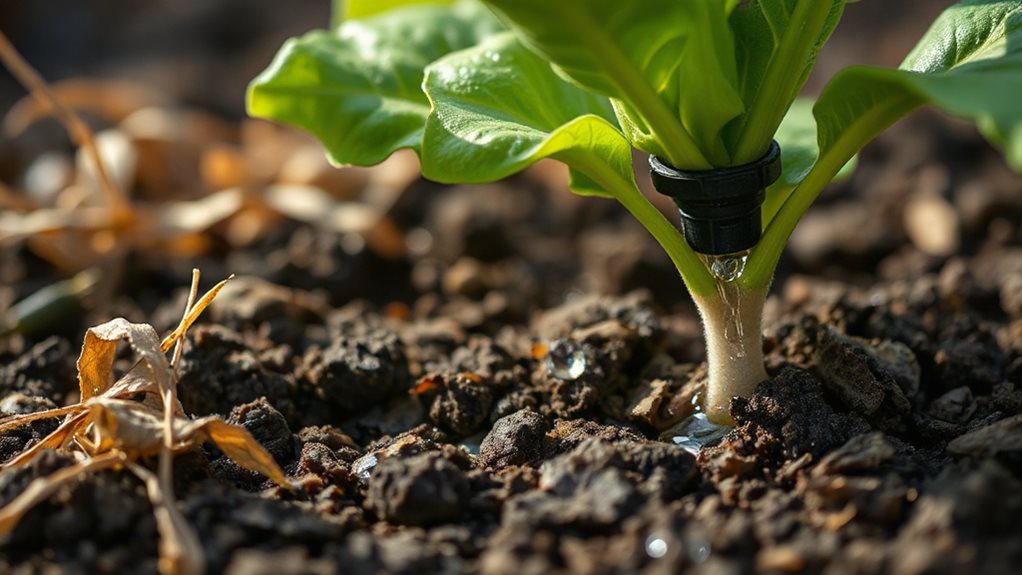
Consistently watering with precision not only supports healthy crops but also weakens weed establishment by controlling moisture where it’s available.
Use drip irrigation to target plant bases, keeping interrows dry and reducing weed germination. Shallow watering and mulching limit surface moisture, while proper nutrient timing guarantees crops outcompete weeds.
Together, these methods starve weeds naturally.
Build Strong Soil With Yearly No-Till Layers
Protecting your soil from unnecessary disruption sets the stage for a resilient, self-sustaining garden, and skipping the tiller is one of the most effective ways to do it.
You build strong soil by adding yearly layers of compost, mulch, or cover crops without tilling, which preserves structure, enhances organic matter, and supports beneficial microbes—creating a healthy, weed-suppressing foundation that works with nature, not against it.
Final Note
You’ve got the tools to tackle garden weeds naturally and effectively. By pulling weeds early, using mulch, and layering compost, you suppress growth while enhancing your soil. Mowing often and watering strategically weakens invaders without harming your plants. Vinegar sprays work best in full sun, and no-till methods build long-term resilience. With consistent, eco-friendly practices, you’ll starve weeds and nurture a healthier, more productive garden over time.

Nathan McPhail is a garden and home DIY expert who writes practical, easy-to-follow advice for homeowners and gardeners. Through Yardique, he shares hands-on tips covering gardening, lawn care, landscaping, home improvement, repairs, tools, and outdoor living. His focus is on helping readers solve everyday household and yard problems with straightforward guidance, useful techniques, and practical solutions.
Pingback: How to Build a Cheap Garden Shed With Reclaimed Materials