To grow tomatoes in containers, choose compact, determinate or dwarf varieties suited for limited space, guaranteeing your container is at least 18 inches wide with drainage holes. Use well-draining potting mix, support plants with cages or stakes, and provide at least six hours of sunlight daily. Water consistently, mulch to retain moisture, and monitor environmental conditions like wind and pests. Proper setup and care help assure healthy harvests—exploring these tactics further will give you even more success tips.
TLDR
- Choose compact tomato varieties like cherry or dwarf types suited for container gardening.
- Use at least 18-inch diameter containers with drainage holes and fill with well-draining potting mix.
- Provide sturdy support structures, such as cages, immediately after planting for stability.
- Water deeply and regularly, maintaining consistent moisture with mulch to prevent common tomato issues.
- Ensure at least six hours of direct sunlight daily, and protect plants from extreme heat and strong winds.
How to Choose the Best Tomato Varieties for Containers
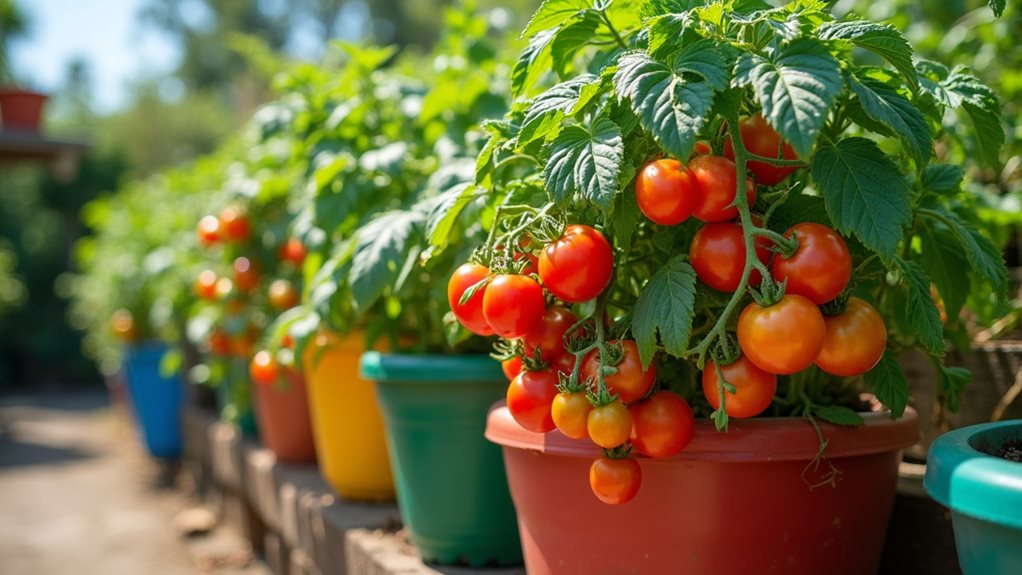
Choosing the right tomato varieties is essential for successful container gardening, especially since space and soil volume are limited.
Opt for determinate varieties, dwarf tomatoes, or micro tomatoes with small fruit and shorter days to maturity. These compact plants, like cherry tomatoes, have smaller root systems and manageable plant size, making variety selection easier.
This ensures healthy growth in limited container space. Additionally, considering cost factors such as potential expenses for DIY or professional refinishing can help you plan and optimize your gardening setup efficiently.
Selecting the Right Container Size and Material for Growing Tomatoes
Selecting the appropriate container size and material is essential for ensuring healthy tomato growth in a limited space. Use at least 18 inches in diameter for determinate varieties and 24 inches for indeterminate types to allow sufficient root space. Choose containers with drainage holes, filled with well-draining potting mix that promotes root development, moisture retention, and prevents waterlogging. Avoid heavy or black plastic containers in hot climates. Additionally, selecting rot-resistant materials like cedar or recycled wood can extend the lifespan of your containers, especially when exposed to moisture and outdoor conditions.
How to Plant and Support Your Container Tomatoes Effectively
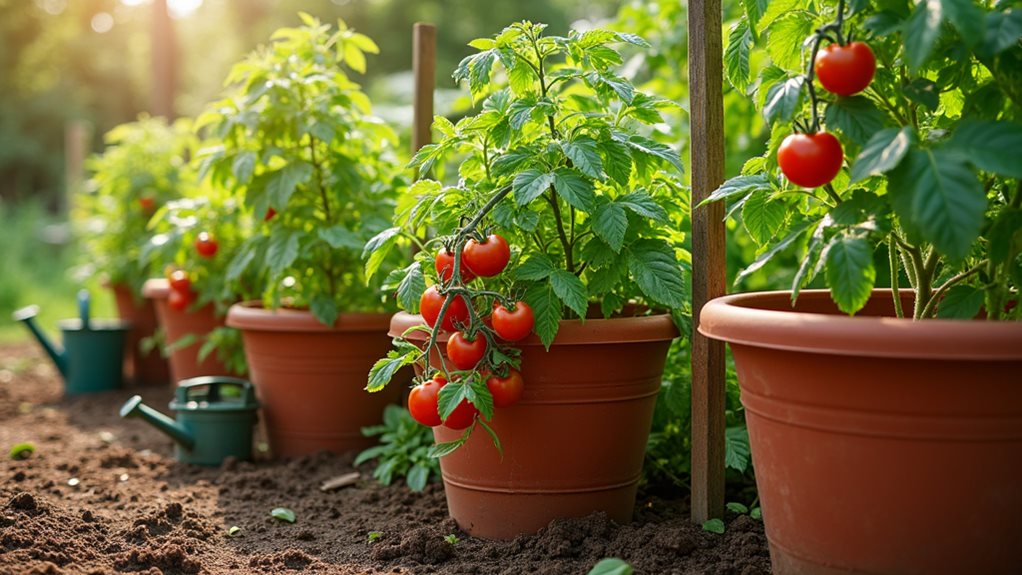
Planting your tomato seedlings properly sets the foundation for healthy growth and abundant fruit. Dig deep, covering 2-3 leaf sets to promote root development.
Prune lower leaves to improve air circulation.
Place a sturdy tomato cage or support structure immediately, securing it loosely for stability.
Regularly check and adjust supports to accommodate plant growth and guarantee proper support and plant stability.
Additionally, ensure your container has adequate drainage to prevent waterlogging and root rot.
Best Watering and Mulching Practices for Healthy Tomato Plants
Proper watering and mulching are essential practices that support the health and productivity of your container-grown tomatoes.
You should water deeply and consistently, aiming for about 1 inch per week, and check soil moisture regularly using a moisture meter or your finger.
Applying a 2-inch mulch layer conserves soil moisture, regulates soil temperature, and reduces water evaporation, promoting healthy growth.
Optimizing Sunlight, Location, and Environmental Conditions
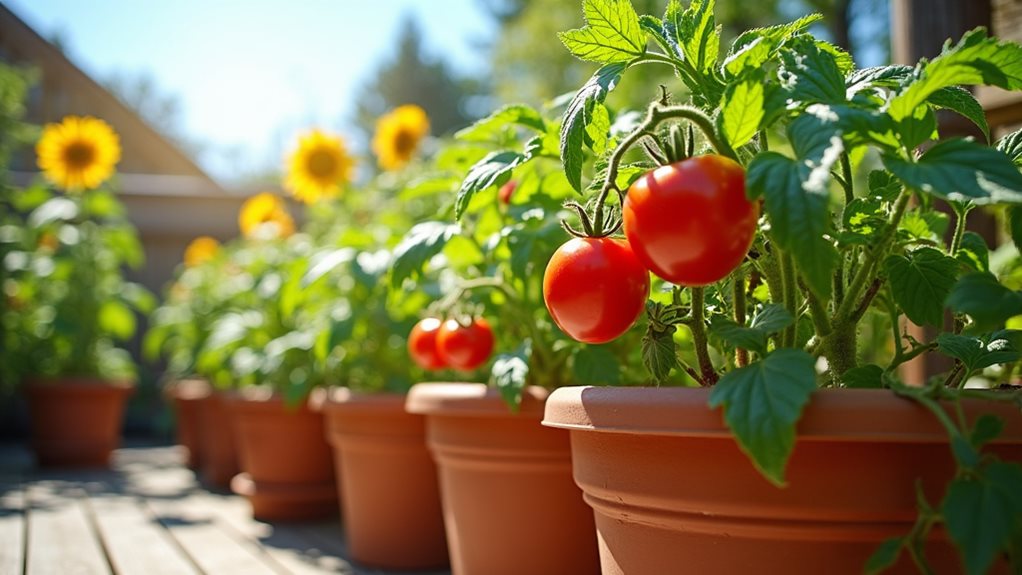
Maximizing sunlight exposure is essential for the healthy growth and fruit production of your container-grown tomatoes, as they need at least six hours of direct sunlight each day.
Choose a growing location with full sun, ideally facing south or southwest. Use reflective surfaces and elevated container placement to enhance sunlight.
Provide shade in hot climates. Protect plants from wind and monitor environmental conditions for maximum growth. Insects, such as bugs or spiders, are not a regular part of a rabbit’s diet but can be attracted to a rabbit hutch if it contains a lot of bugs.
Troubleshooting Common Challenges in Container Tomato Gardening
Dealing with common challenges in container tomato gardening can be frustrating, but understanding their causes and solutions helps you maintain healthy plants and guarantee a good harvest.
Consistent watering prevents blossom end rot, cracking, and fungal diseases by maintaining proper soil moisture. Avoid overwatering and irregular watering; use drip irrigation for steady flow.
Ensure good airflow around your plants and regularly check for pests to keep your plants thriving. Incorporating soil amendments like compost and organic matter can improve drainage and prevent issues related to poor soil structure.
Final Note
Growing tomatoes in containers is a rewarding process that relies on proper variety selection, suitable containers, and attentive care. By providing adequate sunlight, consistent watering, and proper support, you can cultivate healthy, productive plants. Monitoring environmental conditions and addressing common issues promptly will help guarantee a successful harvest. With careful planning and maintenance, container gardening offers an accessible way to enjoy fresh tomatoes, even in limited spaces, promoting both satisfaction and sustainability in your gardening efforts.

Nathan McPhail is a garden and home DIY expert who writes practical, easy-to-follow advice for homeowners and gardeners. Through Yardique, he shares hands-on tips covering gardening, lawn care, landscaping, home improvement, repairs, tools, and outdoor living. His focus is on helping readers solve everyday household and yard problems with straightforward guidance, useful techniques, and practical solutions.