Choose a rot‑resistant, sustainably sourced wood like cedar, redwood, black locust, or cypress for your raised garden beds, and opt for ½‑¾″ thick, straight‑grain boards to minimize warping under soil pressure. Verify FSC certification to ensure responsible harvesting, and consider climate‑specific options—redwood or cedar in arid zones, black locust or white oak where humidity is higher. Budget‑friendly choices such as California incense cedar or repurposed pallets can work if you treat them properly, and a brief look at lifespan‑cost data will show which species offers the best long‑term value.
TLDR
- Choose naturally rot‑resistant species such as cedar, redwood, black locust, or white oak for longest lifespan.
- Use ½‑¾″ thick 2×8 boards with straight grain to resist warping under soil pressure.
- Match wood to climate: teak or western red cedar in arid zones; black locust and cedar in humid or temperate areas.
- Consider budget‑friendly options like California incense cedar, hemlock, or reclaimed pallets, ensuring they are properly sealed.
- Verify FSC certification for sustainable sourcing and apply a protective sealant or mulch to extend durability.
How to Pick Durable Wood for Raised Beds
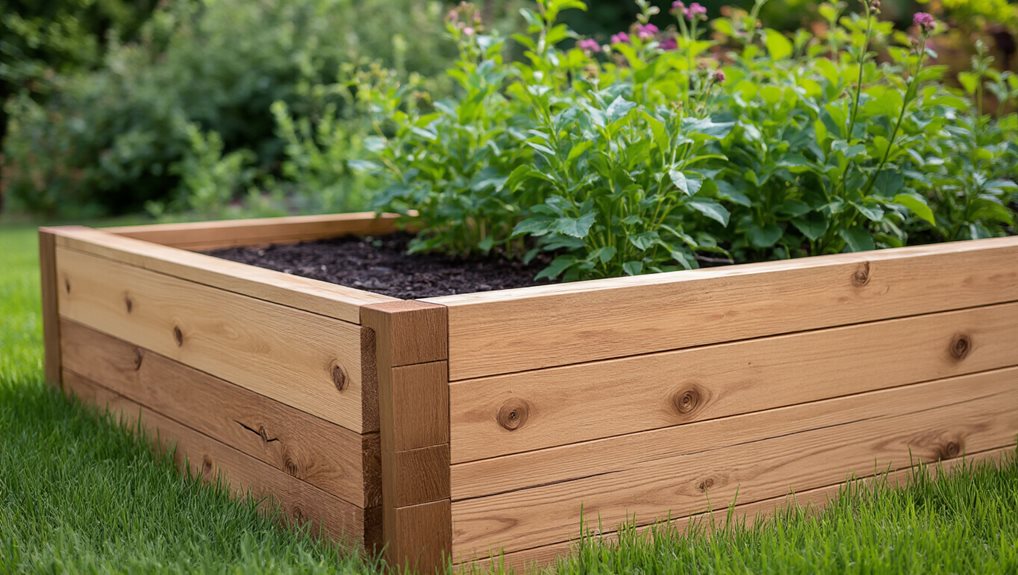
How can you choose wood that will stand up to the elements and last for years without constant replacement? You should prioritize species with natural rot resistance—cedar, redwood, white oak, black locust, or robinia—because their oils, tannins, or density protect against decay and insects. Cypress offers dense, rot‑resistant properties while maintaining dimensional stability. Balance longevity with budget by considering mid‑range options like Douglas fir or cypress, and verify FSC certification for sustainable sourcing.
Key Selection Criteria: Thickness, Grain, FSC
Which thickness, grain orientation, and FSC certification you choose will directly affect a raised bed’s durability, stability, and environmental impact.
Opt for ½‑¾″ thick 2×8 boards; they resist warping under soil pressure, especially when short (≤6 ft) and braced.
Favor straight grain for uniform strength, and verify FSC labeling to ensure sustainable sourcing, reinforcing your garden’s community ethos.
Also consider using stabilized wood options or exterior-grade plywood with proper sealing to prolong life in exposed garden conditions durability standards and to support long-term performance.
Top Rot‑Resistant Woods by Climate Region
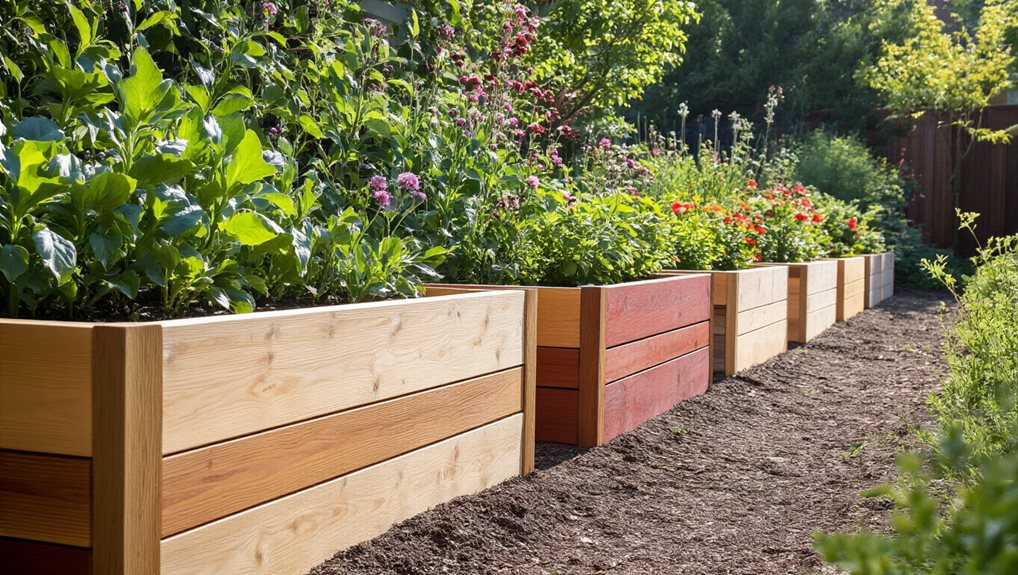
In arid zones, choose redwood heartwood, teak, or western red cedar for natural rot resistance; in humid or temperate areas, black locust, cedar, and white oak excel. Proper soil preparation and mulch after planting help maintain long-term durability in any climate, supporting healthy wood foundations. rot resistance
Budget‑Friendly Durable Wood Options
Ever considered which low‑cost woods will still hold up season after season in your raised bed? California incense cedar gives rot‑resistance at a fraction of premium cedar, while hemlock offers cheap, widely available lumber if you accept modest durability. Repurposed pallets provide rustic charm and zero cost, and DIY 4×4×1‑ft frames built from local lumber stay under $100, letting you allocate savings to soil and community. Readings from moisture and wood‑quality considerations help ensure durable construction in damp garden environments moisture detection and testing methods to confirm structural integrity over time.
Lifespan‑Cost Comparison: Which Wood Gives Best Value?
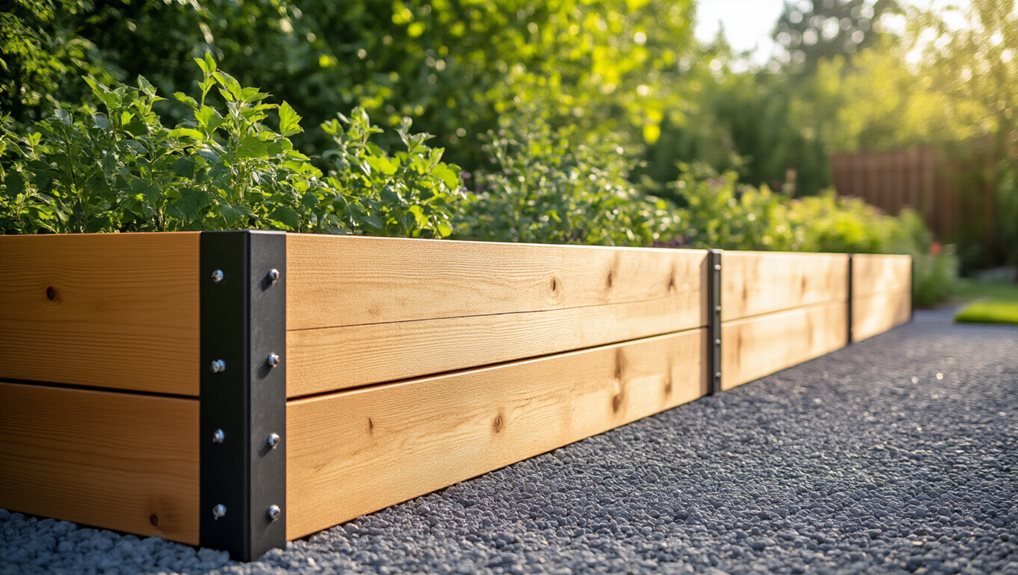
Even after weighing budget‑friendly options, the next step is to compare how long each wood lasts against its price, so you can see which material truly offers the best value for a raised garden bed. Integrating weatherproofing and material resilience topics can help you gauge long‑term performance more accurately durability factors.
Final Note
By weighing thickness, grain orientation, and FSC certification, you can match wood to your climate and budget, ensuring a raised bed that resists rot and lasts for years. Choose naturally durable species—cedar, redwood, or cypress—where they’re abundant, or opt for pressure‑treated lumber and hardwood alternatives in harsher zones. Balancing upfront cost against lifespan yields the greatest value, so select the material that meets both structural integrity and long‑term performance requirements.

Nathan McPhail is a garden and home DIY expert who writes practical, easy-to-follow advice for homeowners and gardeners. Through Yardique, he shares hands-on tips covering gardening, lawn care, landscaping, home improvement, repairs, tools, and outdoor living. His focus is on helping readers solve everyday household and yard problems with straightforward guidance, useful techniques, and practical solutions.