You’re getting brown tips because the plant isn’t getting consistent moisture, the air is too dry, or the water itself is harming the foliage. Letting soil dry too long or watering unevenly stresses roots, while low indoor humidity accelerates leaf water loss, especially in winter. Overwatering creates root rot, which blocks nutrient uptake, and tap‑water chemicals like fluoride or chlorine can burn margins. Adjust your watering schedule, raise humidity, and use filtered water, and you’ll see healthier edges. Continue for deeper insights.
TLDR
- Inconsistent or insufficient watering causes drought stress, leading to brown leaf tips.
- Low indoor humidity, especially in winter, accelerates leaf water loss and tip browning.
- Overwatering creates root rot and oxygen deficiency, resulting in crispy brown edges.
- Tap water contaminants (fluoride, chlorine, high acidity) can accumulate and damage leaf margins.
- Root‑bound pots or poor drainage restrict water flow, causing localized tip dehydration.
Is Your Watering Routine the Main Reason for Brown Leaf Tips?
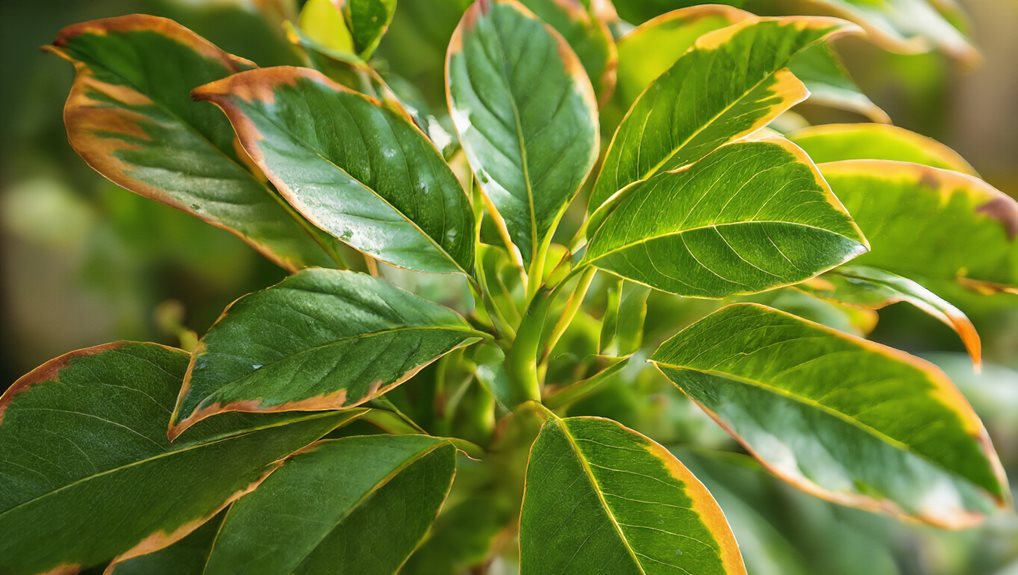
Why might your watering schedule be the hidden cause of those brown leaf tips? You probably let soil dry too long, so water reaches tips last, creating drought stress; uneven watering can also leave excess water draining too quickly, indicating a root‑bound pot.
Consistently watering until the moisture meter reads three, then allowing excess to drain, prevents tip browning and promotes healthier roots.
Also, root‑bound pots can restrict water flow, causing the tips to desiccate even when the soil feels moist.
Low Indoor Humidity That Causes Brown Leaf Tips
When indoor air gets dry, the tips of your leaves start to brown because the plant loses water faster than the roots can supply it, especially in winter when heating cuts humidity to single digits. Placing pots on a pebble tray filled with water creates a micro‑climate that lifts local moisture, while a regular misting routine adds a quick, temporary boost to the leaf surface. Combining these tactics with a hygrometer to monitor levels helps you keep humidity in the 40‑60 % range most houseplants need Humidity Monitoring to ensure a stable environment.
Indoor Air Dryness
Ever notice how the tips of your indoor plants turn brown and brittle during winter? Low indoor humidity, often dropping below 30% because of heating, accelerates moisture loss from leaf margins, especially on tropical species like spider plants and dracaena. When the air is dry, tips can’t retain water, so they crisp. Grouping plants, misting, or using a humidifier restores balance and prevents browning.
Pebble Tray Benefits
How can a simple pebble tray keep your indoor plants from developing brown, brittle tips? By elevating the pot above water, the tray lets moisture evaporate, creating a modest humidity bubble that raises local humidity a few percent—enough to ease tip browning without soggy roots.
It’s inexpensive, low‑maintenance, and avoids mold risk, making it a friendly, community‑focused solution for low‑humidity homes.
Frequent Misting Routine
A pebble tray creates a modest humidity bubble, but when the air in your home stays consistently dry, you’ll need more than a passive barrier to protect leaf tips.
Mist three times daily, especially near windows or vents, to raise local humidity; group plants together for a shared micro‑climate, and watch tropical species like dracaena, calathea, and spider plant retain supple edges without brown tips.
Overwatering and Root‑Rot Risks That Brown Leaf Tips
Why do your leaf tips turn brown even when the soil feels soggy? Overwatering suffocates roots, limiting oxygen uptake, so leaves develop crispy, brown edges that mimic drought stress.
Fungal pathogens thrive in waterlogged media, turning roots mushy and brown, which spreads yellowing, wilting, and leaf drop.
Stop watering, let soil dry, check moisture before each soak, and repot with well‑draining mix to prevent root rot. In addition, using proper watering practices can help maintain balanced moisture and reduce stress on both roots and leaves.
Tap‑Water Chemistry That Creates Brown Leaf Tips
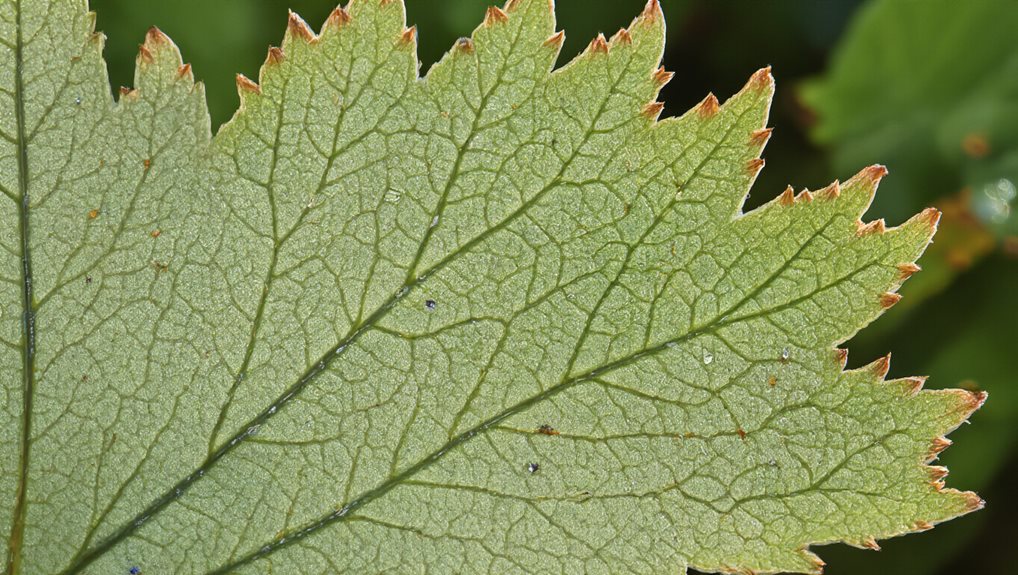
Switching to filtered or distilled water, or using a high‑quality Aqua Crest filter, removes these contaminants and helps keep your foliage healthy. Citric acid in citrus juices can also help explain why tap water acidity can affect plant tips, but using purified water prevents mineral buildup that leads to browning water quality.
Fluoride Accumulation Effects
Ever wondered why the tips of your houseplants turn brown despite diligent care? Fluoride from tap water accumulates in leaf margins, entering through roots or stomata, and builds up as a cumulative toxin that disrupts photosynthesis, respiration, and glucose catabolism.
Sensitive species—spider plant, dracaena, peace lily, calathea, prayer plant—show tip necrosis, yellowing, and irreversible scorch, especially when soil pH is low and calcium scarce. Filtered water reduces this buildup, preserving foliage health.
Chlorine‑Induced Leaf Necrosis
Fluoride buildup isn’t the only water‑borne culprit; chlorine, commonly added to municipal tap water, can also create brown leaf tips through a series of chemical reactions on the foliage surface.
When humid air carries chlorine, it forms a hydrochloric acid mist that settles on leaves, especially at margins and tips, causing necrotic spots that turn brown, then dry, and may drop, prompting you to adjust irrigation or water sources.
Fertilizer and Nutrient Imbalances That Brown Leaf Tips
Regularly checking for moisture and humidity levels in the root zone can help prevent nutrient imbalances and tip burn by supporting consistent uptake moisture management.
Quick Fixes & Long‑Term Habits to Prevent Brown Leaf Tips
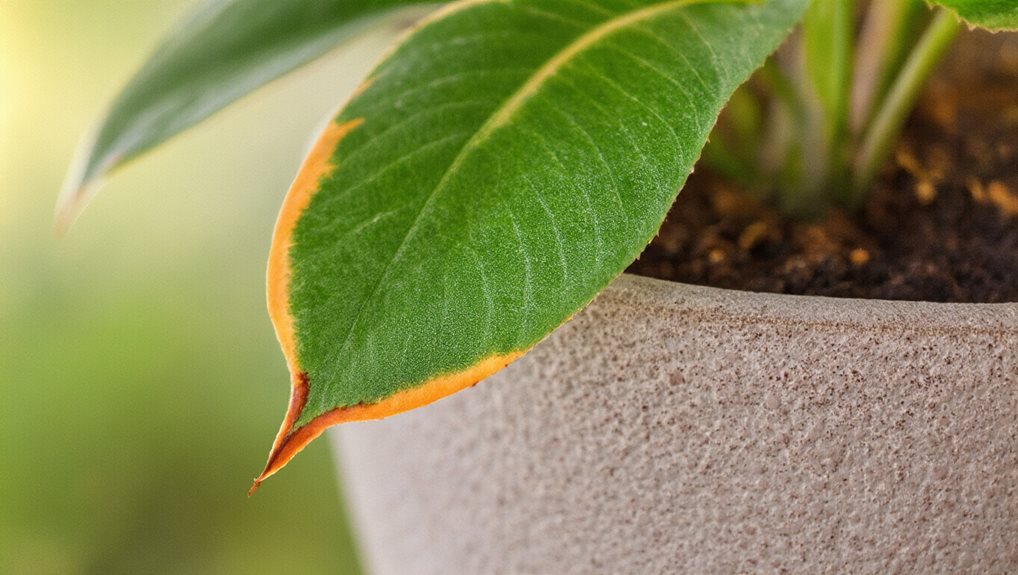
Water thoroughly then let soil dry slightly, keep humidity 40‑60% with a humidifier or pebble tray, use filtered water, inspect for pests weekly, relocate to bright indirect light, and trim brown tips just above healthy tissue, establishing a consistent care routine. A dusk-to-dawn style approach to lighting can help you observe plant behavior overnight and adjust care accordingly, reinforcing your overall plant-health routine dusk-to-dawn fixtures.
Final Note
By adjusting your watering schedule, boosting humidity, and using filtered or distilled water, you’ll address the primary causes of brown leaf tips. Regularly inspect roots for rot, avoid over‑fertilizing, and ensure proper drainage to keep nutrient balance stable. Implementing these habits not only prevents further browning but also promotes overall plant vigor, allowing your foliage to remain healthy and aesthetically pleasing.

Nathan McPhail is a garden and home DIY expert who writes practical, easy-to-follow advice for homeowners and gardeners. Through Yardique, he shares hands-on tips covering gardening, lawn care, landscaping, home improvement, repairs, tools, and outdoor living. His focus is on helping readers solve everyday household and yard problems with straightforward guidance, useful techniques, and practical solutions.