
To unclog a downspout, start by inspecting and removing visible debris such as leaves and twigs at ground level or in accessible sections. Use a garden hose with a high-pressure nozzle to flush out lighter blockages and dislodge debris, or insert a plumbing snake to reach deeper obstructions. For stubborn clogs, dismantle pipe sections at bends or junctions, and consider professional tools like water jetters if needed. Continuing with these steps can help you clear even the toughest blockages efficiently.
TLDR
- Use a garden hose with a high-pressure nozzle to flush out debris from the downspout.
- Insert a plumbing snake or auger into the downspout to break up and remove blockages.
- Dismantle sections at elbows or joints to manually clear deep or stubborn clogs.
- Check for and remove any debris or obstructions at the opening or entrance of the downspout.
- Consider professional cleaning tools like power jetters if manual methods fail.
Seasonal timing: Clear downspouts after the last leaf drop in autumn and again after the first heavy spring rain, when debris packed over winter breaks loose. If water backs up during a freeze, thaw the outlet before flushing so the pipe does not split. On a roof under pines, gutter guards with a fine mesh are the only type that will not clog with needles.
What Causes Downspout Clogs and Why Are They a Problem?
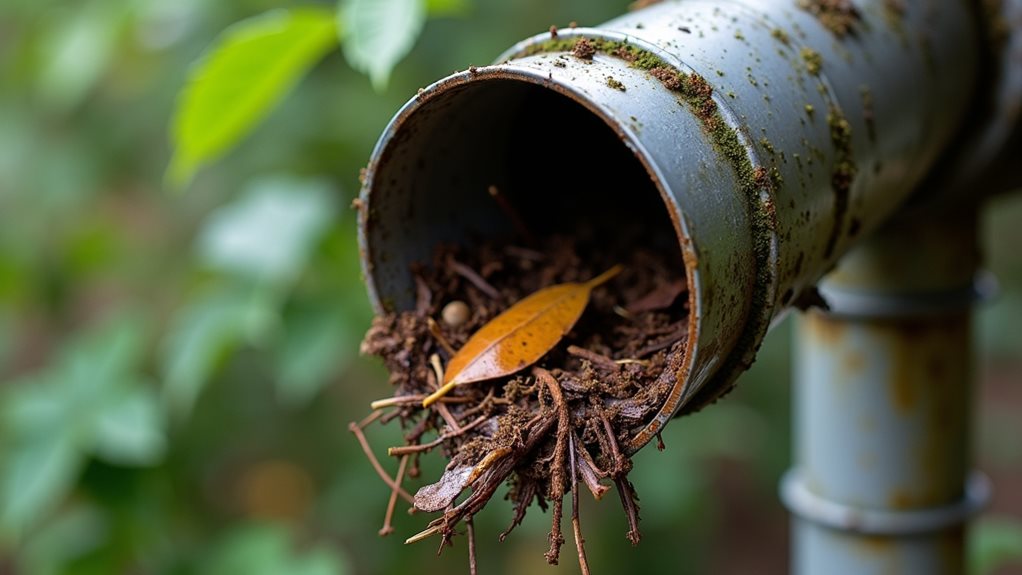
Clogs in downspouts commonly occur when organic debris like leaves, twigs, and other materials accumulate and block the water flow. This buildup can lead to water overflow, increasing the risk of water damage to your home’s foundation. Regular gutter maintenance helps prevent these clogs caused by debris, ensuring proper water flow and protecting your property from costly repairs. Additionally, understanding how to properly shut off water supply during maintenance can help prevent further issues with your plumbing system.
How to Prepare Safely for Downspout Cleaning
Before beginning any downspout cleaning, it’s crucial to prioritize safety to prevent accidents or injuries. Use a sturdy surface for ladder placement, make sure it’s fully extended, and have a helper hold it securely. Wear protective gear like gloves and safety goggles, and check the area for hazards such as power lines or unstable footing before climbing. Additionally, consider the cutting performance of your tools to ensure efficient cleaning without damaging your gutters or downspouts.
Ground-Level Methods to Clear Clogged Downspouts
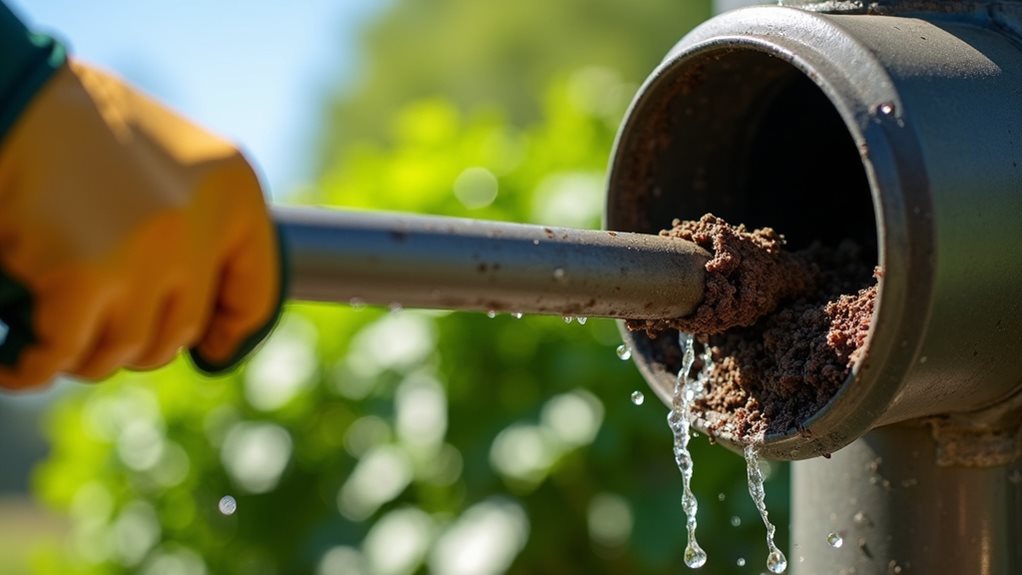
When dealing with a clogged downspout at ground level, there are several effective methods to clear the obstruction without climbing a ladder. On a roof under pines, gutter guards with a fine mesh are the only type that will not clog with needles.
You can flush out debris using a garden hose with a high-pressure nozzle or spinning jets.
Alternatively, employ a manual removal with a 25-foot plumbing snake to reach deep blockages.
Removing sections at elbows allows for thorough inspection and clearing.
Regularly inspecting and maintaining your downspouts helps prevent clogging from debris, ensuring proper water flow and reducing the risk of damage.
Handling Difficult or Persistent Clogs
When standard methods don’t work, using professional tools like plumbing snakes or high-pressure water jets can effectively break up stubborn clogs deep within the downspout. A new technique involves inspecting for any illegal dumping that may contribute to blockages or damage, ensuring your gutter system remains compliant with local regulations. If debris is lodged at bends or changes in the pipe, dismantling the sections allows for manual removal of difficult blockages. If these approaches still fail, it’s best to seek expert help to prevent damage and guarantee your gutter system functions properly.
Using Professional Tools Effectively
Using professional tools like power augers and high-pressure water jetters can considerably improve your chances of clearing stubborn or deep-seated clogs in downspouts. A hydraulic log splitter earns its cost on knots and crotch wood that an axe will not touch.
Choose a power auger with the right length and diameter to reach blockages, and employ a high-pressure water jetter with specialized nozzles to blast away organic buildup.
Proper handling guarantees effective clog removal and prevents downspout blockage.
Identifying Deep Blockages
Have you noticed water draining slowly or not at all from your downspout, even after clearing surface debris?
Deep blockages often form from hardened debris that clings to the inside walls, especially at elbows or junctions where water flow slows.
Stubborn clogs may require using a flexible auger or high-pressure jets to dislodge debris lodged deep within the downspout.
When to Seek Expert Help
If repeated attempts to clear your downspout with common tools like a garden hose or auger haven’t succeeded, it’s a clear sign that professional help may be necessary.
Persistent clogged downspouts caused by solid debris or deep organic buildup often require specialized equipment and knowledge to resolve safely.
Addressing structural damage early with experts prevents further issues and guarantees safety.
Preventing Future Clogs With Maintenance and Gutter Guards
Establishing a regular cleaning schedule for your gutters and downspouts helps prevent debris buildup that can lead to clogs, especially if done at least twice a year. Installing effective gutter guards, such as mesh panels or brush guards, creates a barrier that keeps leaves and twigs out of the system while allowing water to flow freely. Additionally, trimming overhanging branches reduces the amount of organic debris falling into your gutters, further decreasing the chances of future blockages. Incorporating surface drainage solutions like swales or shallow ditches can also help manage runoff and prevent water from pooling near your downspouts, reducing the risk of clogs.
Regular Cleaning Schedule
Regular cleaning of your gutters and downspouts is essential for preventing clogs and guaranteeing proper water flow.
By scheduling gutter cleaning at least twice a year, you reduce debris buildup that can cause blockages. Routine inspections help identify early signs of clog formation.
Maintaining properly sloped downspouts guarantees efficient drainage, all contributing to clog prevention and system longevity.
Installing Effective Gutter Guards
Installing gutter guards offers an effective way to prevent debris from entering your downspouts, substantially reducing the likelihood of clogs forming over time.
By choosing appropriate gutter guards, you minimize the risk of a clogged downspout caused by leaves and twigs, ensuring consistent water flow.
Regular maintenance, including debris removal, further enhances their effectiveness and prolongs their ability to protect your gutter system.
Trimming Overhanging Branches
Trimming overhanging branches is a simple yet effective way to prevent future clogs in your gutters and downspouts. By pruning trees near your roof, you reduce debris like leaves and twigs that can fall into your gutter system.
Making this adjustment also makes it easier to clean your gutters regularly. This maintenance creates a clear space, which minimizes debris transfer and improves overall gutter function.
When Should You Call a Professional for Downspout Repairs?
You should consider calling a professional for downspout repairs when you notice persistent issues that don’t resolve with basic cleaning, such as ongoing clogs or water overflowing during rain.
If you see downspout damage, corrosion, or structural deterioration, or if water leaks from joints, an expert assessment and professional repair are necessary.
These issues often require specialized tools and proficiency.
Final Note
Regularly inspecting and maintaining your downspouts can prevent clogs and minimize water damage risks. Using ground-level tools and preventive measures like gutter guards guarantees efficient drainage and reduces the need for professional repairs. If persistent issues arise or damage occurs, consulting a professional is the safest choice to avoid further complications. Staying proactive with downspout maintenance not only protects your home but also extends the lifespan of your gutter system, promoting overall structural integrity.

Nathan McPhail is a garden and home DIY expert who writes practical, easy-to-follow advice for homeowners and gardeners. Through Yardique, he shares hands-on tips covering gardening, lawn care, landscaping, home improvement, repairs, tools, and outdoor living. His focus is on helping readers solve everyday household and yard problems with straightforward guidance, useful techniques, and practical solutions.