You can curb standing water and protect your foundation by grading the yard with a 1‑2% slope away from the house, installing swales or shallow ditches along natural contours, and adding gravel‑filled trenches to slow runoff. French drains—perforated pipe surrounded by gravel and fabric—intercept groundwater and divert it from the foundation, while permeable pavers let rain infiltrate, cutting runoff 70‑90%. Amend clay‑heavy soil with compost or vermiculite to boost infiltration, and keep gutters clear to reduce pressure. Continuing will reveal more detailed steps.
TLDR
- Re‑grade the yard to maintain a 1–2% slope away from foundations, ensuring water runs downhill.
- Install vegetated swales or shallow ditches along natural contours to spread and infiltrate runoff.
- Add French drains or gravel‑filled trenches with perforated pipe to intercept groundwater and reduce hydrostatic pressure.
- Use permeable pavers with a proper base layer and geotextile to cut runoff by 70‑90% while recharging groundwater.
- Amend heavy or compacted soil with compost, vermiculite, or expanded shale to improve infiltration and prevent marshy patches.
Identify Common Yard‑Drainage Problems and Terminology
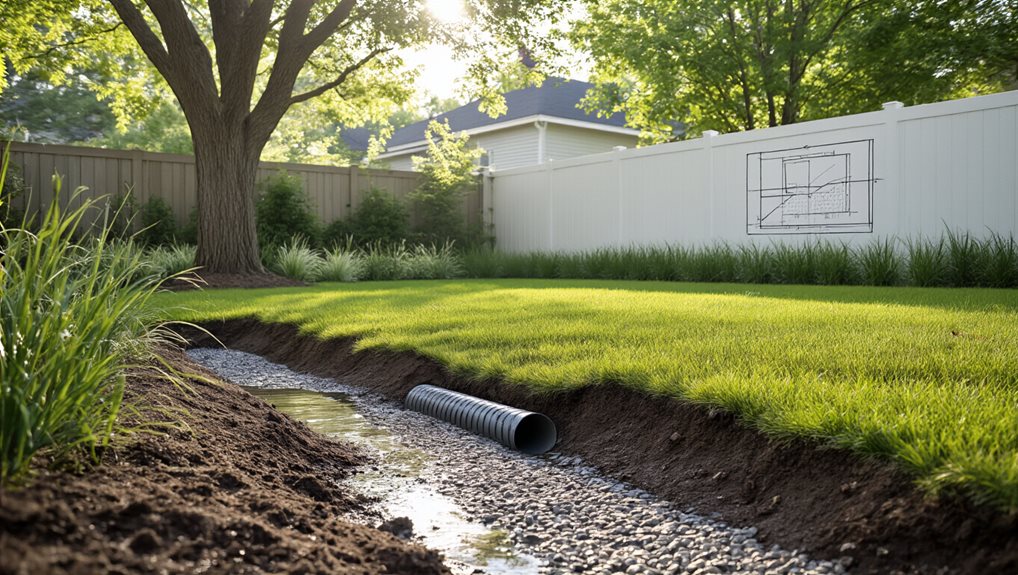
Ever wondered why water lingers in certain spots of your yard after a storm? You’re likely seeing standing water, a sign of poor soil absorption or an improper slope that traps runoff, especially near foundations where clogged gutters add pressure. Clay‑heavy or compacted soil slows infiltration, creating marshy patches that kill grass, invite mosquitoes, and risk structural damage. Identifying these issues is the first step toward effective drainage. Adding a drainage swale can channel excess water away from problem areas. Proper drainage solutions often rely on understanding how water infiltration works and the role of soil structure in moving moisture away from foundations.
Choose the Right Surface‑Drainage System for Yard Drainage
After pinpointing standing‑water hotspots and the underlying soil or slope issues, the next step is selecting a surface‑drainage system that matches your yard’s topography and aesthetic preferences. Choose swale drains for grassy, low‑maintenance channels that blend into flat terrain; open drains for budget‑friendly, straightforward canals; trench or slot drains for sloped or paved areas needing sleek, high‑capacity flow; and inclined pipes to guide water downhill efficiently, ensuring your yard stays dry and cohesive. Plaster terms and wall mounting considerations, while unrelated to yard drainage, remind readers to assess material constraints before installation in any project, including ensuring proper support for attachments where needed weight capacity and using appropriate fasteners for the chosen system.
Install French Drains to Protect Foundations
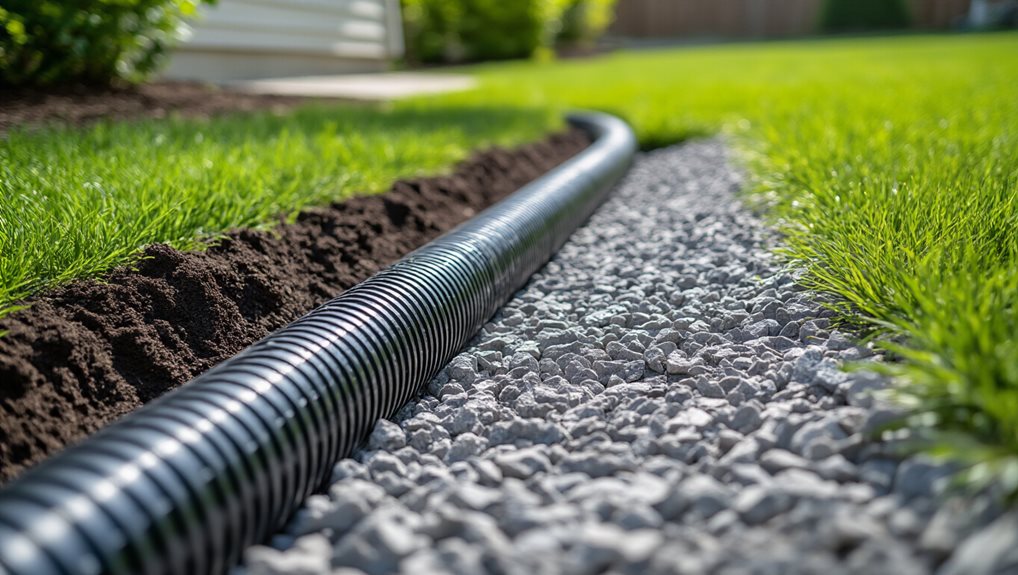
How can a French drain safeguard your home’s foundation? It intercepts groundwater, reducing hydrostatic pressure that cracks walls, redirects runoff to prevent soil erosion, and keeps the surrounding earth drier, which stabilizes the footing. By channeling water through gravel and a perforated pipe, it automatically averts basement flooding, preserving structural integrity and enhance property value without costly repairs. Cedar wood oils help decay resistance when used in exterior structures, contributing to longer-lasting outdoor projects.
Estimate French‑Drain Costs and DIY Installation Steps
A French drain’s ability to protect your foundation becomes even more precious when you know what it will cost and how you can install it yourself. Expect $10‑$65 per linear foot for exterior drains, $40‑$100 for interior, and $21.12 per foot DIY, while material expenses include gravel, geotextile fabric, and perforated PVC. Mark, trench 8‑18 in, line with fabric, add gravel, lay pipe with 1 % slope, backfill, then test flow and monitor for clogs. Regularly monitor for signs of under-stimulation in goats nearby, such as pacing or repetitive behaviors, to ensure they stay calm and engaged during any construction activity environmental enrichment.
Re‑grade Your Yard to Direct Water Away
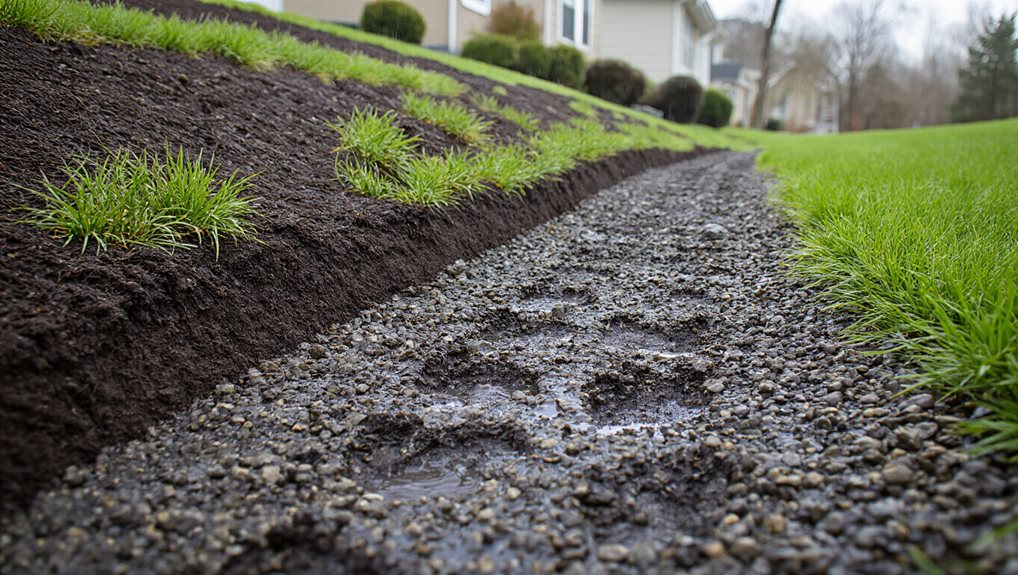
You’ll need to establish a proper slope—typically at least a 1% grade—so water runs away from your foundation, and you should fill any low spots that could collect runoff.
Using a laser level or a simple string line, mark high and low points, then add soil to raise the depressions and create a smooth, even gradient.
Once the ground is reshaped, compact it thoroughly to prevent settling, and you’ll have a solid base that directs water toward the desired drainage path.
Establish Proper Slope
Is your yard’s slope keeping water from pooling near your foundation? Check the grade with a taut string and level, aiming for at least a 1‑inch‑per‑foot drop over the first five to ten feet, then maintain a 2‑5% slope outward.
Mark high and low spots, adjust soil with heavy equipment, compact it, and verify a smooth, consistent decline toward swales or drains.
Fill Low Spots
After confirming that your yard’s slope directs water away from the foundation, the next step is to eliminate the low spots that trap runoff. Walk the property, locate pools, and mark each dip; then spread topsoil mixed with compost to raise those areas just above the surrounding grade, aiming for a 2 % slope. Rake evenly, repeat if water persists, and backfill to maintain a smooth, draining surface.
Add Subsurface Drainage Pipes for Yard Drainage
You’ll want to lay the pipe along a consistent 1% slope so gravity drives water toward the discharge point, positioning perforated sections with holes facing downward to capture subsurface flow.
Follow placement guidelines by setting a firm base of aggregate, keeping pipe joints tight with bell ends and glue, and spacing pipes no more than 30 feet apart for optimal performance. Additionally, plan for layered privacy plantings along the drainage trench to help screen and stabilize the area over time spacing guidelines and ensure the chosen plants tolerate moist soils typically found above buried drainage lines. Finally, plan maintenance access with clean‑out ports or removable covers, and use filter fabric to protect the trench from soil intrusion while allowing easy inspection.
Pipe Placement Guidelines
Where should you position subsurface drainage pipes to achieve optimal yard drainage? Place them 18‑24 inches deep, 3‑5 feet apart, avoiding trees within 50 feet, and keep a minimum 2‑foot cover in mineral soils.
Use a 3‑inch perforated pipe on a 3‑4 inch gravel base, maintain at least a 1 % slope, line with geotextile, and backfill promptly with permeable material to ensure stability and effective flow.
Gravity‑Driven Flow Design
A well‑designed gravity‑driven system relies on a steady downhill slope to move water through subsurface pipes, so the pipe’s inlet must sit higher than its outlet and the overall elevation drop should be at least 1% to keep flow continuous.
Choose slotted or perforated pipe, surround it with gravel, confirm slope with a level, and guarantee the discharge point remains lower than the inlet, creating a reliable, low‑maintenance flow that integrates seamlessly into your yard.
Maintenance & Access Planning
How can you ensure your subsurface drainage system stays functional for years to come? Map collection zones, mark trench lines away from utilities, and schedule manholes every 30 feet for easy access.
Choose pipe diameters that meet volume needs, maintain a 1 % slope, and backfill with graded sand, gravel, and filter fabric.
Compact layers gently, leave space for topsoil, and inspect regularly to prevent clogs.
Amend Soil to Improve Yard Drainage Infiltration
Ever wondered why water pools on your lawn after a rainstorm? Amend your soil by mixing well‑aged compost, shredded leaves, or vermiculite into the top 6‑12 inches, aerating first if it’s compacted; add calcined clay or expanded shale for stubborn spots, and top‑dress with mulch annually.
Test infiltration with a 12‑inch hole—water should drain within eight hours, confirming improved porosity.
Lay Permeable Pavers to Enhance Yard Drainage
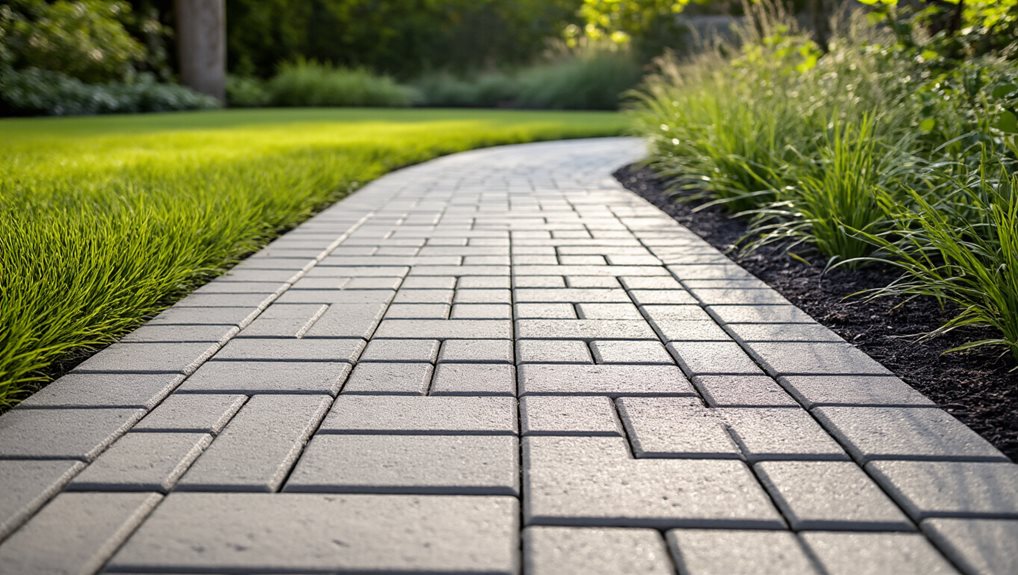
You’ll want to choose permeable pavers that let water flow through their open cells, then install a compacted stone base that supports the pavers while providing a drainage pathway.
By layering the base correctly, you create vertical infiltration that moves rainwater into the soil, reducing runoff and preventing erosion.
This setup also lowers hydrostatic pressure on foundations, helping protect your home from flooding and settlement.
Choose Permeable Pavers
Why consider permeable pavers for your yard? You’ll cut runoff by 70‑90 %, easing local storm‑drain pressure while protecting foundations from erosion. The pavers let rain infiltrate, recharging groundwater and filtering oil, sediment, and pollutants before they reach streams. They support vehicle loads, reduce mosquito habitats, and look attractive with grass‑filled joints, fostering a resilient, community‑friendly landscape.
Install Proper Base Layers
How do you ensure that a permeable‑paver system drains efficiently and stays stable over time? First, line the excavated pit with non‑woven geotextile, overlapping 24″ joints, then install drain pipes and observation wells before adding a 10″‑plus open‑grade sub‑base compacted in 4‑6″ lifts with a 300 lb plate compactor. Next, spread a 10″ washed rock basecourse, compact again, lay a 25 mm sand bedding, and finally place the pavers, tamping each with a mechanical vibrator to secure level, movement‑free installation.
Combine Swales and Shallow Ditches for Natural Water Flow
Ever wondered how you can turn a simple sloped trench into a powerful, self‑sustaining drainage system?
Combine a vegetated swale with a shallow ditch, aligning them along natural contours so water flows gently, spreads evenly, and infiltrates soil.
Keep slopes at 1‑2%, add berms or check dams for control, and plant grasses to stabilize sides, filter runoff, and protect your yard’s foundation.
Use Gravel‑Filled Trenches to Slow Stormwater
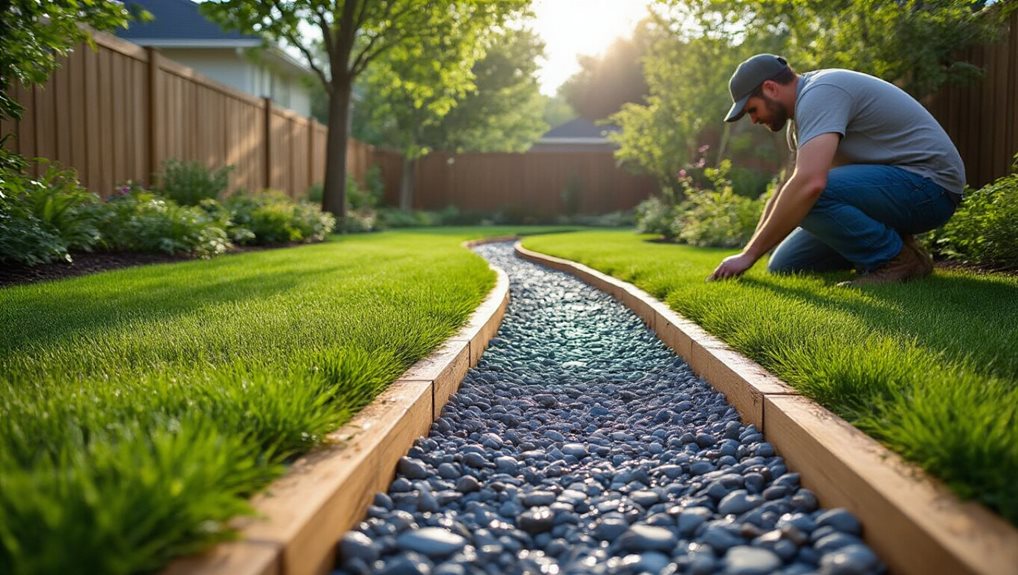
After installing vegetated swales, adding a gravel‑filled trench can further slow stormwater and enhance infiltration. Dig a 14‑inch‑deep trench where runoff concentrates, line it with filter fabric, and fill with washed stone ¾”‑1½”. Route water to a pop‑up emitter or swale, then top with sod or decorative gravel. Clear debris monthly and check percolation to keep flow steady.
Troubleshoot Yard Drainage Issues and Know When to Call a Pro
Where does the water collect after a storm, and why does it linger?
You’ll notice pooling in low spots, near foundations, or where clay soil prevents absorption, so start by checking the one‑inch‑per‑foot slope with a level, observing runoff paths, and testing drainage by running a hose.
If water still gathers despite minor fixes, it’s time to call a professional.
Final Note
By evaluating your yard’s slope, soil type, and existing drainage features, you can select the most effective system—whether it’s a French drain, swale, permeable pavers, or re‑grading—to channel water away from foundations and prevent pooling. Implementing the right combination of surface‑ and subsurface‑drainage solutions, maintaining them regularly, and knowing when professional help is needed will safeguard your property, reduce erosion, and keep your surroundings healthy.

Nathan McPhail is a garden and home DIY expert who writes practical, easy-to-follow advice for homeowners and gardeners. Through Yardique, he shares hands-on tips covering gardening, lawn care, landscaping, home improvement, repairs, tools, and outdoor living. His focus is on helping readers solve everyday household and yard problems with straightforward guidance, useful techniques, and practical solutions.