
To prevent wasps from building nests on your house, you should start by sealing cracks around windows, doors, and vents, as these are common entry points. Keep outdoor food, trash, and ripe fruits covered or away from your property, since these attract wasps. Plant aromatic herbs like mint or eucalyptus, which act as natural deterrents, and make sure your yard is tidy. Regular inspections can catch early signs of nests, and if you find one, proactive steps or professional removal may be necessary. Learn more about effective methods to keep wasps at bay.
TLDR
- Seal cracks, gaps, and entry points around windows, doors, and vents to prevent wasp nest sites.
- Keep outdoor areas clean by removing ripe fruit, food scraps, and securely sealing trash cans.
- Install wasp-repellent plants like mint and eucalyptus around the house to deter nesting.
- Regularly inspect potential nesting sites early and remove small nests before they grow larger.
- Use eco-friendly wasp deterrents or traps around the perimeter to discourage wasps from settling nearby.
Why Wasps Are Attracted to Your Home and How They Choose Nests
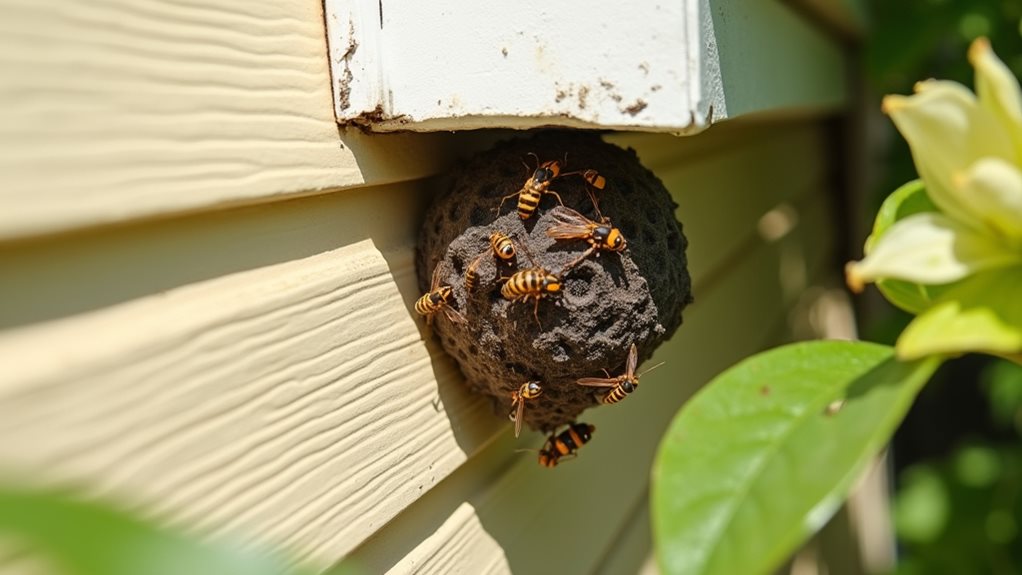
Wasps are naturally attracted to homes because they seek sheltered spots, like eaves, wall cavities, or sheds, to build their nests.
Nearby food sources, such as uncovered trash or ripe fruits, draw them in.
To control and prevent wasps, avoid leaving food around your home, and if you uncover a wasp nest, take prompt action to discourage new colonies from settling nearby.
Additionally, maintaining a clean environment and sealing cracks or holes can help reduce the likelihood of attracting wasps, especially since spiders and insects may be drawn to areas where wasps are present.
How to Spot Wasp Nests Early and Know When to Act
Early detection of wasp nests can markedly reduce potential risks and prevent larger colonies from establishing later in the season. Regular inspection of potential nesting sites, like eaves or wall cavities, helps identify signs of activity and small nests early.
Recognizing these indicators allows you to implement preventative measures promptly, reducing the need for more invasive removal later.
Top Prevention Tips to Keep Wasps Away From Your House
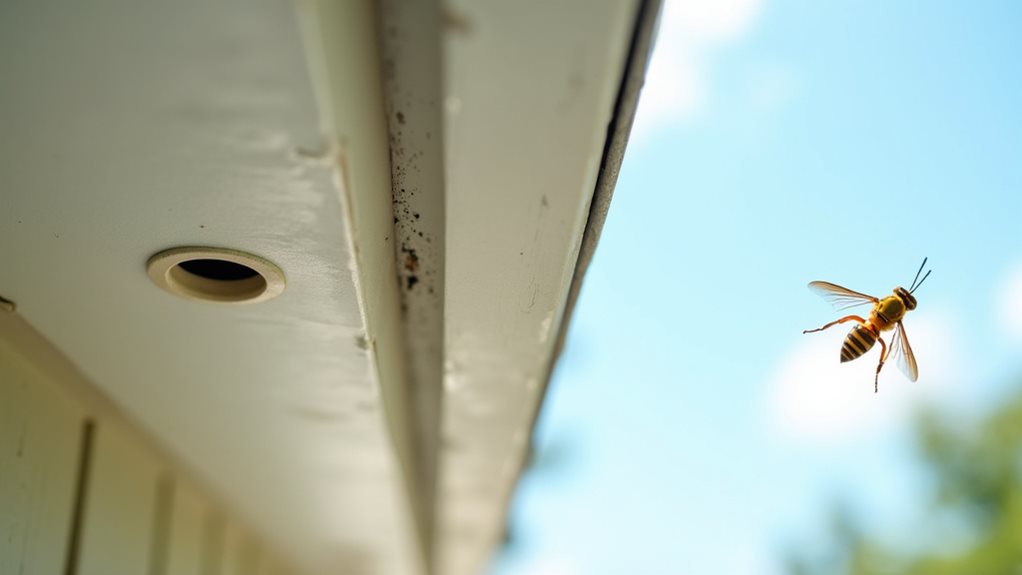
To effectively prevent wasps from nesting on your house, it’s essential to address common attractants and entry points before they become a problem. Seal cracks around windows, doors, and vents to block potential nesting sites. Remove ripe fruits or food scraps, and keep outdoor trash cans sealed. Control professionals can assist with preventing nests and keeping wasps away from your home. Ensuring proper water pressure and inspecting for possible entry points can also help reduce the likelihood of wasps establishing nests near your house.
Natural Wasp Deterrent Methods You Can Try
Natural deterrent methods offer an eco-friendly way to discourage wasps from establishing nests around your home. To prevent nests, consider planting aromatic herbs like mint and eucalyptus, which naturally repel wasps and reduce attraction. Incorporating crop rotation principles in your garden can also help manage pest populations, including wasps, by disrupting their cycles. Sealing cracks and avoiding areas with exposed food or trash also help. Using natural wasp control strategies can be effective in keeping wasps away.
When and How to Call a Professional for Wasp Nest Removal
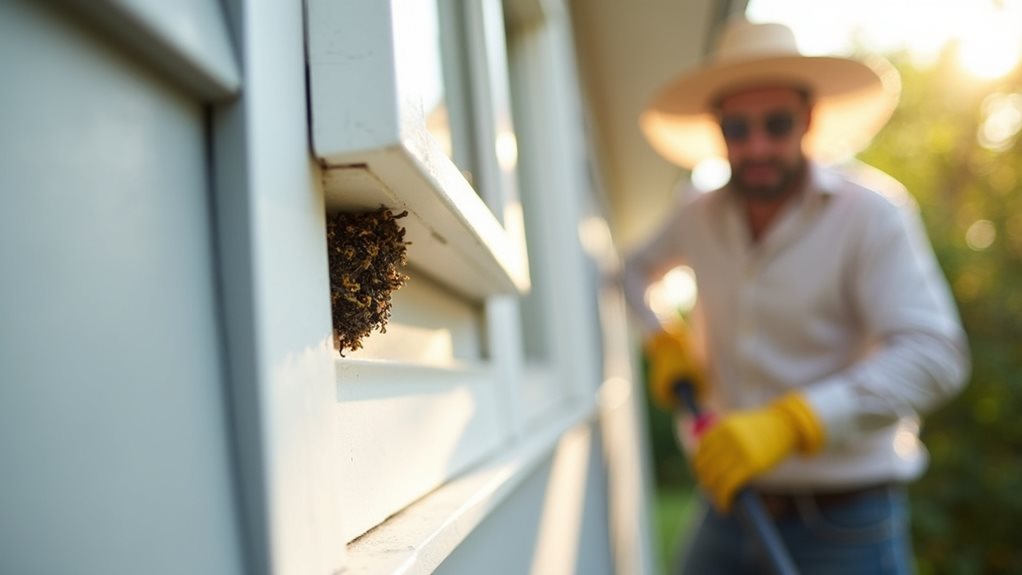
Recognizing when to call a professional for wasp nest removal is essential for safety and effective results, especially with large nests or those in hard-to-reach areas.
Contact us for professional pest control, and help make your home safer.
Schedule nest removal early in spring or summer before the colony builds their nest, ensuring a safe, efficient process around your property.
Being aware of nest size and location can help determine the urgency and whether professional intervention is necessary.
Final Note
By understanding why wasps are drawn to your home and implementing proactive prevention methods, you can greatly reduce the risk of nests forming. Regular inspections, natural deterrents, and timely professional assistance when needed are essential steps in managing wasp activity safely. Staying vigilant and addressing potential nesting sites early not only protects your property but also minimizes the chances of stings or allergic reactions. Prioritize prevention and prompt action to keep your home wasp-free and safe for everyone.

Nathan McPhail is a garden and home DIY expert who writes practical, easy-to-follow advice for homeowners and gardeners. Through Yardique, he shares hands-on tips covering gardening, lawn care, landscaping, home improvement, repairs, tools, and outdoor living. His focus is on helping readers solve everyday household and yard problems with straightforward guidance, useful techniques, and practical solutions.