Eliminate breeding sites by sealing trash, cleaning bins daily, and keeping compost dry and thinly spread, then clear drains and remove standing water so every surface stays residue‑free. Install fans or air curtains to create a steady 8–9 m/s breeze that disrupts flight paths, positioning them above tables and oscillating them to sweep the seating area. Add natural repellents like lemongrass spray or citrus peels, and fit fine mesh screens or nets around the perimeter. Set up yeast‑baited traps away from guests, rotating them nightly, and maintain a regular sanitation schedule to prevent new breeding grounds; continuing this approach will reveal further details on optimizing your outdoor seating.
TLDR
- Eliminate breeding sites by removing organic waste, sealing trash, keeping compost dry, and regularly cleaning drains to prevent standing water.
- Install strategically placed fans or air curtains to create a continuous breeze of 8–9 m/s, disrupting fly flight patterns around seating areas.
- Use oscillating or ceiling fans at knee‑level to sweep airflow across tables, enhancing the effectiveness of residual sprays.
- Deploy fine mesh screens or retractable nets (0.3–0.6 mm) around seating zones and treat them with repellents for an additional physical barrier.
- Set up yeast‑baited traps away from guests, rotate them nightly, and maintain regular sanitation to sustain long‑term fly control.
Eliminate Breeding Sites for Outdoor Fly Control
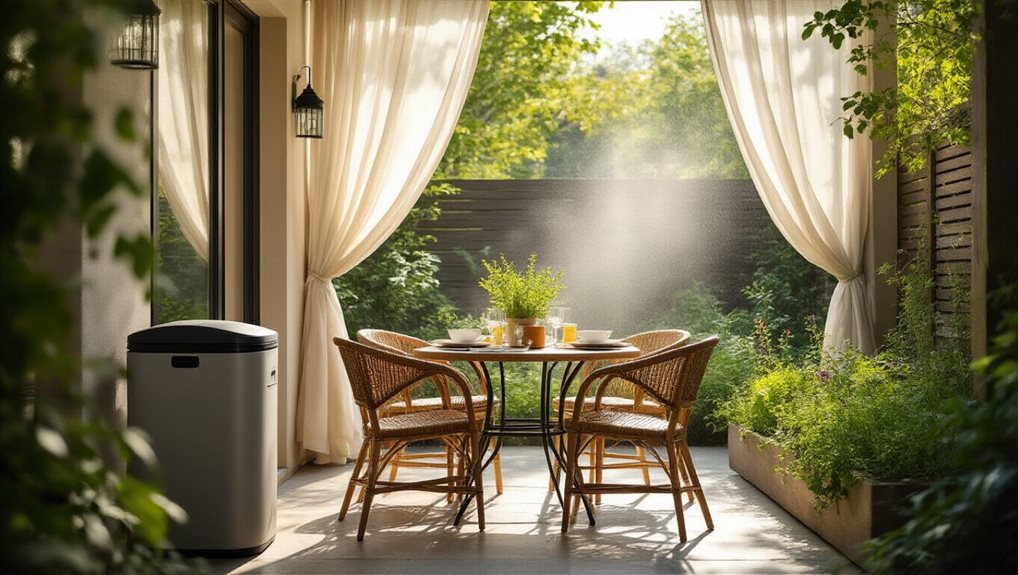
Where do flies find the perfect breeding ground?
You stop them by removing organic waste daily, sealing trash tightly, and cleaning bins after emptying; you turn compost every few days, keep it dry, spread it thinly, and cover it with a tarp.
Regularly clean drains, pour boiling water into them, and eliminate standing water, ensuring every surface stays dry and residue‑free.
Understanding species helps target the most effective sanitation measures.
Create a Breeze for Outdoor Fly Control
You’ll want to position fans strategically around tables and entryways, so the airflow covers the entire seating zone and blocks flies from entering.
By creating continuous airflow—whether with oscillating pedestal fans, ceiling fans, or outdoor air curtains—you disrupt their flight patterns and keep them from landing.
Pairing these fans with a steady breeze also helps any residual sprays work more effectively, giving you a practical, low‑maintenance solution.
Position Fans Strategically
Ever wonder how a simple airflow tweak can keep flies from crashing your outdoor meals? Place fans directly above tables and near entrances, tilting them slightly to sweep breezes across social zones.
Elevate units at a safe height, use medium‑high speeds, and choose damp‑rated models for covered areas.
Combine perimeter fans, adjust angles, and experiment with oscillation to disrupt fly paths while preserving guest comfort.
Create Continuous Airflow
Fans that were positioned strategically above tables can now be used to generate a steady breeze that continuously pushes flies away from outdoor seating areas.
You’ll set fans at knee‑level, aiming for 8–9 m/s airflow, and use rheostats to fine‑tune speed, ensuring consistent exclusion.
Oscillating or portable units disrupt flight patterns, while continuous ventilation clears residues and reinforces sanitation, creating a shared, fly‑free environment.
Use Outdoor Air Curtains
How can you keep flies from landing on outdoor tables without chemicals? Install an outdoor air curtain that blasts a steady 7.25 m/s jet across the seating opening, creating a vectoral barrier that disrupts flight,,,95‑99 % of flies and mosquitoes within 15 minutes.
Choose rectifier‑equipped, NSF/AMCA‑certified models for enhanced range, energy‑efficient operation, and chemical‑free, sustainable pest control that maintains visibility and foot traffic flow.
Use Natural Repellents for Outdoor Fly Control
Natural repellents offer a practical, low‑cost way to keep flies from outdoor seating areas, and they work best when you combine several plant‑based options that target the insects’ senses. Mix lemongrass oil with water for a quick spray, plant basil, lavender, mint, or marigold around tables, and hang citrus peels with cloves to mask odors. Using proper ventilation and keeping the seating area tidy also helps reduce attractants and supports a fly‑free zone. bedding moisture and reinforce with peppermint or garlic sprays to maintain a fly‑free zone.
Put Up Screens and Nets for Outdoor Fly Control

Ever wondered how a simple barrier can keep flies out while still letting fresh air and sunlight in? You can install retractable screens that roll into frames for patios, or permanent mesh for gazebos, using 800‑hole mosquito netting or ultrafine 0.3‑0.6 mm mesh to block tiny pests while preserving ventilation and visibility. Secure edges with hooks, burying, or anchoring to prevent wildlife entanglement, and treat the netting with repellent for added protection. Ensure the chosen method is secure to prevent flies from entering through gaps weight limits and verify proper installation before use.
Set Up Traps for Ongoing Fly Control
Hang disposable or reusable traps on hooks at least ten feet from tables, using the mild yeast scent to lure flies away, and add water in hot weather to keep the attractant active.
Position bag or glue traps near trash zones, rotate full units nightly, and combine types for thorough, low‑maintenance control.
In addition, consider selecting traps based on the area’s layout and ceiling height to optimize coverage and minimize disturbance to guests labor rates.
Schedule Maintenance to Stop Breeding Sites
When you schedule regular maintenance, you prevent the hidden breeding sites that turn a pleasant patio into a fly‑infested zone. Inspect bins, replace sealed lids, empty twice weekly, and keep dumpsters distant from entrances. Drain standing water from saucers, gutters, and leaks daily. Clean animal waste, wipe surfaces, and remove crumbs. Conduct weekly checks of cracks, hay, and beverage stations to keep your outdoor space welcoming and fly‑free.
Arrange Seating and Light to Deter Flies
Regular maintenance eliminates hidden breeding sites, but keeping flies away also depends on how you arrange and illuminate your seating.
Position tables away from food prep, cluster them under a pergola, and install ceiling fans set counter‑clockwise to create a downward breeze, replace UV bulbs with soft yellow or sodium vapor lighting, and keep lights distant from seating; this combined airflow, light, and placement strategy deters flies while fostering a welcoming atmosphere.
Final Note
By eliminating breeding sites, creating airflow, applying natural repellents, installing screens, and using traps, you’ll keep flies away from outdoor seating. Regular maintenance prevents new infestations, while strategic placement of furniture and lighting discourages flies from landing. Together, these practical steps form a comprehensive, low‑cost strategy that protects your patio or garden, ensuring a more comfortable, fly‑free environment for guests and family alike.

Nathan McPhail is a garden and home DIY expert who writes practical, easy-to-follow advice for homeowners and gardeners. Through Yardique, he shares hands-on tips covering gardening, lawn care, landscaping, home improvement, repairs, tools, and outdoor living. His focus is on helping readers solve everyday household and yard problems with straightforward guidance, useful techniques, and practical solutions.