To fix a leaning fence post without removing it, first assess whether the tilt is caused by water rot, soil erosion, or foundation issues. You can apply supports like braces or shims to gradually realign the post, using ropes or straps anchored securely. For temporary stabilization, stakes or braces at angles help hold the post in place. If you want a more permanent fix, filling the base with moist concrete or stabilizing soil can prevent future leaning. Continuing to investigate these techniques can help you restore your fence’s stability effectively.
TLDR
- Use braces or stakes at an angle to support and gradually straighten the leaning post.
- Attach ropes or straps to anchor points for gentle, controlled tension to realign the post.
- Apply supports like shims or wedges inside the post to restore vertical position.
- Secure the post with temporary braces made from wood or metal until it stabilizes.
- Ensure proper drainage and add gravel or soil around the base to prevent future leaning.
Why Do Fence Posts Lean and How Can You Tell?
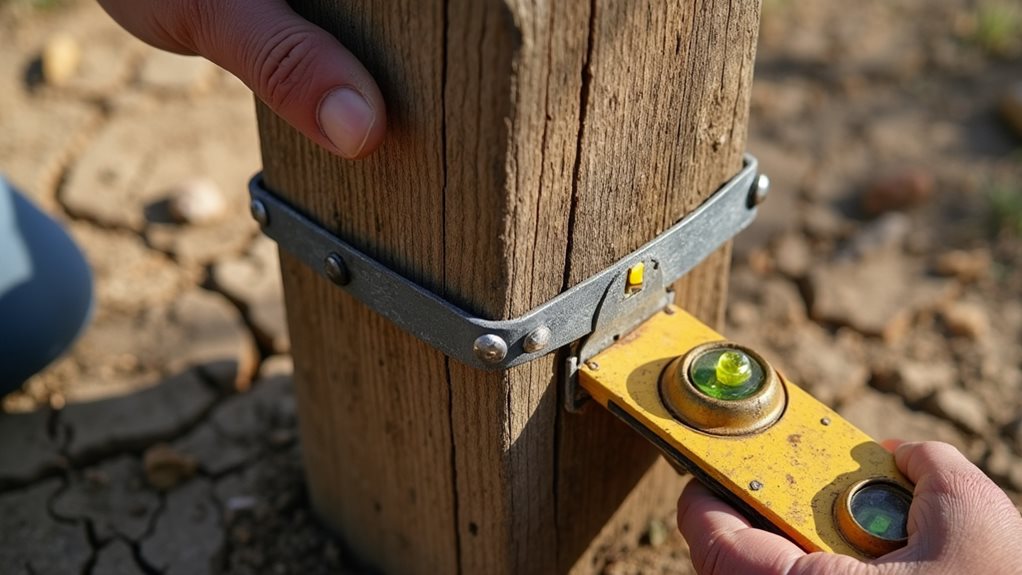
Have you ever noticed a fence post leaning more than it should? A leaning fence post often results from rot at the base due to water pooling or poor drainage. Proper storage conditions can help prevent such issues in outdoor posts by reducing moisture exposure. Soil erosion from weather or animals can loosen the foundation. You can tell if a post leans more than 5 degrees with a level or by visual inspection, indicating instability.
How to Assess Damage and Decide on the Best Repair
To effectively assess the damage to a leaning fence post, start by measuring the angle of the tilt. A lean exceeding 5 degrees typically signals the need for repair.
Check if multiple posts are leaning to determine if the issue is localized or widespread.
Inspect the post’s base for rot or softening, and consider the age and material before deciding on the best repair approach. Additionally, examining the soil conditions and drainage around the post can help identify underlying issues that may contribute to instability, such as poor drainage or soil erosion.
How to Straighten a Fence Post Without Removing It
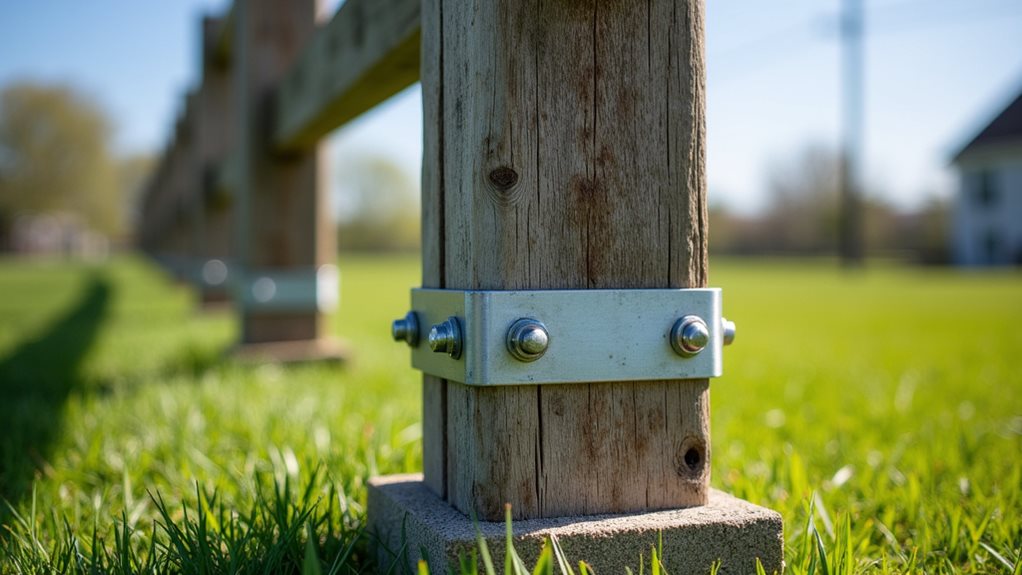
You can straighten a leaning fence post without removing it by carefully applying supports like braces or shims to realign the post gradually.
Attaching ropes or straps to sturdy anchor points allows you to gently pull the post upright, while adjusting its angle guarantees stability as the ground settles.
After making these adjustments, it’s important to wait at least 24-48 hours to confirm the post stays straight before removing any temporary supports.
Using Braces and Supports
When a fence post starts to lean, using braces and supports can provide a quick and effective way to straighten it without removing the post entirely.
Consider using a brace made from new wood or metal stakes, anchored at an angle to support the leaning post and keep the fence upright.
Regularly check and tighten the braces to maintain the post level and stabilize the whole thing.
Adjusting Post Position
Adjusting the position of a leaning fence post without removing it involves applying controlled tension to gently realign the post and prevent further movement.
You can use a come-along or hydraulic jack, attaching sturdy straps or ropes around the fence post and anchoring to an immovable object.
Slowly applying tension over days allows the soil to settle, keeping the fence upright securely.
Simple Ways to Temporarily Stabilize Your Fence
Temporary stabilization methods can be effective solutions to prevent further leaning while planning a permanent repair. You can brace the post with 2x4s or stakes driven at 45° angles, tie it to nearby sturdy structures for added support, or insert a metal post or wedge inside to stop further tilt. Dig around the base and pack gravel or soil for initial stability. Using durable materials like galvanized metal or weather-resistant plastic planters can also help support or reinforce the area temporarily.
Securing Your Fence With Concrete or Soil Stabilization
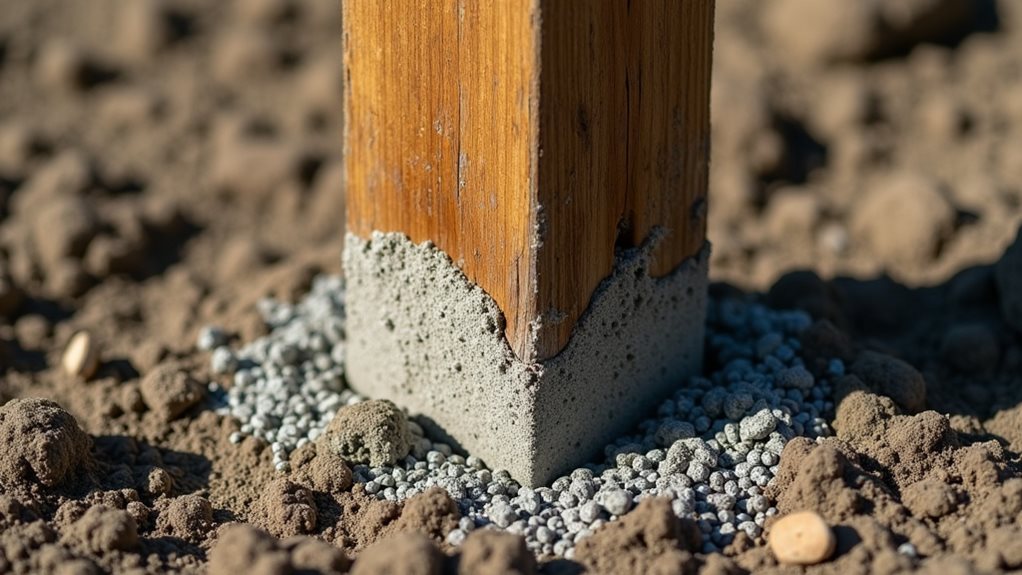
Proper ground preparation is vital before applying concrete or soil stabilization to guarantee your fence remains secure over time. Using effective techniques like filling all gaps with moist concrete and supporting the post until it cures properly will strengthen the repair. Additionally, maintaining good drainage around the post helps prevent future leaning caused by soil erosion or rot. Being aware of potential environmental hazards, such as soil toxicity, can help you take additional precautions to protect the foundation of your fence.
Proper Ground Preparation
To effectively stabilize a leaning fence post, thorough ground preparation is crucial, especially when using concrete or soil stabilization methods.
You should excavate around the post to expose the base. Guarantee the soil is dry and well-drained.
Dig a deep, wide hole for support. Fill it with moist concrete and slope the soil away for proper drainage.
Then wait for full curing.
Effective Stabilization Techniques
Securing a leaning fence post effectively involves choosing the right stabilization method based on your soil conditions. Using wet concrete around the post creates a stable, long-lasting foundation, especially if poured in layers and cured properly.
Alternatively, soil stabilization with gravel or compacted soil, combined with proper drainage, prevents shifting and extends the fence’s stability.
Tips to Keep Your Fence Sturdy for the Long Term
Regular inspections are essential to keep your fence sturdy over time, as early detection of leaning or rot can prevent more serious problems later on. Guarantee proper drainage by grading soil away from posts, apply protective sealants yearly, and use durable hardware. Adding cross-supports distributes stress evenly, helping your fence stay strong, safe, and reliable for years to come. Incorporating organic matter into surrounding soil can also improve soil health and support the stability of fence posts.
When to Call a Professional Fence Repair Specialist
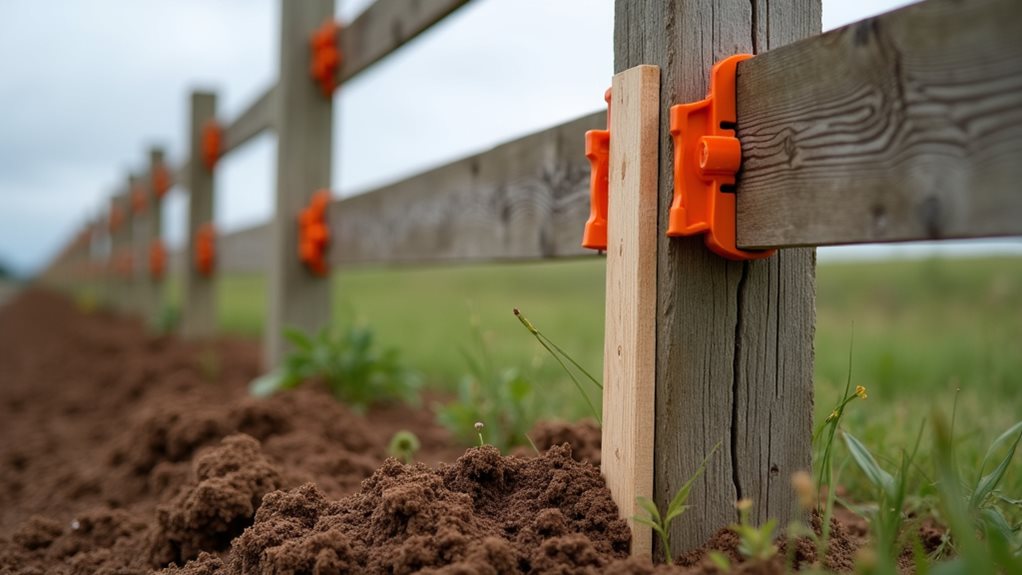
When multiple fence posts are leaning or show signs of extensive rot, it’s time to contemplate calling a professional repair specialist. If posts lean more than 15 degrees, have snapped, or if the fence is near utility lines or in complex areas, expert help is essential. Professionals can handle underground utility issues, large erosion, or structural damage safely and effectively. Additionally, they can assess soil conditions, such as compacted soil, that may be contributing to instability and recommend long-term restoration solutions.
Final Note
Addressing a leaning fence post involves evaluating the damage, then applying appropriate stabilization techniques, such as temporary bracing or concrete stabilization. Regular inspections and proper installation help prevent future issues, ensuring your fence remains sturdy and functional. While some repairs can be managed independently, recognizing when to seek professional assistance is vital for long-term durability. By following these practical steps, you can effectively restore your fence’s integrity without the need for complete removal, saving time and money.

Nathan McPhail is a garden and home DIY expert who writes practical, easy-to-follow advice for homeowners and gardeners. Through Yardique, he shares hands-on tips covering gardening, lawn care, landscaping, home improvement, repairs, tools, and outdoor living. His focus is on helping readers solve everyday household and yard problems with straightforward guidance, useful techniques, and practical solutions.