
Water your plants in the morning between 5 a.m. and 9 a.m. to reduce evaporation, support root uptake, and let foliage dry quickly, lowering disease risk. Evening watering can leave leaves wet overnight, encouraging fungi like powdery mildew, especially in humid climates. If you must water at night, aim at the soil with a drip system and do it an hour before dark. Morning watering aligns with natural transpiration cycles, keeping plants healthier. Climate, soil, and timing adjustments make a noticeable difference—there’s more to learn about optimizing every drop.
TLDR
- Watering in the morning (5–9 a.m.) is ideal, as cooler temperatures reduce evaporation and promote healthy root uptake.
- Morning watering allows foliage to dry quickly, lowering the risk of fungal diseases like powdery mildew and blight.
- Evening watering can be risky due to prolonged leaf wetness, which encourages fungal growth in cool, humid conditions.
- During heatwaves, early evening or very early morning watering may support deeper soil penetration and root hydration.
- When evening watering is necessary, use drip irrigation or soaker hoses to keep foliage dry and minimize disease risk.
Water in the Morning: The Best Time for Healthy Plants
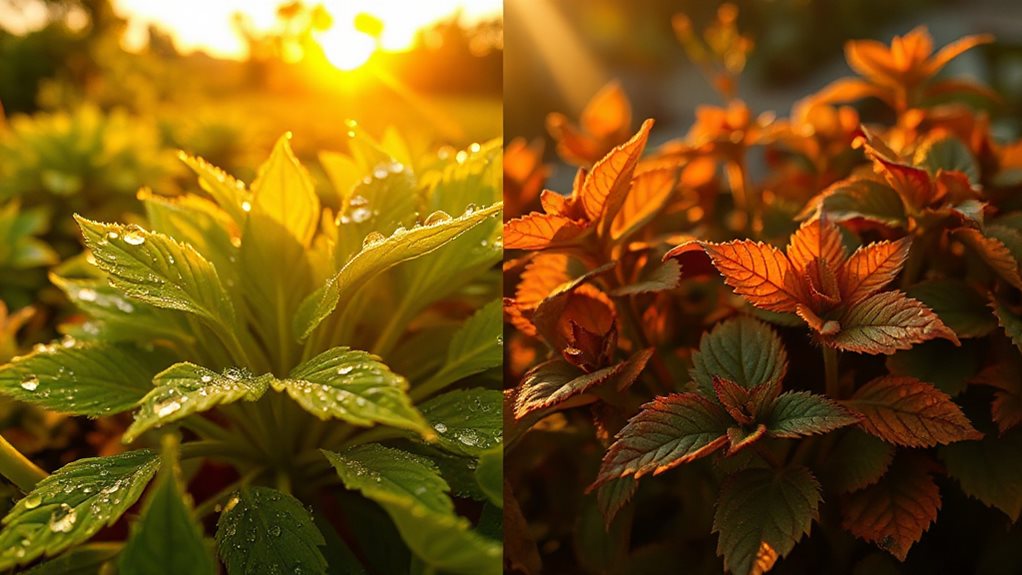
Most gardeners find that watering in the morning—ideally between 5 a.m. and 9 a.m.—gives their plants the best chance to thrive, and for good reason.
Cooler temperatures and calm winds reduce evaporation, so water reaches roots efficiently. You’ll support healthy transpiration, prevent heat stress, and let foliage dry quickly, cutting disease risk. New grass seed especially needs consistent moisture and should not be allowed to dry out for longer than 12 hours to ensure germination.
Using drip irrigation and mulch enhances moisture uptake while saving water—smart, simple steps every gardener can take.
Deep, infrequent watering encourages deeper root growth, helping plants become more resilient to heat and drought over time.
Why Night Watering Increases Disease Risk
When you water at night, your plants’ leaves stay wet for hours because cooler temperatures and high humidity slow evaporation.
That extended moisture gives fungal spores—like those causing powdery mildew and botrytis—plenty of time to germinate and spread, especially in the dark. Without morning sun to dry things off, damp foliage creates the perfect environment for diseases to take hold. Consistent moisture management is important for seedlings, since their shallow-rooted systems are especially vulnerable to disease when kept wet for long periods.
Foliage Stays Wet Overnight
While your garden may seem calm after sunset, watering at night sets the stage for trouble by leaving foliage damp when the air cools and humidity rises.
You’re extending leaf wetness, giving fungal spores 6–8 hours to germinate. With humidity above 65%, moisture lingers, raising disease risk.
Your roses, tomatoes, and cucumbers become vulnerable to powdery mildew, blight, and rot.
Fungal Spores Thrive In Darkness
Because darkness creates the ideal environment for fungal development, watering your garden in the evening plays right into the hands of pathogens lurking in the soil and on plant surfaces.
Fungal spores thrive in the dark, when humidity rises and protective pigments aren’t triggered. You’re giving them the perfect combo—moisture and nightfall—boosting spore germination, mycelial growth, and disease spread, all while your plants sleep.
Cool Temperatures Prolong Dampness
If you’re watering your lawn in the evening, you’re unintentionally extending the time moisture lingers on leaves and in the soil—long after the sun goes down.
Cool nighttime temperatures slow evaporation, keeping grass wet for 8–12 hours, which promotes fungal growth.
Cold, saturated soil also reduces oxygen to roots and increases runoff, wasting water while raising disease risk.
How Morning Watering Prevents Fungal Diseases
You’ll often see healthier, disease-free plants when you water in the morning, and for good reason—timing directly disrupts fungal development.
You let sun and wind dry foliage fast, shortening leaf wetness that spores need.
By avoiding dew overlap and using drip methods, you limit infection chances.
Pruning and spacing enhance airflow, helping your garden stay dry and resilient against diseases like powdery mildew.
Aerating during the growing season also improves soil oxygenation and root health, which helps plants recover from and resist disease.
When Evening Watering Is Actually Okay
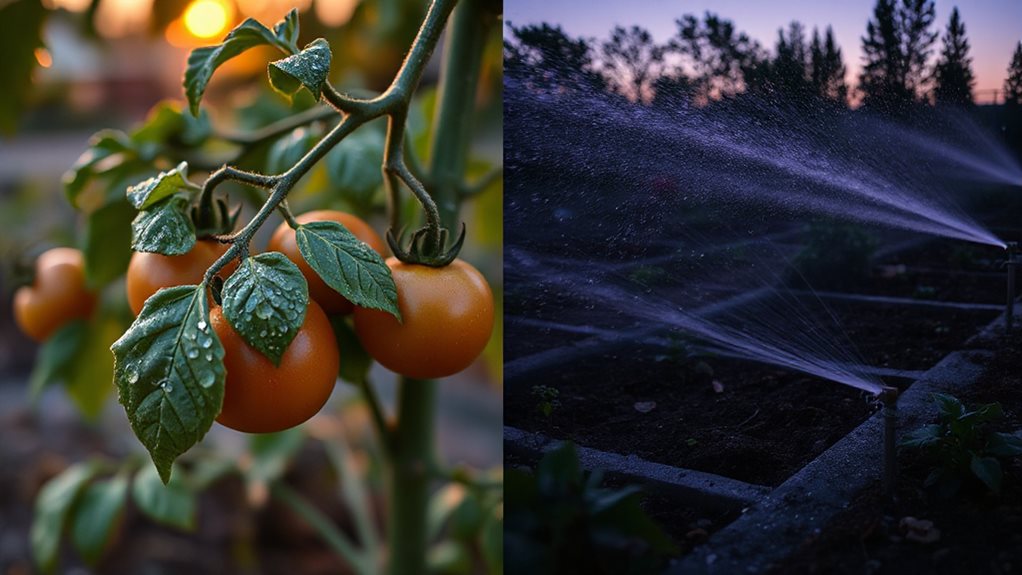
While morning watering helps keep foliage dry and fungal diseases at bay, there are situations where evening irrigation not only works but offers distinct advantages.
You’ll conserve water, since cooler temperatures reduce evaporation and support deeper soil penetration. Nighttime watering sustains root nutrient uptake, refills xylem conduits, and promotes drought tolerance—all especially beneficial in dry, hot regions where moisture retention is essential. Blueberries also benefit from consistent moisture and proper timing to avoid overwatering risks, so monitor soil moisture and adjust accordingly.
How to Water Safely at Night If You Must
Often, the safest way to water at night starts with aiming straight for the soil and keeping foliage dry.
Use a drip system or soaker hose to deliver moisture directly to roots, minimizing splash.
Water one to two hours before dark so any wet leaves can dry.
If you must water later, keep it light and base-focused.
Check soil moisture first, and always monitor for disease signs.
Consider using drip irrigation or a soaker hose to reduce surface moisture and lower disease risk.
Best Techniques to Water Without Wasting a Drop
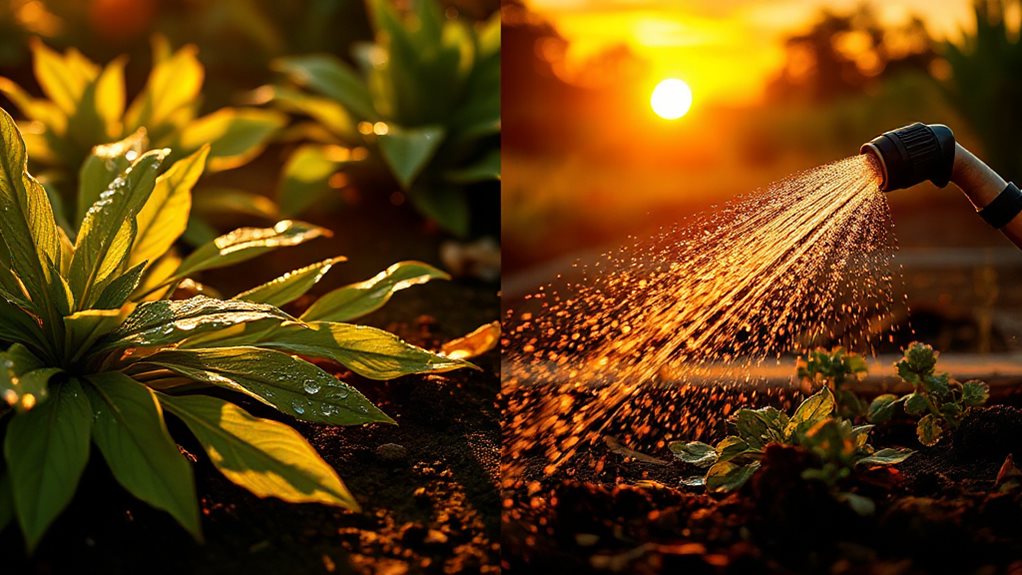
You can save a lot of water by using drip irrigation, which delivers moisture straight to the roots where it’s needed most, cutting evaporation and runoff by up to 60%.
Soaker hoses are another efficient option, releasing water slowly into the soil so it soaks in without pooling or running off.
Aim your system carefully to target root zones, especially in sandy or clay soils, and you’ll use every drop more effectively.
Drip Irrigation Benefits
You’ll consistently get more from every drop when you use drip irrigation, thanks to its precise delivery of water directly to plant roots.
You’ll save up to 80% more water, enhance crop yields, and cut fertilizer and labor costs.
Soaker Hose Efficiency
Maximize your garden’s water efficiency by leveraging the steady, targeted delivery of soaker hoses—porous tubes that seep water directly into the soil along their length.
Use a 5/8” diameter hose, keep it under 50 feet, and pair with a timer to deliver 25 gallons evenly. Adjust pressure to prevent runoff, position near plant bases, and water early to enhance absorption while cutting waste by 30%.
Target The Roots
Tap into your garden’s full potential by supplying water exactly where it’s needed most—the roots.
Target the root zone with drip irrigation or a soaker hose, directing moisture deep below the surface.
Water slowly at the base, avoiding stems, and extend coverage beyond the original root ball.
This precise approach minimizes waste, prevents disease, and encourages strong, drought-resistant growth.
How Climate Changes When You Should Water
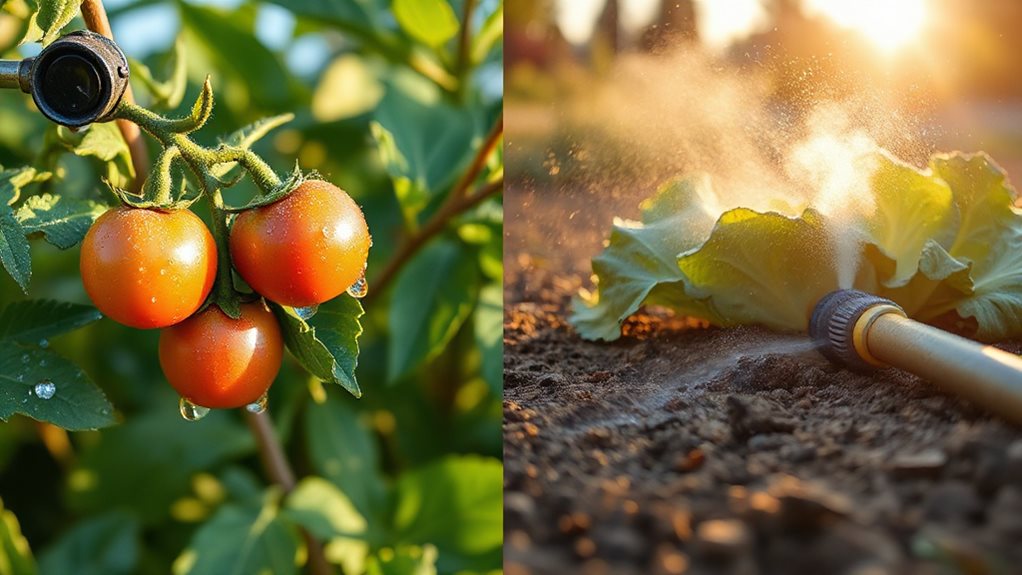
Often, the best time to water your plants depends less on a fixed schedule and more on the climate you’re working with, since environmental conditions directly influence both water loss and plant health.
In hot, dry areas, morning watering helps combat daytime heat, while in humid climates, it reduces fungal risks by letting foliage dry.
During heatwaves, early evening or very early morning guarantees deep root uptake.
In drought-prone regions, timing matters less than efficiency—use mulch and sensors to conserve water.
Windy, sunny conditions demand flexibility; prioritize soil moisture and minimize leaf wetting to protect plants.
Is Your Garden Being Over- or Under-Watered?
You might be watering your garden regularly, but if your plants still look stressed, it’s time to take a closer look at whether they’re getting too much or too little moisture.
Check soil two inches down—dry means under-watered, soggy means over-watered.
Wilting, stunted growth, or fruit issues signal imbalance.
Adjust frequency based on soil type, weather, and plant needs to keep your garden thriving.
Customize Your Watering Schedule for Real Results
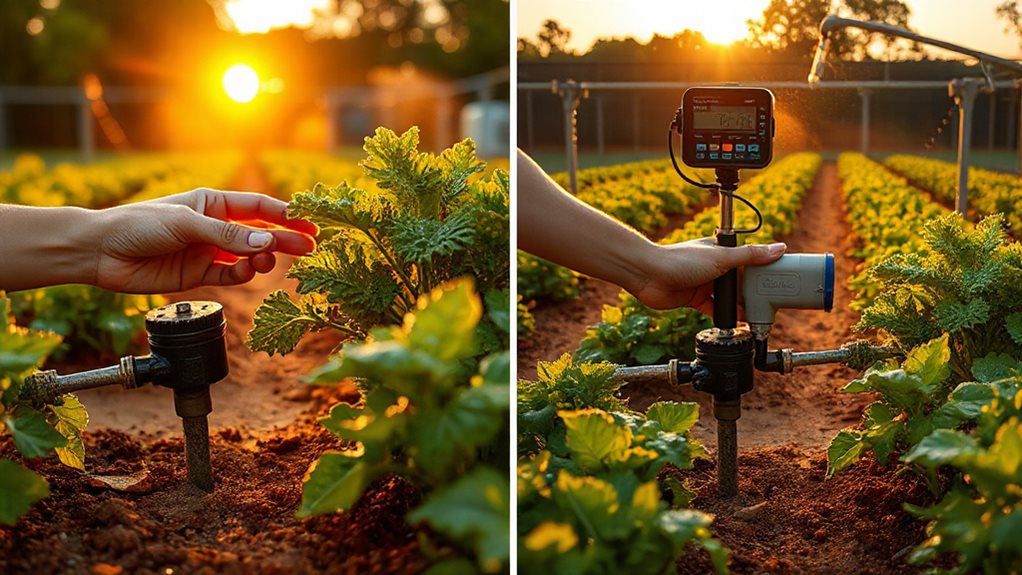
Regularly fine-tuning your watering schedule based on specific grounds needs leads to healthier plants and smarter resource use.
You can customize by zone, soil type, and sun exposure, then adjust automatically for weather or season changes.
Using sensors and real-time data, your system optimizes absorption, reduces runoff, and saves up to 30% on water—delivering precise moisture when and where it’s needed most.
Final Note
You’ll give your plants the best chance by watering in the morning, when cooler temperatures and calm winds reduce evaporation. This timing lets foliage dry quickly, cutting the risk of fungal diseases. While evening watering works in dry climates, it can invite problems if leaves stay wet overnight. If you must water at night, aim for the soil, not the leaves, and use drip irrigation to stay efficient.

Nathan McPhail is a garden and home DIY expert who writes practical, easy-to-follow advice for homeowners and gardeners. Through Yardique, he shares hands-on tips covering gardening, lawn care, landscaping, home improvement, repairs, tools, and outdoor living. His focus is on helping readers solve everyday household and yard problems with straightforward guidance, useful techniques, and practical solutions.