
To grow blueberries in raised beds, start by selecting a well-drained site with at least 5-10 hours of sunlight daily, ideally on a south-facing slope. Construct a 12-inch-high bed using durable, rot-resistant materials and fill it with soil adjusted to a pH of 4.5-5.0, incorporating peat moss, pine bark, and sulfur to maintain acidity. Plant your blueberries with proper spacing, mulch heavily, and water deeply with rainwater. Proper care, pest protection, and soil management are essential for healthy, productive plants, and conquering these basics prepares you for a successful harvest.
TLDR
- Choose a well-drained, sunny site protected from harsh winds for optimal blueberry growth.
- Build a 12-inch-high raised bed with rot-resistant materials, filled with acidic soil mix (pH 4.5-5.0).
- Incorporate organic amendments like peat moss and pine bark fines to maintain soil acidity and fertility.
- Water deeply with rainwater, mulch heavily, and fertilize with acid-loving formulas to support healthy growth.
- Protect plants from pests, wildlife, and cold weather using netting, fencing, and proper mulching.
Why Raised Beds Are the Best Choice for Growing Blueberries
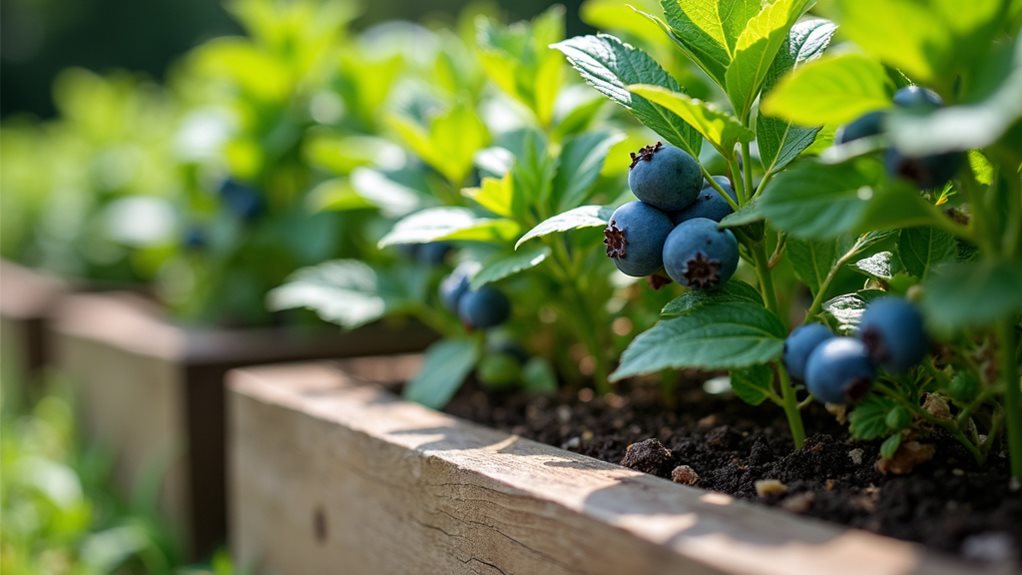
Raised beds are the ideal choice for growing blueberries because they offer superior control over soil conditions, which are critical for the plants’ health and productivity. They provide good water drainage, preventing root rot. They also allow you to maintain the acidic soil necessary for blueberries. This elevated environment makes it easier to adjust soil pH and guarantee consistent soil quality. Additionally, using row cover can help protect blueberries from frost and pests, extending the growing season and improving yields.
How to Find the Perfect Location and Site Conditions
Choosing the right location is essential for healthy blueberry plants, so look for a spot that receives at least 5-10 hours of full sun each day, guaranteeing ideal growth and fruit production.
The site should have well-drained soil to prevent root rot and be protected from harsh winds and cold drafts that can damage the plants.
Additionally, make sure there’s easy access to water and good air circulation to support consistent moisture levels and reduce disease risk.
For optimal growth, maintaining the proper soil pH—between 4.5 and 5.5—is crucial, and selecting a site with ideal soil conditions can help achieve this.
Sunlight Requirements
Blueberries thrive best when they receive ample sunlight, requiring at least 5 to 10 hours of direct, full sun each day to produce healthy growth and abundant fruit.
Place your raised bed in an area with good drainage, avoiding shade from trees or structures that could block sunlight.
A south-facing slope or well-drained site maximizes sun exposure and prevents waterlogging.
Drainage and Elevation
Proper drainage is crucial for healthy blueberry plants, as waterlogged soil can lead to root rot and other health issues.
To guarantee well-drained soil, choose elevated sites or create raised beds at least 12 inches high. This elevation improves drainage and aeration, preventing excess moisture from pooling and harming your blueberries.
Avoid low-lying areas prone to standing water.
Wind and Cold Protection
Since wind and cold can substantially impact the health and productivity of your blueberry plants, selecting a site that offers natural protection is essential.
Position your raised beds near windbreaks like fences or shrub hedges, and plant on the south or southeast side of structures for warmth.
Mulching heavily with straw or pine needles improves cold protection.
Ensuring well-drained soil prevents root damage.
Preparing and Amending Soil for Acidic, Well-Drained Blueberry Beds
Achieving the right soil conditions is essential for healthy blueberry plants, and this begins with preparing a raised bed that promotes acidity and good drainage.
You should test the soil pH and add sulfur to lower it to between 4.0 and 5.0.
Incorporate organic matter like peat moss and pine bark fines to improve well-drained conditions and maintain soil acidity.
Additionally, ensuring your blueberries are protected from pests and diseases, such as parasites, can contribute to healthier growth and higher yields.
Building and Filling Your Blueberry Raised Bed Step by Step
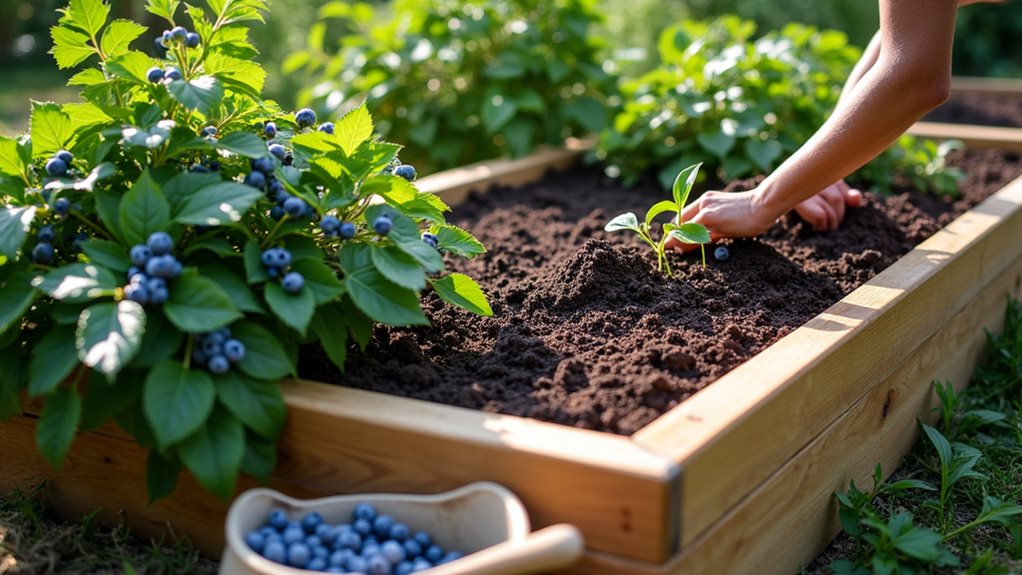
Building your blueberry raised bed involves careful planning and precise execution to create an ideal environment for healthy plants. Start by constructing a 12-inch-high, 3-foot-wide raised bed using durable, rot-resistant materials. Fill it with your soil mix, ensuring the pH level is between 4.5 and 5.0. When planting, make a planting hole suited to each blueberry’s root system. Incorporate appropriate soil amendments to maintain the optimal acidity and nutrient balance for blueberries.
Choosing the Right Blueberry Varieties for Your Climate and Soil
Choosing the right blueberry varieties for your climate and soil is essential to guarantee a successful harvest and healthy plants.
You should select blueberry varieties suited to your USDA hardiness zone, considering factors like pollination needs and bloom periods.
For warmer climates, rabbiteye blueberries thrive, while northern highbush varieties perform well in cooler regions, ensuring peak growth.
How to Adjust and Maintain Soil pH for Healthy Blueberries
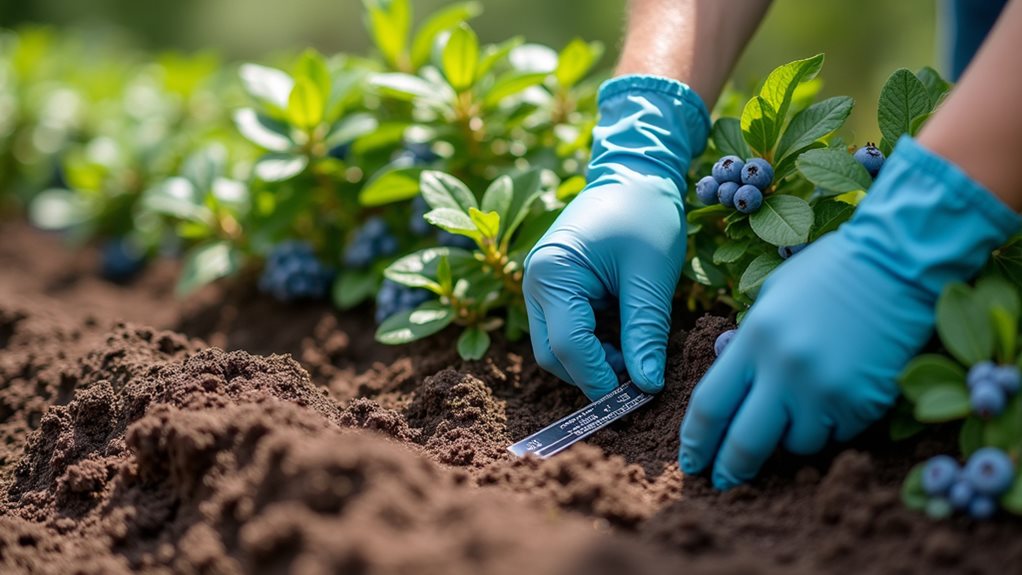
To keep your blueberries healthy, start by testing your soil’s pH using a reliable kit or sending a sample to your local extension office.
If the pH is too high, you can lower it by adding elemental sulfur, which requires about a year to take effect. Regularly monitor the levels to maintain the perfect range.
Be mindful that watering with alkaline water can raise pH, so consider acidifying your irrigation water with vinegar or sulfur to sustain ideal soil conditions. Additionally, understanding how to test soil pH accurately can help you make more informed adjustments.
Testing Soil pH
Ever wonder how to guarantee your blueberries grow strong and healthy? Testing soil pH levels is essential, so you can understand the soil before planting. Use a reliable soil test kit or send samples to your extension office for accurate results.
Regularly test your soil and adjust as needed, especially after amendments, to keep pH within the ideal range.
Applying Acidifiers
Applying acidifiers is a crucial step in maintaining the ideal soil pH for blueberries, especially since these plants thrive in acidic conditions between pH 4.0 and 5.0.
To lower soil pH in raised beds, you can add sulfur, which effectively reduces alkalinity.
Regular application of acidifying fertilizers also helps sustain proper soil acidity for healthy blueberry growth.
Regular pH Monitoring
Regularly monitoring soil pH is crucial for maintaining the ideal conditions that blueberries need to flourish, as even small fluctuations can substantially impact plant health.
Use soil testing kits or send samples for analysis to accurately track pH.
Adjustments with amendments like elemental sulfur help maintain acidity, but re-test every few months to prevent over-acidification and guarantee ideal soil conditions.
Watering, Mulching, and Fertilizing Blueberries in Raised Beds
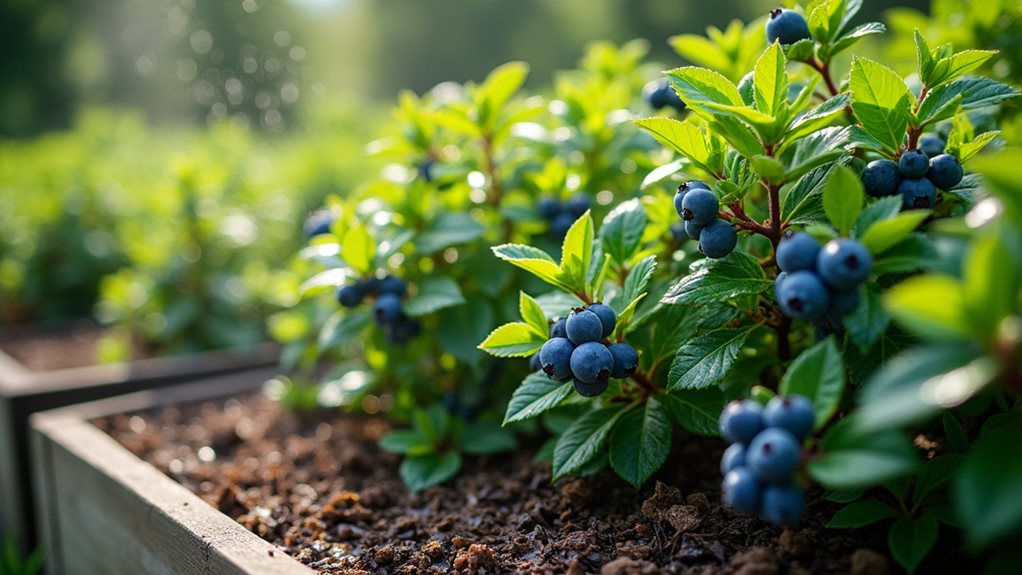
Maintaining proper watering, mulching, and fertilizing practices is essential for the healthy growth of blueberries in raised beds.
You should water deeply with rainwater to keep soil moisture consistent, especially during dry spells.
Mulching with organic material helps retain moisture and stabilize soil acidity.
While fertilizing with acid-loving formulas promotes ideal growth and root development.
Protecting Your Blueberries From Pests, Wildlife, and Cold Weather
Protecting your blueberries from pests, wildlife, and cold weather is essential to guarantee a healthy and productive harvest.
Use bird netting or frames with fine mesh to prevent birds from eating ripe berries.
Install deer fencing and deterrents to keep deer and rabbits away.
Cover plants with frost protection and mulch with straw or pine needles to insulate roots during cold spells.
Pruning, Pollination, and Harvesting Tips to Maximize Your Yield
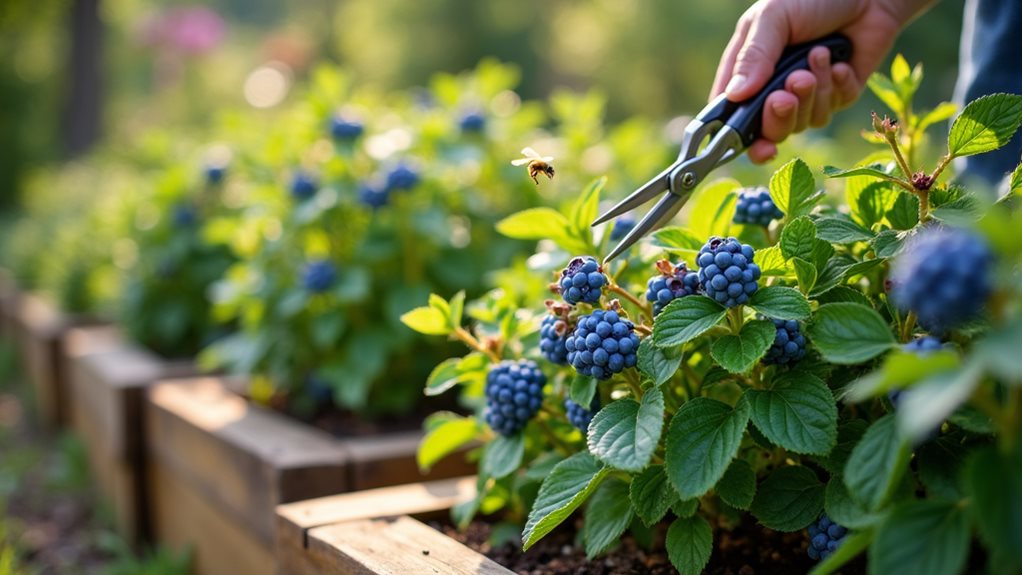
Pruning, pollination, and harvesting are essential steps that directly influence the quantity and quality of your blueberry crop. Understanding how to manage these processes effectively can greatly maximize your yield. Proper pruning during winter keeps blueberry bushes healthy. Planting compatible varieties enhances pollination. Timely harvests guarantee peak berry quality, resulting in a bountiful, rewarding yield. Incorporating soil erosion prevention practices around your garden can also help maintain a stable environment for healthy plant growth.
Troubleshooting Common Problems When Growing Blueberries in Raised Beds
When growing blueberries in raised beds, it’s essential to monitor soil pH closely, keeping it between 4.0 and 5.0, as even slight imbalances can hinder nutrient absorption and plant health.
Address drainage problems immediately to prevent root rot, which can quickly damage or kill your plants.
Stay vigilant for pests and wildlife that may threaten your berries and young plants.
Soil pH Imbalances
Soil pH imbalances are a common challenge when growing blueberries in raised beds, primarily because blueberries thrive in highly acidic soil with a pH between 4.0 and 5.0.
If your soil’s acidity level is too high, use soil amendments like elemental sulfur or ferrous sulfate to lower pH gradually.
Regular testing helps maintain ideal soil pH for healthy growth.
Pest and Wildlife Damage
Wildlife and pests can pose significant threats to your blueberry plants, especially when they’re growing in raised beds where access might be easier for animals like birds, deer, and rabbits.
Using bird netting, wildlife deterrents, and barriers such as fencing helps protect your berries.
Regular pest control and monitoring are essential for maintaining healthy plants and reducing damage from wildlife.
Final Note
Growing blueberries in raised beds offers a controlled environment that enhances plant health and yields. By selecting ideal site conditions, amending soil appropriately, and implementing proper watering, mulching, and pruning practices, you can achieve successful cultivation. Regularly monitor for pests and environmental stresses to protect your crop. With careful management and attention to detail, your blueberries will thrive, providing a reliable harvest season after season.

Nathan McPhail is a garden and home DIY expert who writes practical, easy-to-follow advice for homeowners and gardeners. Through Yardique, he shares hands-on tips covering gardening, lawn care, landscaping, home improvement, repairs, tools, and outdoor living. His focus is on helping readers solve everyday household and yard problems with straightforward guidance, useful techniques, and practical solutions.