
The best time to dethatch your lawn depends on your grass type and seasonal conditions. For cool-season grasses, aim for early fall when growth slows but recovery is still possible, while warm-season grasses should be dethatched in late spring or early summer before peak heat. Ideally, choose days with moderate soil moisture, soil temperatures above 50°F, and no rain in the forecast to minimize stress. Staying attentive to signs your lawn needs dethatching can help you time it perfectly; continue exploring for more detailed guidance.
TLDR
- Dethatch in early spring or fall for optimal lawn recovery and minimal stress.
- For cool-season grasses, late September to early November is ideal.
- Warm-season grasses should be dethatched in late March to early April.
- Choose days with moderate soil moisture, temperatures above 50°F, and no rain forecasted.
- Regularly assess thatch thickness; remove when it exceeds ½ inch for healthier grass growth.
Why Proper Timing Is Key to Healthy Lawn Dethatching
Timing is essential when it comes to dethatching your lawn because doing it at the right time can greatly influence the health and recovery of your grass. During periods of active grass growth, your lawn can recover more quickly and effectively. Proper timing, such as in early spring or fall, minimizes stress and promotes healthier turf, ensuring better results from dethatching. Additionally, understanding the best seasonal conditions for dethatching helps prevent damage and encourages stronger root development.
Best Seasons to Dethatch for a Thriving Lawn
The best times to dethatch your lawn are during early spring and fall when grass actively grows, allowing for quick recovery and healthy root development.
For cool-season grasses, late September to early November is ideal, while warm-season grasses do best with dethatching in late March or early April.
Avoid dethatching during hot, dry summers or when the ground is frozen, as these conditions can damage your lawn.
Incorporating proper soil stabilization practices, such as aeration and mulching, can further enhance lawn health after dethatching.
Ideal Dethatching Seasons
Dethatching your lawn during the right seasons can make a significant difference in its health and appearance. The ideal time for dethatching is during early spring or fall when grass growth is active, allowing the grass to recover quickly.
Dethatching during these periods promotes healthy root development and minimizes turf stress, ensuring a thriving, lush lawn.
Grass Growth Timing
Understanding the ideal seasons for dethatching depends largely on the growth patterns of your grass type. During early spring or fall, cool-season grasses experience active grass growth, making it the best time to reduce the thatch layer.
Proper timing guarantees healthy recovery and minimizes stress, helping your lawn thrive through effective thatch removal when growth is at its peak.
Weather Conditions Considerations
Choosing the right weather conditions is crucial for successful dethatching, as performing this task during ideal seasons guarantees the lawn’s health and recovery.
You should aim for moderate soil moisture, avoiding overly wet or frozen ground, and wait until soil temperatures rise above 50°F.
Warm, sunny days with no rain forecasted provide the best weather for effective dethatching.
How Weather Conditions Affect Dethatching Timing
Weather conditions play a vital role in determining the right time to dethatch your lawn. Moist soil from rain or snow, cold temperatures, and unstable weather can all hinder the process and even cause damage if you act too early.
Waiting for warmer, stable conditions guarantees the soil is dry, warm enough, and suitable for effective dethatching without risking harm to your lawn.
Soil Moisture Levels
Since soil moisture levels greatly influence the success of dethatching, it’s important to take weather conditions into account before scheduling the task.
Dethatching works best when moisture levels are moderate, not too dry or waterlogged.
A lawn that’s moist after rainfall or watering allows better equipment penetration, reduces root damage, and guarantees a smoother, more effective dethatching process.
Temperature Suitability
Ideal temperature conditions are essential for successful dethatching, as they directly impact both the effectiveness of the process and the health of your lawn.
When soil temperature reaches between 60°F and 75°F, active grass growth occurs, making it a prime time.
Moderate temperatures help prevent stress from extreme heat or cold, ensuring a healthier, more resilient lawn post-dethatching.
Weather Stability
Consistent weather conditions play a crucial role in determining the best time to dethatch your lawn, as fluctuations can considerably impact the process’s success and your lawn’s recovery.
When weather remains stable with proper moisture levels, you achieve ideal timing.
Avoid periods of rain, frost, or extreme dryness, as these conditions hinder equipment effectiveness and can damage your lawn’s health.
When to Dethatch Based on Your Grass Type
Different types of grass have specific times when dethatching is most effective, primarily based on their growth cycles and environmental needs.
For warm-season grasses like Bermuda and Zoysia, the best time to dethatch is late spring or early summer during active growth.
In contrast, cool-season grasses such as bluegrass and fescue should be dethatched in early fall, after their active growth begins.
Proper dethatching can also help prevent weed growth and improve water drainage, ensuring a healthier lawn.
Signs Your Lawn Needs Dethatching Now
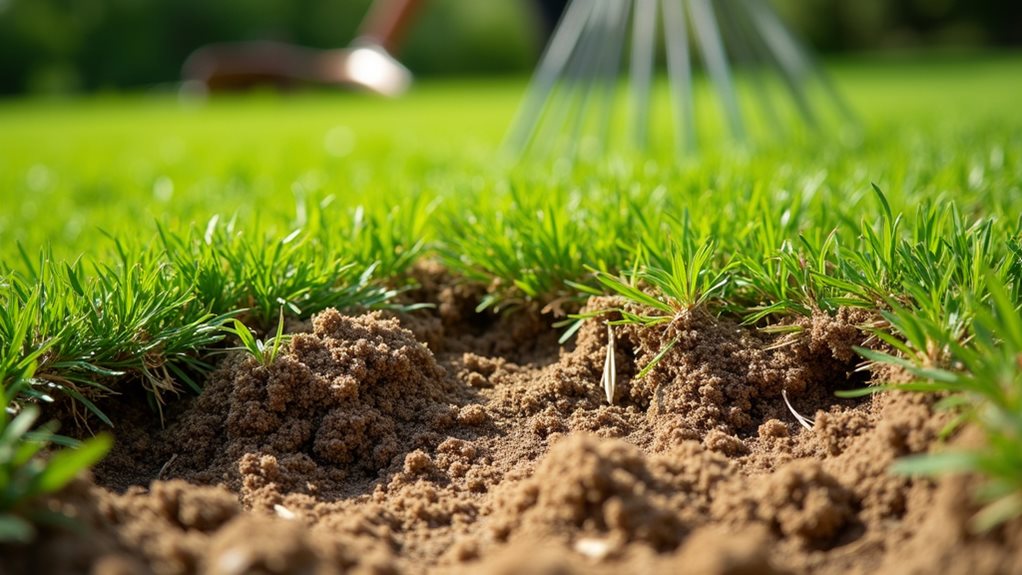
Recognizing when your lawn needs dethatching can prevent long-term damage and promote healthier grass growth.
Signs include a thatch layer thicker than ½ inch, which feels spongy or brown beneath the grass, and poor water absorption indicating thatch obstructs soil.
Visible thinning or brown patches also signal thatch buildup, stressing your grass and soil’s ability to stay healthy.
How Often Should You Dethatch for Optimal Lawn Health
To maintain a healthy and resilient lawn, it’s important to understand how often you should dethatch. Most lawns benefit from dethatching every 2 to 3 years. However, if the thatch builds up over ¾ inch, annual dethatching becomes necessary. Regularly evaluating your lawn’s thatch layer helps you adjust your lawn care routine and prevent root suffocation. Incorporating proper soil amendments can improve soil structure and reduce thatch buildup over time.
Practical Tips for Scheduling Dethatching and Lawn Care
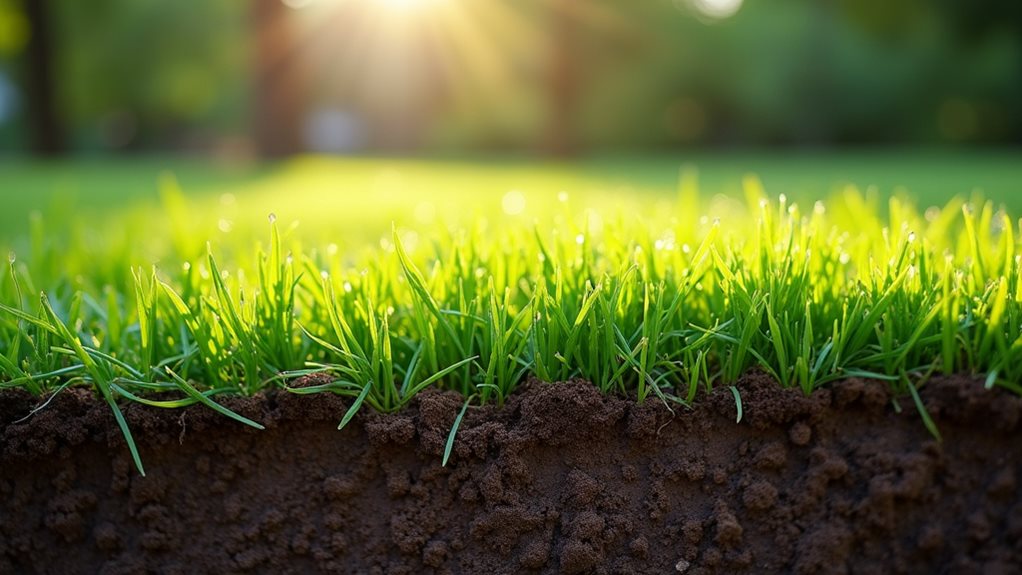
Scheduling your dethatching and lawn care activities requires careful attention to environmental conditions and timing. You should dethatch during early spring when soil moisture levels are ideal—neither too wet nor frozen—to guarantee equipment effectiveness.
Monitoring soil temperature and moisture helps you choose the right moment, promoting healthy growth and a lush, resilient lawn.
Final Note
Timing is essential when dethatching your lawn, as doing it at the right season and under suitable weather conditions promotes ideal grass recovery and health. Recognize signs that your lawn needs dethatching and adhere to recommended frequency for sustained vitality. By scheduling your dethatching sessions thoughtfully and understanding your grass type, you can maintain a lush, healthy lawn. Proper timing, combined with consistent lawn care practices, guarantees your yard remains resilient and visually appealing throughout the year.

Nathan McPhail is a garden and home DIY expert who writes practical, easy-to-follow advice for homeowners and gardeners. Through Yardique, he shares hands-on tips covering gardening, lawn care, landscaping, home improvement, repairs, tools, and outdoor living. His focus is on helping readers solve everyday household and yard problems with straightforward guidance, useful techniques, and practical solutions.