To pressure wash a wood deck without damage, use a fan tip with a 30-degree spray angle and keep the pressure below 800 psi to prevent gouging or splintering. Maintain a distance of at least 12 inches from the surface and use smooth, consistent strokes aligned with the wood grain. Adjust your technique as needed, and consider soft washing for delicate areas. Continuing will reveal how proper tools and methods protect your deck’s surface while achieving a thorough clean.
TLDR
- Use a fan tip with at least a 30-degree spray angle and keep pressure below 800 psi.
- Maintain a safe distance of at least 12 inches from the surface to prevent damage.
- Keep the wand moving with smooth, consistent strokes aligned with the wood grain.
- Avoid high-pressure tips and sudden movements near delicate areas to prevent splintering or gouging.
- Follow up with sealing or staining to protect the wood and extend the lifespan of your deck.
Why Using the Correct Pressure Protects Your Wooden Deck
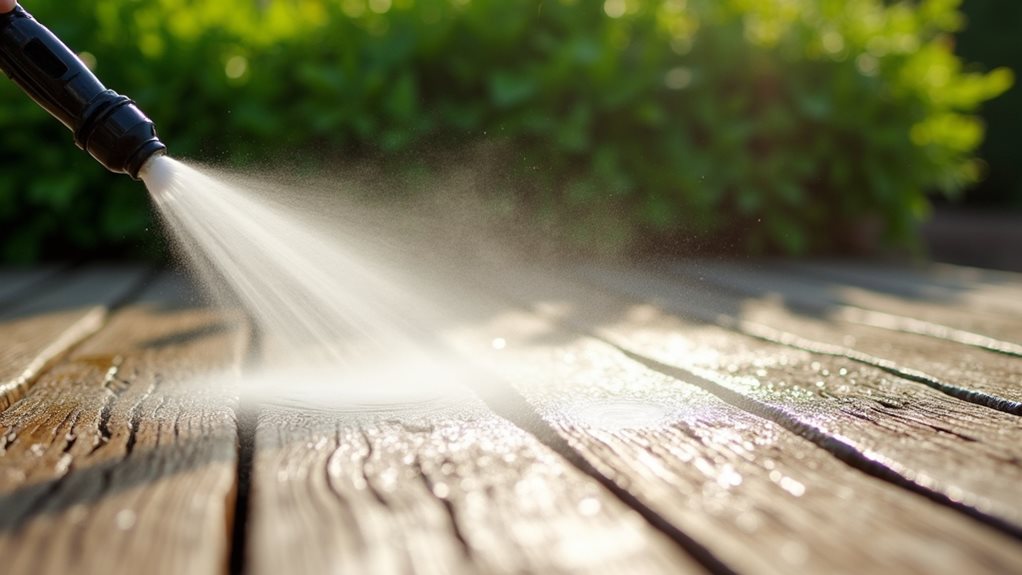
Using the correct pressure when cleaning your wooden deck is essential to prevent damage and guarantee the surface remains intact.
With a pressure washer, focusing on proper technique—like maintaining a consistent distance and avoiding high-pressure tips—ensures effective deck cleaning without harming the wood.
Practicing on less important surfaces helps you learn the right pressure and technique.
Additionally, selecting the appropriate pressure settings and nozzle type can significantly reduce the risk of gouging or splintering the wood.
How to Choose the Right Nozzle and Pressure Level
Choosing the right nozzle and pressure level is essential for cleaning your wooden deck effectively without causing damage.
For pressure washing, use a fan tip with at least a 30-degree spray angle to distribute pressure evenly. Limiting pressure to no more than 800 psi is recommended.
Keep the wand more than 12 inches from the surface to prevent harm. During cleaning, maintain a consistent distance of less than 8 inches.
Step-by-Step: Safely Pressure Washing Your Deck
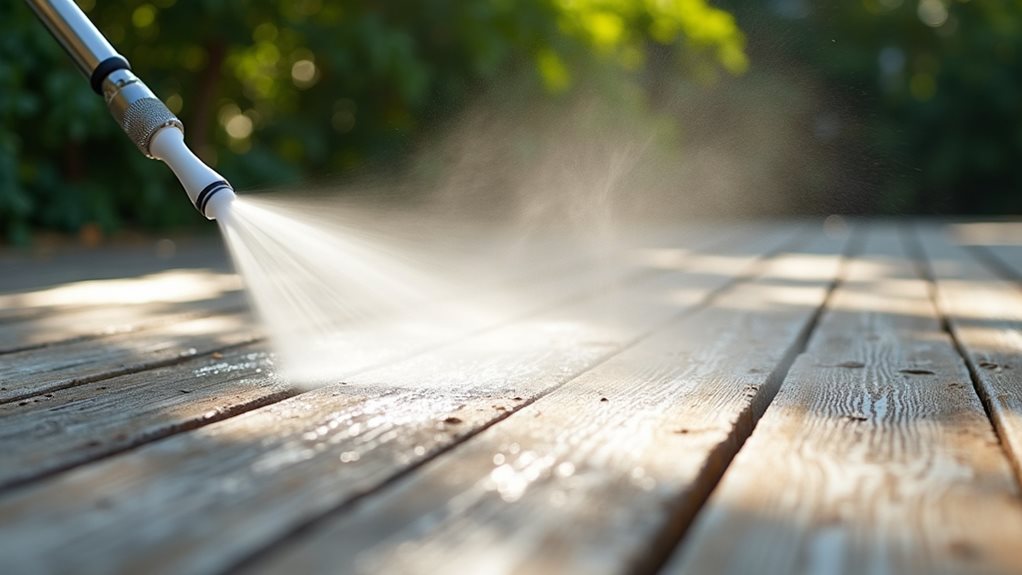
Before beginning the actual cleaning process, it’s important to prepare your equipment and work area to guarantee safety and effectiveness.
When pressure washing your wood deck, keep the pressure below 800 psi and use a 30-degree fan tip to prevent surface damage.
Maintain at least 12 inches from the surface, use smooth strokes with the grain, and monitor pressure constantly to avoid splintering or etching.
Additionally, ensure your pressure washer setup includes the appropriate nozzle and settings for delicate surfaces like wood.
Soft Washing vs. Pressure Washing: When to Use Each Method
Understanding when to apply soft washing versus pressure washing is essential for achieving the best results without damaging your deck. Soft washing uses low pressure and cleaning solutions, making it ideal for fragile or older decks. Pressure washing involves higher pressure, which is suitable for thorough cleaning of durable surfaces. Choose the right method based on your deck’s material, condition, and contaminants for effective deck cleaning. Additionally, it’s important to consider water heater leaks and their causes to prevent damage to your property during any cleaning process.
Post-Cleaning Tips to Keep Your Deck Looking Great
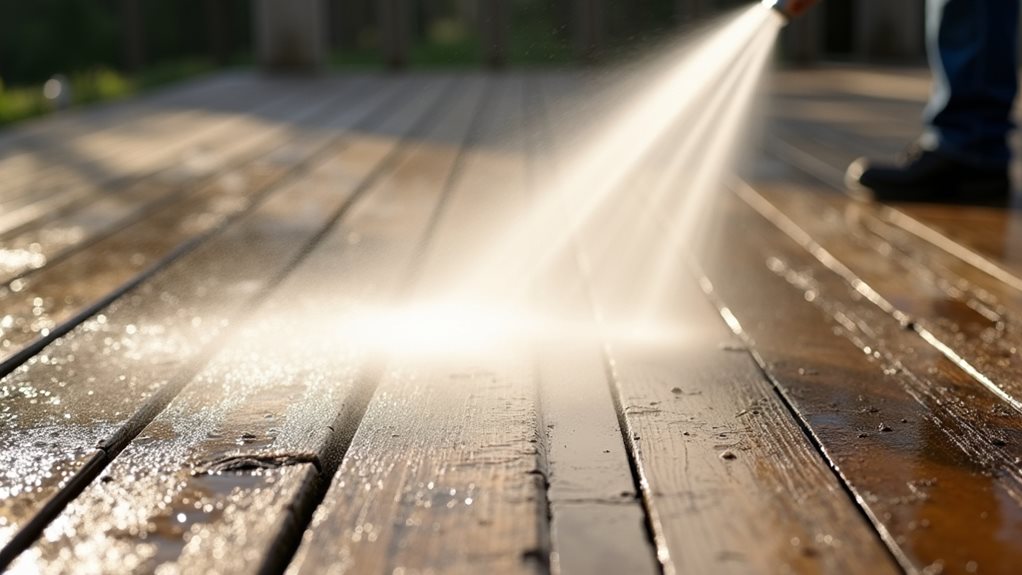
After completing a thorough cleaning of your deck, implementing effective post-care strategies is essential to maintain its appearance and prolong its lifespan.
Applying a protective sealant or stain after pressure washing helps preserve the wood and prevents mold and moisture buildup.
Regularly inspecting for damage, removing debris, and scheduling soft washing extend your deck’s durability and keep it looking great.
Final Note
By selecting the appropriate pressure, nozzle, and technique, you can effectively clean your wood deck without causing damage. Remember to adjust settings based on your deck’s condition and use soft washing for delicate areas or stubborn stains. Regular maintenance, combined with proper cleaning methods, will extend your deck’s lifespan and keep it looking its best. Prioritize safety and patience to achieve professional results while preserving the integrity of your wood surface.

Nathan McPhail is a garden and home DIY expert who writes practical, easy-to-follow advice for homeowners and gardeners. Through Yardique, he shares hands-on tips covering gardening, lawn care, landscaping, home improvement, repairs, tools, and outdoor living. His focus is on helping readers solve everyday household and yard problems with straightforward guidance, useful techniques, and practical solutions.