
To eliminate fungus gnats from your potting soil, first let the top layer dry out between watering sessions, as moisture attracts the larvae. Use physical barriers like a layer of sand or diatomaceous earth on the soil surface to block egg-laying. Applying a diluted hydrogen peroxide solution can help kill larvae on contact, while replacing heavily infested soil prevents future outbreaks. Maintaining proper drainage and avoiding overwatering are key steps; continuing to follow these methods will reveal more effective strategies.
TLDR
- Allow the soil to dry out between waterings to reduce moisture that attracts fungus gnats.
- Use diatomaceous earth or sand on the soil surface to block larvae and dehydrate eggs.
- Apply a diluted hydrogen peroxide solution to kill larvae and eggs on contact.
- Replace heavily infested soil with fresh, well-draining potting mix to eliminate gnat breeding grounds.
- Implement preventative measures like proper watering, soil surface coverings, and good drainage.
What Causes Fungus Gnats to Infest Potting Soil?
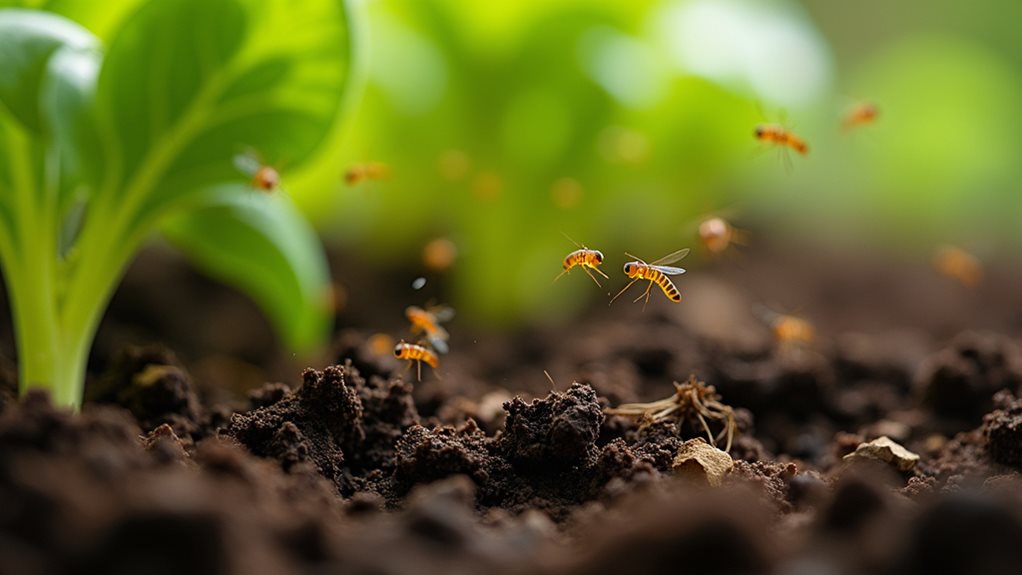
Fungus gnats are primarily attracted to moist, organic-rich potting soil because it creates an ideal environment for their larvae to develop. Excess moisture, decaying plant material, and algae on the soil surface provide food and breeding sites. A native plant species can help stabilize soil and reduce organic buildup, making the environment less attractive to gnats. When soil stays damp and organic matter accumulates, it encourages gnat infestations, making proper drainage and drying essential to prevent their proliferation.
How Can I Recognize Fungus Gnat Infestation in My Soil?
Recognizing a fungus gnat infestation involves paying close attention to specific signs in your soil and around your plants.
Look for sticky soil, which indicates excess moisture, and observe if tiny, translucent fungus gnat larvae are present by inspecting buried organic matter or soil.
Flying gnats and wilting plants also signal a potential infestation, prompting closer examination.
Additionally, noticing clipping management issues such as increased soil moisture or decaying organic matter can further indicate the presence of fungus gnats.
What Are the Best Ways to Kill Fungus Gnat Larvae and Eggs?
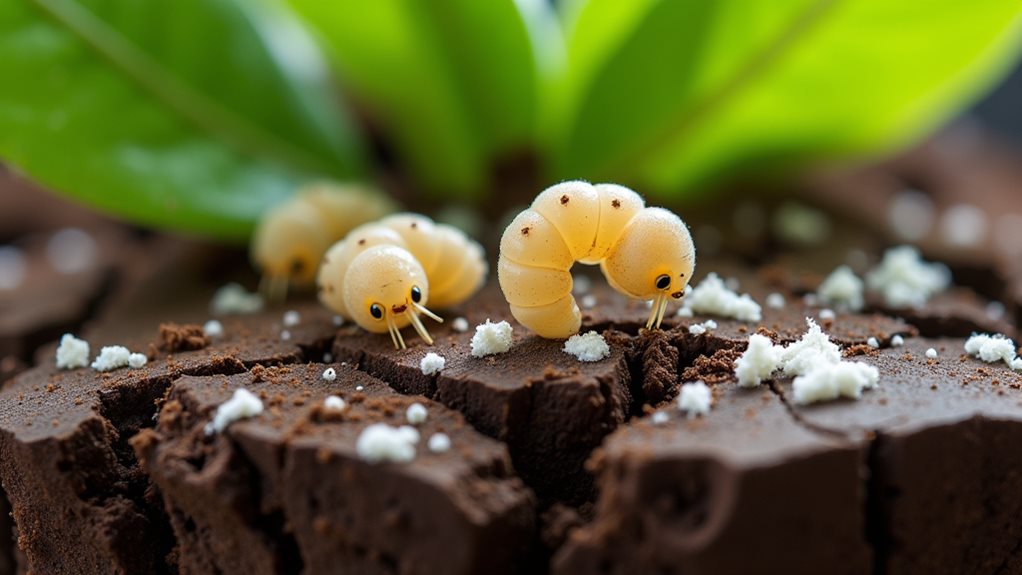
To effectively target and eliminate fungus gnats, you need methods that directly impact their larvae and eggs, disrupting their life cycle.
Applying diatomaceous earth physically shreds and dehydrates larvae.
A diluted hydrogen peroxide solution kills eggs and larvae on contact.
Scraping infested soil and replacing it, along with drying surfaces, also reduces gnat populations considerably.
Additionally, maintaining proper watering techniques and letting the soil dry out between waterings can significantly hinder gnat development.
How Can I Prevent Future Fungus Gnat Problems?
Implementing preventative measures can substantially reduce the likelihood of future fungus gnat invasions. You should make sure the soil stays dry, especially the top layer, by allowing it to fully dry out between waterings. Use fast-draining soil amendments like perlite or sand, and cover the surface with gravel or diatomaceous earth to block larvae. Timing and conditions for harvesting are also important to keep your plants healthy and less susceptible to pests.
When Should I Sterilize or Replace Infested Soil?
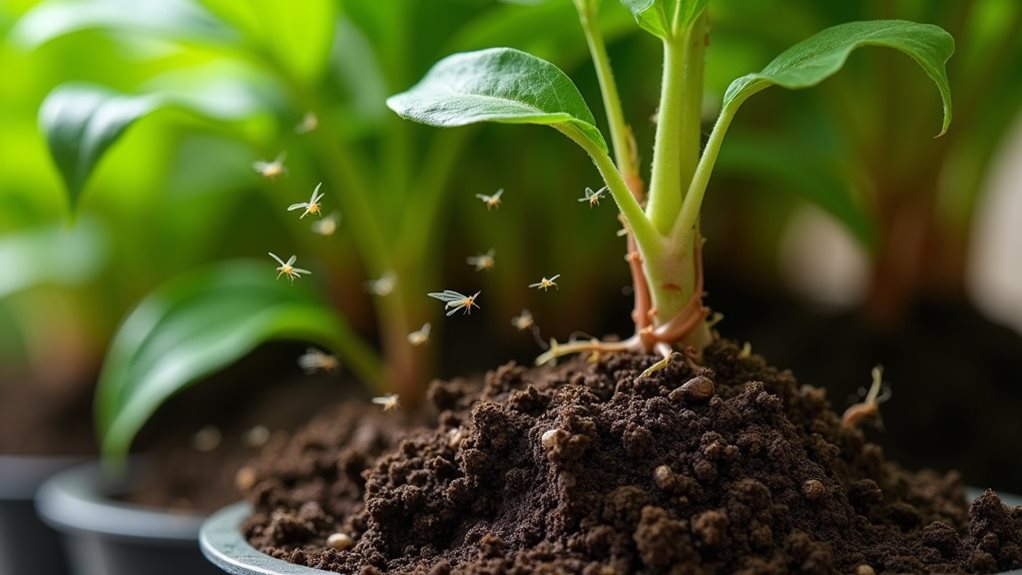
When larvae are actively present in the soil, it’s the right time to sterilize or replace infested soil to prevent the fungus gnat population from maturing further. If the soil has been heavily infested for a long period, replacing it with fresh, well-draining soil is often the most effective solution. Sterilization or replacement should occur before replanting to eliminate remaining eggs or larvae. Using techniques such as soil pH testing can help assess soil conditions and prevent future infestations.
Final Note
To effectively eliminate fungus gnats, focus on improving soil drainage, reducing excess moisture, and using targeted treatments like biological controls or insecticidal soaps. Regularly inspect your plants and soil to catch infestations early, and sterilize or replace infested soil when necessary. Maintaining proper watering habits and soil hygiene are key to preventing future problems. By following these steps, you can protect your plants and keep your soil healthy and pest-free.

Nathan McPhail is a garden and home DIY expert who writes practical, easy-to-follow advice for homeowners and gardeners. Through Yardique, he shares hands-on tips covering gardening, lawn care, landscaping, home improvement, repairs, tools, and outdoor living. His focus is on helping readers solve everyday household and yard problems with straightforward guidance, useful techniques, and practical solutions.