
To maximize tomato yield, start pruning indeterminate plants early by removing suckers and lower leaves to improve airflow and reduce disease risk. Use clean, sharp tools or your fingers for precise cuts, and be careful not to over-prune or damage healthy stems. Regular maintenance guarantees energy goes into fruit development instead of unnecessary growth. Avoid pruning during extreme weather, and consistent care encourages larger, healthier tomatoes. Continuing will reveal additional techniques to enhance your harvest effectively.
TLDR
- Prune suckers regularly to direct energy toward fruit production and improve airflow.
- Use sharp, sterilized tools or fingers for precise, clean cuts.
- Remove lower leaves and dense foliage to enhance ventilation and reduce disease risk.
- Start pruning when plants reach 12-15 inches, focusing on larger suckers first.
- Avoid over-pruning and pruning during extreme heat to prevent plant stress and damage.
Why Pruning Tomato Plants Boosts Your Harvest and Plant Health
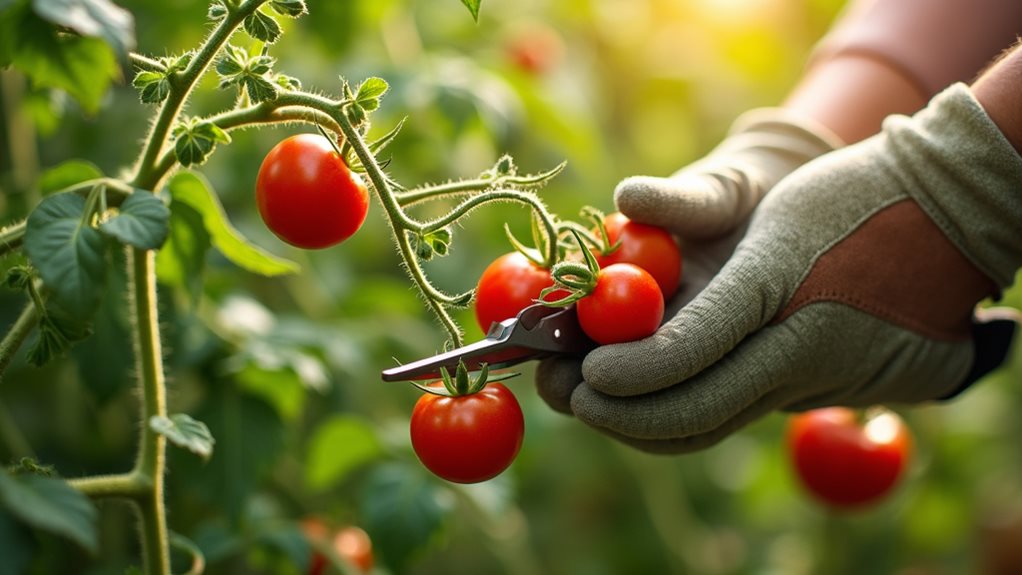
Pruning tomato plants is an essential practice that directly enhances both your harvest and the overall health of your plants.
When you prune tomatoes, you improve airflow, reducing fungal diseases, and remove suckers that divert energy.
This focus on plant health encourages larger fruits, faster ripening, and a harvest increase, while preventing overcrowding and supporting steady plant growth.
Additionally, proper pruning can help manage the size of the plants and facilitate easier harvesting, especially when using garden hoses for watering.
How to Identify Which Tomato Plants Need Pruning (Indeterminate vs. Determinate)
Understanding the growth habits of your tomato plants is essential for determining whether they need pruning.
Indeterminate tomatoes grow vine-like and require pruning to manage suckers and control plant size. This helps improve airflow and fruit production.
In contrast, determinate tomato plants are bushy and reach a set height. Minimal pruning is needed to maximize harvest without hindering overall yield.
A thorough understanding of plant nutrition can also assist in maintaining healthy tomato plants and optimizing their growth.
Essential Tools and Tips for Pruning Tomato Plants Effectively
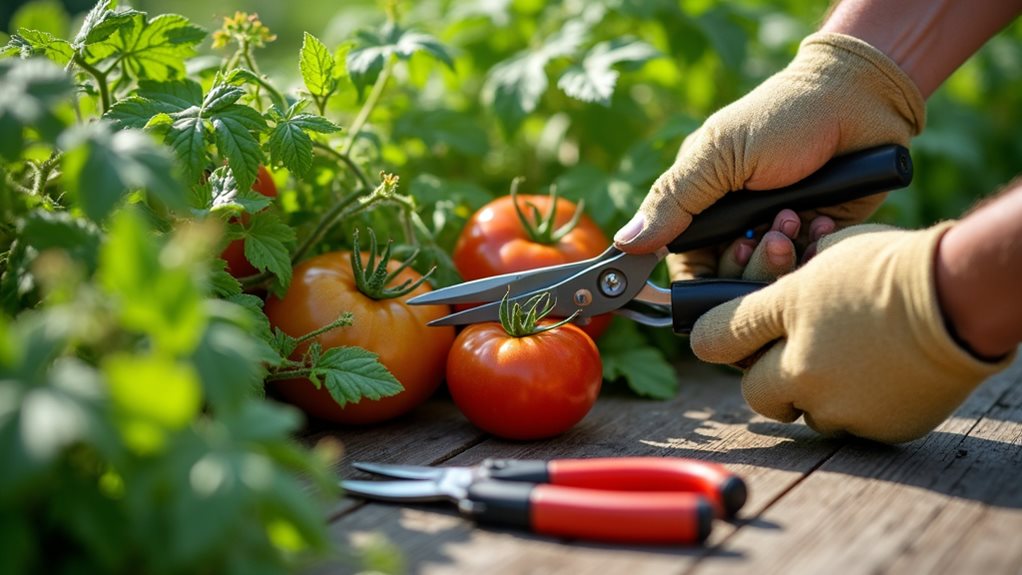
Choosing the right tools is essential to guarantee clean, precise cuts that promote healthy growth and reduce the risk of disease.
Use sharp garden shears for larger stems and your fingers for suckers, ensuring proper technique.
Always sterilize tools with alcohol between cuts to prevent disease spread, supporting plant health, effective suckers removal, and disease prevention.
Step-by-Step: How to Prune Indeterminate Tomatoes for Better Yield
To maximize your tomato plants’ yield, it’s essential to follow a systematic pruning process that encourages healthy growth and better fruit production.
For indeterminate tomatoes, start when they reach 12-15 inches, removing suckers and lower leaves.
Regular pruning improves airflow, supports fruit development, and reduces disease risk, ensuring a healthy plant and a bountiful harvest. Additionally, employing effective physical barriers like netting can help protect your plants from pests and birds, further enhancing yield.
Advanced Pruning Techniques to Improve Airflow and Fruit Size
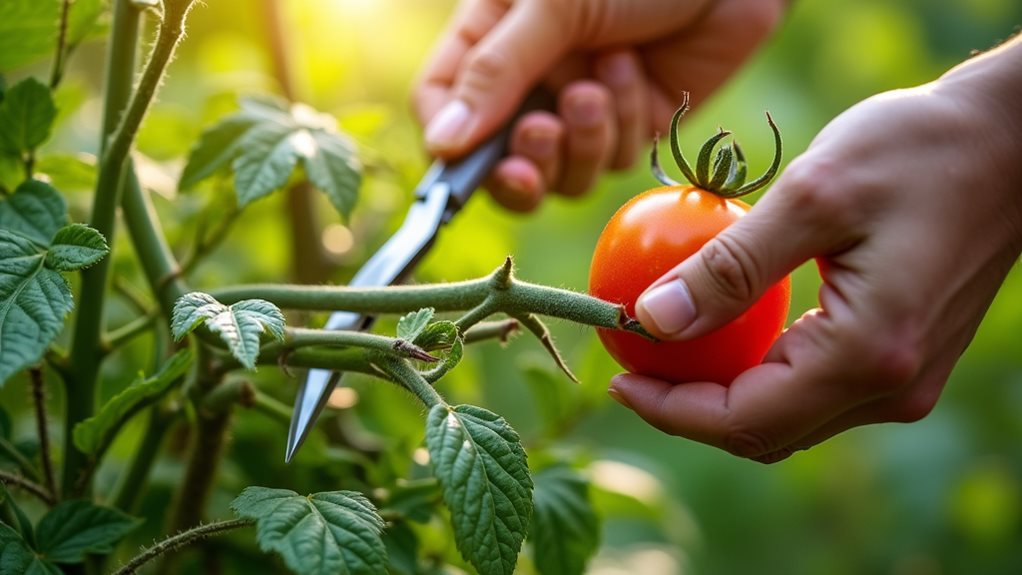
Advanced pruning techniques focus on optimizing airflow and increasing fruit size, which are essential for healthy tomato plants and abundant harvests.
By removing larger suckers early and clearing dense foliage around the main stem, you improve airflow, reduce disease risk, and promote plant health.
Canopy management through pruning and topping directs energy into larger, better-quality fruit, enhancing yield.
Common Pruning Mistakes to Avoid for a Healthy Tomato Crop
Even though pruning is essential for healthy tomato plants and higher yields, many gardeners make common mistakes that can inadvertently harm their crops.
Over-pruning, using diseased tools, or excessive removal of suckers can cause plant stress.
Pruning during extreme heat or drought, or cutting into the main stem or branches too aggressively, can create wounds and increase disease susceptibility.
Final Note
By perfecting proper pruning techniques, you can greatly improve your tomato plants’ health, airflow, and fruit production. Regularly removing unnecessary foliage and managing growth stages guarantees your plants remain vigorous and productive throughout the season. Avoid common mistakes like over-pruning or neglecting airflow, which can lead to disease and smaller yields. With consistent effort and attention to detail, you’ll optimize your harvest, gaining both better quality and quantity in your tomato crop.

Nathan McPhail is a garden and home DIY expert who writes practical, easy-to-follow advice for homeowners and gardeners. Through Yardique, he shares hands-on tips covering gardening, lawn care, landscaping, home improvement, repairs, tools, and outdoor living. His focus is on helping readers solve everyday household and yard problems with straightforward guidance, useful techniques, and practical solutions.