
To grow herbs in pots indoors, choose containers with drainage holes made from breathable materials like terra cotta or cedar, and fill them with a nutrient-rich, well-draining organic soil mix that includes compost. Position your pots where the herbs receive at least 4 to 6 hours of bright sunlight daily or supplement with grow lights. Regular watering when the top soil feels dry, combined with periodic organic fertilization, supports healthy growth. Keeping airflow good and pruning encourages vigorous, lush herbs—continue to investigate to find more tips for year-round success.
TLDR
- Choose breathable pots with drainage holes and fill with nutrient-rich, well-draining organic soil mixed with compost.
- Provide 4–6 hours of bright, direct or indirect sunlight daily, or supplement with grow lights.
- Water thoroughly when the top inch of soil feels dry, and fertilize every 2–4 weeks with diluted organic fertilizer.
- Regularly prune herbs to promote bushier growth and prevent legginess caused by insufficient light.
- Ensure good airflow, monitor environmental conditions, and rotate pots weekly for healthy indoor herb growth.
Why Growing an Indoor Herb Garden Is a Game-Changer for Your Kitchen
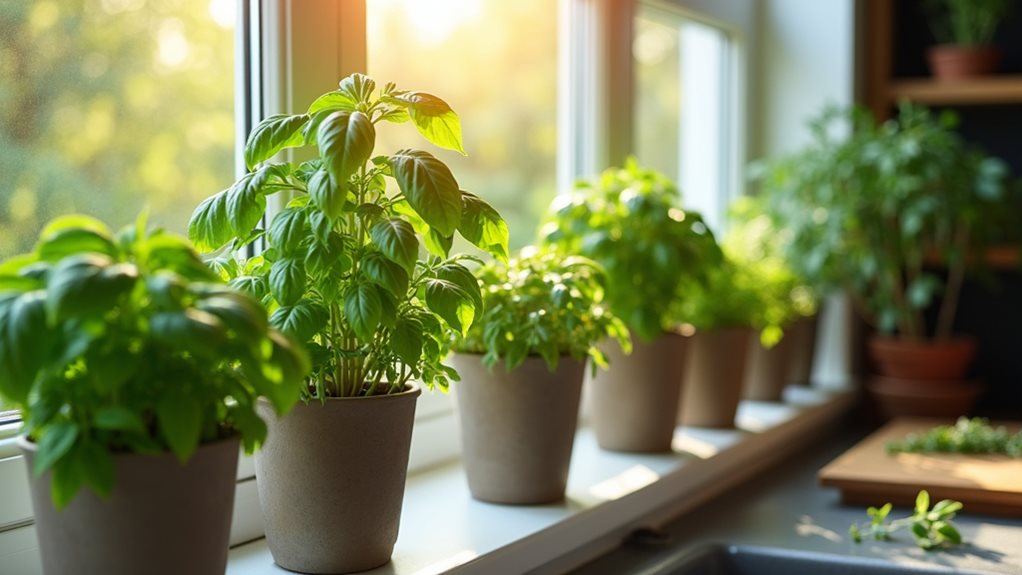
Growing an indoor herb garden can be a revolutionary addition to your kitchen, offering both practical and aesthetic benefits. With an indoor herb garden, you’ll enjoy fresh herbs for cooking, supporting healthy eating and reducing trips to the store. Additionally, choosing the right containers and ensuring proper lighting and watering can significantly boost your herbs’ growth and vitality.
Choosing the Right Pots and Soil for Your Indoor Herbs
Choosing the right pots and soil is essential for healthy indoor herbs, as proper drainage and material choices can prevent issues like root rot and guarantee longevity.
Opt for containers with drainage holes made from breathable materials such as terra cotta or cedar.
Fill them with a nutrient-rich, well-draining organic soil mix that includes compost.
Additionally, make certain your pots are at least 6 inches deep to allow enough space for roots to grow and spread.
This supports vigorous herb growth.
Drainage and Material Choices
When selecting pots for your indoor herbs, it’s essential to prioritize proper drainage to prevent water from accumulating around the roots, which can lead to root rot and other issues.
Choose pots with drainage holes, especially terracotta or unglazed clay, as they promote soil drainage and vaporize excess moisture.
Use a well-draining soil mix to support healthy roots and avoid water retention.
Soil Composition and Fertilization
Selecting the right soil and pots is fundamental to maintaining healthy indoor herbs. Use a well-draining, organic potting mix blended with compost to provide essential plant nutrition and prevent water retention.
Choose pots with drainage holes, line them with barrier cloth, and incorporate organic fertilizer like fish emulsion every few weeks. This guarantees ideal soil conditions and promotes vigorous growth.
How Much Light Do Indoor Herbs Need? Tips for Bright, Healthy Growth
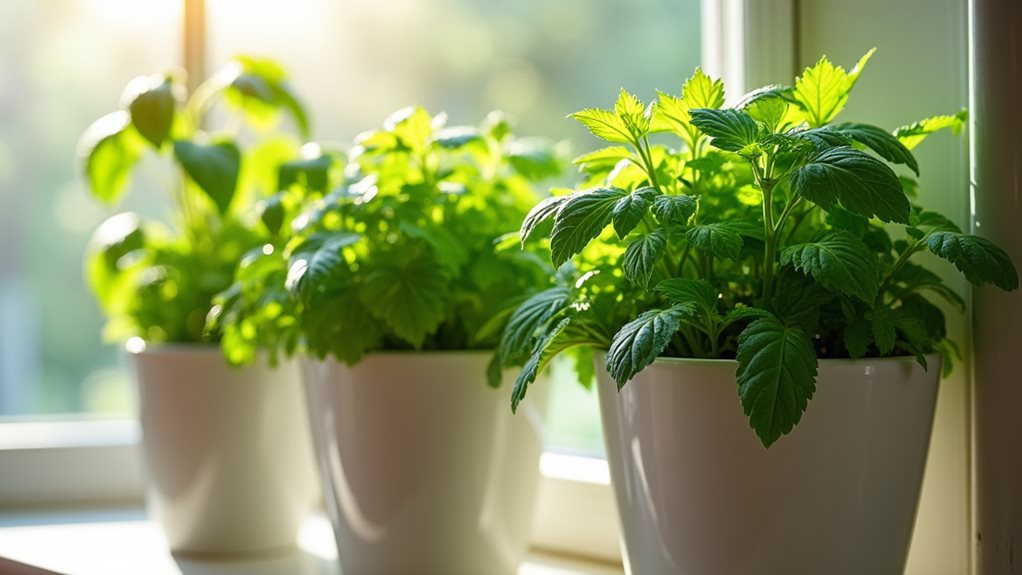
Indoor herbs require a sufficient amount of light to thrive, with most needing at least 4 to 6 hours of bright, direct, or indirect sunlight each day.
For healthy plants, guarantee they receive enough light, whether natural sunlight or supplemented with grow lights.
Herbs like basil need more light, while others like mint tolerate slightly less.
Providing adequate light promotes bright growth and successful growth from seed.
Additionally, understanding the light requirements of each herb can help you optimize their growth conditions and ensure a lush, healthy indoor herb garden.
Step-by-Step Guide to Planting and Caring for Your Indoor Herbs
Starting your indoor herb garden involves carefully planting and caring for each herb to guarantee healthy growth from the beginning. Use herb pots with drainage holes, fill them with organic soil mixed with compost, and plant seeds or seedlings with proper spacing.
Focus on light for herbs, water when the top soil feels dry, and regularly prune to promote bushier herb growth. Additionally, understanding your USDA planting zone can help you select herbs that are best suited to your indoor environment and ensure successful growth year-round.
How to Water and Fertilize Your Indoor Herb Garden
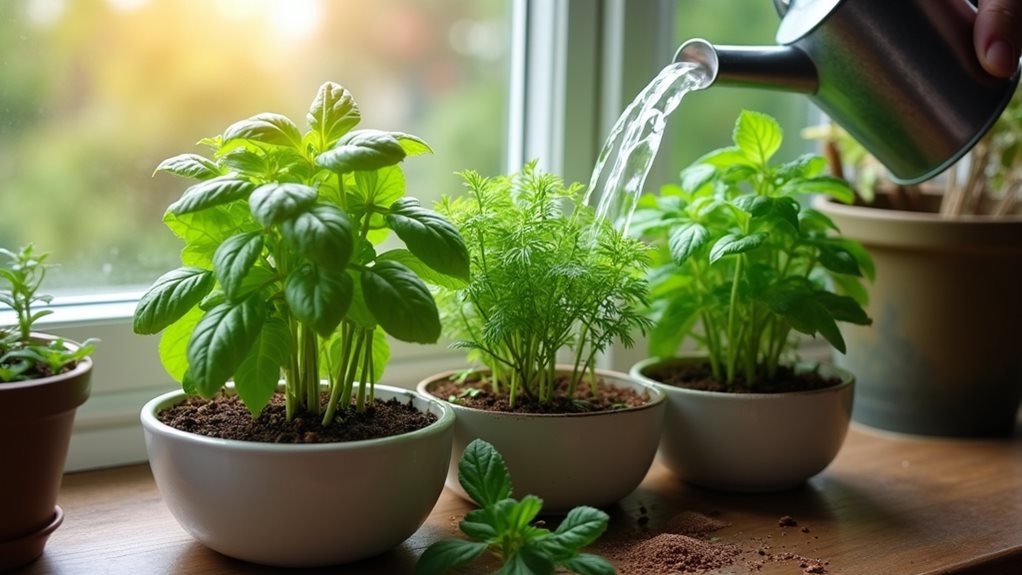
Proper watering and fertilizing are essential to maintaining healthy, productive herbs indoors. You should water your organic herbs thoroughly when the top inch of soil feels dry, using a watering can with a narrow spout to direct water to the soil. Fertilize every 2-4 weeks with diluted organic fertilizer, monitoring nutrient levels to avoid over-fertilization. Additionally, avoiding excess water can prevent issues such as polymeric sand haze, which can cause residue buildup and affect plant health.
Troubleshooting Common Indoor Herb Problems (Leggy, Yellowing, Mold)
When herbs develop problems like legginess, yellowing leaves, or mold, understanding the causes is essential.
Legginess often results from insufficient light or poor airflow.
Yellowing leaves indicate overwatering or poor drainage, risking root rot.
Mold on soil surfaces can be prevented by adjusting watering habits, improving ventilation, and pruning regularly to promote healthy growth.
When and How to Harvest Your Indoor Herbs for Best Flavor
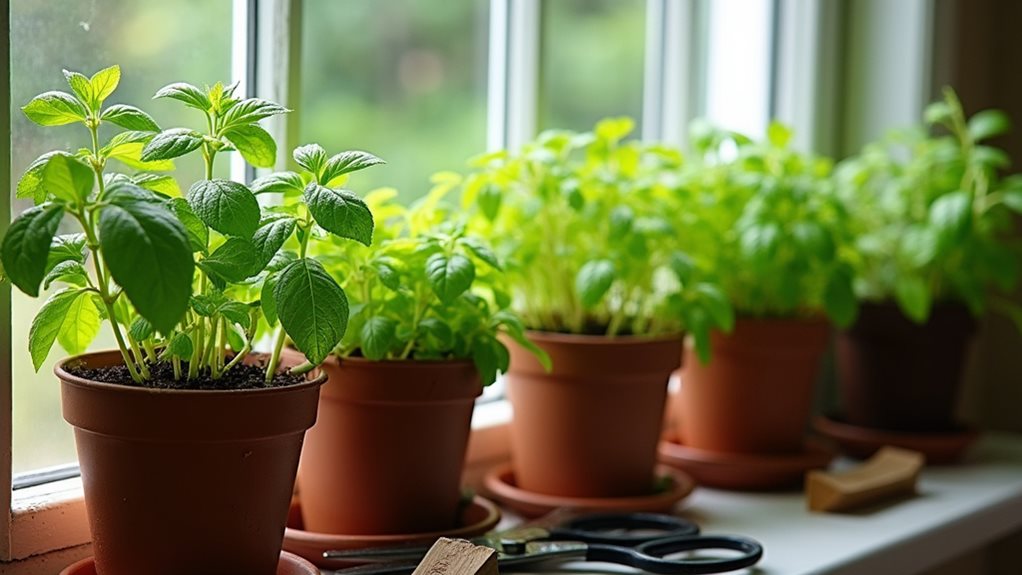
Harvesting your indoor herbs at the right time and in the proper manner can markedly enhance their flavor and potency.
To harvest herbs, snip them just above a leaf node to encourage healthy regrowth and continuous harvests.
Avoid plant damage by using sharp tools, and don’t harvest more than one-third at a time to guarantee your herbs remain lively and flavorful.
Being mindful of pests like insects, which can occasionally be ingested during foraging, helps keep your herbs healthy and safe.
Tips to Keep Your Indoor Herb Garden Thriving All Year Round
Keeping your indoor herb garden thriving year-round requires consistent attention to light, watering, and environmental conditions. Make certain your herbs receive 4-6 hours of direct light or supplement with grow lights.
Use well-draining soil, prune regularly to promote bushiness, and rotate pots weekly.
Good ventilation and careful soil moisture monitoring prevent mold and pests, keeping your herbs healthy and thriving. Additionally, understanding snake behavior and prevention can help you protect your indoor space from unwanted pests or creatures.
Final Note
Growing herbs indoors offers a convenient way to enjoy fresh flavors year-round, enhancing your cooking and interior space. By selecting appropriate pots and soil, ensuring sufficient light, and following proper watering and fertilization routines, you can cultivate a healthy, productive garden. Vigilance in troubleshooting common issues and timely harvesting will maximize flavor and plant significance. With consistent care and attention, your indoor herb garden can thrive, providing fresh herbs that boost your culinary experiences and bring a touch of nature into your home.

Nathan McPhail is a garden and home DIY expert who writes practical, easy-to-follow advice for homeowners and gardeners. Through Yardique, he shares hands-on tips covering gardening, lawn care, landscaping, home improvement, repairs, tools, and outdoor living. His focus is on helping readers solve everyday household and yard problems with straightforward guidance, useful techniques, and practical solutions.