Use a 50/50 blend of topsoil and compost, then add 20‑30 % vermiculite or perlite to boost water‑holding capacity, and keep the mix light enough for drainage. Build your raised beds at least 12 inches deep so the larger soil volume stores moisture longer, and apply a 2‑inch layer of climate‑appropriate mulch—bark chips for dry zones, straw or pine needles for humid areas—to reduce evaporation. Install early‑morning drip or soaker hoses, schedule watering at soil level, and maintain a pH around 6.5 with lime to improve particle aggregation. Monitor moisture with a probe or the finger‑test method, rotate crops, and add green manure to keep the soil porous. If you follow these steps, you’ll discover even more ways to keep your beds consistently moist.
TLDR
- Use a 50/50 topsoil‑compost mix with 20‑30% vermiculite and 10‑30% perlite to boost water‑holding capacity while maintaining drainage.
- Add 2‑3 inches of climate‑appropriate mulch (bark, straw, or pine needles) to insulate soil and reduce surface evaporation.
- Build raised beds at least 12 inches deep (up to 18 inches) to increase soil volume and retain moisture longer.
- Install drip or soaker irrigation, watering early in the morning and pairing with compost‑rich soil for slow, deep absorption.
- Periodically monitor moisture with a probe or finger test and adjust watering to keep soil consistently moist but not waterlogged.
Choose the Right Soil Mix for Moisture Retention
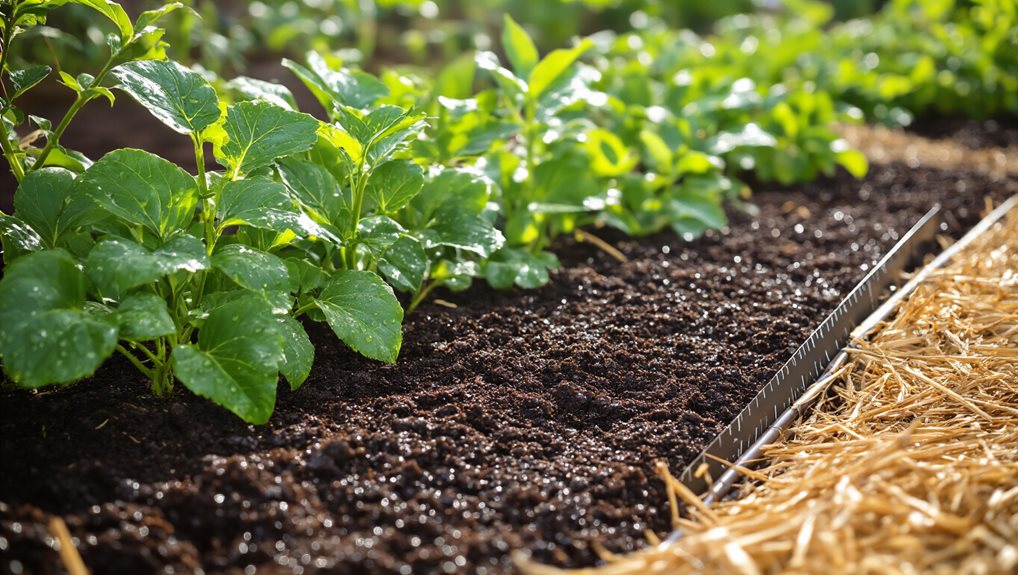
Choosing the right soil mix is the cornerstone of keeping raised‑bed moisture steady, and a 50/50 blend of topsoil and compost often hits the sweet spot for most gardeners. You’ll find that topsoil supplies a nutrient‑rich, permeable layer while compost boosts structure and water‑holding capacity, creating a balanced medium that retains moisture without waterlogging, and you’ll feel confident your beds stay hydrated throughout the season. Adding a high proportion of organic matter ensures long‑term fertility and moisture retention. coffee grounds can be used as a supplemental amendment to further improve soil health and nutrient availability when applied correctly and in moderation.
Add Vermiculite or Perlite to Boost Water Holding Capacity
You can enhance your raised bed’s water‑holding capacity by mixing in vermiculite, which traps moisture and releases it slowly to keep roots hydrated. Mulching on top of these amendments also helps regulate soil temperature and retain essential moisture, especially during cold months. moisture retention helps describe how vermiculite and mulch work together to protect roots when temperatures drop. If drainage and aeration are your priority, perlite creates light, airy pockets that prevent waterlogging while still supporting healthy root growth. Adjust the ratio—typically 10‑30 % of either amendment—to match your soil’s texture and the plants’ moisture needs.
Vermiculite Enhances Moisture Retention
How does vermiculite keep raised‑bed soil from drying out? It absorbs water into its porous structure and releases it slowly, maintaining consistent moisture.
Mix 20‑30 % into your bed, or blend with compost at a 1:3 ratio, to enhance water‑holding capacity without compaction. This steady supply reduces watering frequency, supports root growth, and creates a stable, communal environment for your plants.
Perlite Improves Soil Aeration
Why does perlite matter in a raised‑bed mix? It creates coarse, porous granules that hold sizable air pockets, keeping roots oxygenated and preventing compaction. The lightweight particles improve drainage, reduce waterlogging, and lower bulk density, so soil stays loose even after frequent watering.
Adding perlite balances moisture and airflow across clay, loam, or sand, enhancing root growth and nutrient uptake while keeping the bed manageable.
Build Raised Beds at Least 12 Inches Deep for Better Water Storage
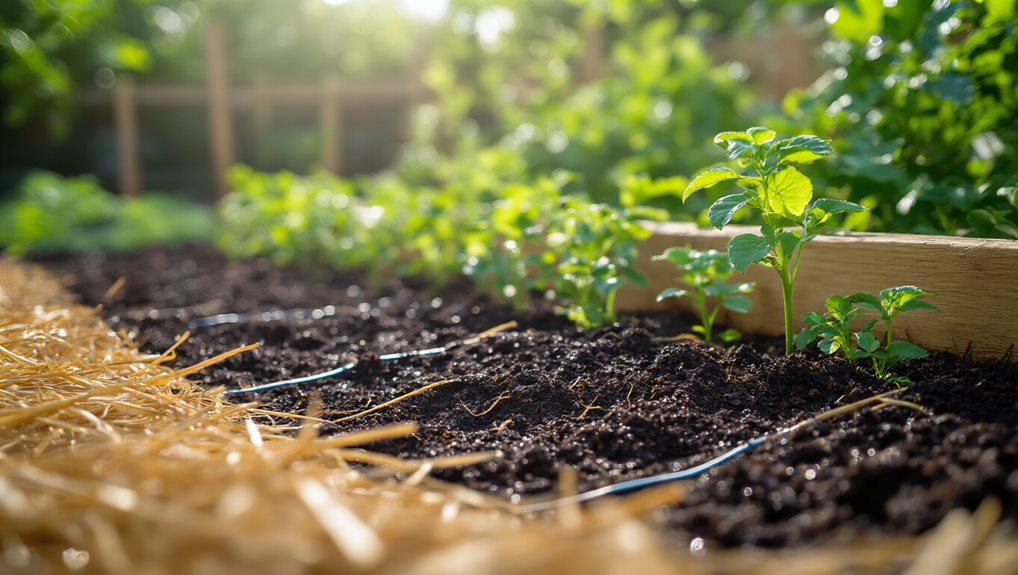
You’ll notice that a 12‑inch minimum depth gives your beds enough volume to store water, so the soil stays moist longer between watering. With deeper beds, the grid system and no‑dig approach help protect soil structure and promote healthier root growth no‑dig techniques.
MinimumDepth for HoldsCapacity
Ever wondered why a 12‑inch‑deep raised bed holds water better than a shallower one? You’ll find that twelve inches supplies enough soil volume for medium‑rooted crops, while deeper beds accommodate tomatoes, carrots, and potatoes without rapid drying. Calculate capacity by multiplying width, length, and height; a 2.5 × 7 × 2‑foot bed holds 35 ft³. Adding two inches for compaction ensures reliable moisture retention.
Deeper Beds Reduce Evaporation
When soil depth reaches at least twelve inches, evaporation slows noticeably because water is held farther beneath the surface, reducing exposure to wind and sun; this deeper profile creates a more stable moisture reservoir that benefits both shallow‑rooted herbs and deeper‑rooted vegetables.
You’ll notice that 12‑inch or deeper beds retain moisture longer, especially on concrete, where extra depth buffers against rapid loss, cuts watering frequency, and supports balanced drainage for healthier crops.
Install Soaker/Drip Irrigation for Raised-Bed Moisture Retention
How can you keep the soil in raised beds consistently moist without wasting water? Install a soaker hose or drip line that runs along each row, delivering water straight to root zones, minimizing evaporation and runoff. Pair it with compost‑rich soil and vermiculite to boost retention, schedule early‑morning runs, and check for clogs regularly, ensuring every plant receives just enough moisture. Using rainwater from a barrel system helps provide soft, chemical-free hydration that supports healthier roots and lusher growth, further reducing mineral buildup and the need for treated tap water. rainwater is a chemical-free alternative with slightly acidic pH and natural nitrogen that aids nutrient uptake.
Select Mulch That Fits Your Climate to Preserve Moisture
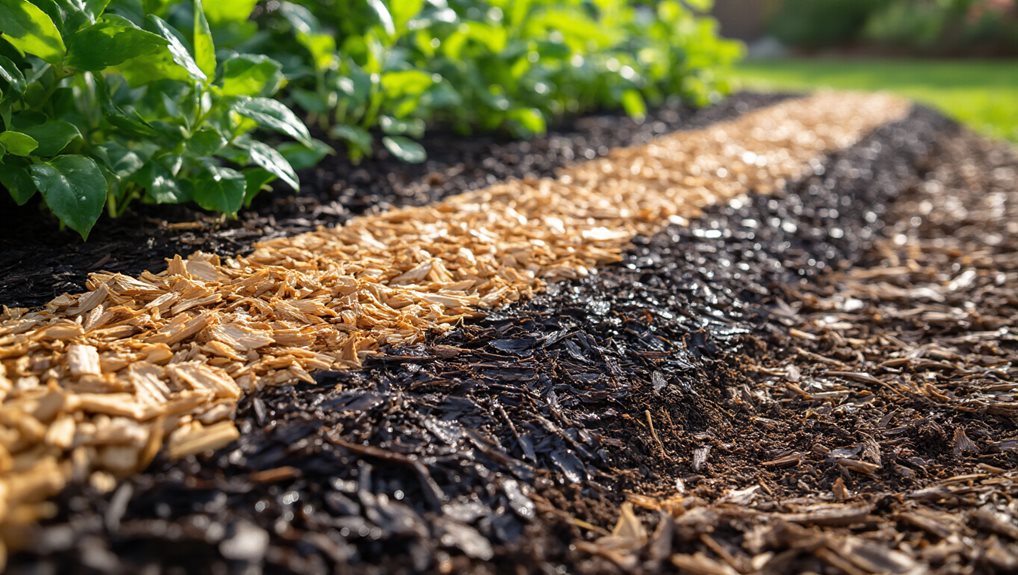
Pick a mulch that matches your climate—dry zones benefit from thick, water‑holding bark or wood chips, while humid areas do better with lighter straw or pine needles to avoid mold. The moisture‑retention benefits of shredded mulch can further enhance soil health in dry conditions water retention. Adjust the layer thickness to two inches in hot, windy beds, but thin it to one inch in milder or winter conditions so roots stay insulated without suffocating. Refresh the mulch each season, replacing any compacted or degraded material to keep the soil’s moisture‑retention capacity consistent.
Choose Climate‑Appropriate Mulch
Which mulch works best for your region’s climate? In hot‑dry zones, spread straw or shredded bark to reflect heat and stay in place; in cold winters, opt for straw, pine needles or sheep wool to insulate roots against frost.
In humid, rainy areas, use wood chips or shredded hardwood for slow decay and moisture control.
Choose acidic‑soil‑friendly pine bark or conifer mulch to maintain low pH and protect tender plants.
Adjust Mulch Thickness Accordingly
Ever wondered how the right mulch thickness can keep your raised‑bed soil from drying out? Adjust it to match climate, soil, and plant maturity: in hot, dry zones use 2‑4 inches of pine bark or wood chips, while cool, wet areas need only 1‑2 inches of finer material.
Sandy beds benefit from 3‑4 inches, clay from 2‑3.inches, and always keep mulch a few inches away from plant bases to prevent rot.
Refresh Mulch Seasonally
How often you refresh your mulch can be the difference between a thirsty raised bed and a consistently moist one, especially when you match the material to your climate’s moisture demands. In hot, dry zones, choose shredded bark or pine needles, which compact and trap moisture; in cooler, rainy areas, opt for composted leaf mold or grass clippings, which absorb and release water slowly, maintaining steady humidity and encouraging a shared sense of garden stewardship.
Water Early to Maximize Raised-Bed Moisture Retention
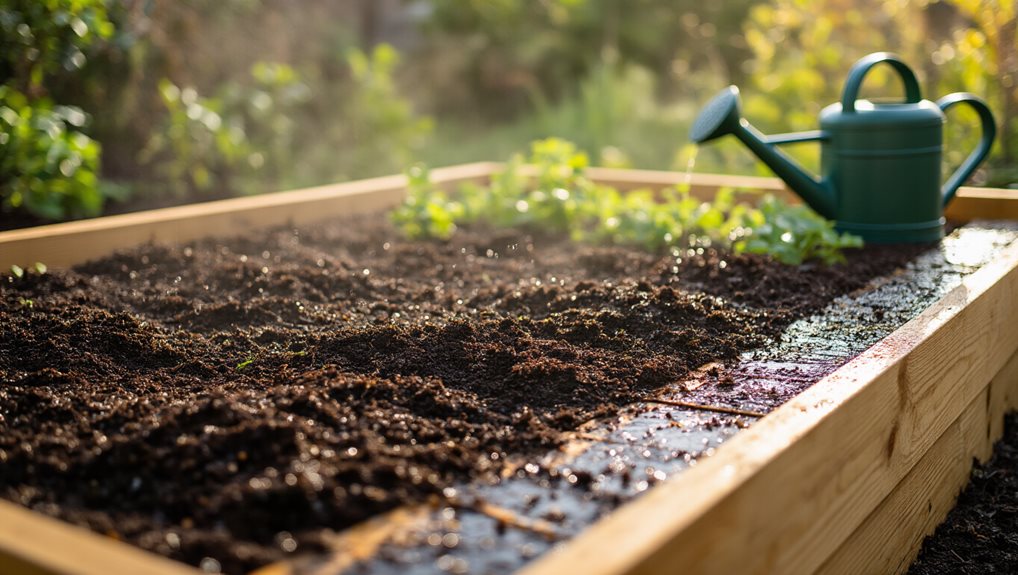
When you water your raised beds in the early morning, you take advantage of cooler temperatures and lower evaporation rates, which lets the soil absorb more water before the midday heat dries the surface. Early watering lets roots penetrate deeper, aligns with dew, and reduces fungal risk, while soaker hoses or drip systems deliver moisture directly to the root zone, maximizing retention and fostering a cohesive, thriving garden community.
Re-Wet Hydrophobic Soil With Dish-Soap
Watering early in the morning helps keep your raised‑bed soil moist, but if the soil has become hydrophobic, even that timing won’t stop water from be off the surface.
Mix one tablespoon of biodegradable dish soap per gallon of water, stir gently, then pour slowly over the dry patches; the surfactants break waxy residues, letting water seep into tiny pores, restoring moisture within hours.
Incorporate Compost for Long-Term Raised-Bed Moisture Retention
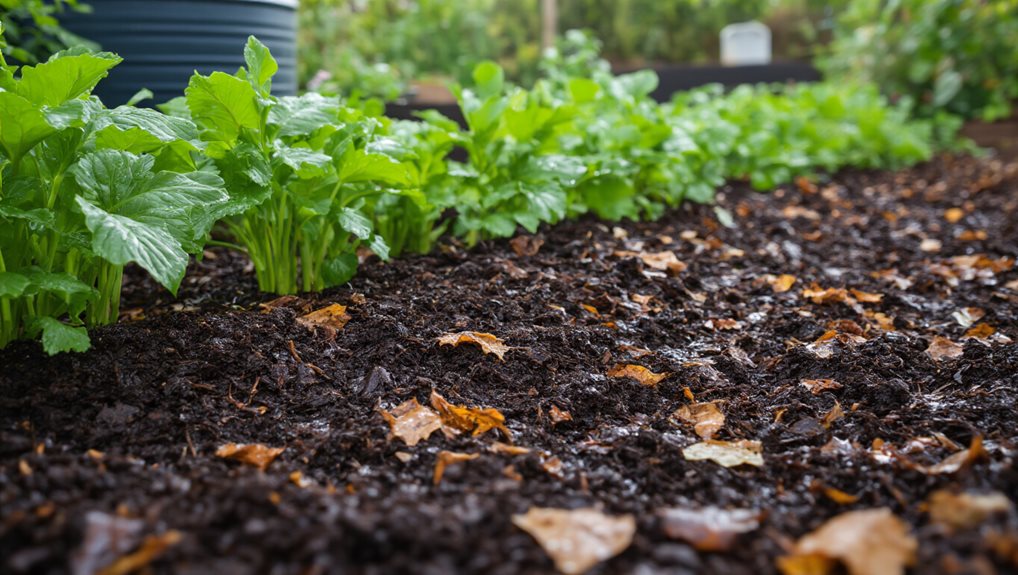
Why not enhance your raised‑bed’s water‑holding power by adding compost?
By mixing 25‑50 % compost into your soil, you create sponge‑like aggregates that increase porosity, reduce compaction, and lock moisture up to twenty times their weight, cutting irrigation frequency.
This balanced mix lightens heavy clay, steadies sandy beds, and buffers drought, while preventing erosion and keeping nutrient‑rich topsoil intact.
Balance Soil pH With Lime to Improve Water Retention
Can you enhance your raised‑bed’s water‑holding capacity by tweaking its pH with lime? Adding calcium carbonate neutralizes acidity, displaces aluminum, and releases hydroxide ions, which raise pH toward the optimal 6.5 range, improving particle aggregation and organic‑matter stability.
This enhances soil structure, boosts microbial activity, and increases water retention, while also reducing nutrient lock‑up and toxicity for healthier, more resilient plants.
Monitor Moisture in Raised Beds With a Probe or Finger Test
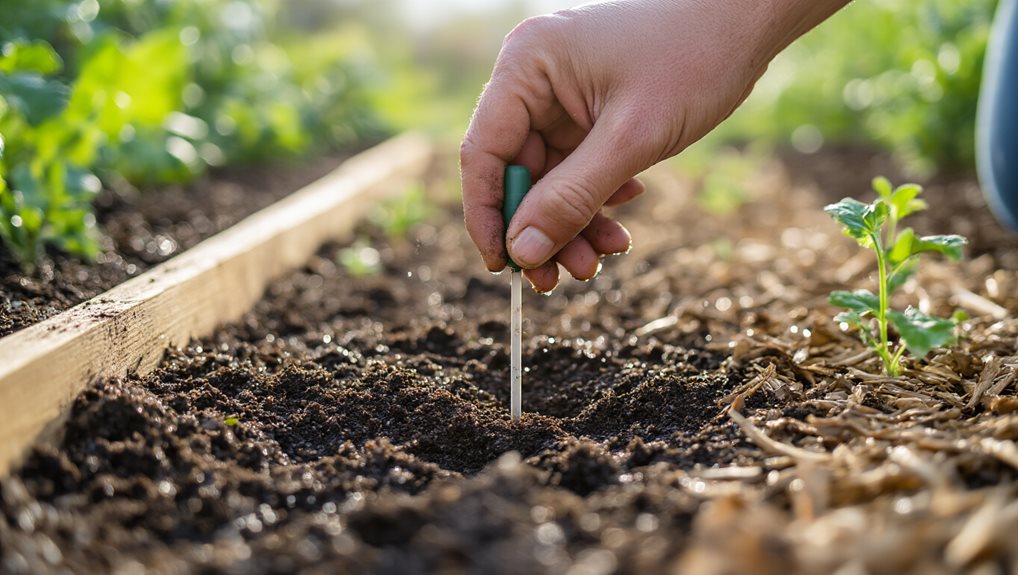
How often do you check the moisture in your raised beds, and what’s the most reliable way to do it? You can feel a walnut‑sized soil ball, squeeze it, and watch the ribbon length—longer ribbons mean wetter soil—while a TDR or capacitance probe gives instant readings. Install the sensor at rooting depth, calibrate for soil type, and compare trends to your water‑holding capacity to water only when needed.
Rotate Crops and Add Green Manure to Keep Soil Porous
Ever wondered how rotating crops and adding green manure can keep your raised‑bed soil porous? By shifting plant families every few years you vary nutrient extraction, break pest cycles, and encourage deep, diverse roots that aerate compacted layers.
Plant legumes or rye as cover crops between seasons; when you till them in, they boost organic matter, improve drainage, and retain moisture, fostering a resilient, porous soil community.
Troubleshoot Common Raised-Bed Drying Issues
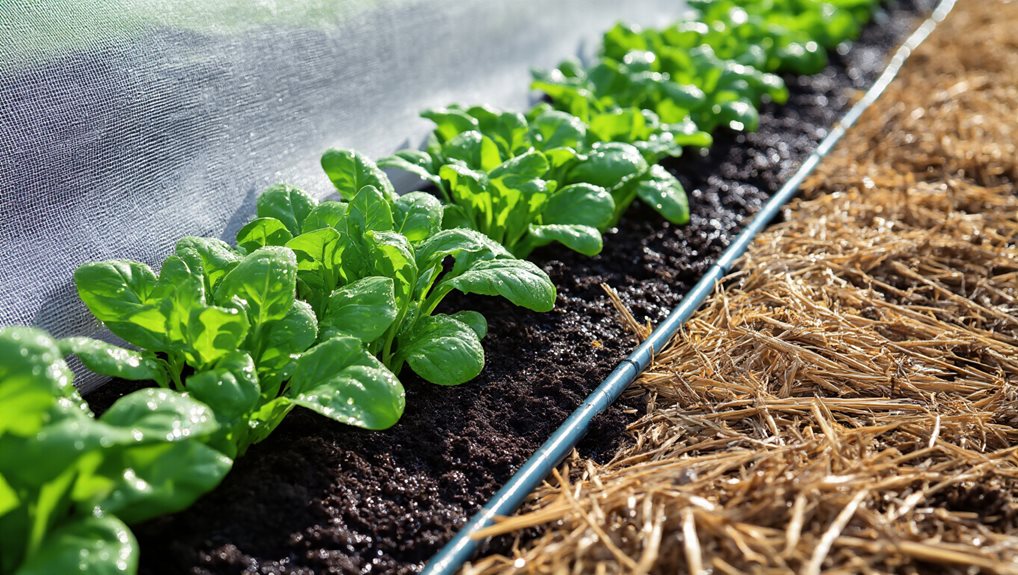
Why do your raised beds dry out so quickly? Check your soil mix—excess potting soil evaporates fast; aim for 60% topsoil, 30% compost, 10% potting with pumice or peat, and add vermiculite.
Ensure beds are at least 12‑18 inches deep, apply 2‑3 inches of mulch, water consistently at soil level, and monitor moisture with a meter to catch early stress.
Final Note
By combining a well‑balanced soil mix with vermiculite or perlite, planting beds at least twelve inches deep, and installing soaker or drip irrigation, you’ll retain moisture far better than with standard setups. Mulching appropriately for your climate, adjusting pH with lime, and regularly monitoring moisture using a probe or finger test keep conditions optimal. Rotate crops and add green manure to maintain porosity, and troubleshoot any drying issues promptly to ensure thriving, water‑efficient raised beds.

Nathan McPhail is a garden and home DIY expert who writes practical, easy-to-follow advice for homeowners and gardeners. Through Yardique, he shares hands-on tips covering gardening, lawn care, landscaping, home improvement, repairs, tools, and outdoor living. His focus is on helping readers solve everyday household and yard problems with straightforward guidance, useful techniques, and practical solutions.