Start by cleaning every surface of the furniture with a glass‑cleaner‑detergent mix, wiping it down and vacuuming crevices to remove pheromone trails and food residues, then seal any cracks with diatomaceous earth. Apply a natural spray—equal parts lemon juice and water or vinegar and water—plus a few drops of peppermint or eucalyptus oil, and repeat daily on legs and edges. Add a gentle heat barrier using a hot‑water spray or low‑temperature pad along the base, and keep the surrounding area dry, debris‑free, and sealed. Switch to pest‑resistant materials like cedar or metal, and use a diffuser with peppermint or tea‑tree oil for continuous aroma protection. Continue these steps, and you’ll discover even more effective tactics ahead.
TLDR
- Clean and inspect furniture, sealing cracks with diatomaceous earth and removing food sources.
- Spray a 1:1 lemon‑juice‑water solution to dissolve pheromones and deter ants.
- Apply a peppermint‑oil spray (10‑20 drops per two cups water) for a lasting repellent scent.
- Create a gentle heat barrier using hot‑water spray or low‑temperature heating pads along legs and edges.
- Use pest‑resistant materials (cedar, teak, metal) and keep the surrounding area debris‑free and dry.
Clean and Inspect Patio Furniture for Ant Control
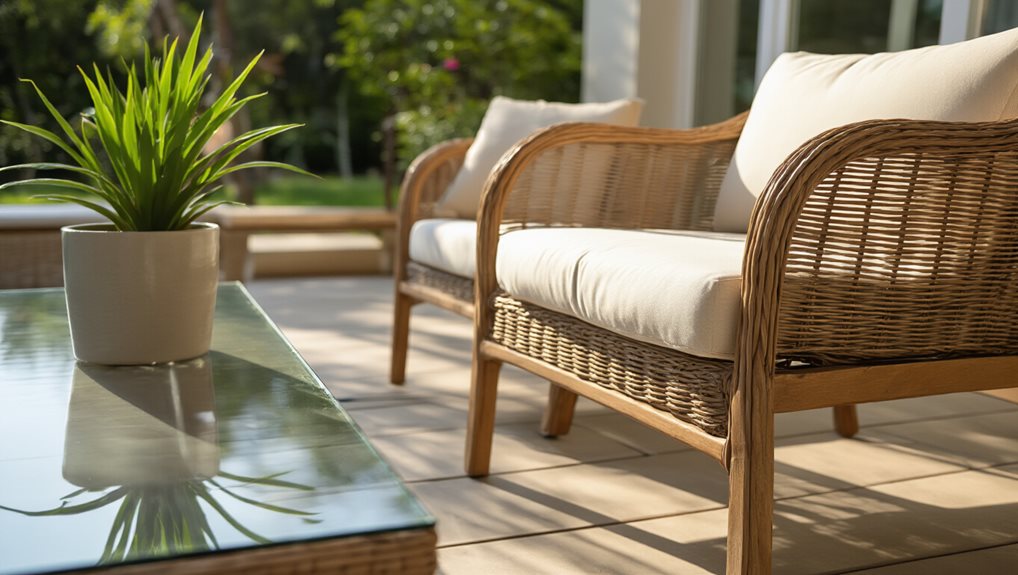
Start by giving your patio set a thorough cleaning, because removing the pheromone trails and food residues that attract ants is the first step toward lasting control. Mix glass cleaner with detergent, spray surfaces, wipe, and leave a light residue; vacuum crevices, inspect wood, metal, and synthetic frames for oils or gaps; seal cracks with diatomaceous earth, and eliminate nearby moisture, debris, and food sources to prevent future infestations. Use treated wood furniture when possible, as its natural oils deter many pests.
Spray Safe Natural Ant Deterrents on Patio Furniture
After you’ve cleaned and inspected the furniture, applying natural sprays will keep ants from re‑establishing their scent trails and deter new for. Mix equal parts lemon juice and water, then spray liberally to dissolve pheromones; similarly, a 1:1 vinegar‑water spray disrupts trails and leaves an unpleasant odor.
Add 10‑20 drops peppermint oil to two cups water for a refreshing repellent, or saturate cotton balls with lemon eucalyptus oil for continuous protection. Use these sprays daily around edges, legs, and entry points to maintain a welcoming, ant‑free patio.
Put Up Easy Heat Barriers to Push Ants Away
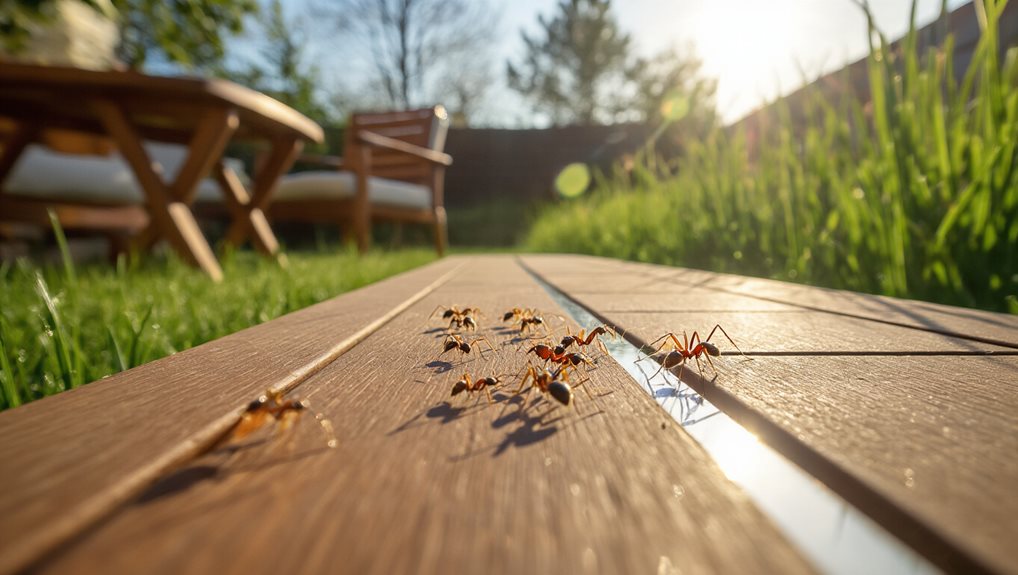
Why not create a simple heat barrier that makes your patio surface uncomfortable for ants while staying safe for people and pets? Apply a coarse spray of hot water or a low‑temperature heating pad along edges, focusing on inclined legs, foundations, and deck boards. Maintain the barrier by clearing debris, re‑spraying seasonally, and ensuring the heat stays gentle enough for pets yet deters ants effectively. Regularly check surrounding moisture and debris to prevent mold or slippery surfaces that can attract more pests ENERGY STAR certified improvements and to ensure the area remains safe and effective over time.
Use Aromatic Sprays & Diffusers for Patio Ant Control
Aromatic sprays and diffusers offer a practical, low‑toxicity way to keep ants off patio furniture by disrupting their scent trails and making treated zones unappealing.
Mix ten peppermint oil drops, a cup of water, and a teaspoon of dish soap, spray trails and entry points every few days, and pair with a diffuser using peppermint, eucalyptus, or tea‑tree oil for continuous, gentle protection that blends fresh aroma with effective ant deterrence. noise reduction
Modify the Environment Around Patio Furniture to Prevent Ants
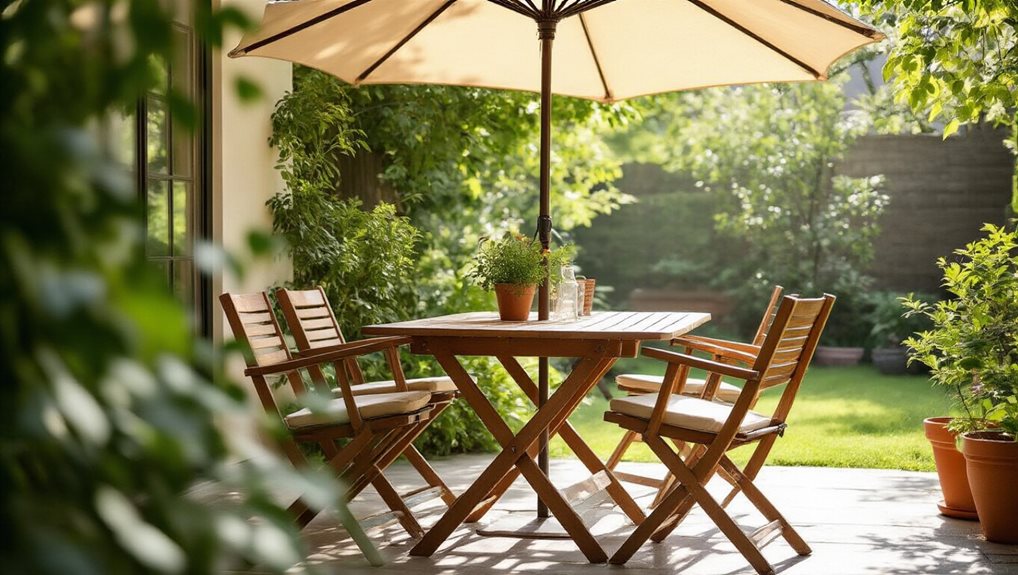
While aromatic sprays create a temporary scent barrier, a more lasting solution comes from reshaping the patio environment itself. Choose pest‑resistant furniture like cedar, teak, resin wicker, or metal to deny ants fibrous hiding spots; seal cracks in pavement and foundations to block nest entry; use cedar mulch around beds for natural repellent; keep lawn mowed and debris‑free to eliminate shelter; and store food waste and compost away from seating, adding diatomaceous earth or boiling water on trails for safe barriers.
Final Note
By keeping your patio furniture clean, applying safe natural deterrents, installing heat barriers, and using aromatic sprays, you’ll create an environment where ants can’t thrive. Regularly inspecting and modifying the surrounding area—removing food sources, sealing cracks, and maintaining dry conditions—further reduces infestations. Consistent, practical maintenance ensures your outdoor space stays comfortable and ant‑free, allowing you to enjoy your patio without ongoing pest concerns.

Nathan McPhail is a garden and home DIY expert who writes practical, easy-to-follow advice for homeowners and gardeners. Through Yardique, he shares hands-on tips covering gardening, lawn care, landscaping, home improvement, repairs, tools, and outdoor living. His focus is on helping readers solve everyday household and yard problems with straightforward guidance, useful techniques, and practical solutions.