Check the UV index each morning and use an umbrella, pergola, or shade sail to block high‑UV periods, rotate pieces weekly and flip cushions to balance exposure, and choose UV‑treated fabrics like Sunbrella or solution‑dyed acrylic for durability. Apply a thin, even coat of UV‑blocking oil or sealant to wood, allowing proper curing, and clean with mild soap regularly while inspecting for brittleness or fading. Store covers and cushions indoors during the off‑season, and follow a seasonal rotation schedule to keep wear even; the next steps will show you how to maintain these protections year‑round.
TLDR
- Use UV‑blocking shade structures (umbrellas, pergolas, shade sails) to limit direct sun exposure.
- Choose UV‑treated, solution‑dyed fabrics (e.g., Sunbrella) for cushions and upholstery.
- Apply and‑blocking finishes or oils to wood and regularly reapply per manufacturer’s schedule.
- Rotate, flip, and reposition furniture weekly to even out sun exposure and prevent localized fading.
- Schedule cleaning, inspections, and protective treatments based on daily UV index forecasts (especially when UV ≥ 3).
Understand How UV Damages Outdoor Furniture
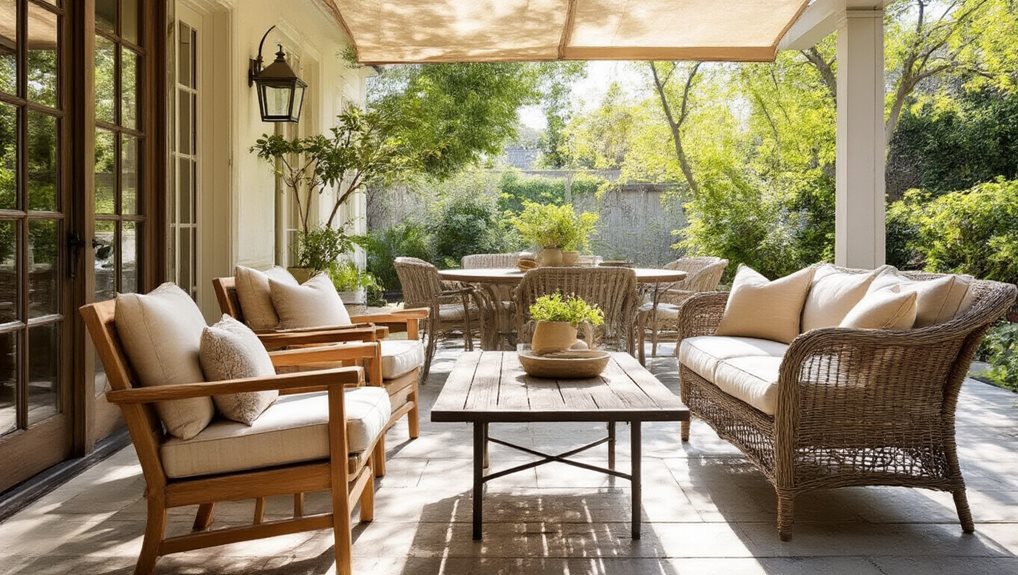
Why does sunlight ruin your patio set so quickly? UV rays break molecular bonds in wood, fabric, and plastics, causing fading, brittleness, and warping; light colors reflect more light, so they fade slower, while darker hues absorb heat and deteriorate faster.
Even high‑quality HDPE and polypropylene lose strength after weeks of exposure, and metal coatings peel as heat builds, compromising structural integrity.
Rotate pieces regularly to balance wear. UV‑treated materials enhance color stability and keep furniture looking fresh longer.
Install Umbrellas, Pergolas, and Shade Sails to Block UV Rays
When you add umbrellas, pergolas, or shade sails to your patio, you create immediate barriers that block the most damaging UV rays and keep your furniture from fading, cracking, or warping.
Choose marine‑grade aluminum umbrellas for portable, adjustable shade; install pergolas with built‑in overhangs to shield seating during peak sun; and stretch modern shade sails to cover uneven exposure, ensuring year‑round protection and a cohesive, inviting outdoor community.
Choose UV‑Resistant Fabrics for Cushions and Upholstery
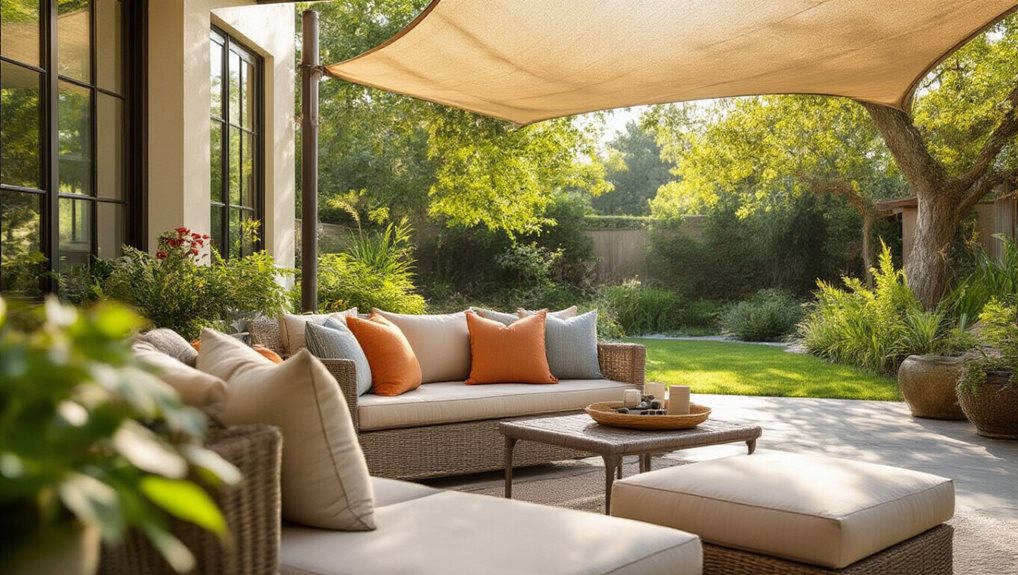
Adding shade structures already blocks the most harmful UV rays, but the next step is to select fabrics that won’t deteriorate under the sun that hits your cushions and upholstery. Choose solution‑dyed acrylic like Sunbrella for premium UV resistance, colorfastness, and a five‑year warranty; high‑quality polyester offers similar fade protection at lower cost; olefin polypropylene provides budget‑friendly water and stain resistance, though it feels less soft. These options keep your outdoor space cohesive and durable. Over time, ensuring you match the fabric choice to your overall maintenance plan can prevent long‑term wear and failures in outdoor furniture. UV resistance
Fit Custom Covers for UV Protection When Off‑Season
First, you’ll take precise measurements of each piece so the cover fits snugly, eliminating gaps where water or UV rays could slip through.
Next, choose a tailored fabric treated with UV inhibitors, which blocks harmful sunlight while also offering waterproof and wind‑resistant properties.
Finally, store the fitted covers in a dry, shaded area during the off‑season, ensuring they remain ready to protect your furniture from sun, rain, and temperature fluctuations year‑round.
Additionally, consider selecting covers with a durable, corrosion‑resistant construction for long‑lasting protection against outdoor elements and ensure the fit accounts for any collapsible or telescoping components to avoid strain on zips and seams adjustable length.
Measure Measureable Materials
Accurate measurements are the foundation for custom covers that shield outdoor furniture from UV damage during the off‑season, and you’ll need to record width, depth, and height for each piece, adding a modest 1–2 inches to width and depth to ensure the cover slips on easily without stretching.
Measure sofas from armrest to armrest, chairs between armrests, tables across the longest edge, and note irregular points, then record all dimensions, including extra inches for cushions, handles, and accessories, before ordering.
Tailored UV‑Blocking Fabric
After recording precise dimensions, you’ll choose a fabric that actually blocks UV rays while fitting snugly around each piece.
Opt for durable, eco‑friendly polyester with SEAL‑TEC or PVC coating, ensuring UV protection, water resistance, and breathability to prevent mold.
Customized elastic hems, adjustable straps, and reinforced stitching create a custom‑like fit, preserving color, preventing brittleness, and extending your furniture’s lifespan.
Seasonal Storage Solutions
A well‑planned off‑season storage routine starts with selecting the right cover, because a snug, breathable fabric shield not only blocks lingering UV rays but also allows air to circulate, preventing moisture buildup that can lead to mold or mildew.
Choose breathable fabric or waterproof vinyl, secure it tightly, raise pieces on pallets, and store them in a climate‑controlled garage or shed, using dehumidifiers and silica gel to keep the environment dry and your furniture ready for spring.
Apply UV‑Blocking Oils, Stains, and Sealants Correctly
First, pick an oil that matches your wood’s species and exposure, because a teak‑specific formula or a UV‑blocking blend will perform far better than a generic clear coat.
Then, spread a thin, even layer along the grain with a flat brush or micro‑fibre roller, making sure the product doesn’t pool in corners or curves.
Finally, let each coat cure for the recommended 12 hours before applying the next one, so the finish hardens properly and delivers the full protective benefits.
Choose Correct Oil Type
How do you select the proper oil to protect outdoor furniture from unyielding sun exposure? Choose a natural oil‑based formula for dense hardwoods, because it penetrates without cracking, while clear UV‑protection oils like Osmo give a satin, microporous finish that breathes.
For teak, mahogany, or rosewood, use dedicated teak oil to block moisture and UV.
Pigmented oils work as first coats before a clear top, and food‑grade blends suit hardwoods used for dining.
Apply Even Thin Coats
Choosing the right oil is only half the battle; applying it correctly determines whether the wood stays protected or quickly deteriorates under unwavering UV exposure.
Use a brush to work the product into the grain with circular motions, ensuring uniform coverage on every surface, especially vertical panels.
Apply a thin, even coat, wipe excess after thirty minutes, and repeat only if needed, avoiding sanding between layers.
Allow Proper Curing Time
Because the oil, stain, or sealant must penetrate the wood before it polymerizes, you need to allow the proper curing time between coats; a typical first coat dries in about twelve hours under good ventilation, after which you can apply the second coat—again waiting roughly twelve hours for the previous layer to set.
This patience ensures deep UV‑blocking penetration, prevents chalky residues, and creates a durable, breathable finish that unites your outdoor space.
Rotate and Reposition Furniture for Balanced Sun Exposure
A simple way to protect your outdoor furniture from uneven sun damage is to rotate and reposition it regularly, ensuring each surface receives a balanced amount of UV exposure.
Flip cushions daily or after intense use, and rotate them bi‑weekly during summer, while rearranging whole sets monthly or when the sun’s path shifts.
This even distribution prevents one‑sided fading, preserves color vibrancy, and extends material lifespan.
Use Natural Shade (Trees, Vines, Patio Screens) for UV Protection
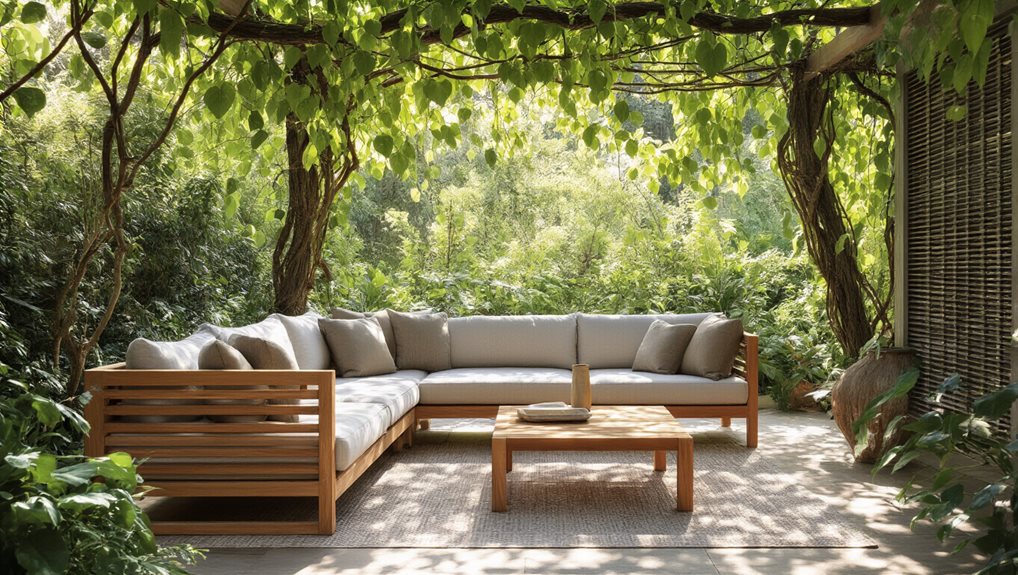
Ever wondered how a single tree can keep your patio set looking fresh all summer? Position chairs and tables beneath mature trees or pergolas draped with wisteria, letting natural canopies block 80‑90% of UV rays while cooling the area by ten to twenty degrees.
Add retractable patio screens or vertical panels for adjustable shade, choosing breathable, mildew‑resistant fabrics that preserve color and prevent cracking.
This layered approach creates a shared, protected oasis.
Store Cushions Indoors to Preserve UV‑Resistant Materials
When you store your outdoor cushions indoors, you protect the UV‑resistant fibers and foam from the tireless sun that would otherwise cause fading, brittleness, and loss of elasticity. To further safeguard your furniture, consider scheduling aeration of nearby soil to improve moisture distribution and reduce runoff around the deck area, which can help prevent moisture buildup that can affect foundation integrity. soil aeration
Clean and Inspect Your Pieces Regularly: Use the UV Index as a Guide
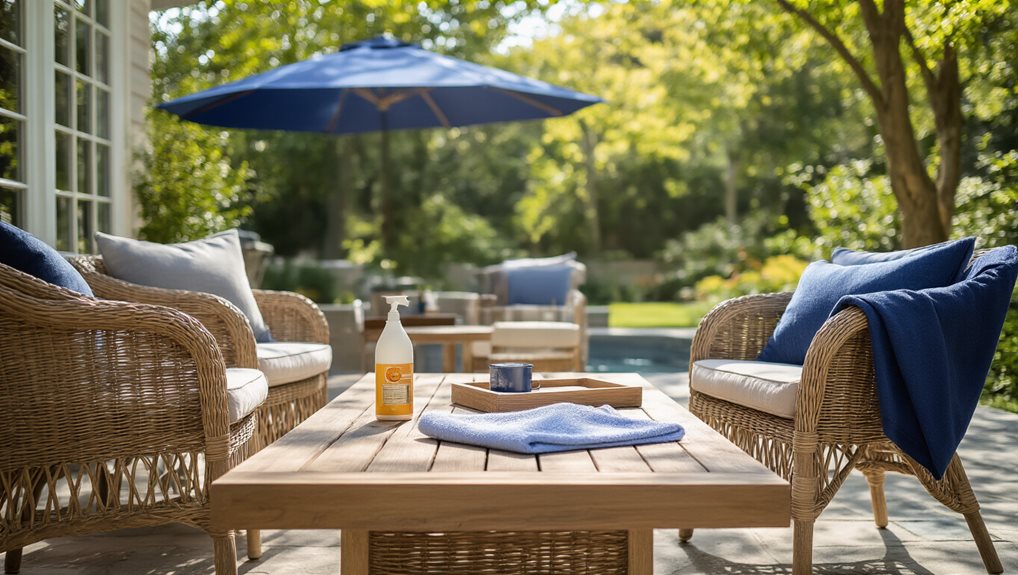
You should check the UV Index each morning and let the forecast dictate how often you clean and inspect your furniture, because higher values mean faster deterioration. When the index reaches six or above, schedule a thorough cleaning and a quick spot‑check for fading, cracking, or discoloration, then adjust the routine if you notice any damage. By aligning your maintenance calendar with real‑time UV data, you’ll catch problems early and keep the pieces looking their best. UV exposure forecasts can help you plan seasonal care and prioritize protective steps for extended durability UV Index guidance.
Check UV Index Daily
How often should you glance at the UV index before stepping onto your patio? Check it each morning, preferably before sunrise, because the forecast guides your shade placement, cushion flipping, and rotation decisions; a high reading signals you should limit exposure between 10 AM and 4 PM, while a low index lets you relax. Consistent daily monitoring builds a protective routine that keeps your outdoor family looking united and resilient.
Schedule Cleaning Frequency
Keeping an eye on the UV index each morning gives you a clear cue for when to prioritize cleaning and inspection of your patio pieces, because higher UV levels accelerate grime buildup and material fatigue. Schedule weekly wipes with mild soap, deep clean twice yearly, and adjust frequency for wood, metal, or wicker; inspect 2‑3 times annually, and use the index to time each task.
Spot Check for Damage
When the UV index climbs above three, it’s a clear signal to start a spot‑check routine for your outdoor furniture, because early detection of fading, yellowing, or surface cracks can prevent more serious degradation later.
Scan weekly in peak season, rotate pieces, feel for brittleness, and note any discoloration; use a UV‑index app to schedule checks, clean gently, and apply stabilizers promptly to keep your patio family looking cohesive.
Repair Cracks and Fading Before They Spread
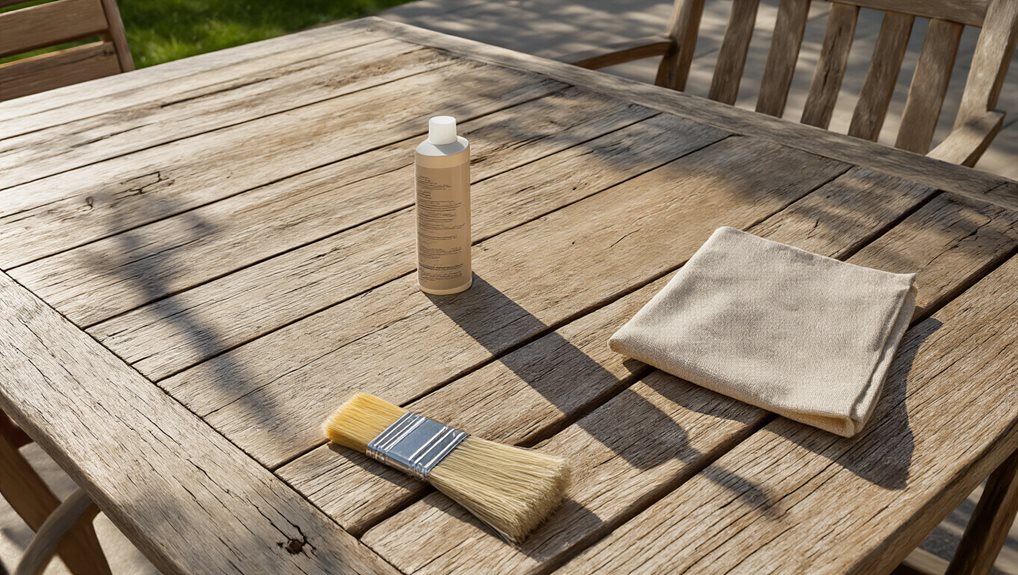
Why wait until cracks widen and fading spreads across your outdoor furniture?
First, clean the wood with mild soap, warm water, and a soft brush, working with the grain to preserve coatings.
Then sand the area, inspect joints, and apply wood filler or pigmented sealer, letting it cure.
For faded surfaces, sand away the old layer and use a UV‑blocking oil or teak restorer to restore color and protect against future sun damage.
Create a Seasonal Rotation Schedule for Even UV Wear
If you schedule rotations throughout the year, you’ll keep UV exposure balanced and extend your furniture’s lifespan. Add periodic checks to ensure the seasonal diagram remains accurate and reflects any changes in sun angles or shade structures seasonal diagram. Rotate pieces every few weeks, flip cushions weekly, and shift wood or wicker to shaded spots quarterly, aligning moves with spring‑summer shade structures and fall‑winter low‑angle sun. Mark positions on a seasonal diagram, log changes in a calendar, and adjust after inspecting for patchy fading, ensuring even wear and lasting durability.
Final Note
By understanding UV damage, using shade structures, selecting UV‑resistant fabrics, applying protective finishes, and rotating seasonal covers, you’ll keep outdoor furniture looking great longer. Regular cleaning, inspections, and timely repairs prevent cracks and fading from spreading, while storing cushions indoors preserves their protective properties. Follow a seasonal rotation schedule and consult the UV index to gauge exposure, ensuring your pieces remain durable and aesthetically pleasing throughout the year.

Nathan McPhail is a garden and home DIY expert who writes practical, easy-to-follow advice for homeowners and gardeners. Through Yardique, he shares hands-on tips covering gardening, lawn care, landscaping, home improvement, repairs, tools, and outdoor living. His focus is on helping readers solve everyday household and yard problems with straightforward guidance, useful techniques, and practical solutions.