You should choose mulch or wood chips based on your garden’s needs. Shredded mulch breaks down faster, enhances soil fertility, and holds moisture well—ideal for flower beds. Wood chips last longer, suppress weeds effectively at 4–6 inches, and suit pathways or slopes. Both improve soil over time without stealing nitrogen. For long-term durability and erosion control, go with wood chips; for quicker nutrient release and tight coverage, pick shredded mulch. The best choice depends on your goals—and what comes next could shift your approach.
TLDR
- Shredded mulch improves soil fertility faster, while wood chips last longer and suit low-maintenance areas.
- Use shredded hardwood mulch for flower beds to retain moisture and suppress weeds effectively.
- Apply wood chips on pathways or slopes for durable coverage and strong erosion control.
- Both mulch types conserve water, but shredded mulch reduces evaporation more due to finer texture.
- Wood chips don’t rob soil nitrogen and gradually enhance soil structure as they decompose.
Mulch vs Wood Chips: Key Differences Explained?
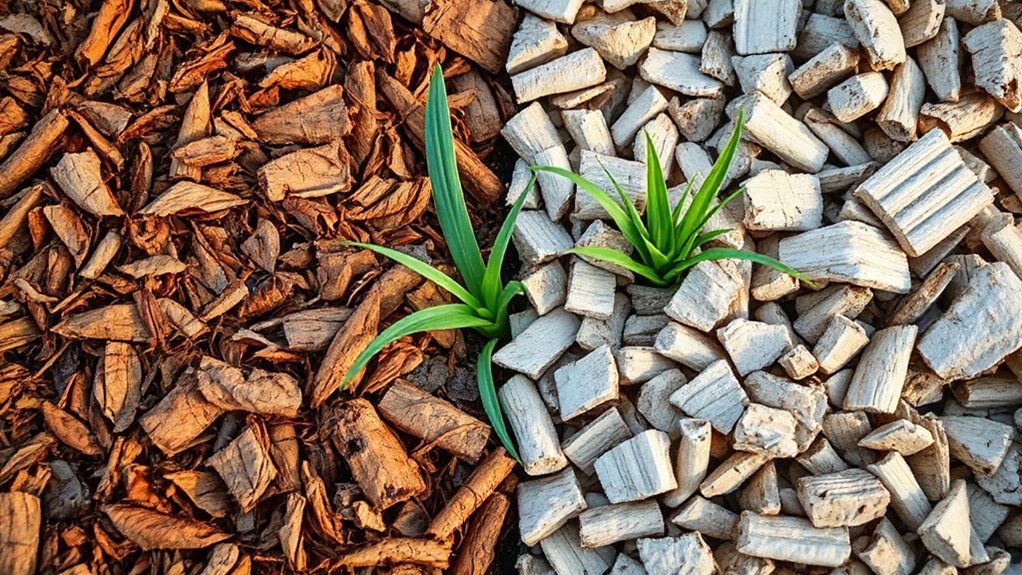
While both mulch and wood chips serve as useful ground covers in landscaping, they differ markedly in composition, texture, and function—making each better suited for specific applications.
You’ll find mulch finer and smoother, ideal for flower beds needing quick nutrient release, while wood chips offer a chunkier, durable cover perfect for paths and erosion control, breaking down slowly to feed soil over time. Organic mulch also enhances soil structure as it decomposes, contributing nutrients more rapidly than wood chips due to its faster decomposition rate. Coconut coir retains moisture much longer than many wood-based mulches, making it a strong choice for containers and drought-prone beds.
How Long Do They Last: Wood Chips vs Mulch?
You’ll find wood chips typically last 2 to 4 years, outperforming most bark mulches that break down in 1 to 3 years, depending on type and conditions.
While shredded bark may need replacing annually, hardwood or hemlock varieties can endure longer with proper care, though they still decompose faster than wood chips in many cases.
To get the most out of either option, you should check the layer yearly, rake it to prevent compaction, and top it off as needed to maintain coverage and effectiveness.
Use fresh mulch when possible to reduce fungal issues and improve longevity, especially when addressing mushroom growth in your beds.
Longevity Of Wood Chips
Wood chips typically last between two and four years, depending on environmental conditions and how they’re maintained, making them a moderately durable mulch option for most gardens.
Climate, chip size, wood type, and sun exposure all influence breakdown, with hotter, drier areas speeding decomposition.
You’ll know it’s time to refresh when the layer thins, fades, or stops suppressing weeds—simple upkeep keeps your garden looking sharp and protected year after year.
Durability Of Regular Mulch
Organic mulches vary widely in longevity, but most hold up well for one to two years before needing a refresh, depending on type and conditions.
You’ll find shredded bark lasts 12–24 months, while hardwood mulch can endure up to three years with proper care.
Cedar and cypress maintain color for two years and protect soil even longer, offering lasting value.
Which Holds Water Better: Wood Chips or Mulch?
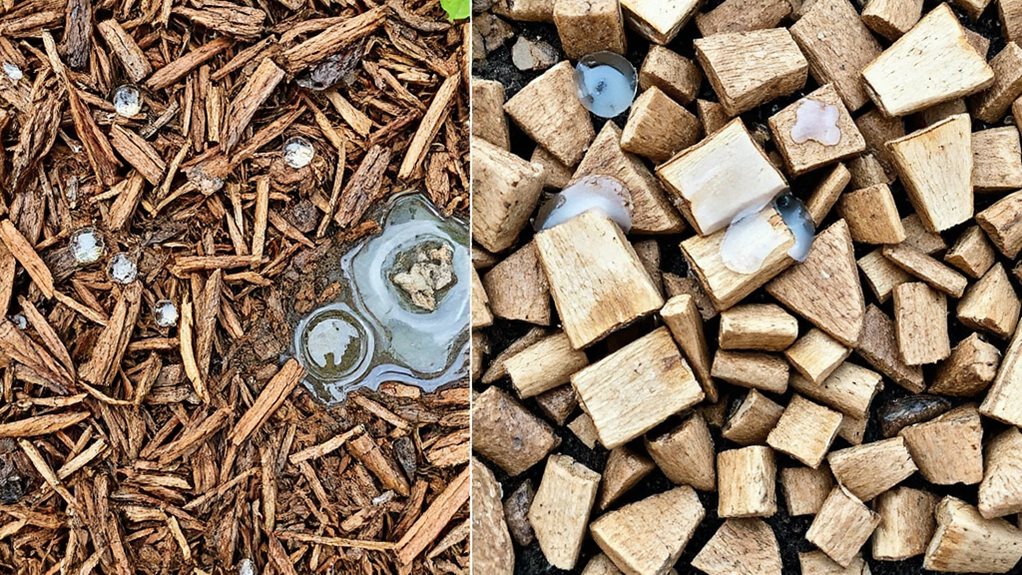
You’ll find shredded hardwood mulch holds water more effectively than wood chips, thanks to its fine, uniform texture that forms a tight barrier over soil.
This smooth layer cuts down on evaporation by blocking sun and wind, keeping moisture locked in where plants need it most.
While wood chips still help retain soil moisture and handle heavy rain well, they don’t seal the ground as completely, leading to slightly higher water loss over time.
Deep watering promotes better root development and can be combined with mulch application to maximize moisture retention.
Water Absorption Capacity
While both mulch and wood chips help conserve soil moisture, shredded hardwood mulch generally outperforms wood chips in water absorption and retention due to its finer, more uniform texture.
It forms matted clumps that reduce evaporation, stay in place during rain, and provide consistent coverage. Though wood chips absorb water well and prevent runoff, their coarser structure allows more moisture loss, especially in dry, exposed areas.
Moisture Evaporation Control
Generally, shredded hardwood mulch holds water more effectively than wood chips, thanks to its fine, interlocking texture that forms a continuous barrier over the soil. It reduces evaporation by up to 33%, stays in place on slopes, and limits sun exposure.
While wood chips last longer, mulch’s superior coverage means you’ll conserve moisture, cut watering needs, and support healthier plants with less effort.
Soil Insulation Performance
Shredded hardwood mulch gives you stronger moisture retention than wood chips, thanks to its fine, interlocking strands that form a dense, continuous layer over the soil.
It reduces evaporation by up to 58.8%, insulates roots, and maintains consistent moisture.
While coarse wood chips allow deeper water penetration, their porous structure releases moisture faster, making shredded hardwood better for long-term soil insulation and water conservation in most garden settings.
Weed Control: Wood Chips vs Mulch?
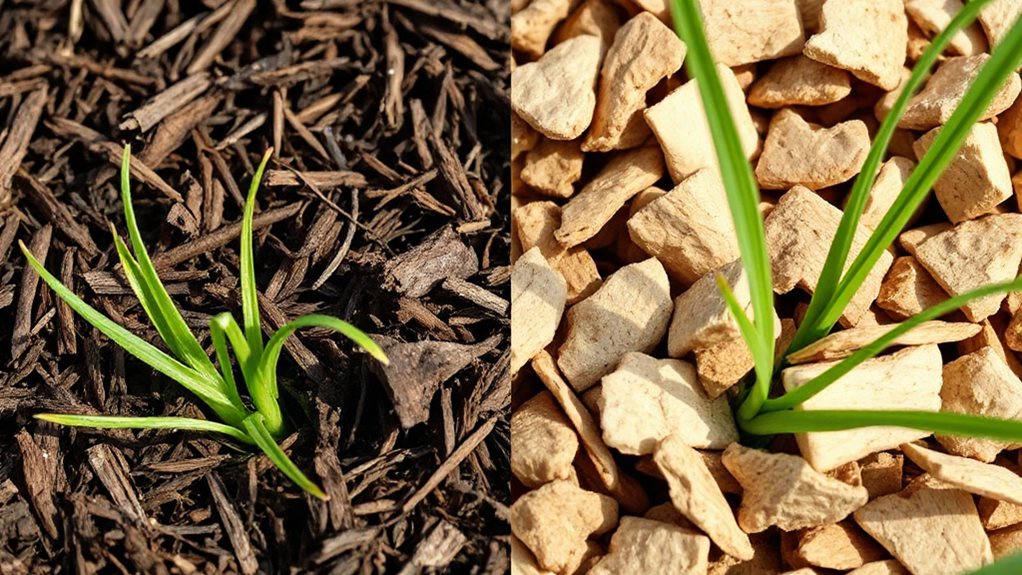
When it comes to keeping weeds at bay, both wood chips and mulch step up as effective options, but they work in slightly different ways and under varying conditions.
You’ll find wood chips suppress weeds best at 4–6 inches, especially in pathways or tough grass areas, while mulch at 2–4 inches blocks light effectively in beds. For full control, pair either with a pre-emergent. Leaf vacuums can also help remove debris from mulch and wood chip areas to prevent seed buildup and reduce weed growth, especially when used on the lowest setting to avoid disturbing the ground and plants leaf vacuums.
Soil Nutrition: How They Compare?
You’ll find wood chips and traditional mulch both enhance the soil, but they do so at different speeds and in distinct ways.
Wood chips break down slowly, steadily releasing nitrogen, phosphorus, and potassium while improving soil structure. Regular mulch, like compost, feeds plants faster but needs frequent replacing. Contrary to myths, wood chips don’t rob nitrogen from roots and actually enhance long-term fertility. Mixing mulch with organic material can further improve drainage and soil strength.
When Should You Choose Wood Chips?
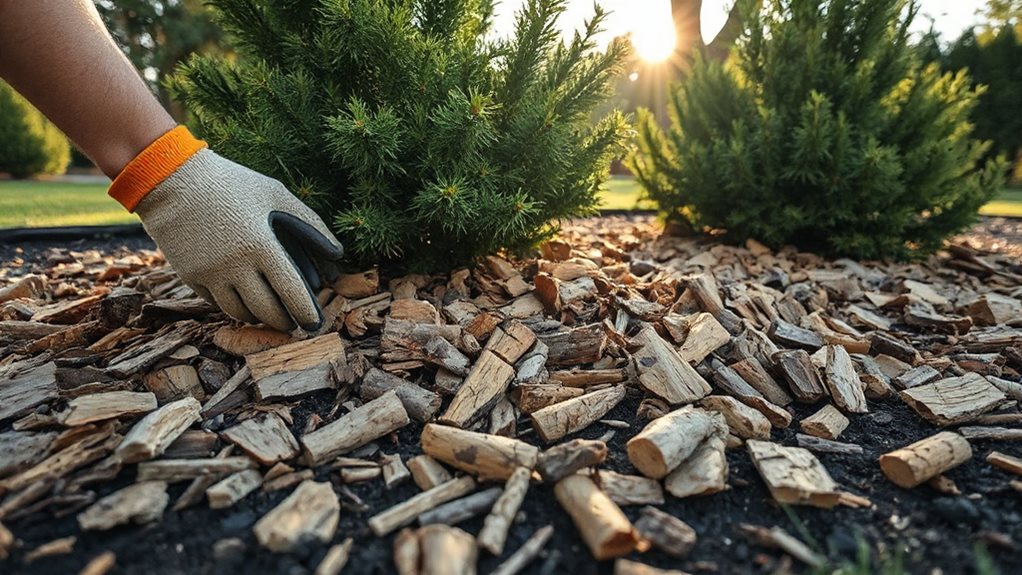
Wood chips stand out as a smart choice when your garden faces specific challenges that demand long-lasting, low-maintenance solutions.
You should choose wood chips if you’re battling erosion on slopes, dealing with dry spells, or fighting weeds. They conserve moisture, stabilize soil, suppress weed growth, improve soil health over time, and buffer temperature swings—making them ideal for orchards, pathways, and gardens needing resilient, natural protection year after year.
When Is Regular Mulch the Better Choice?
While wood chips excel in durability and erosion control, regular mulch often proves the better choice when your primary goal is enhancing the soil and supporting long-term plant health.
You’ll enhance fertility as organic mulch breaks down, adding nutrients, improving structure, and supporting beneficial microbes. It conserves moisture, suppresses weeds, moderates temperature, and reduces disease—all while building healthier, more resilient garden ecosystems over time.
Final Note
You’ll find both mulch and wood chips useful, but your choice depends on your garden’s needs. Wood chips last longer and work well in pathways or around trees, while traditional mulch retains moisture better and improves soil faster. For weed control and nutrition, mulch often wins; for durability, choose wood chips. Match your pick to your goals, and you’ll enhance your garden’s health efficiently and effectively, ensuring strong growth and minimal maintenance over time.

Nathan McPhail is a garden and home DIY expert who writes practical, easy-to-follow advice for homeowners and gardeners. Through Yardique, he shares hands-on tips covering gardening, lawn care, landscaping, home improvement, repairs, tools, and outdoor living. His focus is on helping readers solve everyday household and yard problems with straightforward guidance, useful techniques, and practical solutions.