Seal the area, then spray a bleach‑based or vinegar‑water solution onto the mildew‑affected spots, making sure the coating is even. Wear nitrile gloves and an N95 mask, use a soft‑bristle brush or sponge to work the solution into the grain, and scrub gently in circular motions; a toothbrush works for tight corners. Rinse thoroughly with a low‑pressure hose, blot excess water with microfiber cloths, and let the furniture dry fully in the sun to kill any remaining spores; continuing will reveal material‑specific tricks and long‑term maintenance tips.
TLDR
- Wear nitrile gloves and an N95 mask, then seal vents and work in a well‑ventilated area.
- Apply a bleach‑based or vinegar‑water solution evenly with a spray bottle or sponge, covering all surfaces.
- Scrub gently using soft‑bristle brushes or toothbrushes for tight corners, then rinse thoroughly with a low‑pressure hose.
- Dry the furniture completely, blotting with microfiber cloths and exposing it to sunlight.
- Perform weekly visual checks and spot‑clean with mild soap to prevent future mildew growth.
Outdoor Furniture Mildew Removal – Why Prompt Action Matters
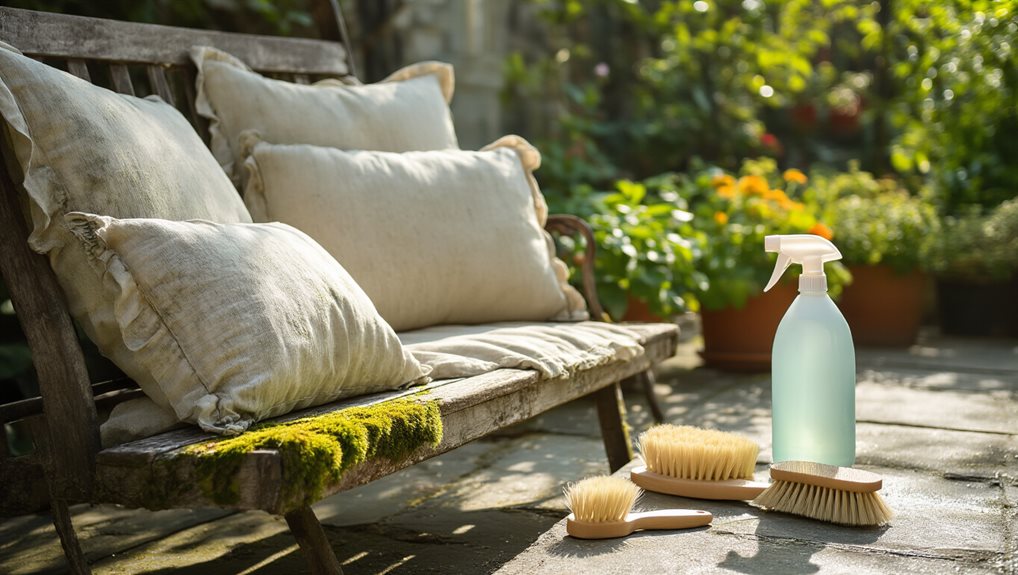
Why should you act quickly when you spot mildew on your outdoor furniture? Prompt action prevents spores from infiltrating fabric fibers, which can cause discoloration, weaken material, and trigger allergens that affect respiratory health. Apply a bleach‑based solution to the affected areas before the mildew sets in.
Essential Tools & Safety Gear for Mildew Cleaning
You’ll want sturdy gloves and an N95‑type mask to keep chemicals and spores away from your skin and lungs, while a well‑ventilated workspace prevents buildup of fumes.
Choose sturdy brushes and sponges—soft‑bristle for delicate surfaces, nylon for resin, and toothbrushes for tight corners—to scrub without damaging the furniture.
Finally, keep a garden hose or bucket handy for rinsing, and use microfiber cloths to dry the pieces quickly before the sun finishes the job. Open-base design
Protective Gloves & Masks
Ever wondered how a simple pair of gloves and a mask can keep you safe while tackling mildew on patio tables and chairs?
Choose nitrile or latex gloves for chemical resistance, textured grips, and snug dexterity, and pair them with a chemical‑rated or N95 mask that seals comfortably over your nose and mouth. This combo blocks spores, chlorine fumes, and irritants, letting you clean confidently and stay protected.
Sturdy Brushes & Sponges
After slipping on protective gloves and a mask, the next step is to arm yourself with the right brushes and sponges, because the right tool determines how efficiently you’ll remove mildew without damaging the furniture. Use a dry scrub brush with arenga fibers for surface mold on vinyl, a soft‑bristle brush for wood grain and canvas, and a non‑abrasive sponge with vinegar‑water to gently lift spores, rinsing thoroughly to preserve fabric integrity.
Ventilated Work Area
How can you keep mildew spores from drifting through your home while you clean outdoor furniture?
Seal vents with plastic and tape, create negative pressure with a fan, and open opposite windows for at least 30 minutes daily.
Wear an N95 or better respirator, safety goggles, and non‑latex gloves.
Use damp cloths, HEPA‑filtered exhaust fans, and keep the area dry to prevent spore spread.
Choose the Right Cleaning Solution for Your Furniture Type
What cleaning solution you pick depends on the material of your outdoor furniture, because each fabric, metal, or resin reacts differently to acids, bleaches, and enzymes. For fabric cushions, use a vinegar‑to‑water mix or gentle soap;
metal and plastic thrive on 1 cup vinegar per quart water;
resin wicker needs mild soap. Hybrid blends balance safety and power, while commercial enzyme cleaners protect colors and threads.
How to Apply, Scrub, and Rinse the Solution Effectively
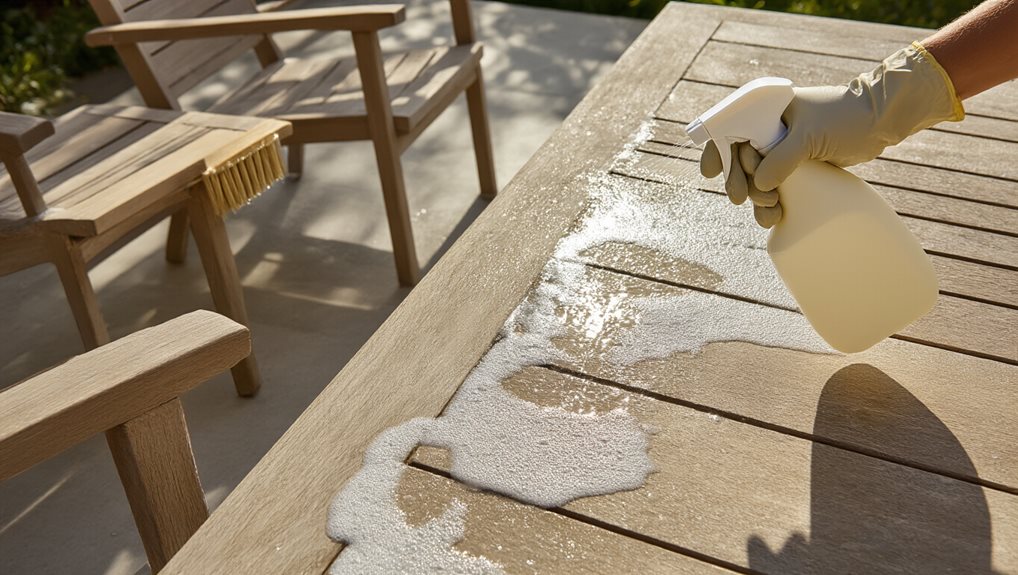
You’ll start by saturating the surface with an even coating, using a spray bottle or sponge to cover every nook, then work the solution into the grain with a soft cloth or brush.
Next, apply gentle circular motions with a soft‑bristle brush, using a toothbrush for tight weaves, keeping pressure light to avoid damage while you scrub each section until the mildew lifts.
Finally, rinse thoroughly with a low‑pressure hose, ensuring all residues are washed away before allowing the furniture to dry completely in the sun.
Apply Even Coating
When you’re ready to coat outdoor furniture evenly, start by pre‑wetting the surface with water, then apply the bleach or vinegar solution using a sponge, spray bottle, or soft brush, making sure to work the liquid into every groove and seam.
Work in sections, keep the coating moist for five minutes, then rinse thoroughly with a hose, wiping excess with a damp cloth before air‑drying.
Gentle Circular Scrubbing
After the coating dries, move on to the scrubbing stage by spreading the solution with a sponge or soft‑bristled brush and then applying gentle circular motions to agitate the mildew.
Use a soft‑bristled brush or damp sponge, press lightly, and rotate your thumbs in small circles for at least fifteen seconds per spot.
Keep pressure firm enough to lift spores but gentle enough to protect wood, and inspect each area before moving on.
Thorough Rinse and Dry
A thorough rinse and dry are essential to prevent lingering mildew spores and water damage after scrubbing. You’ll start with a low‑pressure hose, sweeping from top to bottom, keeping the nozzle 12‑18 inches away, and using overlapping strokes to push suds into the ground.
For delicate wicker, switch to a gentle pressure washer below 1500 PSI, maintaining a 2‑3‑foot distance and a 45‑degree angle. After rinsing, blot with microfiber towels, tilt pieces to drain, and use a leaf blower for deep weave moisture removal.
Finally, let the furniture air‑dry 24‑48 hours, checking for damp spots, and ensure sunlight or fan‑assisted drying eliminates any remaining spores.
Drying & Sun‑Curing: Killing Remaining Spores
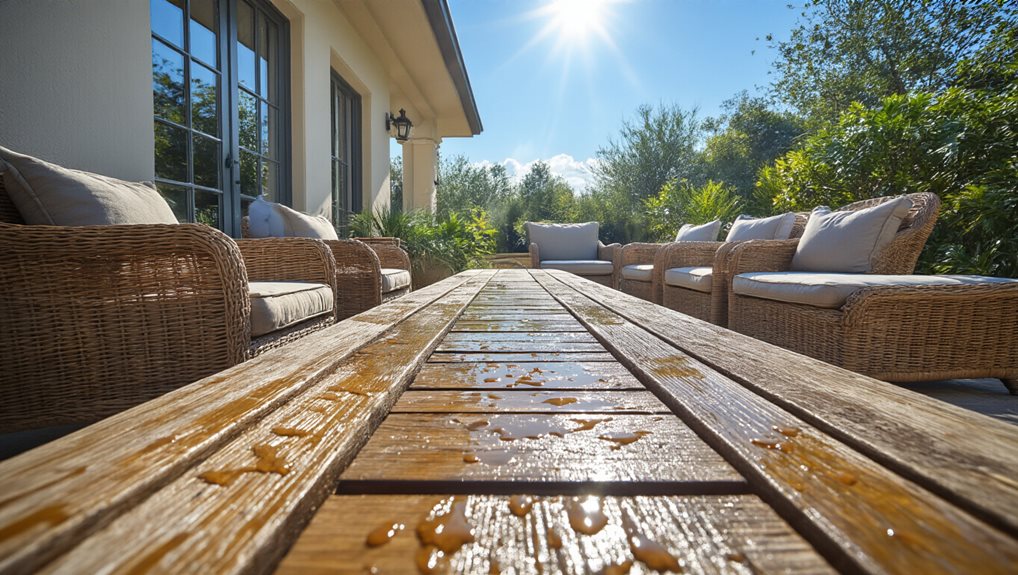
Ever considered how a simple sun‑drying step can finish the job after you’ve scrubbed away mildew? Position cushions upright, flip them halfway, and let direct UV light work for several hours until completely dry; the UV rays annihilate lingering spores while thorough drying prevents moisture that fuels regrowth, ensuring your outdoor pieces stay fresh and protected for seasons to come.
Material‑Specific Tips: Wood, Wicker, Plastic, and Fabric
Where do you start when tackling mildew on different outdoor materials?
For wood, brush off loose spores, scrub a vinegar‑soap mix into the grain, rinse gently and sand stubborn spots before resealing.
Wicker needs a soft‑bristle brush, vinegar‑water soak, circular scrubbing, thorough rinsing and sun‑drying.
Plastic benefits from wiping, a vinegar‑water scrub, hose rinse and sunlight.
Fabric requires brushing, a Borax‑soap soak, vigorous brushing, hose rinse and sunny drying.
In addition, ensure you clean and inspect surrounding outdoor doors and frames to prevent future mildew buildup and maintain structural integrity outward-opening doors.
When to Use Bleach, Vinegar, or Commercial Mildew Removers Safely
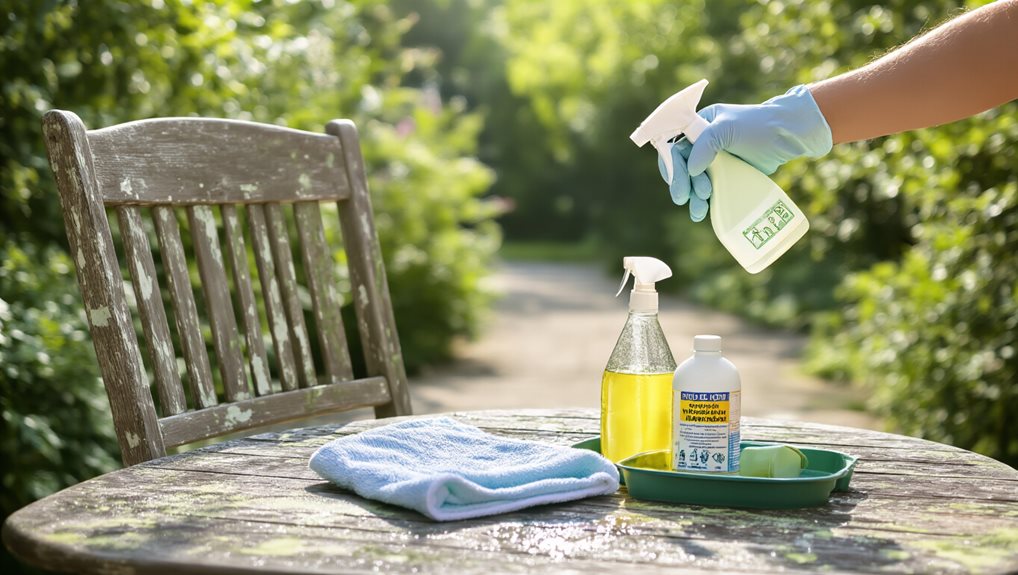
After brushing and rinsing each material, you’ll need to decide whether bleach, vinegar, or a commercial mildew remover is the safest and most effective choice.
Use bleach on non‑porous surfaces like sealed plastic or metal for quick, visible kill‑off, but ventilate and wear gloves.
Choose vinegar for wood, wicker, or fabric to penetrate pores without toxic fumes.
Opt for a commercial remover when deep, persistent growth exceeds home solutions.
For exterior furniture, consider applying a sealant after treatment to help prevent future mildew buildup moisture management and follow the product directions for safe use on your specific material.
Long‑Term Maintenance Routine to Keep Outdoor Furniture Mildew‑Free
How can you keep outdoor furniture mildew‑free all year round?
Perform weekly visual checks, especially in damp corners, and spot‑clean any stains immediately; wipe surfaces with mild soapy water, brush lightly during humid periods, and dry cushions on their side using towels and sunlight.
Use breathable, snug covers, raise pieces on coasters, apply annual sealants, and wash removable cushions at season’s start and end.
Final Note
By tackling mildew promptly, you prevent permanent staining and structural damage, ensuring your outdoor furniture stays attractive and safe. Use the appropriate tools, wear protective gear, and select a cleaning solution suited to the material—whether wood, wicker, plastic, or fabric. Apply, scrub, and rinse thoroughly, then dry and sun‑cure to eliminate residual spores. Incorporate regular maintenance, such as periodic cleaning and protective covers, to keep mildew at bay and extend the life of your pieces.

Nathan McPhail is a garden and home DIY expert who writes practical, easy-to-follow advice for homeowners and gardeners. Through Yardique, he shares hands-on tips covering gardening, lawn care, landscaping, home improvement, repairs, tools, and outdoor living. His focus is on helping readers solve everyday household and yard problems with straightforward guidance, useful techniques, and practical solutions.