Eliminate any standing water by emptying birdbaths, cleaning gutters, and fixing irrigation leaks, because females lay eggs in even a bottle‑cap of water and larvae develop rapidly in stagnant pools. Cover fountains and pools when not in use, trim grass and shrubs to 2–3.5 inches, and install fine‑mesh (0.6 mm) screens or retractable canopies to block entry. Use oscillating or high‑velocity fans to disrupt flight, and position CO₂ traps downwind for added attraction control. Apply EPA‑registered sprays or spatial repellents per label, and keep a weekly checklist to catch hidden breeding sites; the next section shows how to fine‑tune each step.
TLDR
- Eliminate all standing water: regularly empty birdbaths, clean gutters, fix irrigation leaks, and drain low spots after rain.
- Maintain vegetation: keep grass 2‑3.5 inches, prune dense shrubs, and remove leaf piles to reduce shady, moist microclimates.
- Install physical barriers: use fine‑mesh (≤0.6 mm) screens or retractable canopies, sealing all gaps around the patio.
- Create airflow: position oscillating or high‑velocity fans to disrupt mosquito flight and disperse CO₂ and heat.
- Apply EPA‑approved repellents: use spatial sprays or metofluthrin devices, and treat skin/clothing with DEET, picaridin, or permethrin.
Why Standing Water Attracts Mosquitoes on Your Patio

Why does standing water on your patio lure mosquitoes? You’ll notice that female mosquitoes lay eggs directly on or near any pool, even a bottle‑cap amount, because the surface offers a safe hatching zone.
Their eggs survive drying for months, then hatch when rain or irrigation refills the water.
Larvae thrive in stagnant, still pools, feeding and molting rapidly, which turns a tiny puddle into a breeding hotspot.
A single female can lay up to 100 eggs in a small amount of water.
Eliminate Standing Water for a Mosquito‑Free Patio
You should empty bird bowls every day, clear gutters regularly to stop puddles from forming, and fix any irrigation leaks that leave water pooling on your patio. By removing these sources, you eliminate the breeding grounds mosquitoes need to lay eggs and develop into adults. Consistently maintaining these areas keeps your outdoor space mosquito‑free and more enjoyable. Regular inspection for standing water and moisture buildup helps prevent mosquito habitats from forming in hidden spots around your patio, supporting a dry environment standing water.
Empty Bird Bowls
Ever notice how a tiny bowl of water can become a mosquito breeding ground right on your patio?
You should empty bird bowls after every rain, flip them upside‑down or cover them, and check daily for pooled water, algae, or debris that attracts Aedes eggs.
Weekly removal cuts adult populations by up to 70 %, keeping your patio comfortable and your neighbors feeling secure.
Clear Gutters Regularly
After emptying bird bowls, the next step in cutting mosquito habitats on your patio is to address the gutters that line your home’s perimeter. Clear them regularly, removing leaves, debris, and organic matter that create standing water; inspect downspouts for blockages, and trim overhanging foliage.
Consistent weekly checks, seasonal cleanings, and proper gutter‑guard maintenance prevent mosquito larvae from thriving, protecting your shared outdoor space.
Fix Irrigation Leaks
If you notice pooling water around sprinkler heads, low pressure, or soggy patches in the lawn, those are clear signs that your irrigation system is leaking and creating standing water—perfect breeding grounds for mosquitoes.
Check the meter for movement with valves off, isolate zones, replace faulty valves, tighten heads, and use flow‑monitoring tools or professionals to repair underground breaks, preventing standing water and keeping your patio mosquito‑free.
Cover Patio Water Features (Bird Baths, Fountains) When Not in Use
When you’re not using a bird bath or fountain, cover it with a tight‑fitting lid or mesh to keep mosquitoes from accessing the water.
You should also drain the feature and give it a quick clean at least once a week, removing any debris or algae that could become a breeding site.
Regular maintenance like this eliminates stagnant water, which is the key to preventing mosquito larvae from developing.
Cover When Not In Use
Where’s the most reliable way to stop mosquitoes from turning your patio’s bird bath or fountain into a breeding ground?
Cover it immediately after use with fine‑mesh netting or a solid lid, secure it with clips or weights, and keep it covered nightly to block egg‑laying during peak hours.
Inspect for tears, replace damaged sections, and store covers dry when not needed.
This simple habit cuts breeding by over 90 %.
Drain and Clean Regularly
Keeping your patio’s bird baths and fountains free of mosquitoes starts with regular draining and thorough cleaning, because stagnant water is the prime breeding ground for larvae. Empty birdbaths every five days, drain fountains weekly, and scrub each feature while removing leaves, algae, and debris. After rain, eliminate standing water in low spots, and keep surrounding grass short to prevent hidden pools.
Trim Grass and Vegetation to Keep Your Patio Mosquito‑Free

Ever wonder why mosquitoes seem to gather around your patio after a warm afternoon?
Trim your grass to 2‑3.5 inches, clear clippings, and prune dense shrubs near the patio to eliminate shady resting spots; mow regularly so birds and dragonflies can prey on exposed insects.
Remove leaf piles, thatch, and debris, and water early to prevent moist microclimates, ensuring a less inviting environment for mosquitoes.
Keeping soil and vegetation well managed can also help reduce standing water risks and improve overall yard drainage maintenance access and supports safer, easier upkeep.
Install Screens and Nets That Make the Patio Mosquito‑Free
Pick a durable, UV‑resistant mesh that won’t tear under sun or wind, then seal every edge and gap with weather‑proof tape or grommets to block even the smallest openings.
When you install the net, use sturdy hooks or tracks that keep it taut, and consider a retractable canopy that can be pulled back for airflow while still covering the entire patio. This combination of strong material, proper sealing, and flexible covering gives you a reliable, mosquito‑free outdoor space.
Ensure you choose a primer and paint that are compatible with wood composites to help protect any wooden framing or components that support the screen system weather‑proofing and maintain long‑term durability.
Choose Durable Mesh
How can you guarantee your patio stays truly mosquito‑free while still enjoying clear views and fresh airflow? Choose a durable mesh that balances strength, visibility, and airflow; marine‑grade polyester or HDPE resists tears and wind, while stainless steel or aluminum prevent corrosion. Opt for lock‑stitch woven, solution‑dyed fabrics for long‑term integrity, and select 0.6 mm no‑see‑um holes if tiny midges bother you. This ensures a resilient, clear‑view barrier that keeps pests out without compromising the sense of community on your patio.
Seal Gaps Properly
A well‑sealed patio hinges on eliminating every opening where mosquitoes can slip through, so after you’ve installed the mesh, you’ll need to address the gaps around edges, corners, and mounting points. Use adhesive strips or staples to secure loose flaps, apply strong magnets on metal frames, tension the net evenly, and add bottom bars or fixed panels to block lower entries, ensuring a seamless, mosquito‑free enclosure.
Add Retractable Canopies
After sealing every gap, the next step is to install a retractable canopy system that combines screens and nets to keep mosquitoes out while preserving airflow.
Choose motorized screens that deploy at a button press, blocking insects yet letting breezes circulate, and pair them with mosquito curtains featuring UV‑rated mesh and reinforced steel tracks for wind resistance.
This setup creates a shared, comfortable space where you and guests can relax without pest interruptions.
Use Fans to Create a Mosquito‑Free Patio Breeze
Usually, a well‑placed fan can turn a mosquito‑infested patio into a surprisingly comfortable outdoor space by diluting the carbon‑dioxide and body‑odor plumes that attract insects. Position fans to sweep seating zones, aiming airflow at guests so CO₂ and heat disperse, while breezes above 10 mph disrupt weak mosquito flight. Activate them at dusk for immediate protection, and combine with repellents for broader coverage. mosquito attraction factors Fans also create a cooling effect, which can reduce sweating and body heat that mosquitoes tend to follow on warm evenings.
Select the Best Outdoor Fan for Mosquito Control
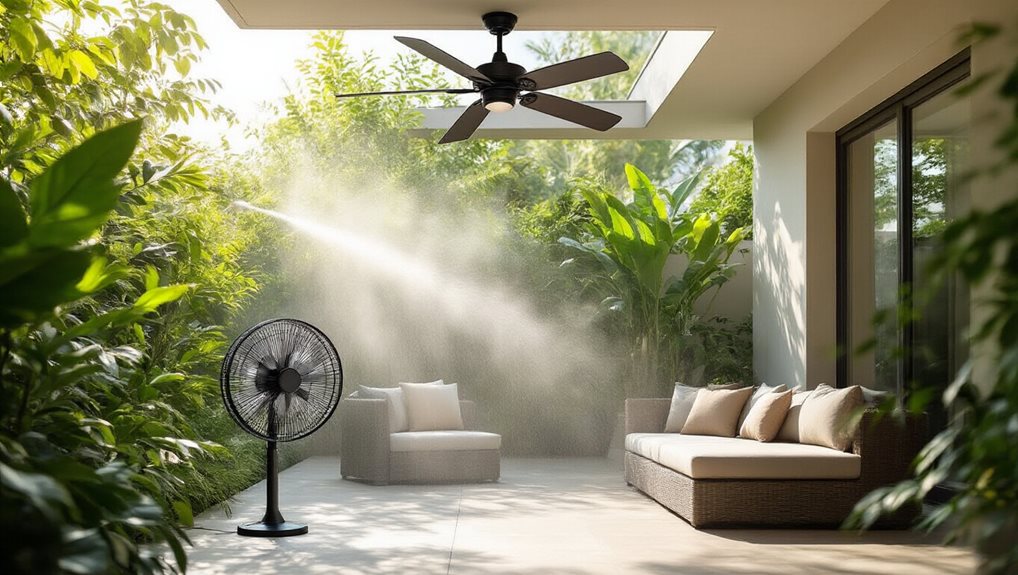
Fans come in many styles, but choosing the right one for mosquito control hinges on airflow strength, coverage area, and durability.
Oscillating fans create a dynamic barrier, covering wider zones and disrupting flight patterns, while high‑velocity models deliver at least 1,000 CFM for strong, consistent breezes that deter larger groups.
Box fans offer steady, cost‑effective airflow for focused spots, and ceiling fans blend aesthetics with gentle circulation that dilutes CO₂ and scents, keeping your patio community comfortable and bite‑free. In addition, selecting a fan with airflow strength and appropriate coverage can help optimize mosquito deterrence in different patio layouts.
Plant Mosquito‑Repellent Herbs and Flowers Around the Patio
The idea that a garden can double as a mosquito deterrent often sounds appealing, but scientific evidence shows that whole plants rarely provide reliable protection. You can still enjoy lavender, marigolds, citronella grass, catnip, or rosemary for their pleasant aromas and occasional minor effect, but expect only short‑lived, modest deterrence.
Plant them in pots near entrances, combine herbs for scent, and remember extracts, not whole plants, deliver consistent results.
Light Citronella Candles or Torches for an Aromatic Barrier

Wondering whether a lit citronella candle can actually keep mosquitoes off your patio? You’ll find that a single torch offers only a fleeting aromatic barrier, with roughly 14% indoor repellency and negligible outdoor effect beyond one meter; most mosquitoes still approach.
For modest coverage you need several candles spaced closely, but expect protection to fade after a few hours, so consider stronger alternatives for lasting bite‑free evenings.
Set Up CO₂ Mosquito Traps for Maximum Bite‑Free Zone
A CO₂ mosquito trap works by releasing carbon‑dioxide at a controlled rate—typically 350 ml/min for propane‑powered units or 500 ml/min for cylinder models—to mimic the breath of a human or animal, thereby attracting female mosquitoes that seek a blood meal.
Position it downwind of your patio, combine CO₂ with 1‑Octen‑3‑ol or BG‑Sweetscent for added lure, and run it continuously; this creates a localized bite‑free zone, reduces local mosquito populations, and lets you enjoy evenings with fellow neighbors.
Apply EPA‑Approved Insect Sprays or Misting for Lasting Protection

Where can you get the most reliable, lasting protection for your patio? Choose an EPA‑registered spray or mist, read the label, and apply it according to the instructions; DEET, picaridin, OLE, and IR3535 offer skin protection for several hours, while permethrin treats clothing and furnishings without skin contact.
Spatial repellents like metofluthrin work best in low‑wind zones, and reapplication intervals follow the product’s specified schedule.
Create a Weekly Inspection Checklist for Patio Mosquito Breeding Sites
After applying EPA‑approved sprays, the next step is to verify that no standing water remains where mosquitoes can breed, and a weekly inspection checklist makes that process systematic and reliable. Empty or flush plant saucers, rinse pet bowls, cover trash barrels, drill holes in old tires, and plug umbrella bases.
Dump bird baths, filter ponds, inspect pool pumps, repair drips, cap gutters, and ensure tarps drain, checking each item every week.
Final Note
By removing standing water, trimming vegetation, and installing screens, you’ll cut off mosquito breeding grounds and entry points. Complement these steps with citronella lighting, CO₂ traps, and EPA‑approved sprays for a layered defense. Regular weekly inspections keep the patio free of hidden habitats, ensuring lasting protection. Follow this systematic approach, and you’ll enjoy a comfortable, bite‑free outdoor space without unnecessary hassle.

Nathan McPhail is a garden and home DIY expert who writes practical, easy-to-follow advice for homeowners and gardeners. Through Yardique, he shares hands-on tips covering gardening, lawn care, landscaping, home improvement, repairs, tools, and outdoor living. His focus is on helping readers solve everyday household and yard problems with straightforward guidance, useful techniques, and practical solutions.